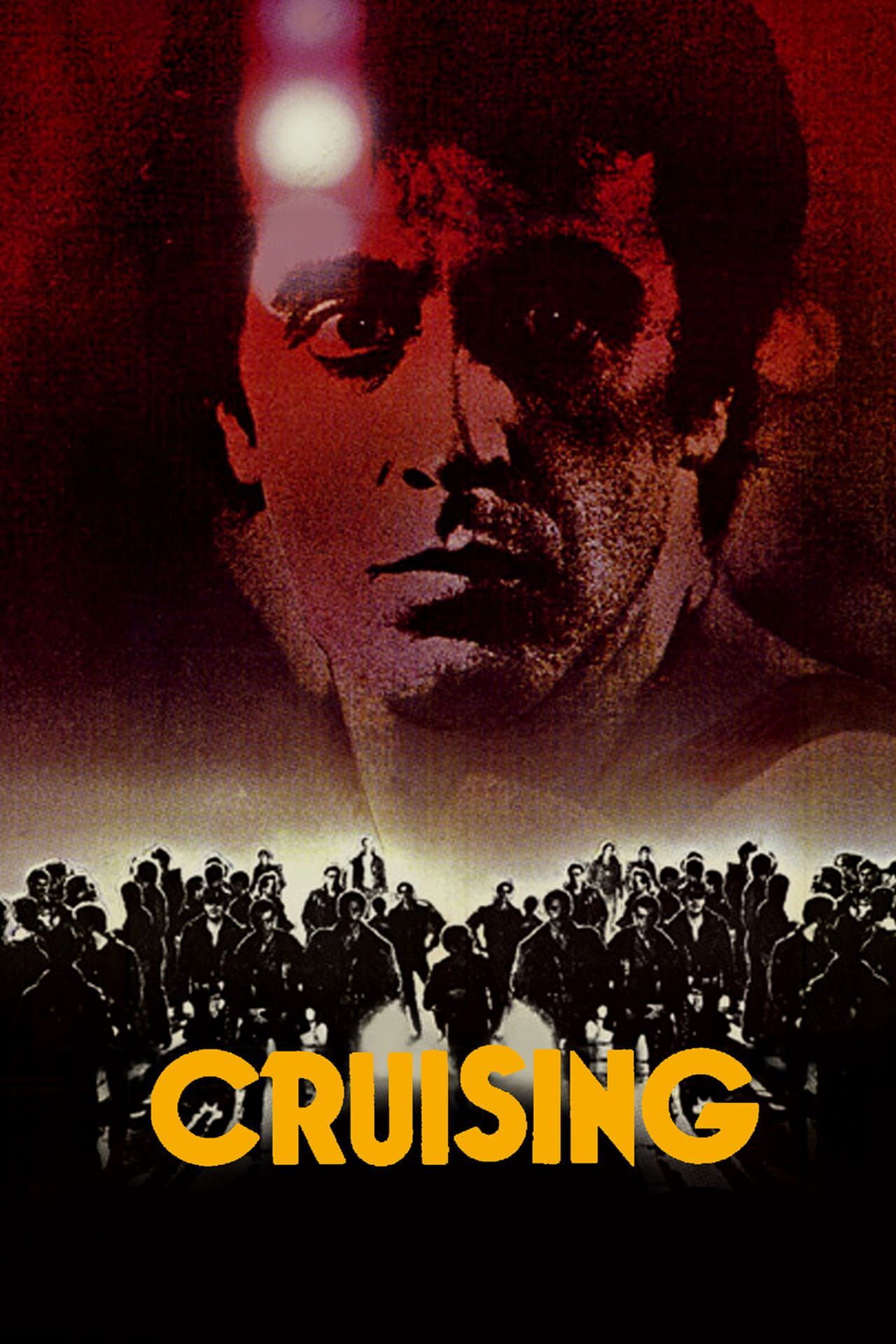
In 1980, the director of The Exorcist and the star of The Godfather teamed up for a nightmarish crime thriller about an undercover detective after a serial killer, which sounds like a home run. William Friedkin and Al Pacino were at the very height of their success and doing something that was squarely in their wheelhouse. Despite this, the movie ended up being one of the most controversial films of the decade, and its troubled production resulted in a messy blend of story and theme that still confounds many critics and viewers to this day.
Cruising follows Pacino as Detective Steve Burns, who goes undercover in the leather-bar, S&M scene of New York’s gay community to find a killer who is targeting men at these clubs. Pacino is sent into a psychosexual spiral as violence and attraction converge throughout this exceedingly bleak crime story. It is not the best movie from either Pacino or Friedkin, but thanks to the many controversies and on-set tensions, the ambiguous nature of the story, and the visual style of the film, Cruising has taken on a fascinating legacy as a movie that is celebrated, reviled, analyzed, and understood differently by every single viewer.
‘Cruising’ Saw Production Difficulties Due to Controversial Subject Matter and Tensions On Set
Going into the 1980s, LGBTQ+ communities were starved for positive, honest portrayals of their lifestyles in popular American media—a major reason why Cruising was such a hot-button issue among social activist groups. Perhaps in 2025, in a much broader media landscape that has welcomed a variety of queer stories, something like Cruising could fly under the radar. But in the late 1970s, a major director and major movie star made one of the first major movies with a central conceit rooted in LGBTQ+ culture, and it was a violent, lurid affair. This is not the representation that queer people needed or wanted at the time, so whatever intentions Friedkin had in making this movie fell short, despite both star and director insisting that they did not intend to depict any group in a negative light.
In addition to the pressure Cruising‘s production received from concerned gay rights groups, internal tensions mounted due to Friedkin’s working relationship with Pacino. Friedkin has since gone on the record to say that he was not taken by Pacino’s star power and that he disapproved of Pacino being late to set and generally acting in an unprofessional manner. Pacino and Friedkin both seemed lost in the story of the film and disgruntled by their on-set dynamic. Pacino also felt the weight of the protests surrounding the movie, questioning where the line was between entertainment and pushing the envelope versus outright exploitation. In his recent memoir, Sonny Boy, Pacino expressed regrets over his work on the film and said that he donated his salary from it to charity groups.
Related
The 30 Best Al Pacino Movies of All Time, Ranked
From ‘The Godfather’ to ‘Scarface’ to ‘Heat,’ this is Collider’s ranking of the greatest Al Pacino movies ever.
Initial reactions to the movie were negative, resulting in over half an hour of Cruising being cut out and eventually lost. Because of this editing choice, the film ends up feeling even more disjointed than it already was. But despite the storm of troubles on and off the set of Cruising, Friedkin and Pacino made a movie that, for all its flaws, is no doubt effective and provocative. The questions then become…is that provocation worthwhile? Does the movie have enough to say or offer enough to the audience? Your mileage may vary, but many viewers are coming around to Cruising as a film that works, not only in spite of the mess but because of it.
William Friedkin’s Lack of a Coherent Vision for ‘Cruising’ Is What Leaves It So Interesting To Dissect
As you arrive at the end of Cruising, it feels increasingly as though Friedkin did not understand what he wanted to say with this film. The result is a movie that is muddled and ambiguous in a way that could be a flaw or a feature depending on where you land. Many viewers find the lack of coherence to be a knock against the film, and it is certainly fair to say Friedkin might have been out of his depth as far as what Cruising can mean as a queer text. But other critics have slowly come around to the film, and its cryptic qualities invite a wide variety of interpretations that make it an extremely rich film to discuss all these decades later.
Cruising has the essence of a horror movie, a cynical and socially engaged piece of storytelling about patriarchal violence and the neglect and abuse of law enforcement to address the issue. The added elements of gay underground culture bring themes of internalized homophobia into the fold, especially as far as Pacino’s character is concerned. One of the most salient and confounding questions about the film’s ending is whether Detective Burns succumbed to perpetuating the murderous cycle of violence. Is Cruising instead about this type of violence as a social disease, brought on by bigotry and a fear of the unknown? Was there ever only one killer? These are unanswerable questions by design, and how you answer could determine whether you think of this film as a stylish, sickening, messy genre exercise or an exploitative, empty provocation. Cruising demands you look into yourself to make sense of its ideas, and that is why years later we can’t stop talking about this movie.