The Academy Award for Best Picture is the most coveted prize that the film industry has to offer, as it solidifies a period in cinematic history. The history of films that won Best Picture is fraught,as there are many instances in which it appeared like history got it wrong. While How Green Was My Valley is a very nice drama, it is certainly not one of John Ford’s best films, and definitely did not deserve to win over Citizen Kane, which is widely regarded as one of the greatest films ever made. Similarly, it seems ridiculous that the Academy chose to honor The King’s Speech with their Best Picture prize in a year where The Social Network was almost instantly heralded as a generational classic.
The Academy has thankfully chosen better winners in recent years like Oppenheimer and Anora, but they still have a ways to go. Here are ten of the most overrated Best Picture winners ever.
10
‘The Life of Emilie Zola’ (1937)
The Life of Emile Zola was seen as a highly influential and important film at the time of its release, mostly because it helped to crystallize the biopic genre that would go on to dominate the Oscars in subsequent years. While it was important to bring the film’s subject matter to light, The Life of Emile Zola feels particularly flat today, as it does little more than scratch the surface of its main character.
The performance by Paul Muni is quite extraordinary, but his acting alone does not make the film any more worthy of taking home the top prize. Given that this was still within the first decade of the Oscars’ existence, it’s understandable why voters may have chosen to rally around a film that felt safe as a means to represent how they wanted Hollywood to be perceived.
9
‘Tom Jones’ (1963)

Tom Jonesis one of the most baffling Best Picture winners of all-time because it is essentially a sexual farce with a very juvenile sense of humor. While the Oscars absolutely should take it upon themselves to honor more comedies in the Best Picture category, the fact that classics like City Lights, His Girl Friday, The Philadelphia Story, and Some Like It Hot weren’t recognized makes the decision to award Tom Jones even stranger.
What’s most baffling about the film is that Albert Finney gives an amazing performance, but ultimately lost in the Best Actor category; despite a career of amazing performances, Finney never won an Oscar. If there’s any argument to be made that the Oscars are overtly enamored with British period pieces, then Tom Jones could be submitted as undeniable proof that their infatuation had gone much too far.
8
‘Oliver’ (1968)

Oliver! is one of the weaker musicals to ever win Best Picture, as it became unclear whether voters were just voting because they were familiar with the stage production. Previous winners like West Side Story and An American in Paris are all-time masterpieces that deserved to be named Best Picture, but Oliver! is fairly bland, and doesn’t quite have the same depth and whimsy as the original source material from Charles Dickens.The film also contains some Jewish stereotypes that have made it age quite poorly.
The decision to reward Oliver! is more egregious when considering its competition, and frankly, what wasn’t even nominated. 1968 was the same year that 2001: A Space Odyssey was released and redefined cinema forever, but the Oscars left the film out of the Best Picture race entirely, with only Stanley Kubrick nominated in the Best Director category.
7
‘Out of Africa’ (1985)

Out of Africa may be the most boring film to ever win Best Picture, and also one of the most problematic. While it’s understandable why the Oscars felt that Syndey Pollack was overdue to win in a major category, handing Best Picture to a romantic film set in Africa that starred two white people was not a good look, especially considering that none of the Black actors in the film were recognized in any of the acting categories.
Out of Africa is the rare Best Picture winner that was easily the worst of the nominees, as it competed against Peter Weir’s brilliant crime thriller Witness, the groundbreaking LGBTQ drama Kiss of the Spider-Woman, John Huston’s wildly entertaining comeback film Prizzi’s Honor, and Steven Spielberg’s The Color Purple, which somehow managed to earn eleven Academy Award nominations without a single win.
6
‘Driving Miss Daisy’ (1989)

Driving Miss Daisy is a Best Picture winner that was seen as regressive and problematic at the time, and has only aged worse in subsequent years. While a story focused on the friendship between an elderly white woman and her African-American driver is already filled with stereotypes, the win was even more egregious when considering that Spike Lee’s masterpiece Do the Right Thing wasn’t even nominated.
Most pundits and contemporary critics would agree that Do the Right Thing was the best film of 1989, but Driving Miss Daisy also beat other nominees that were much stronger. Included within the lineup was the powerful coming-of-age drama Dead Poets Society, the baseball classic Field of Dreams, Oliver Stone’s riveting Vietnam War epic Born on the Fourth of July, and My Left Foot, for which Daniel Day-Lewis won his first award for Best Actor.
5
‘Shakespeare in Love’ (1998)

Shakespeare in Loveis one of the biggest upsets in Oscar history, as the film famously beat Saving Private Ryan for the top prize, even though Steven Spielberg had already won for Best Director. Even though the performance by Gwyenth Paltrowwas beloved, the success of Shakespeare in Love at the Oscars was largely credited to Harvey Weinstein, who became known for his aggressive campaigning techniques.
Weinstein successfully created smear stories that targeted the accuracy of Saving Private Ryan, and tried to convince voters that the film peaked after its riveting D-Day opening sequence. In hindsight, Saving Private Ryan is remembered as one of the greatest World War II dramas ever made, and Shakespeare in Love seems to be almost completely lost to time. It’s a fairly generic romantic comedy that doesn’t actually have much insights on the highly influential literature of the Bard.
4
‘Crash’ (2005)
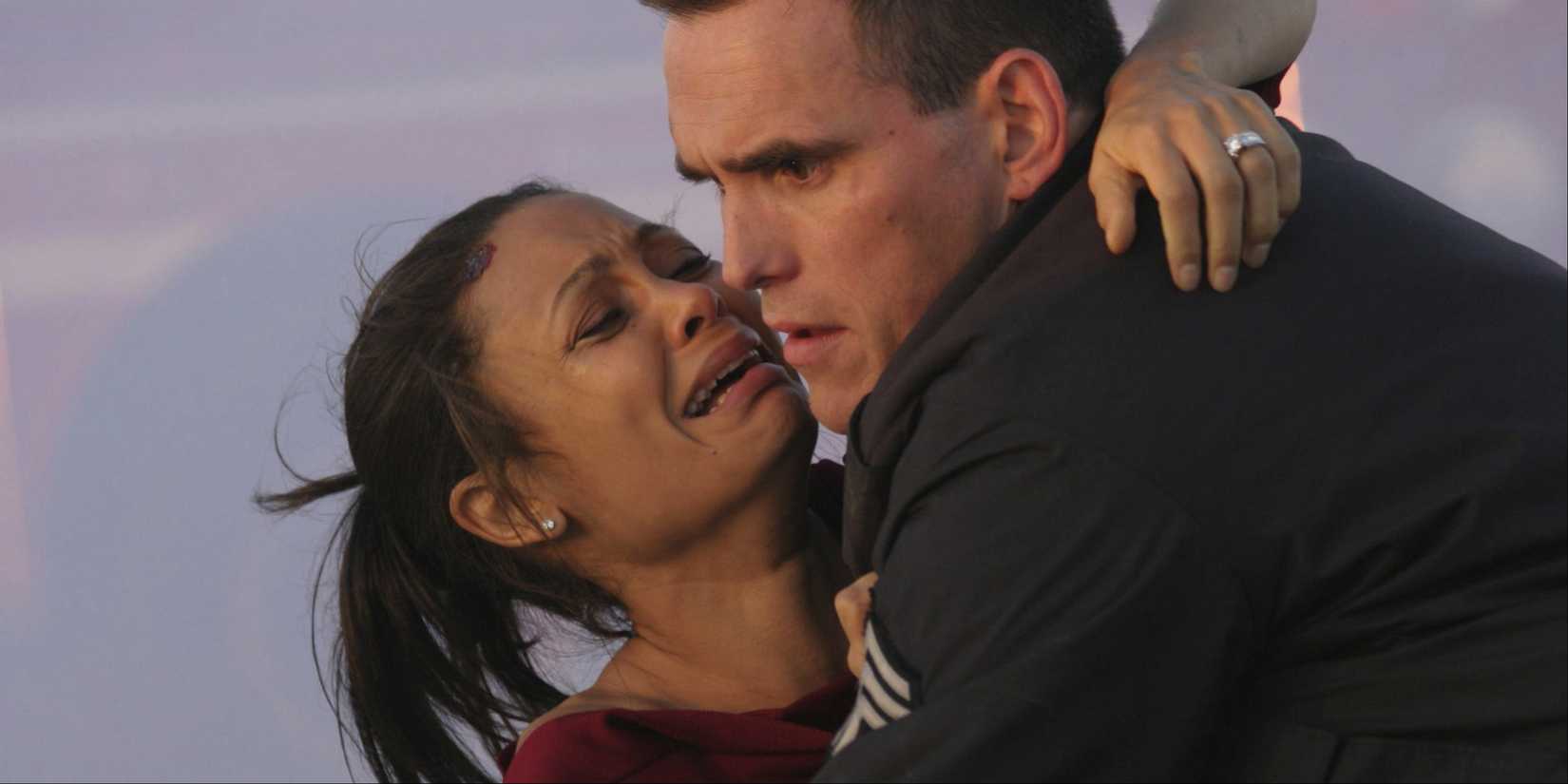
Crashmay be the single worst film to ever win Best Picture, as it goes beyond simply being “overrated.” While there are some older Best Picture winners that can be justified as being products of the era in which they were released, Crash is simply a cloying, melodramatic film about race relations that ends up incorporating every stereotype imaginable.
Crash is not the first, and wouldn’t be the last film about race relations made by white people that ended up winning the Oscar for Best Picture, but its victory was particularly stinging in a year that included the heartbreaking western romance Brokeback Mountain, the riveting biopic Capote, the powerful journalistic drama Good Night, and Good Luck, and Steven Spielberg’s gripping revenge epic Munich, all of which would speak to important social issues in an insightful way and had the power to kickstart meaningful conversations.
3
‘Slumdog Millionaire’ (2008)

Slumdog Millionairewas certainly a phenomenon in 2008 that critics and audiences seemed to get behind, but the backlash that it received was rather swift. Danny Boyle has even expressed regret for his exploitative depiction of Indian culture, and some of the more emotionally manipulative moments ring more hollow. Although it won over more deserving nominees like Milk and Frost/Nixon, Slumdog Millionaire was also released in a year where acclaimed releases like The Dark Knight, The Wrestler, In Bruges, and Doubt were all snubbed.
Slumdog Millionaire is one of the many cases in which a director is awarded for the totality of their achievements, and not necessarily the film of a given year. While Boyle’s masterpieces include the addiction dramedy Trainspotting, the highly influential zombie thriller 28 Days Later, the science fiction epic Sunshine, and the biographical drama Steve Jobs, there aren’t many of his fans who would cite Slumdog Millionaire as being the apex of his career.
2
‘CODA’ (2021)

CODAset a dangerous precedent for the Oscars, as it indicated that prolonged awards campaigns could result in frontrunners earning backlash that would result in changing patterns. The Power of the Dog was praised as a brilliant character study and deeply nuanced drama from the moment that it debuted at festivals, but it seemed to earn backlash after winning many top prizes, including negative responses from homophobic voters and those that don’t like arthouse films.
CODA is a perfectly fine family drama that looks and feels like a streaming release, and likely wouldn’t have been remembered had Apple TV+ not seized a moment to campaign it. While there are some Best Picture winners that feel egregiously problematic or insulting, CODA is just so dull and unmemorable that it’s likely going to be forgotten entirely. Even beyond The Power of the Dog, to claim that CODA is a better film than Dune, West Side Story, Drive My Car, and Licorice Pizza is just ridiculous.
1
‘Everything Everywhere All At Once’ (2022)

Everything Everywhere All At Onceindicated a monumental shift within the Oscars’ voting patterns in which a popular, commercial blockbuster (produced by the Russo brothers, no less) rode a wave of good will throughout award season. It didn’t matter that Steven Spielberg poured his heart into making a semi-autobiographical film with The Fabelmans, that Martin McDonagh perfected the dark comedy formula with The Banshees of Inisherin, that Tar spoke to “cancel culture” in a thoughtful way, or that Top Gun: Maverick was a much better action film; those movies didn’t have hot dog hands, raunchy jokes, and talking rocks that would be instantly turned into memes.
Everything Everywhere At Once is the perfect example of a film that felt groundbreaking at the time, but has now revealed itself to be cringe-inducingly on-the-nose, and rather shallow in addressing any of its themes.