Few modern horror villains have captured the audience’s attention as immediately as the Grabber, a masked predator whose unnerving presence is rapidly cementing his place alongside slashers like Michael Myers and Jason Voorhees. With the sequel to Scott Derrickson‘s The Black Phone now in theaters, Ethan Hawke‘s child killer is well on his way to horror legend status. But more than a decade earlier, Hawke was the victim who faced something far worse on screen: a creeping, inescapable evil that didn’t stalk its victims but embedded itself in their lives. Released in 2012, Sinister, also directed by Derrickson, earned a reputation as one of the scariest horror films of the 21st century — not for gore or spectacle alone, but for the way it weaponizes atmosphere and psychological unraveling.
Hawke’s performance as Ellison Oswalt — a washed-up true-crime writer desperate for one last hit — anchors the supernatural dread in something painfully human. He’s not fending off a masked killer; he’s feeding a monster of his own making. His tunnel vision, his refusal to turn away from the horrific images on those Super 8 reels, makes him both victim and accomplice. That moral rot mirrors the film’s central figure, Bughuul, an entity that feeds on both children and obsession. Where the Grabber thrives on physical imprisonment, Sinister traps its characters through imagery. Derrickson understands that the most terrifying monsters aren’t always those lurking in the shadows, but the ones we’re capable of becoming through our own obsessions.
Ethan Hawke and Scott Derrickson First Teamed Up for ‘Sinister’
The Grabber is a potent image of horror: theatrical, menacing, and unforgettable. In The Black Phone, Hawke hides behind a shifting mask, allowing the performance to oscillate between predator and cipher. The terror is immediate and external — a man with the power to abduct, torture, and kill. It’s effective because it operates in the realm of myth: a modern boogeyman comes to life. Bughuul, on the other hand, is something else entirely. He isn’t a man that can be stopped or stabbed or unmasked. He’s a demon whose powers go beyond our realm of understanding. What makes Sinister so unnerving is that Bughuul barely appears on the screen, yet his presence is everywhere: in the reel-to-reel crackle of the film projector, in the soft hum of the house settling at night, in the growing madness of Ellison’s face as the glow of the Super 8 reflects off his eyes.
‘Sinister’ Uses Obsession as a Gateway to Horror
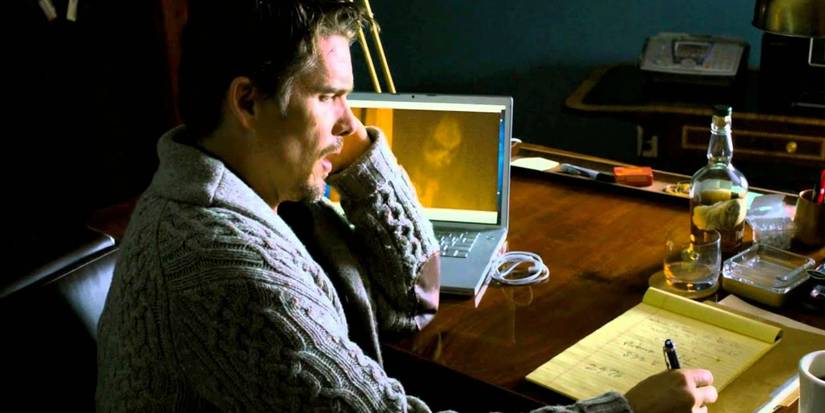
Hawke’s performance in Sinister stands apart from his work as the Grabber precisely because it strips him of the mask. Ellison Oswalt isn’t a villain or a hero; he’s a man circling the drain, driven by ego, desperation, and the allure of relevance. He moves into a house where a family was murdered without telling his wife, not because he’s trying to solve a crime for justice, but because he wants the story to save his career. From the first moment he watches the Super 8 footage, he’s already gone too far. This is where Sinister sharpens its blade. Bughuul doesn’t need to coerce or chase Ellison. He just has to wait as Ellison does the work for him. He isolates himself from his wife and children, he lies and rationalizes, and he convinces himself that he’s still in control. But every late-night viewing session, every lingering look at the static hum of the projector light, is another inch he slips into Bughuul’s grasp.
Hawke plays this psychological unraveling with terrifying precision. His shoulders hunch, and his movements grow jittery. His eyes become a battlefield between rational thought and magnetic horror. Unlike the Grabber, who thrives in control, Ellison’s power is an illusion. He isn’t the hunter in this story but the bait. Obsession in Sinister isn’t just a plot device; it’s the real monster. Bughuul is merely a reflection of what happens when ambition and morbid curiosity override survival instincts. The terror comes not from watching Ellison run, but from watching him stay. It’s a portrait of a man who mistakes his proximity to evil for control over it, and pays the ultimate price.
‘Sinister’ Turns Home Movies Into Hell
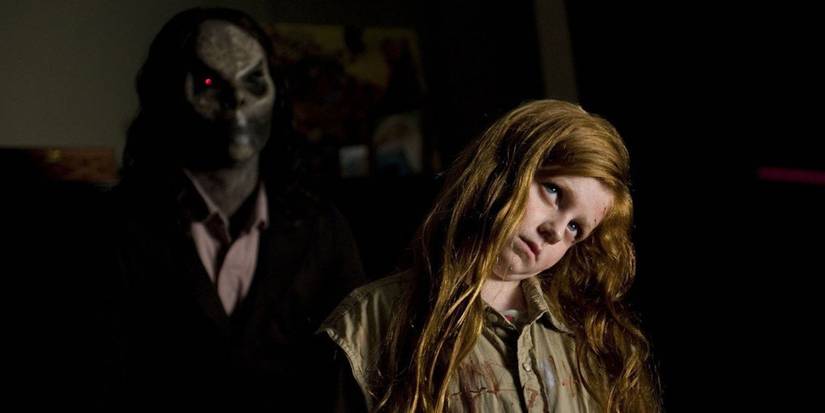
One of the most brilliant and devastating aspects of Sinister is its use of Super 8 footage. The images themselves are grainy, quiet, and disturbingly mundane at first: children playing in the yard, families together in their homes on a summer’s day. But then something shifts. Each reel becomes a descent into ritualized violence. A family hanging from a tree; A car set ablaze with its doors locked; An entire family drowned in the pool; A lawnmower rolling toward an unseen figure in the dark. These images are more than plot devices — they’re symbols of how horror can live in silence, how evil can be captured, preserved, and played back over and over again until it feels real.
Derrickson doesn’t rely on bombastic jump scares or orchestral stings alone to make these scenes terrifying. He lets the images breathe. He allows the projector’s whir to fill the space, turning it into a kind of ritual. Watching them feels wrong, like you’ve stumbled across something private and damned. This is what elevates Sinister above many of its contemporaries. It’s not just about what you see — it’s about how seeing changes you. Bughuul doesn’t attack Ellison but watches with him, waiting until the line between voyeur and victim collapses. And that’s where the film lands its most insidious blow: it implicates the audience, too. By sitting in the dark and watching these films with Ellison, we share his fascination — and, in some small way, his doom.
The Enduring Power of ‘Sinister’ Over a Decade Later
Over the years, scientific studies on horror films — including those measuring heart rates and anxiety response — have repeatedly ranked Sinister among the “scariest movies of all time.” There’s a good reason for that. Unlike many horror films that fade once the killer is defeated or the credits roll, Sinister doesn’t offer catharsis. There’s no triumph, no escape, no silver bullet. Ellison’s decision to run comes too late. His obsession seals not only his fate, but his family’s as well. Bughuul isn’t vanquished; he endures, carried forward by the very act of witnessing.
That inevitability — that slow, coiling dread — is what keeps Sinister lodged in the collective memory. It’s the horror of an open door that will never close. Where the Grabber is frightening because he can take something from you, Bughuul terrorizes because you give it to him willingly. More than a decade later, Sinister continues to influence horror filmmaking. Its restrained use of sound, its grounded lead performance, and its commitment to atmosphere over spectacle have inspired multiple imitators but few equals (let’s not talk about the failed sequel).
The Grabber and Bughuul Represent Two Different Types of Horror Monsters
The Grabber and Bughuul couldn’t be more different — one a theatrical, mask-wearing boogeyman, the other a whisper in the walls. Yet both The Black Phone and Sinister have solidified Hawke’s place in horror history as a scream king. His ability to embody both the predator and the prey gives his genre work a rare depth. The Black Phone delivers terror that’s sharp and immediate, the kind of fear that slams doors and drags you into basements. Sinister brings the kind that seeps through the cracks in your foundation and never leaves. If the Grabber is the monster you fear at night, Bughuul is the one that lives in your house long after the lights come on. And that’s why Sinister remains Hawke’s most terrifying film. The Grabber might make you afraid to walk home at night, but Bughuul is the reason you’re terrified to go home at all.
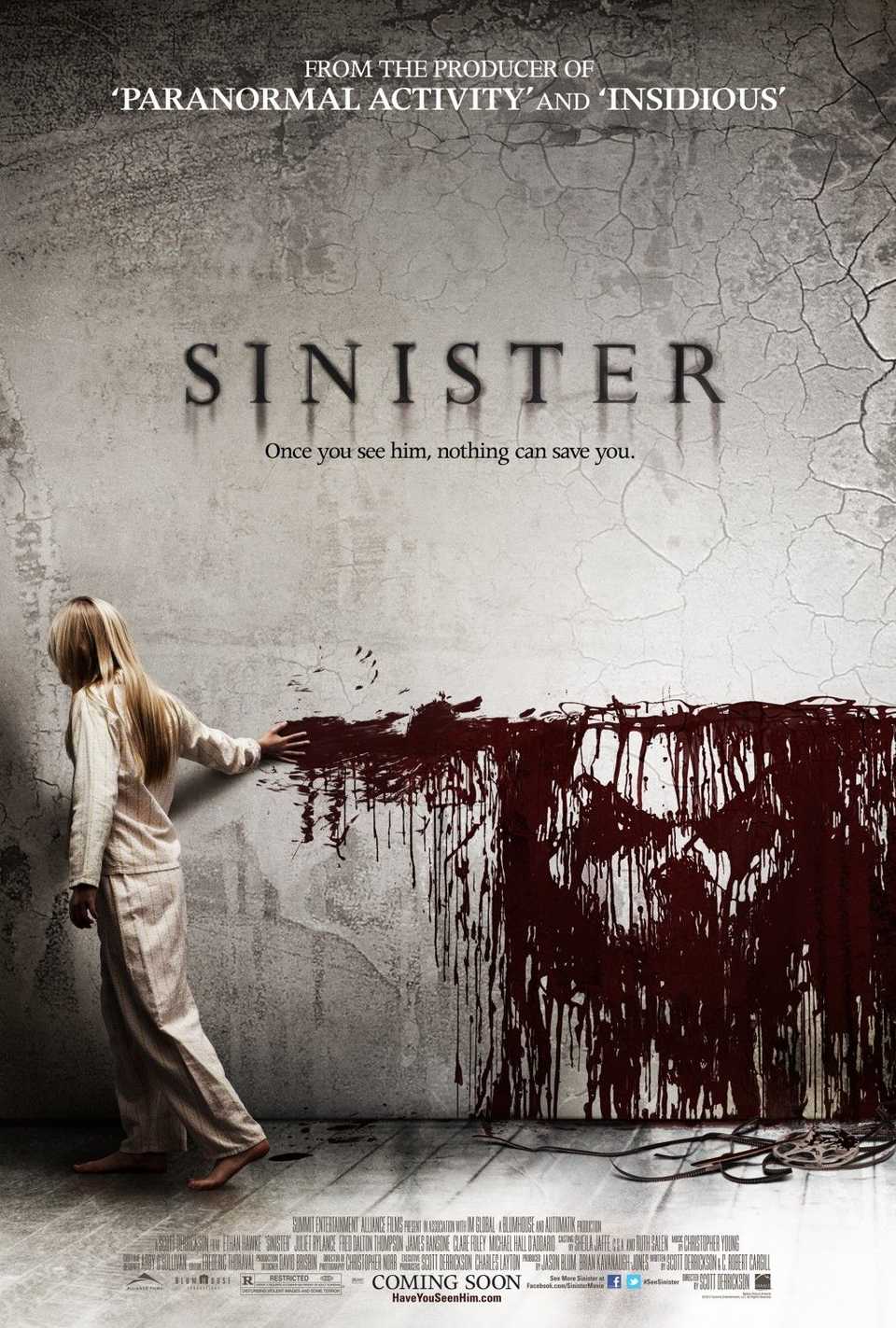
- Release Date
-
October 12, 2012
- Runtime
-
110 minutes
- Director
-
Scott Derrickson
- Writers
-
Scott Derrickson, C. Robert Cargill
- Franchise(s)
-
Sinister