Space. It’s been called the final frontier, but it’s a place that only a select few highly trained individuals (and the occasional out-of-touch pop star) have ever visited. It’s perhaps the alien and unknowable nature of space that makes it such a prime sinister setting for movies. Whether it’s the dangers inherent to interstellar travel or the extraterrestrial horrors that may lie beyond the stars, movies set in space have a uniquely potent way of setting audiences on edge. Thrillers, horror films and existential mood pieces abound when it comes to the darkest reaches of space cinema.
While science fiction in general may offer a broader swath of scary movies, including those set on other planets or ones where terror comes to Earth from somewhere far past the stratosphere, those strictly set in space are a much smaller, if not any less terrifying crop. These movies, set primarily in the cold, dark silence of space by way of spaceships and stations, may be few and far out, but they all know how to tickle the amygdala. These are eight sweat-inducing space movies, ranked by how scary they are.
8
‘Gravity’ (2013)
Space, like the ocean, is such a vast expanse that it can’t help but trigger those innate human fears of being lost, alone and helpless. That’s the kind of fear that’s tapped into by movies like Apollo 13, Marooned and, especially, Gravity. This hard science fiction survival thriller puts Sandra Bullock’s astronaut through the ringer after some space debris untethers her from her ship and sends her careening into the infinite black. It’s not the kind of terror that makes an audience scream out loud, but it definitely makes them white-knuckle for 90 minutes. The idea of floating away into the abyss of outer space, waiting for oxygen reserves to slowly deplete, is deeply disturbing, no matter how thrillingly executed.
Gravity succeeds partly because of Bullock’s committed performance, but mostly it’s due to the photo-realistic digital effects coupled with the complicated lighting and cinematography developed by Emmanuel Lubezki in collaboration with director Alfonso Cuarón. The majority of the film’s space setting was created with CGI, while Bullock and her fellow actors were all filmed in a large rig which used thousands of lights to simulate the zero gravity environment. The technical achievements, which helped win the film multiple Academy Awards, aren’t just for show, as they completely immerse the viewer into the setting and put them in Bullock’s space boots to fully experience her terror firsthand.
7
‘Pandorum’ (2009)

Being lost alone in space might be preferable given the company that the characters of the minor cult film Pandorumhave to contend with. Taking place in the future on a spaceship bound for a new planet for Earth’s colonists to call home, it doesn’t take long for this pulpy space horror to get gruesome. Suffering from the titular fictional psychosis, the inhabitants of the interstellar ark resort to cannibalism, eventually forming into a violent tribe that those unlucky few who haven’t lost their minds have to contend with.
Pandorum is the space horror child of a thousand influences, all of which are plainly obvious upon watching it. Most of the design elements of the film, from the grey corridors of the ship to the cannibalistic creatures, are derivative, but the movie punches above its weight thanks to an above-average cast that includes Dennis Quaid and Ben Foster in major roles and its determination towards providing grimy, unpretentious thrills. Pandorum has zero interest in interrogating the existential nightmare of being the last living remnants of a destroyed civilization. It just wants to deliver some gruesome kills in a very late 2000s style. That it does, which has earned it its own devoted little fan following.
6
‘Aniara’ (2018)

Similarly set on a spaceship taking survivors of a ruined Earth to a new home, Aniaradiffers from Pandorum in many ways, and notably, it realizes that humans don’t need to be turned into sci-fi monsters to be scary as hell. When the titular spaceship is set adrift after an accident, its inhabitants must contend with the new reality of living together on the ship in the emptiness of space. It’s a far more ponderous and depressing affair that doesn’t offer anything in the form of traditional scares, but makes up for them with an apocalyptic bleakness that suggests the soul of humanity is just as black and empty as outer space itself.
Aniara is far from a perfect movie, and it could have actually benefited from some more traditional thrills to help it along its runtime, but the movie’s commitment to watching the slow-burn decay of a microcosm of civilization feels a little too relatable to dismiss. Many space movies suggest that what should be feared most are the unknown threats that lurk in the dark beyond the stars. Aniara suggests that the greatest threat lurks inside all of us.
5
‘2001: A Space Odyssey’ (1968)
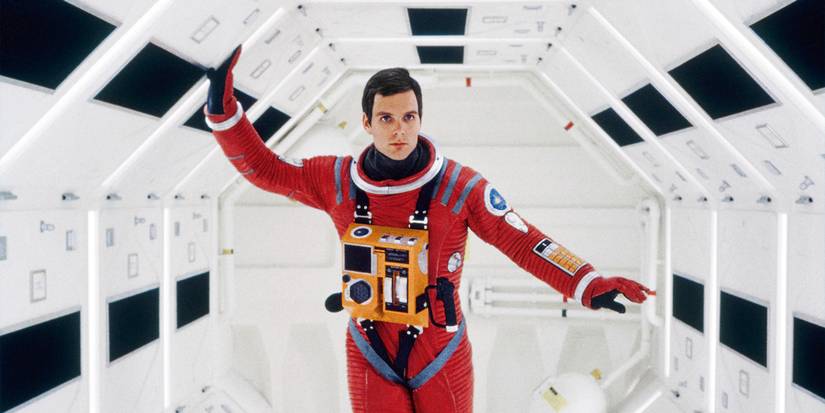
Beyond Aniara, there are a few sci-fi films that dig even deeper into the existential cosmic dread that only the darkness of space can make humans confront. Movies like Interstellarand Solariswant viewers to consider their seemingly significant existence in the epic scale of the universe, but if there’s one film that outdoes them, while also giving audiences one of the greatest villains in science fiction history, it’s Stanley Kubrick’s 2001: A Space Odyssey. From its prehistoric opening scene to its surreal ending, this science fiction masterpiece takes viewers on a journey through the stars that has been alternately been interpreted as both hopeful and desolate.
Following a group of astronauts sent to Jupiter, the film has many of the hallmarks and plot structure that are often the foundations for cosmic and space horror, even if the film itself is outwardly engaging with them. It’s an epic that wants to grapple with deeper themes of human nature and evolution that can be extrapolated into several different readings. On top of all that is also HAL 9000, the artificial intelligence and de facto villain of the movie who has proven even more prescient as a threat with every subsequent year that passes. If the cold, detached voice and singular red eye of this killer computer don’t send a chill down your spine, you may not be as in touch with your own humanity as you thought.
4
‘Life’ (2017)

Sure, pondering our own existence and facing death at the hands of our own technological creations is scary, but really what we all fear more is some tentacled monstrosity latching on to us and never letting go. That’s a universal fear that’s thoroughly explored in the above-average B-movie, with an A-list cast, Life. Cribbing liberally from other alien movies before it, this sci-fi thriller doesn’t offer anything new in the way of its space kills, but it does pull them off with a fair amount of competence and features some solid performances from its cast who are all better than the material given to them.
Returning to the International Space Station from Mars, a probe brings exciting evidence of extraterrestrial life in the form of an amoebic lifeform they name Calvin. Predictably, for anyone who has seen a horror movie, Calvin soon begins to grow and turns hostile towards the crew, killing them off one by one. The characters are underwritten fodder for alien kills, but there’s enough life in them to elicit some sympathy when Calvin begins to twist and contort their bones. The pacing is also quick enough that the audience never has to think too hard or too long about any of the film’s implications and can simply squirm at the next nasty sequence. Where the film really scores some scary points, though, is in its surprisingly dark ending that has some very catastrophic implications for Earth’s future.
3
‘Event Horizon’ (1997)

One of the most oft-cited examples of space horror, Event Horizonis just as derivative and often hokey as the more maligned entries into the subgenre, but it does have an undeniable atmosphere about it that has earned it a very devoted following of fans. Following a group of astronauts sent on a rescue mission to a seemingly abandoned spaceship that contains a specialized drive that allows it to create wormholes. Naturally, the ship turns out not to be abandoned and contains something far more sinister onboard.
Turns out that creating holes in space comes with all kinds of consequences. In this case, that consequence is an apparent portal to hell. Event Horizon is essentially Hellraiserin space, but it’s actually much better than the actual Hellraiser in space movie, and is most definitely the most effective work of director Paul W.S. Anderson. The film’s visceral visuals are what most fans cite as its scariest element, and those visuals were considerably cut down from the film’s initial edit. Even in its truncated form, the film has an ineffably eerie quality to it that outweighs its narrative shortcomings, and it has had its own minor influence on the space horror genre, particularly on the iconic video game Dead Space.
2
‘Sunshine’ (2007)
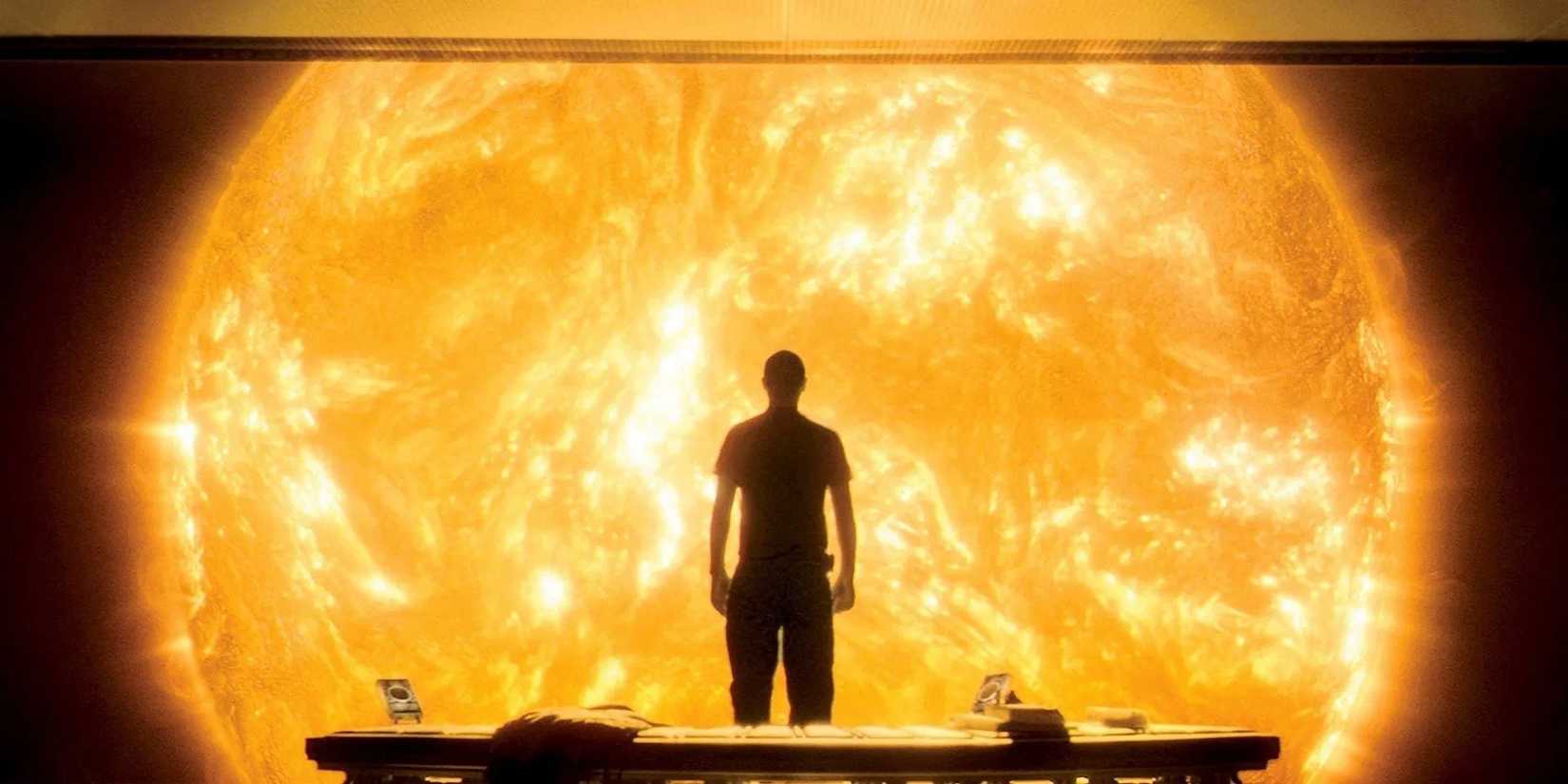
After they had successfully reinvigorated the zombie subgenre with 28 Days Later, director Danny Boyle and writer Alex Garland followed it up with the cosmic thriller Sunshine. Following a group of astronauts tasked with reigniting a dying sun, the plot offers grand visuals that contrast the power of the sun with the cold claustrophobia of space, enhancing the central conflict of faith in conflict with science. It has the cerebral discomfort offered by films like 2001 and, in its controversial third act, more traditional scares of the horror film variety.
While the slasher-esque finale of the movie has been a major point of contention between defenders and detractors, it certainly helps hammer home the inherent menace of slavish devotion and fanaticism. Regardless of individual opinions on it, the ending is still well staged and features a damned effective villain performance. Sunshine was overlooked when it was originally released, but has since developed its own cult following and remains an extremely effective, and scary, journey into space.
1
‘Alien’ (1979)
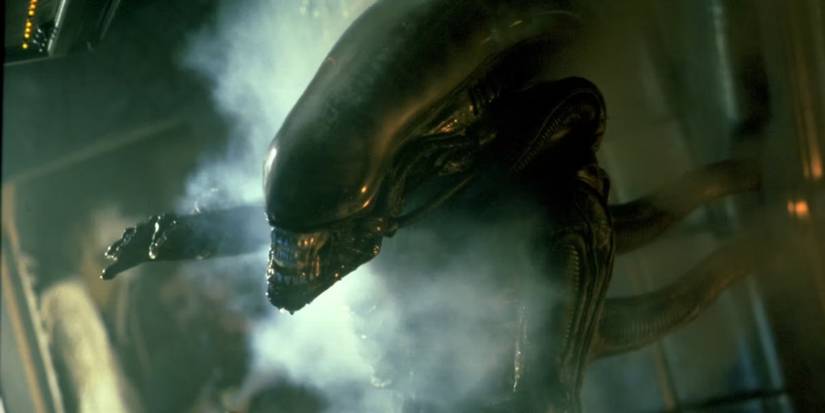
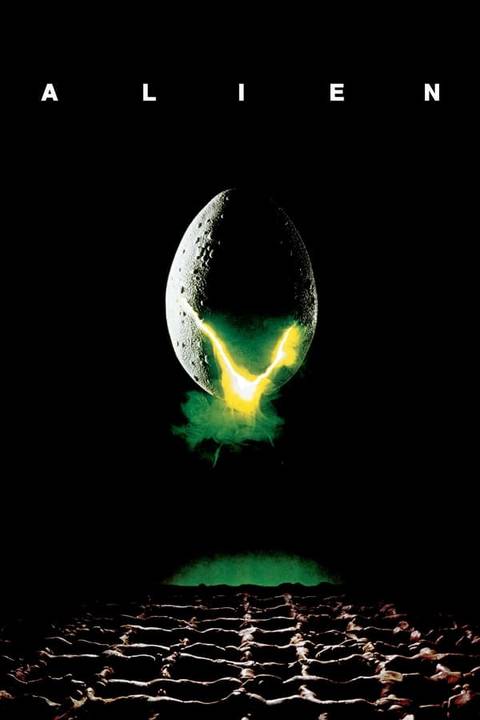
All the films from the original Alienquadrilogy offer something uniquely scary to the sci-fi genre. There’s the action-packed thrills of James Cameron’s Aliens, the haunting nihilism of David Fincher’s Alien 3and the weird eroticism of Alien Resurrection, but it all started with the absolute space horror of Ridley Scott’s original. It’s the reigning queen of all modern sci-fi horror films, and it hasn’t been bettered since. Given how massively influential the original Alien has become, it’s all the more impressive considering how many individual elements had to come together to make it the horror masterpiece it is.
The brainchild of writer Dan O’Bannon, who was heavily inspired by sci-fi films such as Planet of the VampiresandIt! The Terror from Beyond Space, the script was originally intended to be made as an ultra low-budget film for producer Roger Corman until it caught the attention of producers who had connections with 20th Century Fox. With a bigger budget and Scott selected as director, after a slew of then more high profile filmmakers passed, the film was quickly elevated beyond its B-movie roots. Add in the singular creature design by Swiss artist H.R. Giger, and Alien became the most terrifying film set in space ever made.