The best psychological thrillers don’t rely on jump scares or gore. They’re about tension, the invisible pressure that builds between people, the slow collapse of certainty, and the dread that comes from realizing the real horror might be inside your own mind. The finest of them contain many layers, revealing something new on each viewing.
With this in mind, this list ranks some of the great psychological thrillers that are worth coming back to again and again. The titles below master that delicate balance between suspense and introspection, feeling fresh even when you know the broad contours of the plot.
10
‘The Hidden Face’ (2011)
“Sometimes love makes us do things we never imagined.” Few thrillers play with perspective as devilishly as The Hidden Face. This Colombian gem begins as a story about a man (Quim Gutierrez) mourning his missing girlfriend (Clara Lago), but then the camera flips, revealing what really happened. It’s one of the most shocking mid-film twists of the 2010s. That said, there’s more to the movie than just narrative gimmicks. Overall, it’s an elegant, almost Hitchcockian tale of jealousy, voyeurism, and entrapment. The visuals convey this nicely. The film’s use of mirrors, reflections, and sound transforms a simple domestic space into a psychological labyrinth.
Every creak of the floorboards becomes loaded with guilt and fear. What makes The Hidden Face worth revisiting is its dual nature: half romantic tragedy, half claustrophobic nightmare. The more you rewatch it, the more it becomes a study in perception, how love can turn into obsession, and how control disguises itself as grief. It’s a quiet, cruel, and intriguing little puzzle box.
9
‘The Tenant’ (1976)

“If you cut off my head, what would I say? Me and my head, or me and my body?” Directing himself, Roman Polanski stars in this one as Trelkovsky, a shy man who moves into a Paris apartment whose previous tenant committed suicide. There, he soon begins to believe the building’s inhabitants are conspiring to make him do the same. What follows is a descent into pure paranoia, where every noise, glance, and gesture feels weaponized.
The walls seem to close in; the architecture itself becomes accusatory. The tone is dreamlike yet oppressive, culminating in one of the most disturbing identity collapses ever put on screen. Polanski turns urban isolation into existential horror; strong shades of Kafka. The movie is dense with ideas and open to endless interpretation, covering everything from repression and sexuality to identity and history repeating itself. As a result, it lends itself to multiple viewings, revealing new dimensions to the nightmare on each watch.
8
‘Coherence’ (2013)

“Do you know what’s going on? Because I don’t.” Made on a shoestring budget, Coherence is proof that great psychological thrillers rely on ideas, not effects. During a dinner party, a passing comet causes reality itself to fracture, forcing a group of friends to confront alternate versions of themselves. The tale starts out as light sci-fi but eventually morphs into existential terror, as identity and morality disintegrate with each choice they make. Director James Ward Byrkit keeps the camera close (and handheld) and the performances natural, creating a suffocating realism even as reality breaks apart. This is amplified further by the improvised dialogue.
While the budget was only $50, 000, the cast and crew know how to use their sparse elements for maximum effect. The result is an immersive, intelligent movie that crams a lot into its lean 89 minutes. Rewatching Coherence feels like peering into a kaleidoscope that rearranges itself differently each time. It’s low-budget genius, psychological horror disguised as science fiction.
7
‘Martha Marcy May Marlene’ (2011)

“You can’t imagine what it’s like to be here.” Here, Elizabeth Olsen, in a breakout performance, plays a young woman who escapes a cult but struggles to reclaim her identity as she reunites with her sister. It’s a performance of phenomenal range, carrying a lot of the movie single-handedly. The film’s editing, seamlessly weaving between past and present, mirrors Martha’s trauma, showing how brainwashing blurs memory and reality. Opposite her, John Hawkes is genuinely chilling as the cult leader, a man whose charm is as suffocating as his cruelty.
The direction (courtesy of The Iron Claw‘s Sean Durkin) is quiet, almost tender, which makes the horror hit harder; nothing “happens” in the conventional sense, yet every moment drips with unease. It’s a film about the long half-life of manipulation, how sometimes escape doesn’t mean freedom, and survival doesn’t mean healing. Rewatching it only deepens the dread, as you notice new cues of control hidden in the dialogue and framing.
6
‘The Machinist’ (2004)

“If you were any thinner, you wouldn’t exist.” This movie is most well-known for featuring a skeletal Christian Bale, but there’s much more to it than that. Bale’s character is Trevor Reznik, a factory worker suffering from insomnia and guilt-induced psychosis. It’s one of his most haunting performances. As his reality fractures, the film spirals into a Kafkaesque descent through paranoia, self-loathing, and memory’s distortions. It’s a film obsessed with the mind’s need to punish itself; guilt turned physical.
Bale’s body becomes the visual manifestation of remorse, every rib and hollow eye socket a confession. The world around him is equally grim. Director Brad Anderson paints an industrial purgatory in desaturated grays, where machines hum aggressively and shadows whisper accusations. On rewatch, what initially seems like a twist-driven thriller reveals itself as a tragedy of repression and denial. Bleak but profound, a portrait of someone haunted by the crime of existing.
5
‘The Invitation’ (2015)

“We’re not here to hurt anyone.” Karyn Kusama’sThe Invitation is the ultimate slow-burn dinner party from hell. A man (Logan Marshall-Green) accepts an invite from his ex-wife (Tammy Blanchard) to a reunion with old friends, only to sense that something is very wrong. Kusama masterfully builds tension through social discomfort and microaggressions, turning polite conversation into psychological warfare. There’s a barbed subtext to everything. Indeed, the movie is unsettlingly ambiguous. For most of its runtime, you can’t tell whether the threat is real or imagined.
Every smile feels forced, every toast a warning. When the truth finally emerges, it’s both shocking and, in hindsight, inevitable, followed by one of the bleakest final shots in modern horror. In the hands of a more mediocre storyteller, The Invitation would’ve simply been about cults and grief. Instead, it’s about the human need to find meaning in catastrophe, even if that meaning destroys you.
4
‘The Vanishing’ (1988)
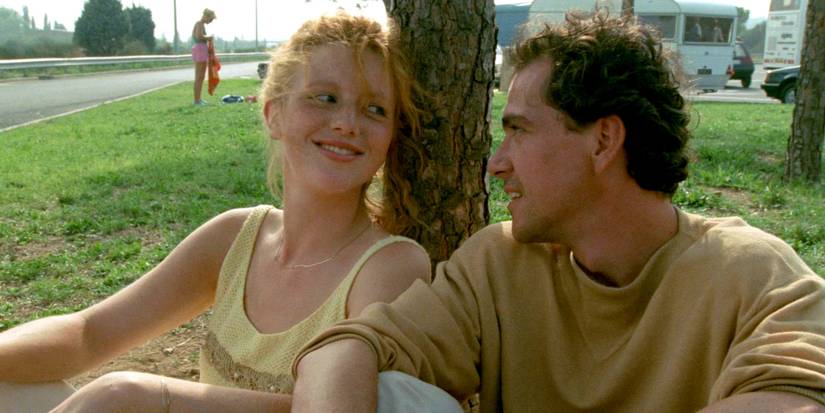
“To know what it feels like to be truly evil, you must first know what it feels like to be truly good.” George Sluizer’sThe Vanishing remains one of the most psychologically devastating thrillers ever made. It begins as a simple mystery: a woman (Johanna ter Steege) disappears at a gas station, and her boyfriend’s (Gene Bervoets) obsession with finding her consumes his life. But the film slowly reveals its cards, showing us both sides of the story: the grieving lover and the eerily methodical abductor.
The strongest elemental here is the layered villain performance from Bernard-Pierre Donnadieu. His turn as the kidnapper is chilling in its ordinariness. He’s not insane, just curious about the nature of evil. The movie as a whole is refreshingly restrained. It doesn’t manipulate or moralize, it simply watches as fate unfolds with unbearable calm. And then, to top it all off, the ending is one of the most shocking and quietly horrifying in cinema history, a moment of pure existential dread.
3
‘The Gift’ (2015)

“You think you’re done with the past, but the past isn’t done with you.” The Gift, Joel Edgerton‘s directorial debut, appears to be a standard stalker thriller at first, but becomes more complex and interesting as it rolls along. In it, a married couple (Jason Bateman and Rebecca Hall) reconnects with an awkward old acquaintance (Edgerton), only for small acts of kindness to curdle into menace. The movie’s secret weapon is the way it reconfigures our sympathies. As secrets surface, we realize the real monster may not be who we thought. Edgerton’s direction is sleek and understated, his script a slow spiral of guilt and revenge.
On the acting front, Bateman weaponizes his comedic persona into something cruel and cold, while Hall brings believable vulnerability, grounding the film’s moral chaos. Taken together, this adds up to a well-crafted thriller that’s less about fear than it is about shame, the kind that festers in silence and resurfaces years later demanding payment.
2
‘The Night of the Hunter’ (1955)

“Would you like me to tell you the little story of right-hand/left-hand? The story of good and evil?” The Night of the Hunter is one of the strangest and most lyrical thrillers ever made, a fable of innocence pursued by evil. Robert Mitchum gives an iconic performance as Reverend Harry Powell, a self-styled preacher and serial killer chasing two children for their father’s hidden fortune. Shot by actor Charles Laughton (his only directorial effort) in stark expressionist style, the film feels like a dream torn between fairy tale and nightmare.
Its black-and-white imagery has become cinematic legend, all silhouetted houses, twisted rivers, and, of course, the words “LOVE” and ” HATE” tattooed across Powell’s knuckles. Mitchum’s villainy is almost biblical, embodying hypocrisy as horror. Yet the film’s true power lies in its compassion for innocence, embodied by Lillian Gish’s guardian angel figure. Not for nothing, The Night of the Hunter is frequently ranked among the best movies of the 1950s.
1
‘Prisoners’ (2013)

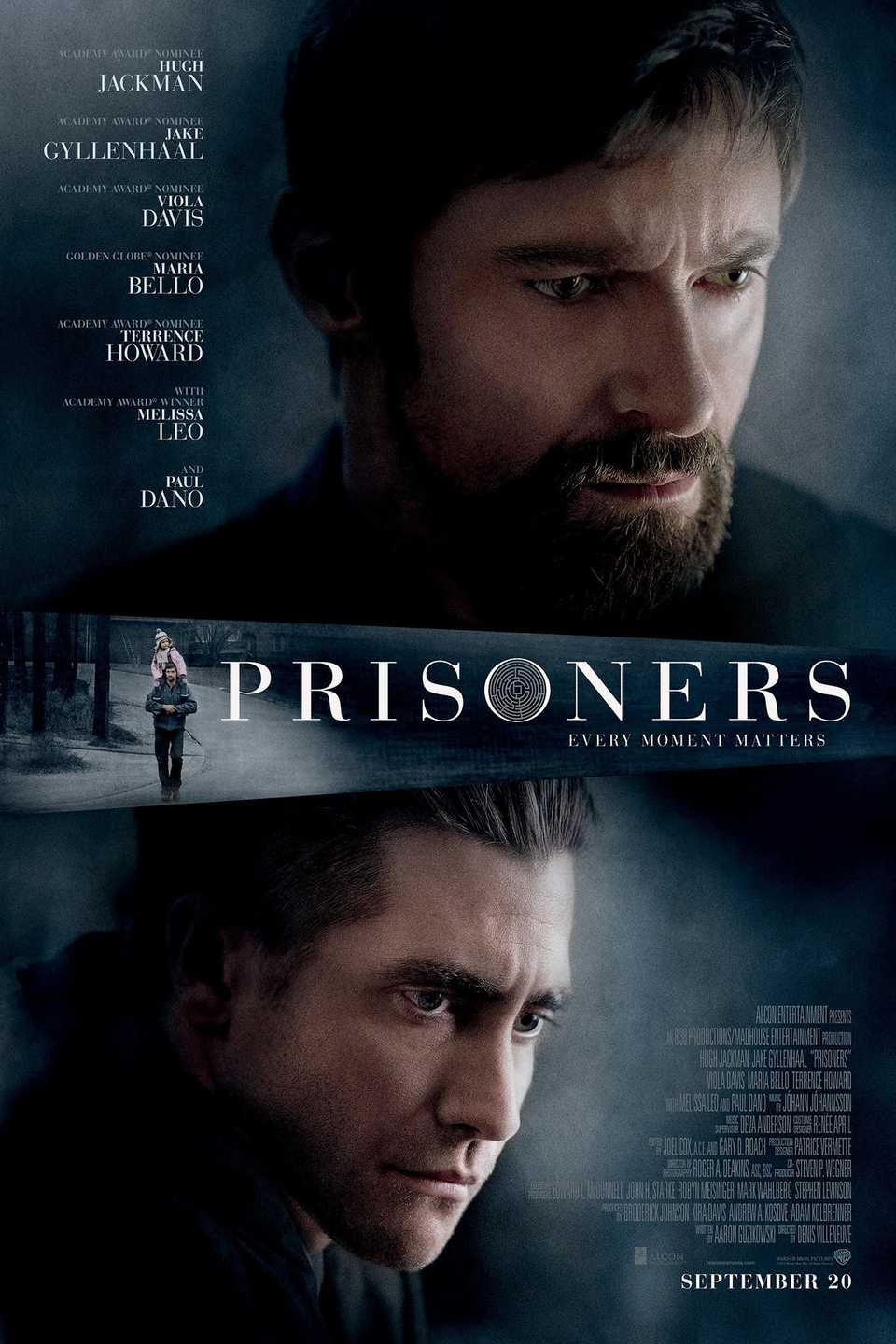
“Pray for the best, but prepare for the worst.” Denis Villeneuve delivered not one but two masterful thrillers in 2013: Enemy and Prisoners. Both are great, but the latter is especially strong. It’s modern psychological thriller perfection, a labyrinth of morality, loss, and obsession. When two young girls are abducted, one father (Hugh Jackman) takes justice into his own hands while detective Jake Gyllenhaal races against time to find the truth. Some standard procedural elements are at play here, but elevated by unusual moral complexity. Here, vengeance and righteousness blur beyond recognition.
Villeneuve’s direction is fittingly austere and precise, Roger Deakins’ cinematography drenched in gray despair. Each frame feels heavy with rain, guilt, and consequence. Jackman delivers perhaps his greatest performance, raw, terrifying, and heartbreakingly human. It’s a film about how easily justice turns into cruelty when desperation takes over. Rewatching Prisoners reveals new details each time, clues, symbols, even moral turns you missed before.
Prisoners
- Release Date
-
September 20, 2013
- Runtime
-
153 minutes
- Director
-
Denis Villeneuve
- Writers
-
Aaron Guzikowski