At first glance, Taika Waititi might seem like an unconventional—and maybe even a bit mismatched—choice to direct a Judge Dredd movie. Known for his irreverent humor and heartfelt absurdism, his style appears worlds apart from the brutal, totalitarian setting of Mega-City One. Digging a little deeper into the character’s comic book origins, however, reveals how the pairing could make perfect sense. Beneath the helmet and hyper-violence, Judge Dredd has always been more than just a grimdark enforcer. He’s a walking parody of state power, a satirical embodiment of justice pushed to its most fascistic and absurd extremes. The character was born in 1977 in the pages of 2000 AD as a dystopian warning, not a traditional hero, but an anti-authority critique dressed as an authoritarian power fantasy. In short, Judge Dredd was never meant to be aspirational: he was the joke. But that nuance has been repeatedly lost in translation on-screen.
Fortunately, satire is where Waititi thrives. Films like What We Do in the Shadows have proven his ability to deconstruct genre tropes with a mixture of affection and subversion, while his capabilities at directing action have been well-established by several projects. But it’s Jojo Rabbit, his Oscar-winning dark comedy about a boy whose imaginary friend is Hitler, that most clearly demonstrates what he could bring to Dredd. Jojo Rabbit walked a tightrope between comedy and tragedy, using laughter as a scalpel to dissect nationalism, propaganda, and the absurdity of fascist thought. It didn’t mock the inherent trauma its characters were experiencing; it mocked the systems that created it. That same lens is precisely what Judge Dredd needs.
Past ‘Judge Dredd’ Adaptations Have Missed The Mark
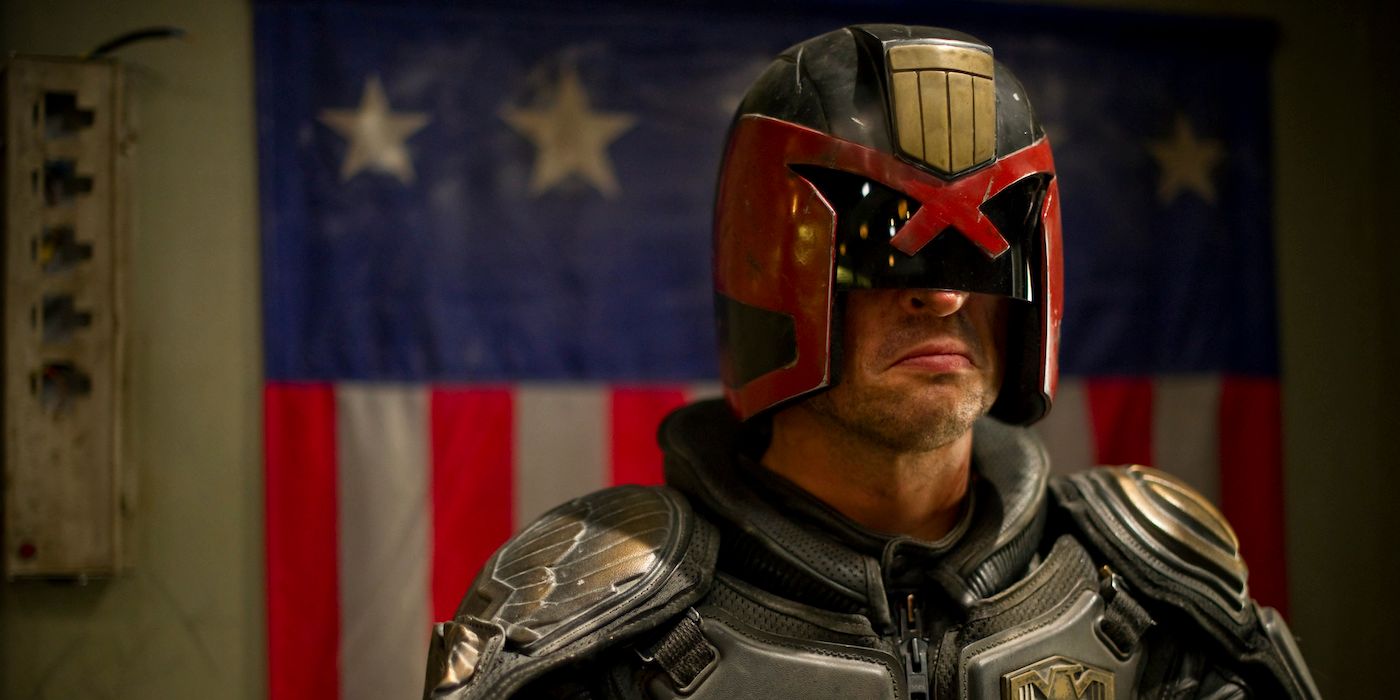
While Judge Dredd has become a cult favorite in comic circles, Hollywood has historically struggled to translate its tone and missed the underlying satirical themes. The 1995 Sylvester Stallone version was a clunky, overly sincere mess that softened the politics and made Dredd out to be a misunderstood action hero rather than a tool of state oppression. It embraced the surface-level grit while abandoning the soul of the comic’s satire. Hollywood made another attempt in 2012 with another adaptation starring Karl Urban, and that iteration came closer to doing the character justice. With its stripped-down plot, relentless pacing, and Urban’s refusal to ever show his face, the film captured the aesthetic and brutality of Mega-City One, but it too stopped short of the deeper critique that was available to explore. It played like a brutally efficient action movie rather than a social satire. The setting was bleak, yes, but it wasn’t absurd. It wasn’t scary in the way real totalitarian power is: systemic, relentless, and banal.
Waititi, however, excels at turning systems of power into punchlines without losing their menace. He’s poised to provide a cinematically rich, aesthetic powerhouse representation of Mega-City One that doesn’t forget to deliver the punchlines to take down systemic power.
‘Judge Dredd’ and Satire in the Age of Surveillance
Now more than ever, Judge Dredd is ripe for reinvention. In an era defined by algorithmic justice, police militarization, and the normalization of surveillance, the core themes of Dredd’s dystopia have never felt more relevant…or more disturbing. Mega-City One no longer feels like science fiction. That’s exactly why satire is the perfect delivery mechanism. A purely serious, grim take on Judge Dredd might feel a bit too close to home to offer any real insight and risks aestheticizing fascism rather than criticizing it. Satire should invite discomfort—it makes us laugh, then realize what we’re laughing at. Waititi’s approach could lay bare the absurdity of state violence, blind loyalty, and dehumanizing bureaucracy by not softening the themes but turning them inside out.
There’s also the question of tone, and Waititi knows when to shapeshift comedy into what it needs to be moment-to-moment to deliver the blows he’s after. He knows when to let humor sit in silence, when to let a joke become horrifying, and when to break through tension with emotional honesty. That balance is exactly what’s needed to make a Judge Dredd adaptation that doesn’t just recreate the comics but actually understands them.
A ‘Judge Dredd’ For A New Generation
There’s room to reinvent Judge Dredd for a wider audience by not sanding off the edges and instead sharpening them. Waititi has proven that audiences will follow him into strange, genre-bending spaces. He made a comedy about Hitler. He made one of the most irreverent Marvel movies, Thor: Ragnarok, also feel mythic. He turned a vampire mockumentary into an entire franchise. With Dredd, he has the opportunity to bring that same unpredictability to a character often flattened into grit, and there’s precedent in the comics themselves. Over the decades, Judge Dredd has veered from horror to absurdity to razor-edged political commentary. The character is paradoxically both rigid and flexible: defined by his flexibility while at the same time endlessly adaptable in tone. Waititi’s vision won’t betray the character—it could actually provide the most faithful version yet.
Related
After a 13 Year Delay, Judge Dredd Is Back With the Help of an Oscar-Winning Marvel Veteran
“I said… hot shot.”
Judge Dredd was never about justice; it’s about what happens when justice forgets to be human. Waititi has made a career out of reminding us that humanity can always be found, even in the most inhuman places. Waititi’s version has the potential to be something that Hollywood hasn’t really dared to make yet: a comic book adaptation that doesn’t just comment on fascism but ridicules it and exposes it as the farce it is. It could be funny, horrifying, and strangely hopeful all at once. It might not be able to please Dredd fans who cling to the grimmer interpretations, but it might finally reflect the world Dredd was created to mock. If anyone can make an adaptation that provides style, bite, and soul, it’s Waititi, and maybe this time, Dredd won’t just execute—he’ll enlighten.
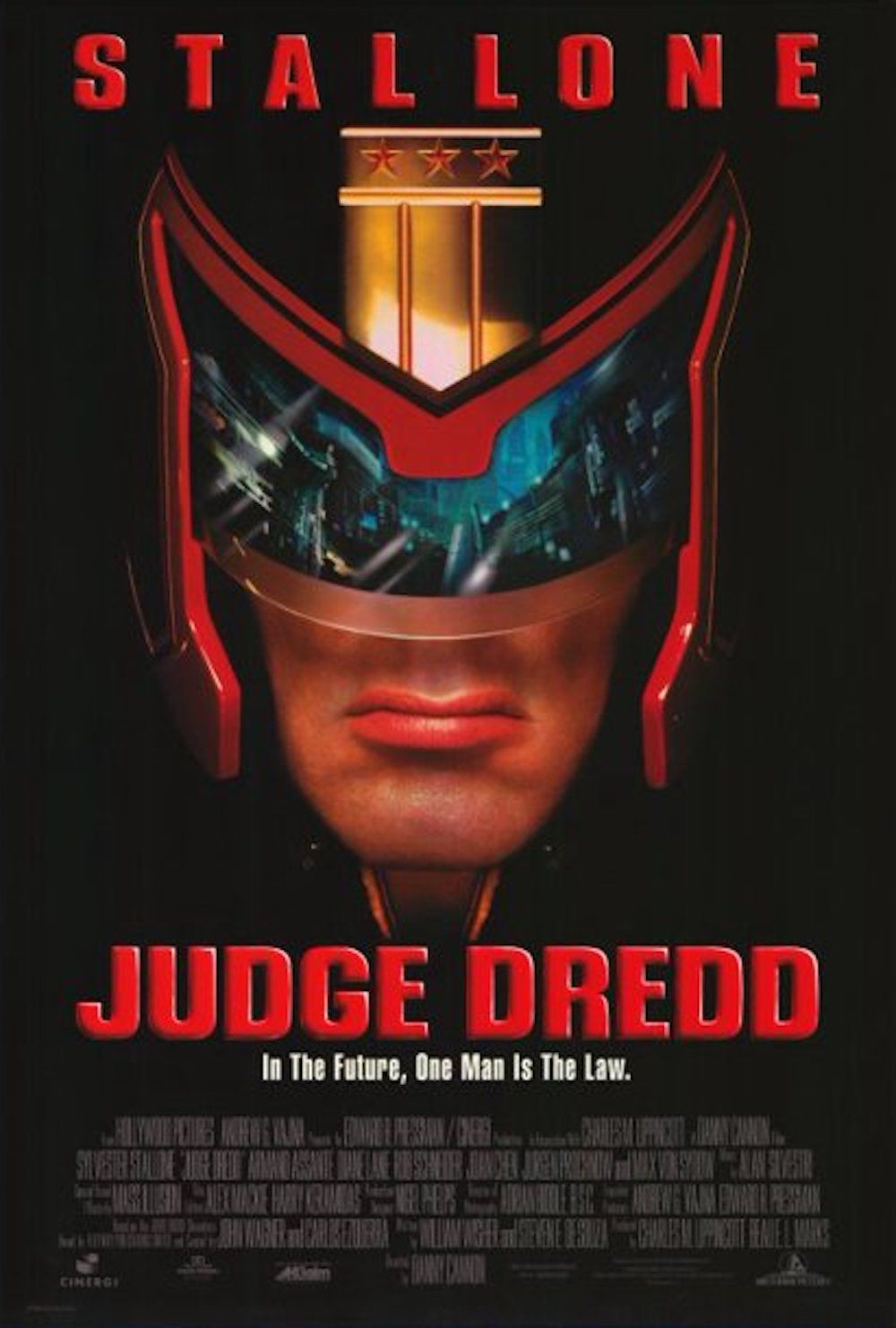
Judge Dredd
- Release Date
-
June 30, 1995
- Runtime
-
96 minutes
- Writers
-
Steven E. de Souza, William Wisher Jr.