This article contains major spoilers for Pluribus‘ episodes 1 & 2.
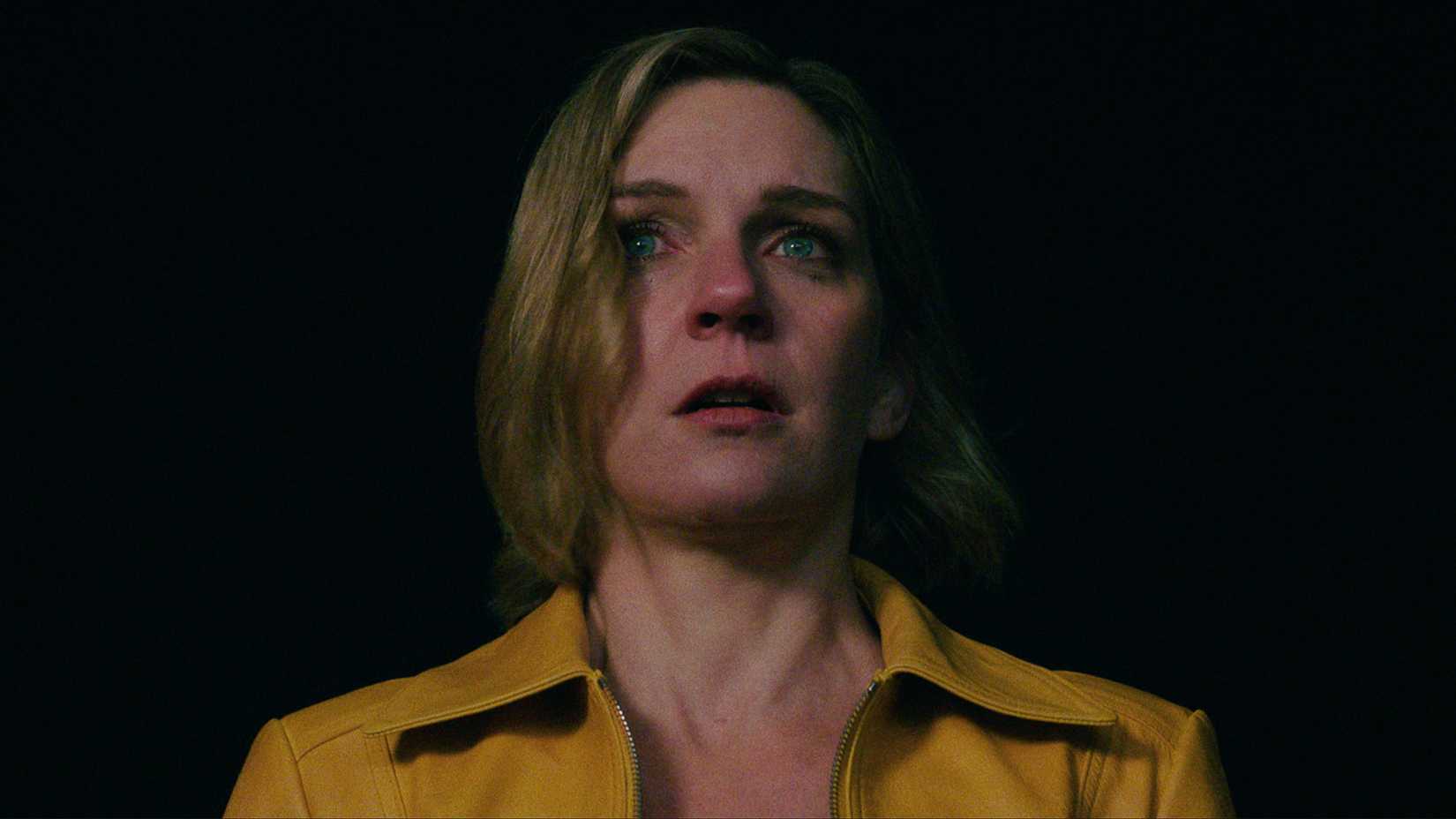
Apple TV‘s Pluribus features a compelling hook in its opening moments where a mysterious happiness virus infects nearly every human on the planet. Only a few individuals end up being immune to it, and one of them is the main character, Carol (Rhea Seehorn).
Although the new Apple TV sci-fi show walks through everything from the origins of the “virus” to how it spreads from one person to another, it avoids delving into many details surrounding its purpose and its creator. Throughout Pluribus‘ episodes 1 and 2, Carol struggles to understand what has happened to the world around her while getting used to the new normal.
Even when she interacts with other immune “survivors,” she ends up saying things that drive them away from her. However, surprisingly, just when Carol’s infected chaperon, Zosia, is about to leave with one of the other immune individuals, Koumba, she makes the intriguing decision of stopping the plane instead of letting her go.
Why Carol Stops The Plane In Pluribus Episode 2’s Ending
All survivors, except Koumba, leave after Carol makes them believe that her worldview and resistance against the virus would cause more harm than good. Carol meets Koumba, hoping that he will still agree with her. To her shock, though, he only stays behind to ask her if her chaperon, Zosia, can join his circle of “romantic partners.”
Carol is disgusted by how Koumba exploits the apocalypse to pull off something unethical and immoral like this. Although Koumba tries to defend himself by claiming he actually admires Zosia, Carol calls him out for taking the agreeability and niceness of the infected for granted. Therefore, instead of agreeing to let Zosia leave, she asks her to call the shots and decide what she wants.
With this, Zosia boards the plane Koumba while Carol prepares to go home. However, a sudden realization prompts Carol to stop Koumba’s plane. Although the episode ends here, Carol’s change of heart seems to have something to do with Zosia’s decision to leave. The fact that Zosia seems to choose one thing over the other implies that the virus’ hive mind does have some free will.
If it did not have the ability to make decisions for itself, Zosia would not have been able to conclude whether she wanted to stay with Carol or leave with Koumba. Carol seems to understand this towards the end of episode 2, seemingly realizing that she can leverage this to somehow find a way to find a cure for the infected. In future episodes, she might try to use Zosia as a vessel to help all the infected restore their humanity.
The Happiness Apocalypse’s Origins & The Virus’ Hive Mind Infection Explained

In Pluribus‘ opening minutes, a group of astronomers closely study an outer space microwave that comes from 600 light-years away. After initially struggling to understand the Morse-coded message it carries, they finally realize it is an RNA sequence. The RNA sequence is then converted to DNA and seemingly monitored in rats through a viral vector.
After a scientist studying the DNA gets bitten by one of the rats, she becomes Patient Zero. With this, a strange desire to spread the virus dawns on her, marking the inception of the pandemic. As Zosia later tells Carol, the process of spreading the virus escalates after the military finds out about it.
All infected individuals are not only inhumanely nice and happy but also share a hive mind. Owing to their shared consciousness, they seem to know everything about one another’s personal lives, and also know every skill in the world. The infected also refer to themselves as “we” instead of adopting their previous individual identities.
Interestingly, even though Carol is immune, she seems connected to the hive mind in some way. Every time she has an outburst of emotions, the entire hive experiences a glitch, and many connected to it also get a fit. Carol’s loose connection to the hive might eventually help her manipulate the infected into becoming human again.
Why Only A Few Like Carol Are Immune To The Happiness Virus

Pluribus‘ episodes 1 and 2 do not explain why only Carol and 11 others are immune. However, Carol’s immunity seems to have less to do with her genetic makeup and more to do with her own dark traits. Carol is portrayed as the most miserable person on the planet in the original Apple TV show. However, in a world where happiness has seemingly been enforced on everyone, Carol seems to be the only real human whose emotions have not been sterilized.
She seemingly remained unaffected by the virus because her darker traits overpowered the happiness the virus was supposed to instill in a person. This is an interesting reversal of the anti-hero trope where a character’s dark traits eventually lead to their moral decay. In Pluribus, the same traits have become the main character’s strength, allowing her to retain her humanity and become everyone else’s potential savior.
What Is The Significance Of The Timer In Pluribus?
Pluribus features a countdown as soon as the astronomers discover the RNA sequence. The show’s timer keeps counting down until almost everyone is infected. It starts counting up after only Carol and a few others are left behind as the “survivors” of the happiness apocalypse. If the timer counts down to the inception of the apocalypse, it seems strange that it completely ignores the immune individuals.
Whoever created the virus seems to be sure that the immune folks are incapable of turning the apocalypse around. The timer can also be seen as a symbol of humanity’s measure of progress. More often than not, we see happiness as a destination and count our way down to it. The countdown in the show seems to represent that.
Like Vince Gillian’s other shows, Breaking Bad and Better Call Saul, Pluribus was also shot in Albuquerque.
Once humans achieve their ideal in Pluribus, they stop associating happiness with the future and lose their sense of time. Since this marks the beginning of a new era, the clock starts counting up.
How Helen’s Death Affects Carol’s Perception Of The Infected

Most other survivors hardly see anything wrong with the apocalypse because they still have their loved ones with them. Their families, too, are infected but all of them seem physically alive. Carol, in contrast, loses her partner Helen. If Helen were still alive, Carol, too, might have considered becoming one of the infected.
Carol’s relationship with Helen also serves as a solid reminder for her of her individual identity and life experiences, which she would not want to give up in the name of manufactured peace and collective bliss.
However, her grief allows her to see everything wrong with the infected. It helps her realize that even if the virus may be benefiting humanity as a whole, its version of happiness is hollow. The benefits of the apocalypse also came at a terrible cost, where millions had to die. Carol’s relationship with Helen also serves as a solid reminder for her of her individual identity and life experiences, which she would not want to give up in the name of manufactured peace and collective bliss.
Is Carol The Problem In Pluribus?

When Carol points out how the collective happiness of the infection came at a terrible cost and led to the death of millions, another survivor, Laxmi, reminds her that her emotional outburst also killed 11 million people. This can suggest that maybe Carol is the problem for resisting the new normal instead of accepting it like the other “survivors.”
However, even though Carol’s methods of confronting the infected may seem harmful, it is hard not to see how she is right. As Carol proves, the infected people are not even human because they have lost their ability to think for themselves. Although the infection makes the world more peaceful, what is the point of peace when it demands no individuality?
Peace can only be embraced if conflict is a possibility. Similarly, happiness can only exist if sorrow remains real in the world. Owing to this, in Apple TV‘s Pluribus, world peace and happiness have become nothing but hollow illusions that mask the death of everything that makes one human. Therefore, Carol is not the problem but the antidote to it.