Some movies are instant classics upon their release, and others settle for being decently received. However, a precious few are misunderstood immediately, with many either harshly criticizing them or dismissing them entirely. These movies might have some passionate defenders, but overall, they couldn’t really connect with mainstream audiences, be it because they tried something too radical or because what they offered simply wasn’t what fans of the genre were expecting.
Nowhere is this situation more prevalent than in the superhero genre. The most formulaic of all cinematic endeavors, the superhero genre is famous for being loud, full of easy spectacle, and humor. Visually, it’s pretty straightforward, and narratively, it often aims for digestible plots that don’t ask much from the audience. Still, a few movies have dared to experiment with the formula, and while some have gotten away with it, others have paid the price. This list will focus on superhero movies that dared to try something new and were harshly punished by critics and at the box office. Yet, time has been kind to their distinctive approach, unique flair, visual bravado, and overall experimental nature, especially as the genre goes through something of a lull, largely brought by its inability to think outside the box.
4
‘Hulk’ (2003)
Few superhero movies are as criminally maligned or misunderstood as Ang Lee‘s 2003 gem, Hulk. The equally underrated Eric Bana stars as Bruce Banner, a scientist who becomes a raging green monster when angry or stressed following a gamma radiation accident. The supporting cast is stacked, including Oscar winner Jennifer Connelly as Betty Ross and Oscar nominees Sam Elliott and Nick Nolte as Thaddeus “Thunderbolt” Ross and David Banner, respectively.
Hulk was divisive from the get-go. Lee goes for a bold visual style, trying to translate the language of comic books into the big screen through panels, angles, and screen transitions. It’s a bold approach, and Lee isn’t exactly consistent with it, but it does give Hulksomething most modern superhero movies seem to lack: a distinct identity. Hulk‘s second big swing was just how much it focused on Banner’s broken psyche: for most of the first half, the film behaves as a character study of a man struggling to understand himself, too hesitant to fully look within out of fear for what he’ll find. Everyone in the cast is in peak form: Bana is stellar as Banner, Connelly brings great gravitas to Betty, Elliott is relishing every bit of scumminess as Ross, and Nolte is chewing scenery left and right as the main villain. The best decision Hulk makes, though, is to behave not like a superhero adventure but rather as a monster movie, framing the titular character less like a misunderstood hero and more like Godzilla’s green, more humanoid cousin. Leemakes Hulk genuinely terrifying and occasionally disturbing, delving deep into just how horrifying his existence is and why he’s eternally pissed at the world. Indeed, this iteration would probably destroy Mark Ruffalo‘s version without even breaking a sweat.
3
‘Tank Girl’ (1995)
There are cult classics, and there are cult classics; Tank Girl is the latter. Set in a ravaged, post-apocalyptic Australia years after a catastrophe, the film follows the titular character (Lori Petty), who must battle the villainous Water & Power corporation led by the maniacal Kesslee (Malcolm McDowell). The supporting cast includes a young Naomi Watts and Ice-T as Tank Girl’s allies, Jet Girl and T-Saint. It’s based on the eponymous British comic book series.
Tank Girl wears its influences on its sleeve — there’s much of George Miller‘s Road Warriorhere and vague echoes of other similar movies, including A Boy and His Dog. However, it’s also entirely unique, a joyous and manic ride that takes demented pleasure in the unhinged approach it takes. Visually, the film feels grand and genuinely refreshing, mixing traditional styles of the post-apocalyptic genre with shades of the punk aesthetic that would take over in the final leg of the ’90s. Narratively, Tank Girl is one loud, angry, unapologetically feminist roar. Lori Petty is exceptional in the title role, a jolt of electricity brought to life through pure, unadulterated commitment. She delivers an impressively physical performance that’s so expressive it borders on slapstick, and the film is all the better for it. Today, Tank Girl‘s influence can be felt in everything from Margot Robbie‘s Harley Quinn to subversive takes on the superhero genre like Kick-Ass and The Boys and even, dare I say it, Miller’s own Mad Max: Fury Road and its iconic Furiosa. If there has ever been a superhero movie ahead of its time, it’s Tank Girl.
2
‘Darkman’ (1990)
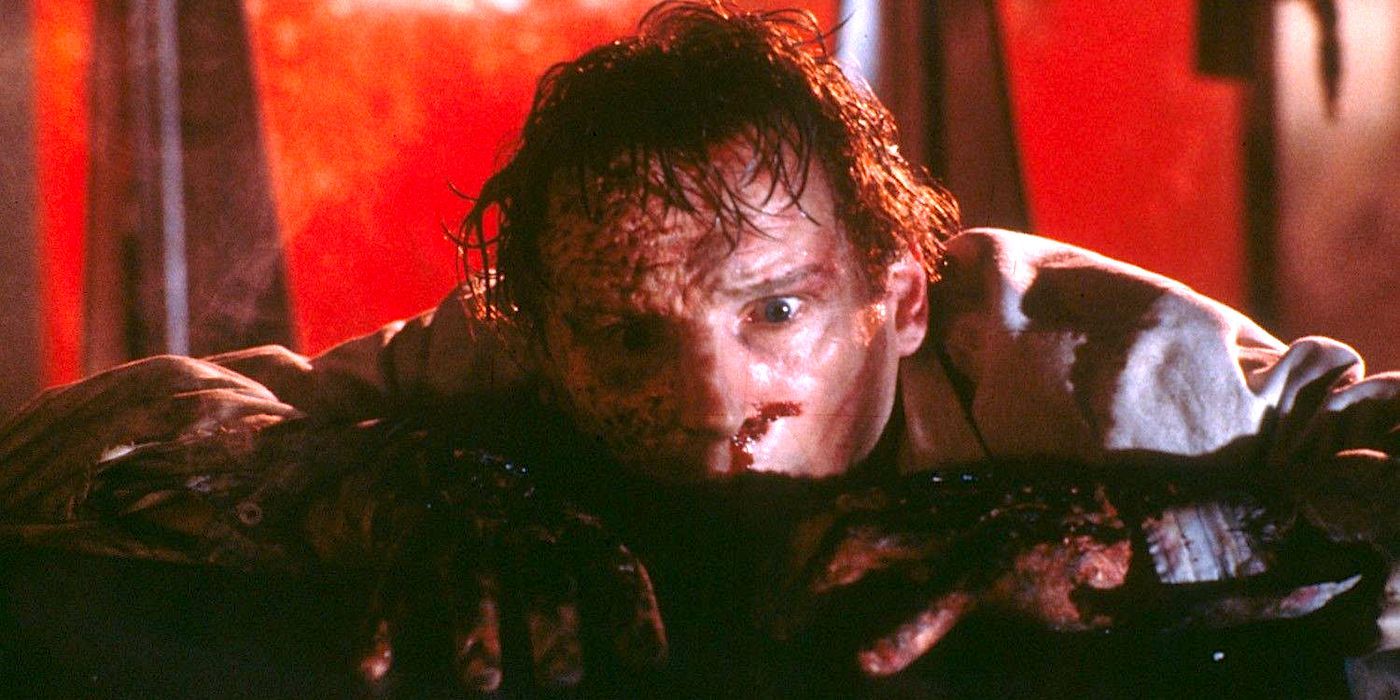
Today, Sam Raimi is widely considered a founding father of the superhero genre, thanks to his Spider-Man trilogy, which includes arguably the best purely superhero movie of the 2000s, Spider-Man 2. However, his first foray into the genre long predates Peter Parker’s first swing across New York City. In fact, Raimi’s first superhero movie came out in 1990 and starred a pre-Schindler’s ListLiam Neeson and a pre-FargoFrances McDormand. Based on an original idea by Raimi, Darkmanfollows Peyton Westlake (Neeson), who is attacked and horribly disfigured after his girlfriend targets a corrupt developer. Following an experimental treatment, Westlake receives super-human abilities but becomes erratic, violent, and psychotic.
Clearly influenced by the Universal Monsters of yore, Darkman combines a classic superhero story with the horror elements that made Raimi a household name. The result is a pulpy take on the genre that, today, seems far more unique than it did thirty-five years ago. Darkman is dripping with style, blending noir-ish elements with the campy sensibilities Raimi is so fond of. All the sauce Riami usually brings to his movies is overflowing here: kinetic transitions, dramatic close-ups, heightened music, silly humor, and abrupt splashes of disturbing horror that further enhance the overall atmosphere. Neeson is in his element as Westlake, delivering an electrifying performance that feels somewhere between B-movie star of the ’50s and the revenge-driven antiheroes that would make up the latter half of his career. Darkman might’ve been too wild and unyielding for ’90s audiences, but today, it feels like a breath of freshness in a genre that’s gasping for air. Raimi would tone down his vision for his future superhero efforts, but in Darkman, he’s allowed to let his freak flag fly, resulting in one of the superhero movies with the most personality.
1
‘The Rocketeer’ (1991)
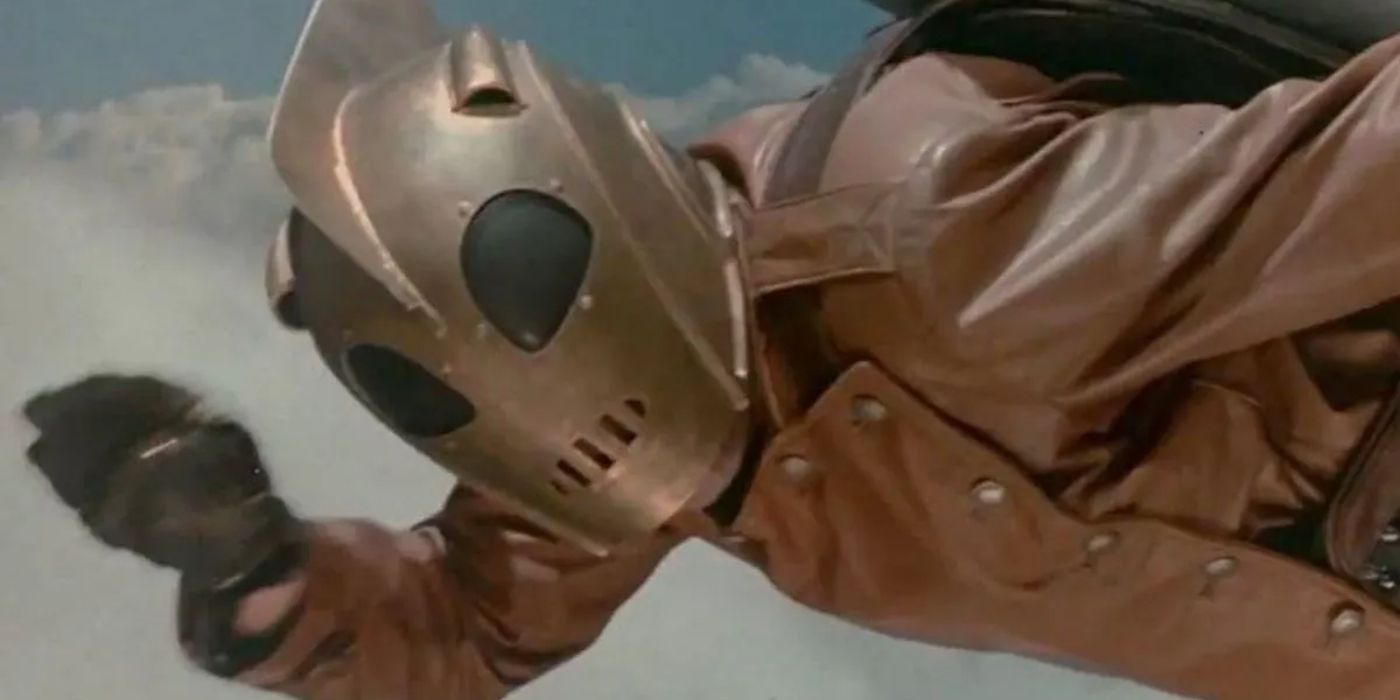
The superhero genre was barely taking shape in the early ’90s, as the industry tried to figure out if it could exist beyond Batman and Superman. It was in this changing environment that The Rocketeercame out… and failed to make much of an impact. Based on the character of the same name and set in 1930s Los Angeles, the film centers on Cliff Secord (Billy Campbell), a stunt pilot who stumbles upon a jet pack that allows him to fly without a plane. Soon, his deeds attract the attention of Howard Hughes (Terry O’Quinn), the pack’s creator, who’s tracking it after the Nazis stole it from him.
Like the other movies on this list, the first thing one notices when watching The Rocketeer is its distinct and lush retro-futiristic visual style. Indeed, the visuals alone are worth the ticket, with The Rocketeer offering one of the most unforgettable depictions of 1930s LA in any ’90s movie. Then there’s the film’s sweet, sentimental, perhaps overly idealistic tone that borrows heavily from the matinee serials that inspired the character. The VFX have aged surprisingly well, and every flight scene seems vivid and full of wonder, possessing a sense of awe missing from today’s increasingly elaborate yet lifeless superhero set pieces. Campbell makes for a perfect pulpy hero, and he shares great chemistry with Jennifer Connelly, making her second appearance on this list. However, it’s Timothy Dalton‘s villainous Nazi who is the film’s secret weapon. The Rocketeer‘s power relies on its unassuming nature and how much pride it takes in respecting its roots. As audiences long for less cynicism in their superhero movies, The Rocketeer becomes a perfect example of how to do a joyous story that still feels original and even daring.