Wyatt Earp had a surprising, behind-the-scenes role in the making of My Darling Clementine, one of the many Western movies based on the events that took place during and adjacent to the Gunfight at the OK Corral. When it comes to selecting the basis of a Western movie in Hollywood, Doc Holliday and Wyatt Earp’s battle with the Clanton gang at the OK Corral has been a go-to favorite for decades.
It was the subject of several all-time great Westerns, not the least of which was Tombstone, which famously paired Kurt Russell and Val Kilmer in an all-star cast that assembled a long list of historical figures associated with the American Wild West. Most of these films offered their own interpretation of how Holliday and Earp defeated the Clantons and the circumstances that preceded the battle.
Of course, not all of these films are accurate to what really happened, and that’s understandable, given the tendency to dramatize in Hollywood, not to mention the number of different accounts as to what actually took place and how long ago it was. Everyone involved hd been dead for decades before most of them were made.
Interestingly, that wasn’t always the case. During the Golden Age of Hollywood, there were still people who either lived during the Gunfight at the OK Corral or had relationships with those who had direct knowledge of it – including Wyatt Earp himself.
Wyatt Earp’s Connection To Hollywood Explained
Twenty years after participating in the Gunfight at the OK Corral in the Arizona Territory, Wyatt Earp moved to Los Angeles where he lived until his death in 1929. Being in the area put him in close proximity to Hollywood, where Westerns were slowly picking up steam in the 1910s.
Due to his various exploits, Wyatt Earp’s direct experience in the American Wild West was consulted on many occasions by filmmakers and producers. As a result, Wyatt Earp developed strong friendships with several key Western movie figures, including Tom Mix and Harry Carey, Sr., both of which major Western stars.
Many of Wyatt Earp’s interactions in Hollywood were motivated by his desire to have his life story brought to the big screen. Among the people he had conversations with about his past was John Ford, who, even in the late 1910s, was one of the most prominent directors in the Western movie genre.
John Ford Based His Version Of The Gunfight At OK Corral On Wyatt Earp’s Advice
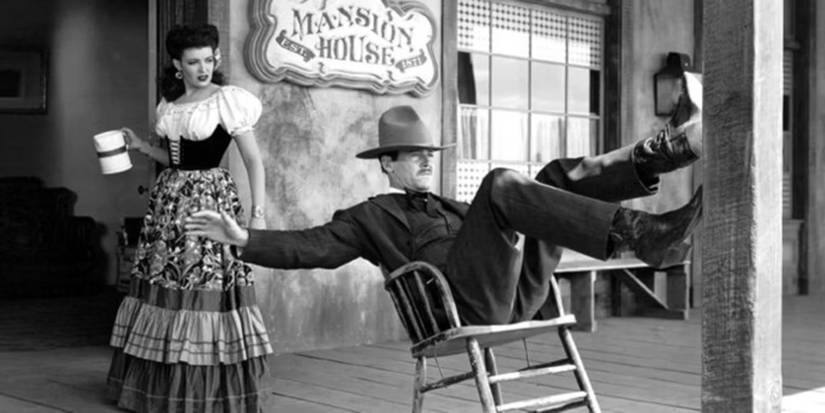
Years after his talks with Wyatt Earp, John Ford joined the list of directors to make a Gunfight at the OK Corral movie, with his being 1946 My Darling Clementine. Although Earp had died 17 years prior, he was said to be instrumental to the making of the film; according to John Ford, he based many aspects of the movie on information that had been provided to him directly by Earp.
In the American West of John Ford, a 1971 television documentary, My Darling Clementine star Henry Fonda is seen asking the director about how he planned out the fight at the end of the movie. Ford responded by explaining how he originally met Earp, and recalled a conversation where his friend, Harry Carey, Sr., asked him about the Gunfight at the OK Corral.
In Ford’s words, Earp “described the fight fully, exactly the way [Henry Fonda] did it” in the 1946 Western. Earp “drew it all out on paper, a sketch of the entire thing.”
Ford also offered a specific example of how Earp’s explanation influenced the battle sequence. He claimed Wyatt Earp had said, “I was not a good shot,” which is he attributed to the fact that Fonda’s character engaged in close-range shooting in My Darling Clementine’s ending.
Despite Earp’s Personal Input, My Darling Clementine Isn’t Historically Accurate
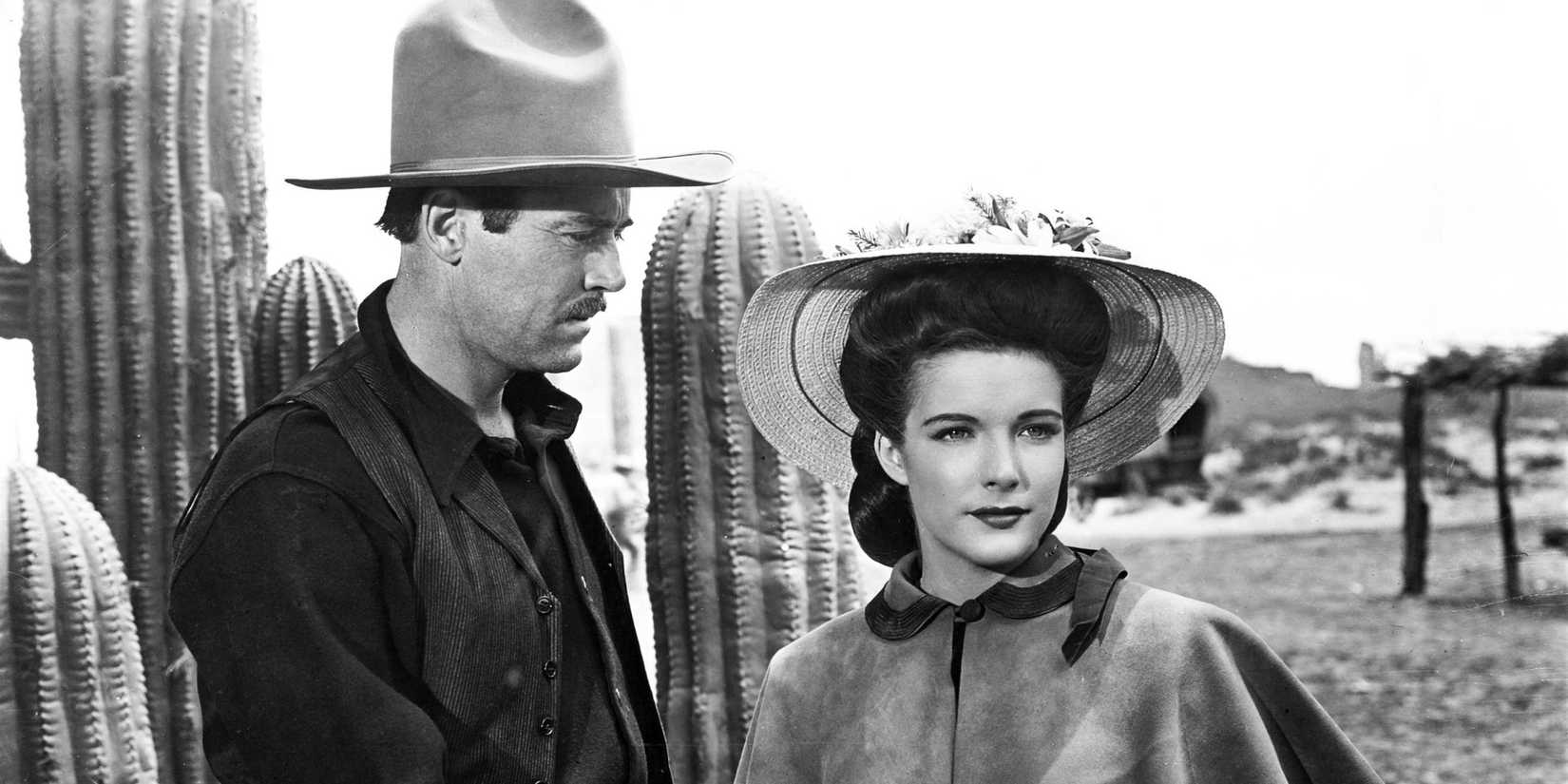
Given that My Darling Clementine was directed by someone who had actually talked to one of the most important players the story was based on, it’d make sense to think it’s one of the most accurate retellings of the Gunfight at the OK Corral. But even with Earp’s personal input allegedly being a factor, the Western is littered with historical inaccuracies.
Ford’s movie changes a lot of things about Doc Holliday and Wyatt Earp, including their occupations and romances. Plus, it adjusts the timeline of events. Even the shootout itself that Ford said was based on Earp’s own account, wasn’t safe from these changes, as it added Newman Haynes Clanton to the climax of the story, despite the real-life outlaw dying one year before the Gunfight at the OK Corral.
Several aspects of the battle also differ from what Earp said happened when he had to recount the incident in court in 1881. So while it may be that his discussions with Wyatt Earp did influence elements of the action in My Darling Clementine, it’s not nearly as accurate to history as one might hope from a filmmaker who knew the lawman personally.
Ultimately though, historically accurate or not, My Darling Clementine is a Western masterpiece, as evidenced by its impeccable 100% rating on Rotten Tomatoes. Great performances from Henry Fonda and Victor Mature a standout villain in Walter Brennan’s take on “Old Man” Clanton, and well-written love stories have a lot to do what the stellar reputation its held for so many years.
There’s also the matter of the final fight, as any all-time great Western naturally needs an extraordinary showdown. John Ford’s decision to film a quiet showdown for the ending lends itself well to the intensity needed for a fight as epic as the Gunfight at the OK Corral – even if the director being advised by Wyatt Earp wasn’t enough to ensure its accuracy.

My Darling Clementine
- Release Date
-
December 2, 1946
- Runtime
-
97 Minutes
- Director
-
John Ford
- Writers
-
Samuel G. Engel, Winston Miller, Sam Hellman