Alan Moore‘s works have always fascinated Hollywood, with several adaptations attempted through the years. Typically, these attempts are mediocre at best, with severe missteps, like The League of Extraordinary Gentlemenand Batman: The Killing Joke. Moore is typically known as not being a fan of adaptations of his work, having his name removed from films like Zack Snyder‘s Watchmenin the past. But that doesn’t stop Hollywood from trying again and again to make it work. One of those adaptations that was considered a success was 2005’s cult classic, V for Vendetta, written by James McTeigue and the Wachowskis and based on Moore’s graphic novel of the same title. So, with Variety reporting that a new TV show based on Moore’s Vendetta is in the works, it should have been suspected that there would be a strong contingent of people who either didn’t want to see Moore’s work done wrong, again, or believed it had already been nailed.
However, fans should see this as an opportunity for Alan Moore’s graphic novel to finally be adapted properly, with TV being the best medium to do so. While the Wachowskis’ version of Vendetta was certainly enjoyable, it is a more sanitized version that Moore felt didn’t reflect his original intentions. With this new project comes the opportunity to bring Moore’s work into the modern day, giving a new perspective on personal accountability in a time of disinformation that stays true to Moore’s anarchistic themes.
The ‘V for Vendetta’ Movie Simplified the Politics of Alan Moore’s Original Graphic Novel
Despite being one of the best adaptations of Alan Moore’s writings, the Wachowskis changed a lot from the original story, arguably making the political themes more sanitized. In Alan Moore’s original story, V, played by Hugo Weaving in the film, is not an almost romantic gentleman who merely wishes to fight back against the government, and Norsefire isn’t the over-the-top organization that it is in the film. Adam Susan, whom the Wachowskis changed to Adam Sutler (John Hurt), genuinely believes fascism is how order can be maintained, whereas Sutler is an objective maniac who only obsesses about power. Similarly, V’s iconic speech to the people isn’t the call to a moral code that it is in the film; it is instead a condemnation of their lack of action, without the silver lining that they can all work together now. In doing so, V is made far more sympathetic in the film, and the politics become black and white, whereas Moore clearly meant for a more murky divide.
The V for Vendetta film was also accused by Moore of being Americanized and losing much of its meaning. During a now archived interview with MTV, via ComicBook.com, Moore claimed that his work had been “turned into a Bush-era parable by people too timid to set a political satire in their own country.” This relates to how many saw the film’s focus on surveillance and a lack of privacy, with people being carted off without trial, to be a metaphor for the Patriot Act during the war on terror.
In contrast, Moore’s own context was Thatcherite Britain, which was increasingly divided by a more authoritarian and harsh government that focused on order and the breaking down of society, replaced with individualism, above all else. Moore wasn’t looking at V for Vendetta from the point of view of a law that the people didn’t vote in themselves, but a much deeper divide in how people believed the world should operate.
Adapting ‘V for Vendetta’ to TV Should Avoid This Classic Hollywood Mistake
There is a classic mistake that most film adaptations can make when putting Moore’s work onto the big screen, and that is the amount of work that goes into rewriting the story and cutting it down for marketability or runtime. The issue is that Moore’s work is lore-heavy, with in-depth, complex worlds that are very specific and overtly convey Alan Moore’s larger-than-life style. That is why his graphic novels, like The League of Extraordinary Gentlemen, are considered unadaptable.
However, with this adaptation being put on television, it should provide far more space for attention to detail to be paid to Moore’s core messages and thorough world. Rather than two hours for a ten-issue series, as V for Vendetta is, each issue can be given its own chunk of screen time, and even expanded upon. With James Gunnattached to executive produce, we can only hope that the project will stay truer to Moore’s work, as Gunn has shown with his skill at putting his own style on comics brought to the big screen, like Superman and Guardians of the Galaxy, while also satisfying hardcore fans.
A ‘V for Vendetta’ Show Needs to Modernize Alan Moore’s Work

That isn’t to say that everything is smooth sailing for a V for Vendetta TV show. Since it will be created at a different time, there are different political contexts to consider. That doesn’t mean changing the core themes and Americanizing them as the film did, but instead analyzing how today’s context still links back to the one Moore was writing in, especially with how he wanted to communicate a blurring line between good and evil. With increasing misinformation, authoritarianism, and political extremism, there is an exciting challenge for the writers of the new project to consider.
There is no doubt going to be some people who are not made happy. Even Alan Moore will be far from a guarantee of positively receiving this news and its execution. However, that is not something to shy away from. There are plenty of lessons that can be learned from the previous mistakes made in adapting Moore’s graphic novels. The show is not only in good hands but competent hands that have shown their quality in the past. It may be a while before we learn anything else about the new V for Vendetta series, but it will certainly be something to keep your eyes peeled for.
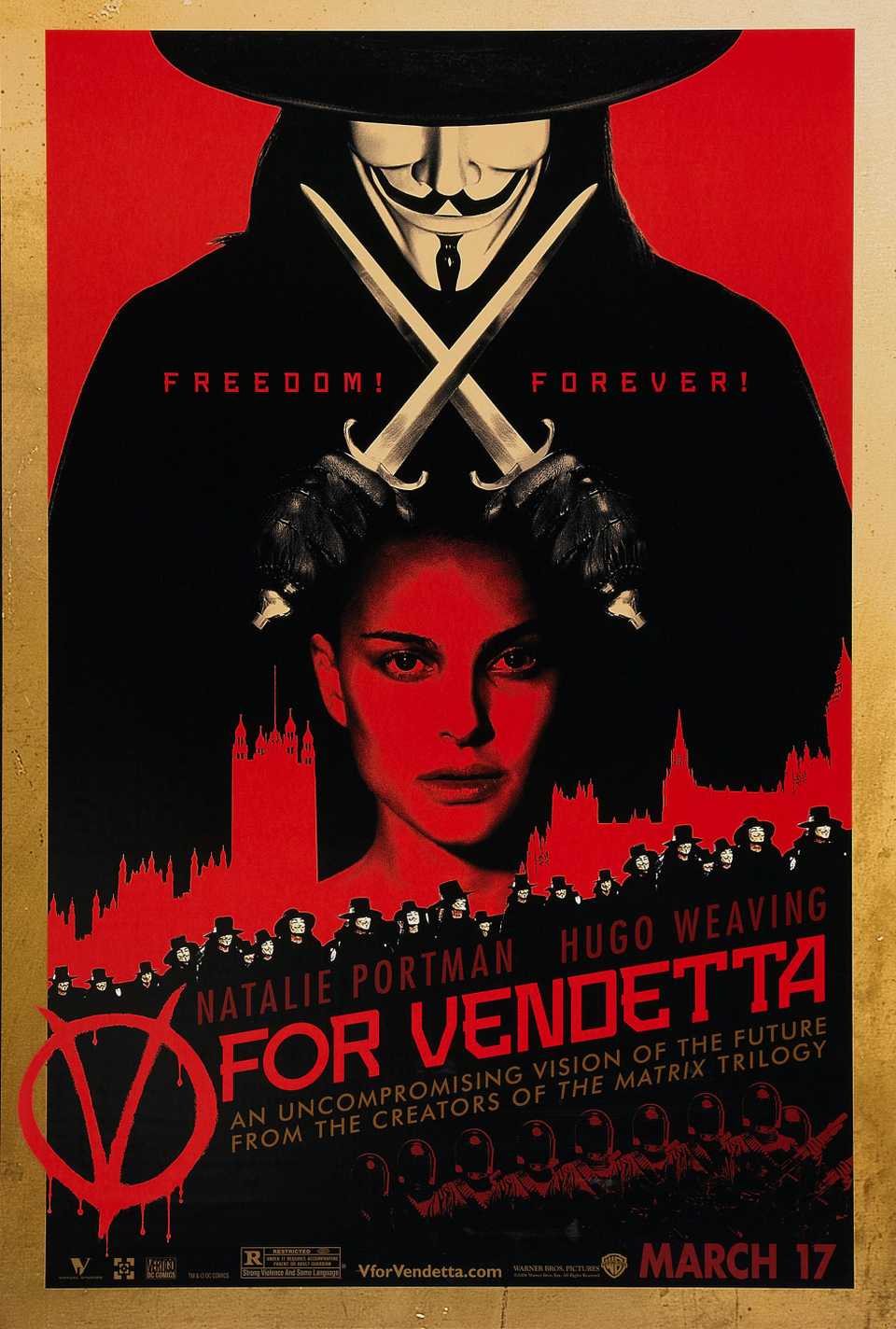
- Release Date
-
March 17, 2006
- Runtime
-
132 minutes