Shonen anime has dominated the global pop-culture landscape for decades, and it’s impossible to argue against Dragon Ball and, later, Dragon Ball Z being two of the biggest forces behind that rise. Long before modern juggernauts reached international fame, Dragon Ball proved that high-energy action storytelling could thrive equally in Japan and the West, shaping an entire generation of fans.
Not only did Dragon Ball and Dragon Ball Z fuel the meteoric rise of modern Shonen, but they also laid the groundwork for many of the genre’s most defining tropes. Among these is one particular narrative device that quickly became a key part of Shonen’s identity, influencing countless series released through the 1990s and well into today’s anime landscape.
Transformations and power-ups, complete with bold appearance changes, are now considered an essential ingredient of many of the best Shonen. Dragon Ball didn’t invent the character power-up, but it perfected it, and despite decades of imitators, it remains the indisputable king of transformations in the Shonen world.
Dragon Ball Has The Best Transformations In Shonen
The Z Warriors Perfected Powering Up
Dragon Ball’s transformation sequences remain unmatched because they balance emotional weight, visual spectacle, and narrative payoff better than any Shonen that followed. When Goku first becomes a Super Saiyan on Planet Namek in Dragon Ball Z, it’s not just a power-up. It’s the culmination of loss, fury, and destiny converging in one moment. That balance between storytelling and spectacle sets Dragon Ball apart.
Shonen series since the 1990s have tried to replicate that formula. Naruto gave Naruto’s Tailed Beast Mode a similar emotional core, and Bleach used Ichigo’s Hollow forms for character development. But these transformations, while iconic, never reshaped anime culture the way Super Saiyan did. They match Dragon Ball’s ideas, but not its impact.
A major reason Dragon Ball transformations remain the gold standard is that every form feels earned. Characters train relentlessly, face devastating losses, and push past physical limits before accessing new levels. When Vegeta unlocks Super Saiyan after years of pride-driven frustration, it resonates because viewers have lived that struggle with him. Power isn’t handed out, it’s fought for.
Comparatively, some Shonen entries lean heavily on sudden, unexplained new abilities. My Hero Academia keeps its escalation grounded, but even it occasionally introduces surprise boosts. In Dragon Ball, even when new forms appear rapidly, they still connect logically to Saiyan biology or previous narrative setups.
Another reason the franchise dominates is the sheer variety of transformations. Super Saiyan alone has more variations than many entire series. From Super Saiyan 2’s electric aura to Super Saiyan 3’s massive hair and browless intensity, every design delivers a unique visual identity. Later additions like Super Saiyan God and Ultra Instinct expanded the visual vocabulary without losing the essence of Dragon Ball.
While other Shonen transformations often stem from mystical entities, curses, or alternate forms, Dragon Ball keeps its focus on personal evolution. Characters evolve because they grow stronger, mentally and physically, making every transformation a milestone in their journey. Few franchises capture that feeling of “the next level” as consistently or as satisfyingly.
The Simplicity Of Dragon Ball’s Transformations Makes Them Iconic
Straightforward Designs Make Every Dragon Ball Power-Up Unforgettable
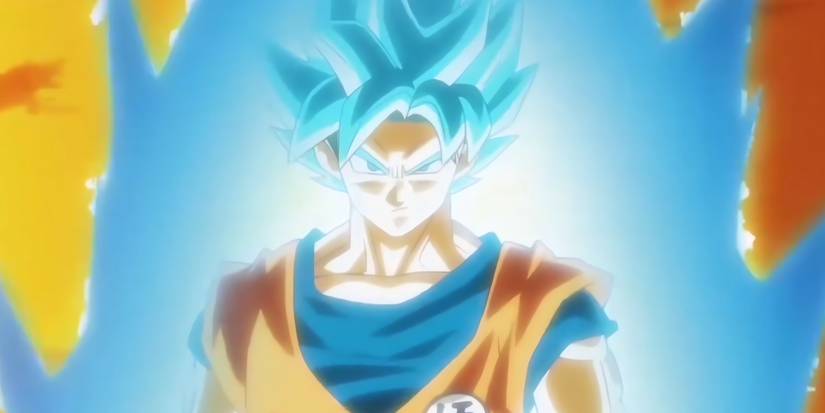
One of the reasons Dragon Ball transformations captured imaginations worldwide is their visual simplicity. When Goku first turns Super Saiyan, the transformation doesn’t rely on elaborate redesigns. His hair turns blonde, his eyes shift color, and his aura changes. Yet that moment remains one of the most powerful scenes in anime history because the simplicity heightens the emotional stakes.
Future transformations built on that idea without overcomplicating the visuals. Super Saiyan 2 added subtle electricity and a sharper aura. Super Saiyan 3 simply lengthened Goku’s hair dramatically and removed his eyebrows, giving him a primal intensity without clutter. When the franchise later evolved into forms like Super Saiyan Blue or Ultra Instinct, the changes focused on color and energy rather than excessive ornamentation.
This minimalist approach kept fans invested because they could instantly recognize each form. The changes were bold but not convoluted. Many Shonen series introduced increasingly complex designs for new abilities, often layering on additional markings, armor, or supernatural effects. Dragon Ball avoided that trap, ensuring its transformations remained timeless rather than trend-driven.
Simplicity also fueled anticipation. Fans eagerly awaited the next new hairstyle or energy color, knowing the variation would be distinct but still feel authentically Saiyan. Vegeta, Gohan, Trunks, and later characters followed similar rules, creating a unified transformation language across the franchise.
Another key factor in the simplicity’s effectiveness is that not much altered when it came to appearance. Even at their strongest, the characters still looked like themselves. This continuity made their growth feel organic and reinforced the idea that these weren’t entirely new beings. They were the same heroes, just pushed beyond their limits.
Where other Shonen transformations sometimes feel like temporary modes, Dragon Ball forms feel like evolutions. The restrained visual design is a major contributor to that. It ensures the focus stays on character growth, emotional stakes, and power escalation rather than overdesigned spectacle.
What Is The Most Iconic Dragon Ball Transformation?
Goku’s First Super Saiyan Form Remains Legendary
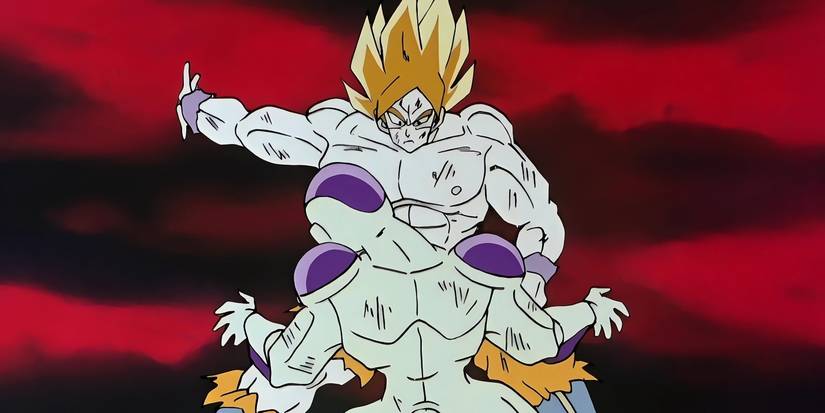
Choosing the most iconic transformation in Dragon Ball is almost impossible because the franchise has produced several defining moments. The obvious pick remains Goku’s first Super Saiyan transformation during his battle with Frieza in Dragon Ball Z. It’s not only a visual turning point but also a cultural one, marking a shift in how Shonen framed emotional power-ups.
However, another transformation with enormous historical weight is the Oozaru Great Ape form. This primal Saiyan ability, triggered by a full moon, completely recontextualized characters like Goku and Vegeta. The Great Ape showcased Saiyan heritage long before the series leaned fully into cosmic lore. It was a frightening, spectacular transformation that hinted at the species’ true power.
Villain transformations also deserve recognition. Frieza’s multi-stage evolution created one of the most memorable escalation structures in anime history. Each form was distinctive, unsettling, and increasingly dangerous. Later, Cell’s Perfect Form provided the franchise with one of its sleekest, most chilling designs. These transformations proved that power-ups weren’t exclusive to heroes – they were tools to intensify conflict harnessed by villains too.
Even so, Goku and Vegeta’s early Super Saiyan forms remain unmatched in cultural impact. They influenced toys, fashion, memes, and even real-life training philosophies. Ask fans worldwide what image comes to mind when they think of Dragon Ball, and odds are it involves golden hair, glowing auras, and clenched fists trembling with newfound power.
While the series has since introduced spectacular forms like Ultra Instinct, nothing surpasses the original Super Saiyan moment in legacy or influence. It’s the Dragon Ball transformation that defined a genre and set a standard Shonen has chased ever since.
- Created by
-
Akira Toriyama
- Latest TV Show
-
Super Dragon Ball Heroes
- First Episode Air Date
-
April 26, 1989