A great screenplay is more than snappy dialogue and a compelling hook; it’s structure, rhythm, character, subtext, and that intangible electricity that makes you lean forward. It’s the invisible hand guiding the entire experience. Over the past century, countless films have dazzled us, but only a few began with scripts so sharp and singular that they rewrote the rules entirely.
The ten screenplays on this list were all uniquely seismic. They reshaped genres, redefined characters, tapped into important ideas, and burned themselves into the cultural bloodstream. Every word counts, every line lingers. Time hasn’t dulled their edge; it has amplified it, their dialog echoing in the annals of cinema. These are the best screenplays of the last century, a collection so vital and impactful that it might as well represent cinema itself.
10
‘There Will Be Blood’ (2007)
Written by Paul Thomas Anderson
“I drink your milkshake!” Loosely adapted from Upton Sinclair‘s Oil!, Paul Thomas Anderson‘s screenplay uses drilling as a vehicle to explore obsession. Daniel Plainview (Daniel Day-Lewis), a silver prospector turned oil baron, claws his way to the top with a mix of charm, manipulation, and barely concealed contempt for humanity. His story is sprawling and practically Shakespearean. The dialogue is far from rapid-fire, but when the characters do speak, Anderson’s writing crackles; minimalist, biblical, and often terrifying.
Plainview doesn’t monologue so much as sermonize, and the film’s emotional landscape is barren, scorched by greed and misanthropy. The final act, which takes place in a private bowling alley, feels less like a resolution and more like divine punishment. Anderson’s script resists neat arcs or redemption. It isn’t trying to be comforting; it’s a slow-motion moral collapse executed with astonishing control, and its themes arguably resonate even more now than they did in 2007.
9
‘All About Eve’ (1950)
Written by Joseph L. Mankiewicz
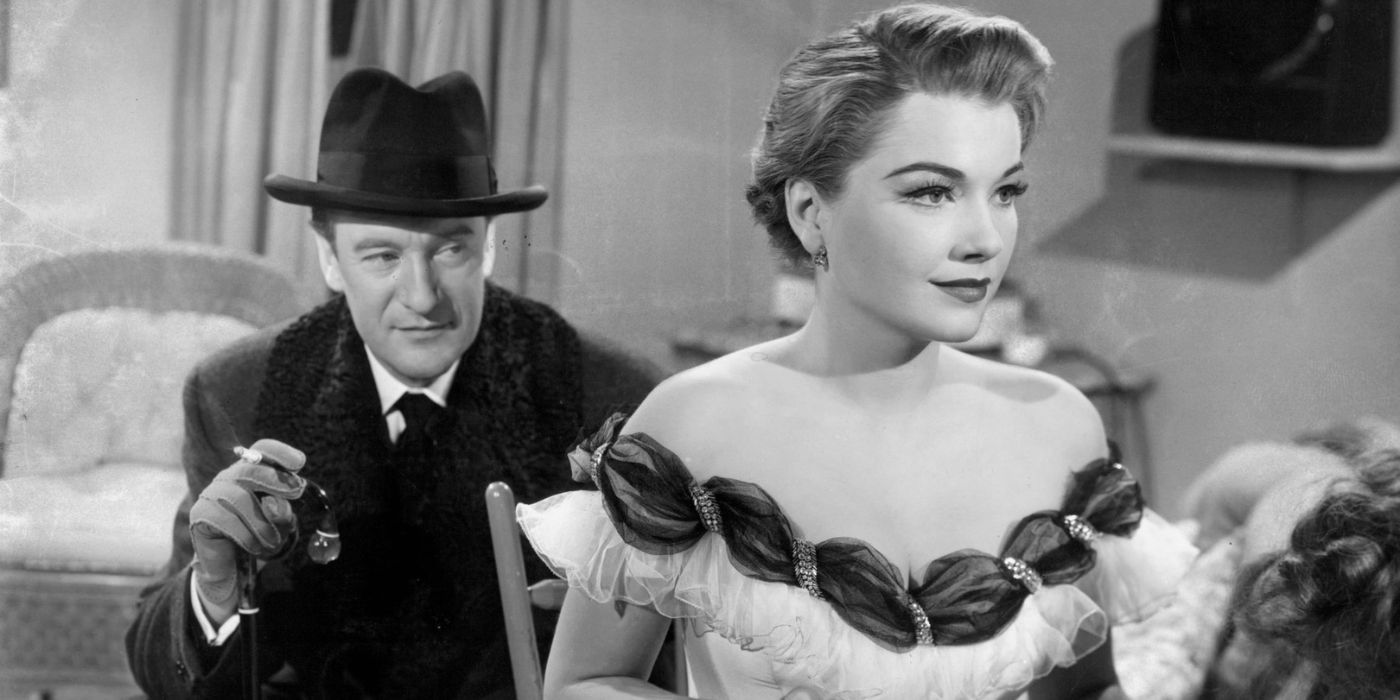
“Fasten your seatbelts. It’s going to be a bumpy night.” Joseph L. Mankiewicz‘s script for All About Eve is one of the sharpest of Hollywood’s Golden Age, equal parts high society snark, backstage melodrama, and psychological warfare. It’s a symphony of elegance and cruelty, where every line is a double-edged sword. At its center is the duel between Margo Channing (Bette Davis), a fading Broadway icon, and Eve Harrington (Anne Baxter), her wide-eyed understudy with venom in her veins.
Mankiewicz’s structure allows multiple narrators and shifting perspectives, making the story as much about self-mythology as ambition. Behind the dazzling dialogue is a scathing meditation on aging, authenticity, and the theater of fame. Even its most quotable lines serve deeper purposes, disguising bitterness as wit, truth as entertainment. “You’re maudlin and full of self-pity. You’re magnificent,” one character tells another, a seemingly straightforward line that contains some of the film’s core, contradictory ideas.
8
‘Casablanca’ (1942)
Written by Julius J. Epstein, Philip G. Epstein & Howard Koch
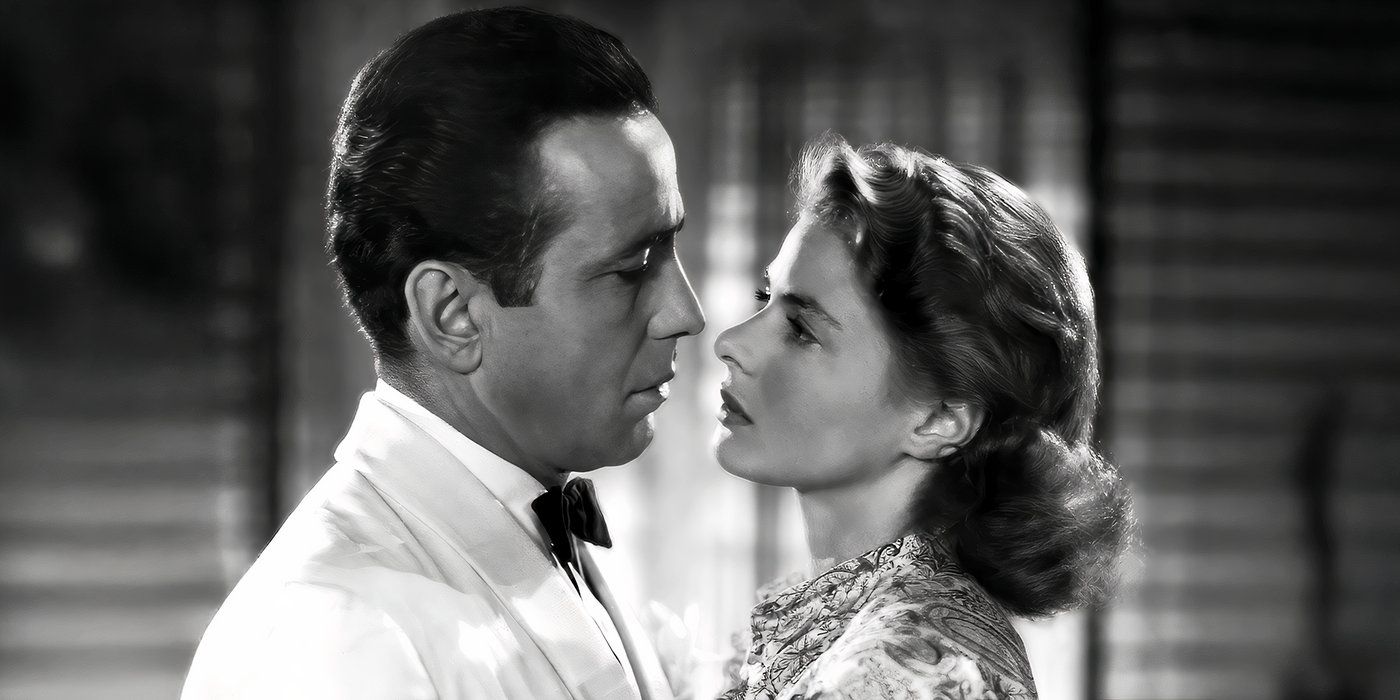
“Here’s looking at you, kid.” The script for Casablanca is fantastic despite (or perhaps because of) the fact that it was written under tight deadlines and wartime pressure. Julius and Philip Epstein, along with Howard Koch, created something that walks the line between propaganda, romance, and existential drama without ever faltering. What makes the screenplay remarkable is its blend of structure, character, and tone, nimbly shifting between light banter, political tension, and heartbreaking decisions.
The love triangle never feels manipulative because every character is written with dignity and depth. Rick Blaine (Humphrey Bogart), in particular, is the archetypal antihero: cynical, wounded, but ultimately noble. “The problems of three little people don’t amount to a hill of beans in this crazy world,” he says. That quote could be cheesy, but in Casablanca, it’s devastating. Not to mention, there’s the iconic closing line (“Louis, I think this is the beginning of a beautiful friendship”) which has since been endlessly imitated and parodied.
7
‘The Apartment’ (1960)
Written by Billy Wilder & I.A.L. Diamond
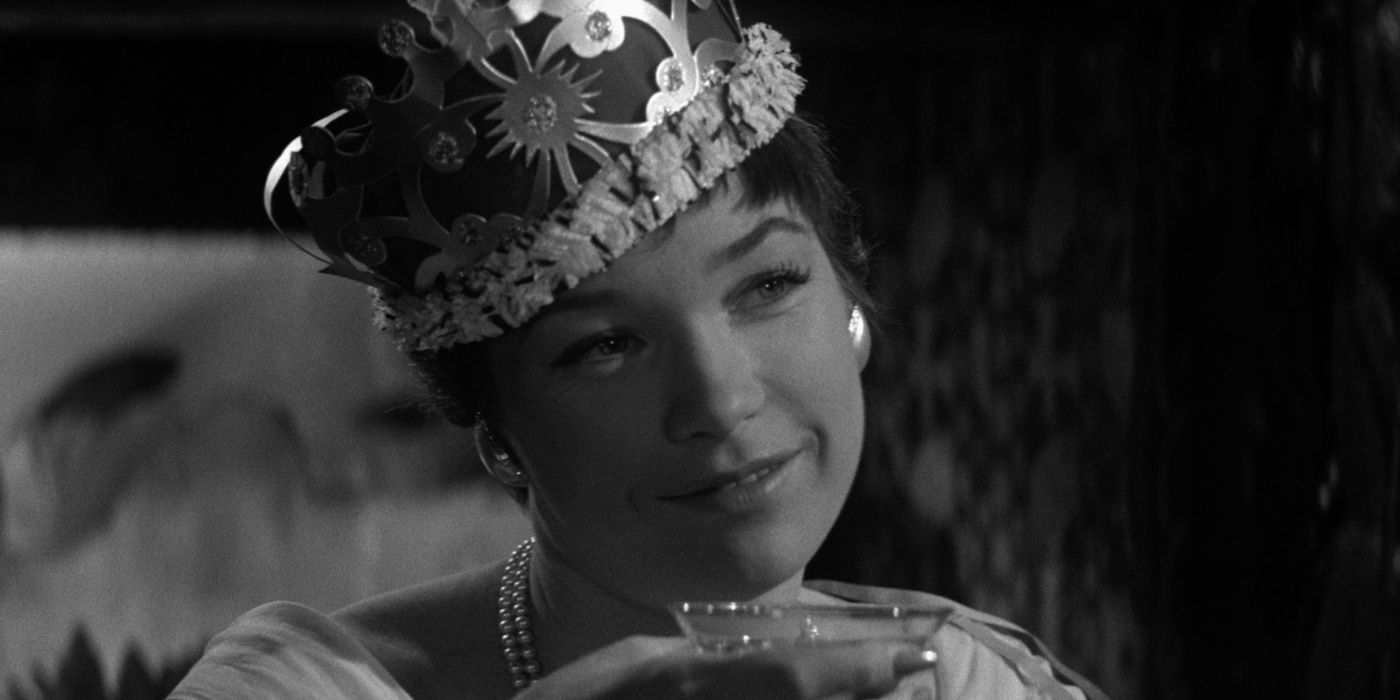
“That’s the way it crumbles… cookie-wise.” On the surface, The Apartment is a romantic comedy about a lonely office worker who lets his bosses use his apartment for their affairs. But Billy Wilder and I.A.L. Diamond‘s screenplay digs far deeper. Beneath the quirky premise,it’s really a quietly devastating film about loneliness, self-respect, and the moral compromises people make in systems designed to exploit them. The dialogue sparkles with wit and pathos, with Wilder’s trademark balance of heartbreak and hilarity.
C.C. Baxter (Jack Lemmon) is one of the most sympathetic leads in film — funny, sincere, and slowly crumbling under the weight of his compromises. Opposite him, Fran Kubelik (Shirley MacLaine) is no manic pixie dream girl. Rather, she’s broken in her own right, caught in a cycle of disappointment and guilt. With these characters, the script moves gracefully from comedy to tragedy and back again, never losing its emotional honesty. The final line — “Shut up and deal” — is both playful and profound.
6
‘Eternal Sunshine of the Spotless Mind’ (2004)
Written by Charlie Kaufman
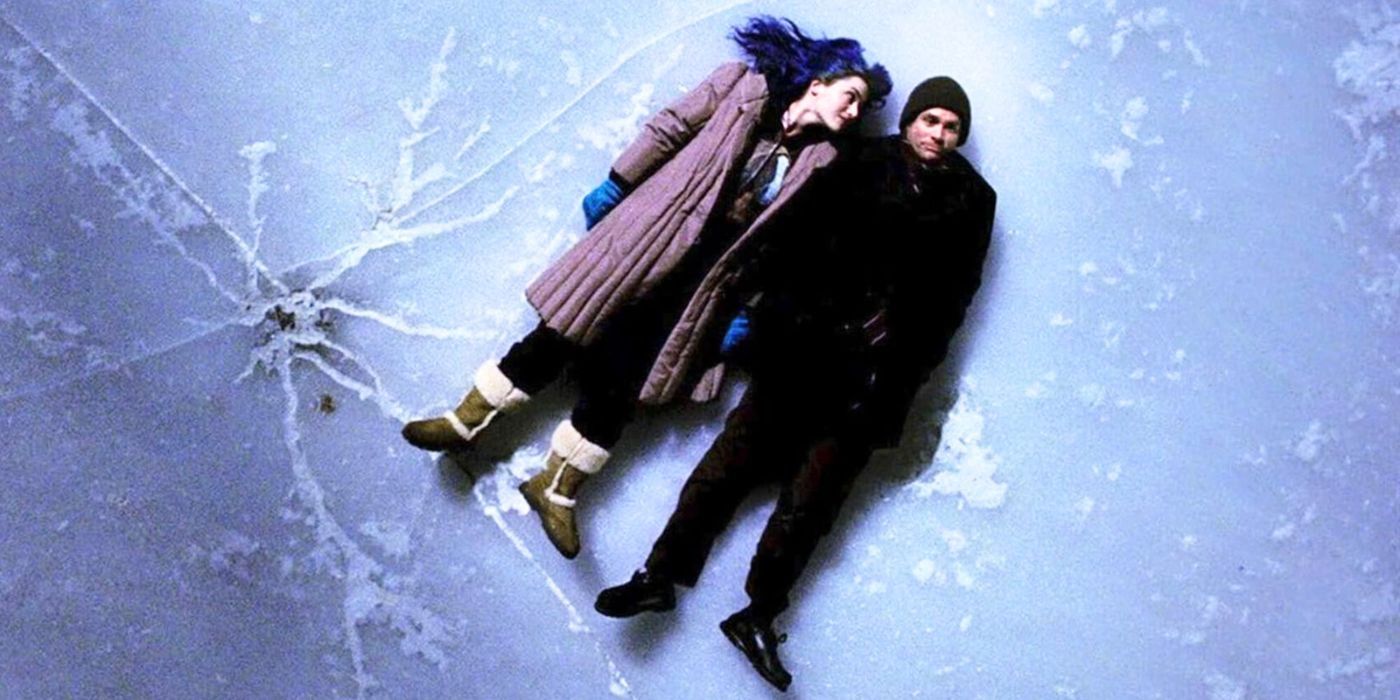
“Blessed are the forgetful, for they get the better even of their blunders.” Charlie Kaufman‘s screenplay for Eternal Sunshine is a miracle of tone, structure, and raw feeling. In a typically offbeat fashion, it imagines a world where memories can be erased, but uses that sci-fi premise to tell one of the most intimate and painful love stories ever written. Joel (Jim Carrey) and Clementine (Kate Winslet) aren’t idealized lovers; they’re awkward, imperfect, and sometimes cruel. In other words, human.
Part of the appeal of the screenplay lies in how it mirrors memory. The narrative itself is fragmented, emotional, unreliable, and nonlinear. As Joel’s mind is erased, we revisit his relationship in reverse, seeing moments of beauty after knowing how it ended. Yet, while Kaufman’s writing is full of absurdity and surrealism, it never loses its emotional grounding. In the end, “Meet me in Montauk” is a plea that feels cosmic, two people choosing each other even after knowing they’ll fail.
5
‘Sunset Boulevard’ (1950)
Written by Charles Brackett, Billy Wilder & D.M. Marshman Jr.
.jpg)
“All right, Mr. DeMille, I’m ready for my close-up.” Dead men don’t usually narrate movies, but in Sunset Boulevard, a screenwriter’s corpse floats in a swimming pool, calmly telling us how he got there. That twisty structure is just the beginning of what makes this script extraordinary. With this one, Billy Wilder and his collaborators crafted a screenplay that slices into the rotting heart of Hollywood with Gothic precision and satirical flair.
It’s a story about dreams gone sour, about a woman who can’t let go of fame, and a man who can’t resist a lifeline, even when it’s wrapped in madness. Crucially, rather than being a cardboard cutout has-been, Gloria Swanson‘s Norma Desmond is portrayed like a queen in exile, all of her dialogue memorably theatrical. Through her, the script captures both the allure and the cruelty of showbiz, exposing how cinema worships youth, forgets its icons, and feeds on desperation.
4
‘Chinatown’ (1974)
Written by Robert Towne
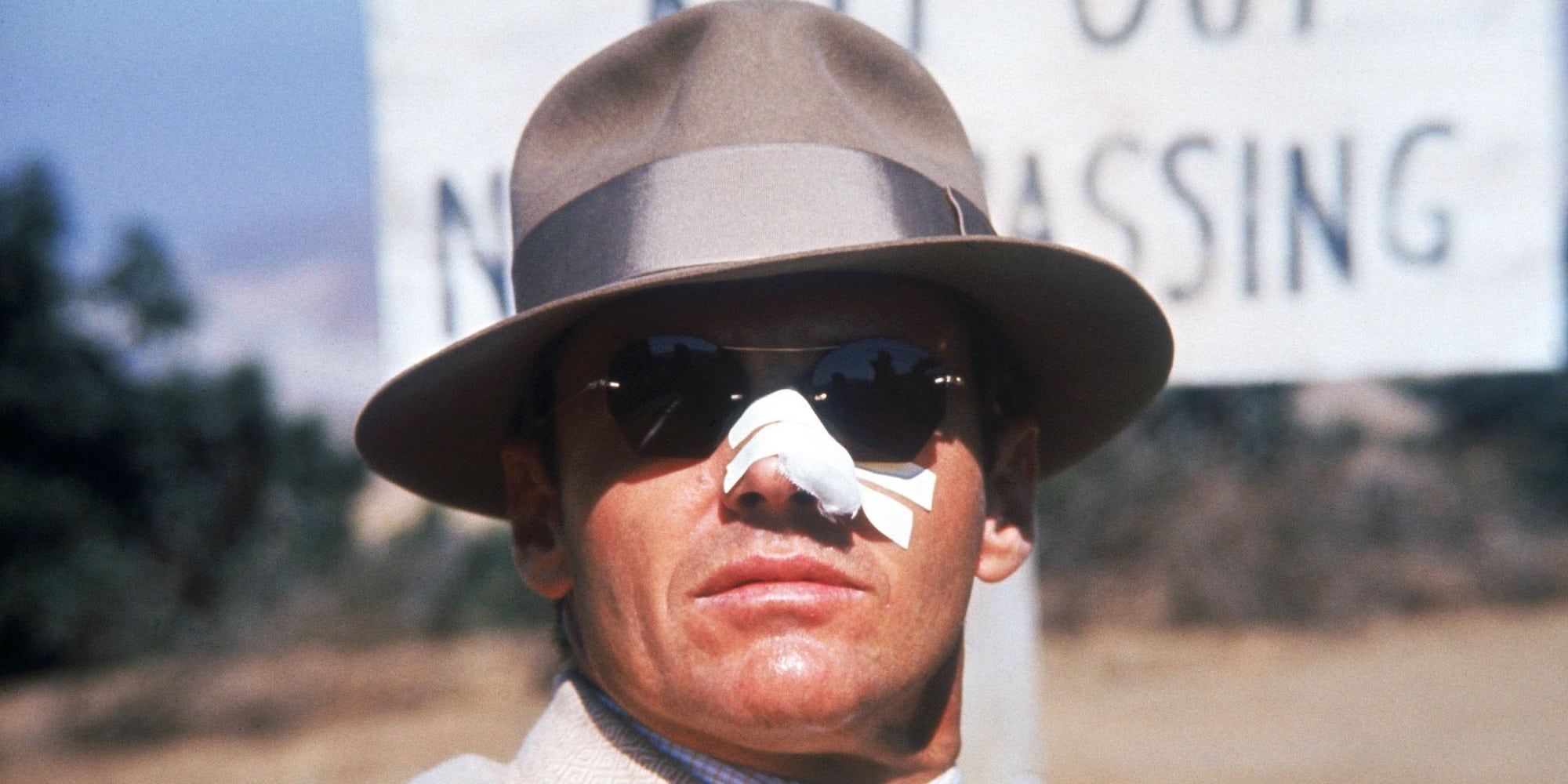
“Are you alone?” “Isn’t everybody?” There’s a reason Chinatown is often cited as the greatest original screenplay ever written. Robert Towne‘s script is a flawless machine:tight, layered, and devastating. It starts with a seemingly mundane case: a man hires private detective Jake Gittes (Jack Nicholson) to investigate his wife. But the story quickly spirals, pulling Gittes into a world of civic corruption, incest, water rights, and a level of human rot he’s entirely unprepared for.
Towne’s writing unravels this darkness gradually, like a bruise that keeps spreading. Every scene builds tension, every detail matters, and the truth, when it comes, lands like a gut-gunch. The whole affair is intense but restrained; no moment feels overplayed. And then there’s that final line (“Forget it, Jake. It’s Chinatown”) which isn’t just a sign-off, but a surrender to systemic evil. Taken together, it all makes Chinatown one of the high points for noir.
3
‘Pulp Fiction’ (1994)
Written by Quentin Tarantino
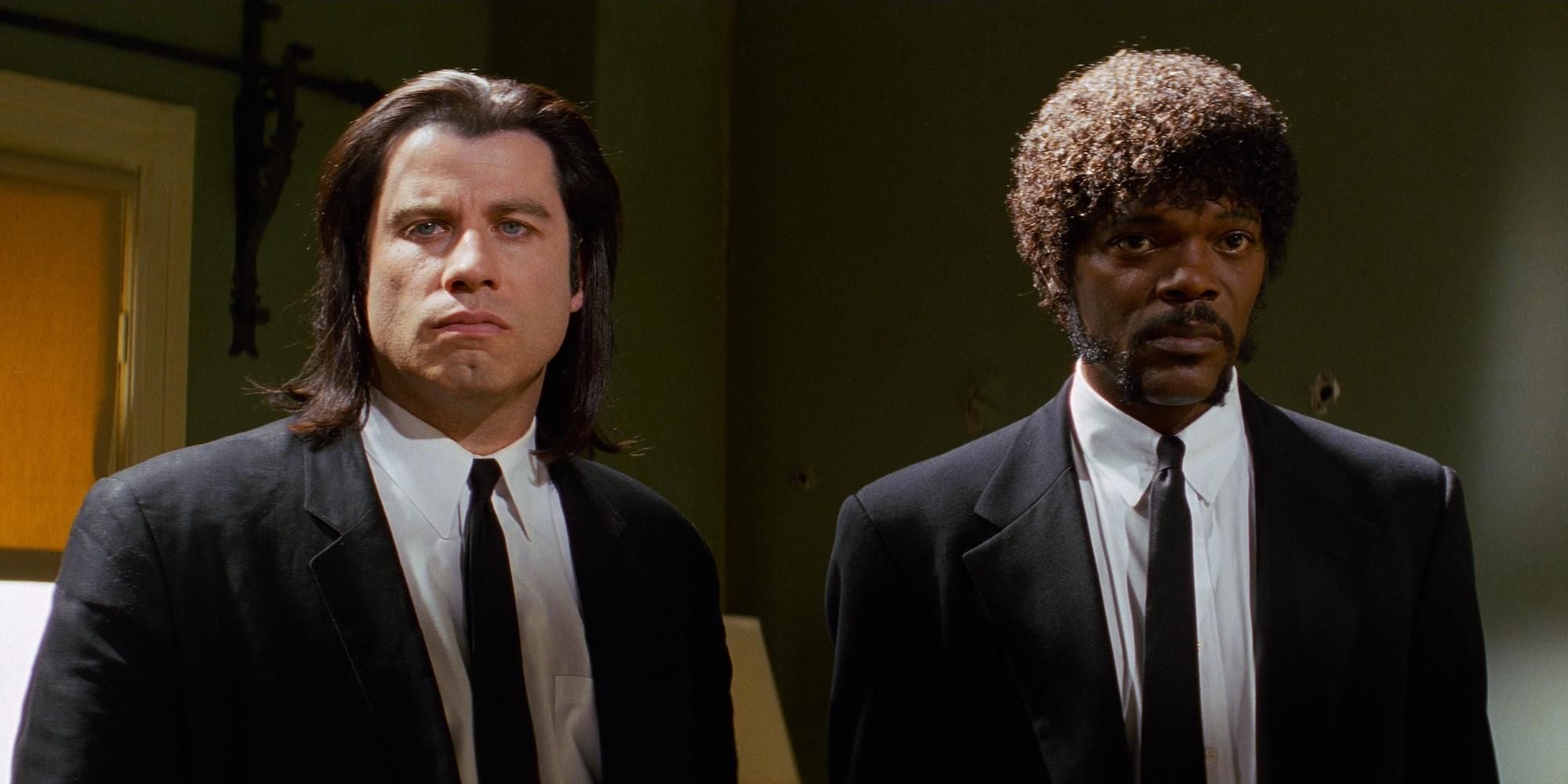
“Zed’s dead, baby. Zed’s dead.” With this one, Tarantino detonated the screenwriting rulebook and reshaped the medium forever. Pulp Fiction is a Russian doll of stories told out of order, where gangsters discuss foot massages, boxers place their lives on the line to save watches, and fate turns on a diner robbery. However, beneath the nonlinear chaos is an incredibly controlled structure. Not to mention,Tarantino’s dialogue is more than just quotable; it’s character-building, tension-wracking, and unexpectedly profound.
Conversations veer from the mundane to the philosophical, the rhythm of the words keeping the audience hypnotized throughout. Each scene builds a little universe, whether it’s Jules’ (Samuel L. Jackson) biblical fury or Butch’s (Bruce Willis) back-alley escape. That they do so while quoting or referencing countless films in the process is all the more impressive. The finished product is a movie that’s violent, hilarious, and weirdly soulful, a love letter to movies told through the barrel of a gun.
2
‘The Social Network’ (2010)
Written by Aaron Sorkin
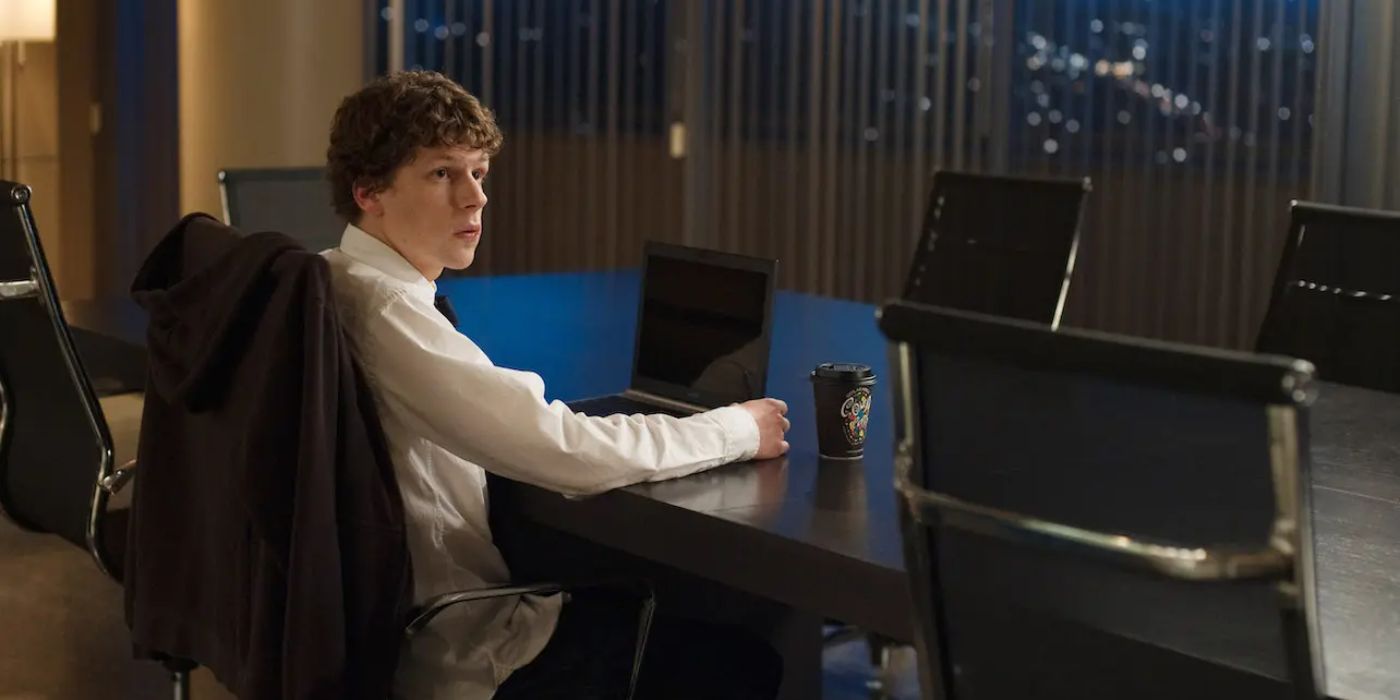
“If you guys were the inventors of Facebook, you’d have invented Facebook.” Claiming the second spot on this list is Aaron Sorkin‘s screenplay for The Social Network, which was ahead of its time in delving into the zeitgeist of the social media age, a courtroom drama disguised as a tech origin story. Part of what makes the script exceptional is its velocity: Sorkin’s dialogue is rhythmic, witty, and lethal, each line a blade sharpened for maximum damage.
Here, Zuckerberg (Jesse Eisenberg) is brilliant and caustic, constantly undercutting his rivals with barbed logic. Yet Sorkin doesn’t portray him as a villain, just a painfully smart outsider who doesn’t know how to connect. The framing device, where rival depositions shape the narrative, adds layers of ambiguity and competing truths. As a result, The Social Network becomes a statement on isolation, identity, insecurity, and the cost of genius. Fast, biting, and brilliantly constructed, this is 21st-century screenwriting at its fiercest.
1
‘Network’ (1976)
Written by Paddy Chayefsky
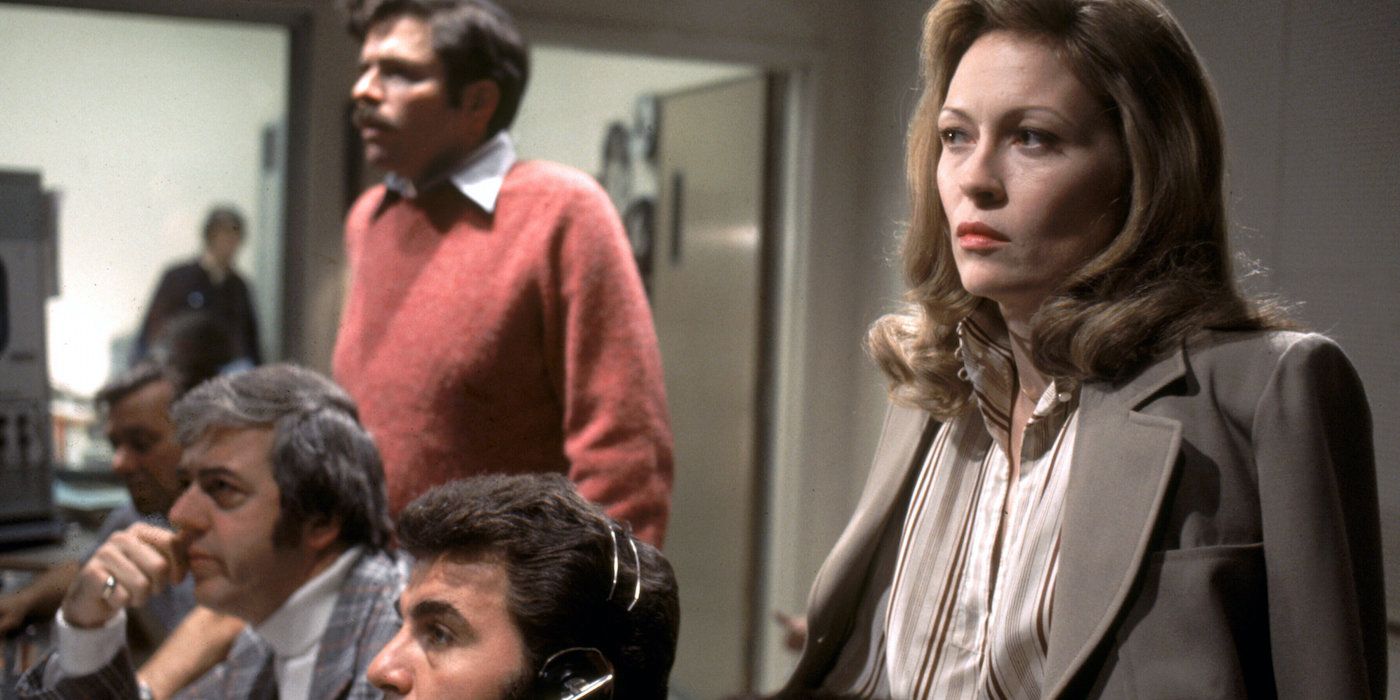
“I’m as mad as hell, and I’m not going to take this anymore!” Paddy Chayefsky’s screenplay for Network is prophetic, explosive, and downright volcanic. In a world where media already blurred the line between news and entertainment, he wrote a story about a man who loses his mind on air… and becomes a ratings sensation. But Howard Beale’s (Peter Finch) rage isn’t just madness; it’s clarity, the one honest voice screaming in a system built to exploit apathy.
The dialogue is fittingly thunderous, biblical, and laced with scathing irony, each monologue a sermon about how unfettered capitalism devours meaning. Every major character gets a chance to speak their truth, even if it’s monstrous. From Beale’s primal scream to Faye Dunaway‘s ice-cold logic to Ned Beatty‘s boardroom speech about global corporatism, Chayefsky elevates rants into poetry. In the end, Network is a script with fire in its belly and prophecy in its bones, and almost 50 years later, it still hasn’t cooled.