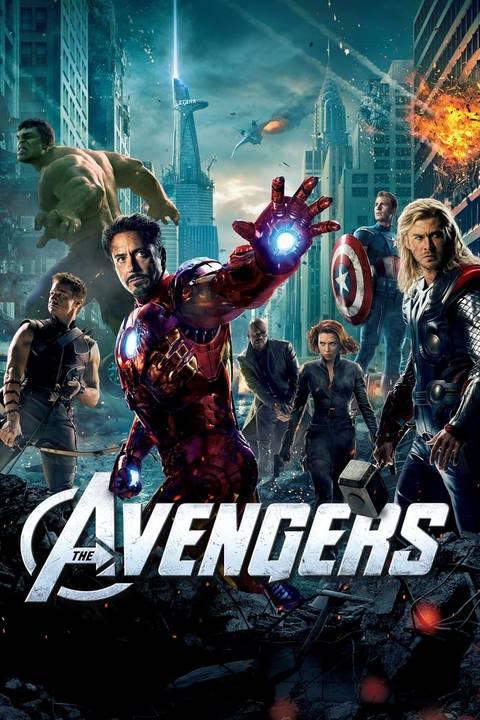
When The Avengers arrived in 2012, it spawned a litany of copycats and imitators. With The Avengers, Marvel proved that audiences would reward long-term planning, where individual heroes were introduced in solo films before uniting in a massive, event-style crossover. Studios rushed to replicate the formula, often skipping crucial groundwork in hopes of fast-tracking their own interconnected franchises.
Some attempts misunderstood why The Avengers worked, focusing on scale over character, or team-ups over storytelling cohesion. While a few of these films found modest success, many struggled under the weight of franchise expectations they hadn’t earned. These movies represent some of the most notable attempts to capture the same lightning in a bottle, with mixed, often disastrous results.
Batman V Superman: Dawn of Justice (2016)
Batman v Superman: Dawn of Justice was Warner Bros.’ most aggressive attempt to replicate The Avengers formula. Rather than slowly building toward a team-up, the film rushed to introduce multiple heroes while simultaneously staging a crossover conflict. Wonder Woman, teases of Aquaman, Flash, and Cyborg, and heavy sequel setup dominate the runtime.

10 A-List Stars You Didn’t Know Played Batman
Batman has been played by far more A-list stars than many fans might realize, from Marvel heroes to Oscar nominees across animation and audio.
Instead of feeling like an earned collision of icons, the movie feels burdened by franchise obligations. Marvel spent years developing Iron Man, Captain America, and Thor before uniting them. Batman v Superman tried to compress that process into a single film.
While visually ambitious, Batman v Superman struggles with tone, pacing, and narrative focus. Its attempt to jump-start a cinematic universe ultimately overshadowed the story it was trying to tell. Dawn of Justice truly highlights the risks of copying The Avengers without its patience.
Avengers Grimm (2015)

Avengers Grimm is one of the most blatant attempts to capitalize on The Avengers brand, right down to its title. Produced by The Asylum, the film replaces Marvel heroes with fairy tale characters like Snow White, Red Riding Hood, and Cinderella. The structure mirrors The Avengers almost beat for beat.
The narrative assembles individual figures into a makeshift team to face a shared threat. However, Avengers Grimm lacks the budget, writing, and character development that made Marvel’s crossover work. Instead of clever subversion, it plays like a rushed imitation designed to exploit name recognition.
It’s certainly unintentionally entertaining for some viewers. Nevertheless, Avengers Grimm exemplifies how surface-level copying of the team-up concept rarely produces meaningful results. It’s less a reinterpretation of The Avengers and more a reminder of how influential, and easy to parody, the formula became.
Guardians (2017)

The Russian superhero film Guardians is a clear attempt to emulate The Avengers within a different cultural framework. The movie assembles a team of powered individuals, each representing a different former Soviet republic, to face a world-ending threat. On paper, the concept mirrors Marvel’s ensemble approach, emphasizing national identity through superpowered archetypes.
In execution, however, Guardians struggles with uneven effects, thin characterization, and tonal inconsistency. The team never develops the chemistry that made The Avengers so engaging. Instead of building toward camaraderie, the film rushes through introductions to reach its action-heavy climax.
Guardians is an interesting example of The Avengers’ global influence. It highlights how simply assembling heroes isn’t enough. Without strong writing and emotional stakes, the formula quickly collapses into fight scenes and sci-fi spectacle.
The Mummy (2017)

Universal’s The Mummy was designed as the launchpad for the Dark Universe. This would have been a shared franchise built around the classic Universal movie monsters, including Dracula, Frankenstein’s Monster and Wolf-Man. Much like Iron Man set up the MCU, The Mummy was supposed to introduce a new tone while planting seeds for future crossovers.
Instead, The Mummy crams exposition, universe-building, and sequel teases into nearly every scene. Russell Crowe’s Dr. Jekyll functions less as a character and more as a walking setup for future films. Rather than focusing on horror or adventure, the movie feels distracted by its franchise ambitions.
The Avengers-style blueprint (solo entry leading to team-up) was applied without understanding why it worked. When The Mummy underperformed, the entire Dark Universe collapsed. It became one of the clearest examples of a studio chasing The Avengers without earning audience trust.
Suicide Squad (2016)

Suicide Squad applied The Avengers team-up model to villains and antiheroes. It assembled a group of criminals forced to work together. On paper, the concept was strong: morally compromised characters clashing under pressure could offer a darker twist on Marvel’s ensemble dynamics.
However, Suicide Squad struggles to balance its introductions. It spent much of its runtime establishing characters rather than developing relationships. Subsequent tonal inconsistency, studio interference, and rushed storytelling prevent the team from feeling cohesive.
Unlike The Avengers, where character interactions drove the plot, Suicide Squad relies heavily on style, music cues, and spectacle. While some performances stood out, the movie ultimately feels like a checklist of franchise components rather than a unified story. It shows how copying the structure without prioritizing character chemistry can undermine the entire concept.
Fantastic Four (2015)
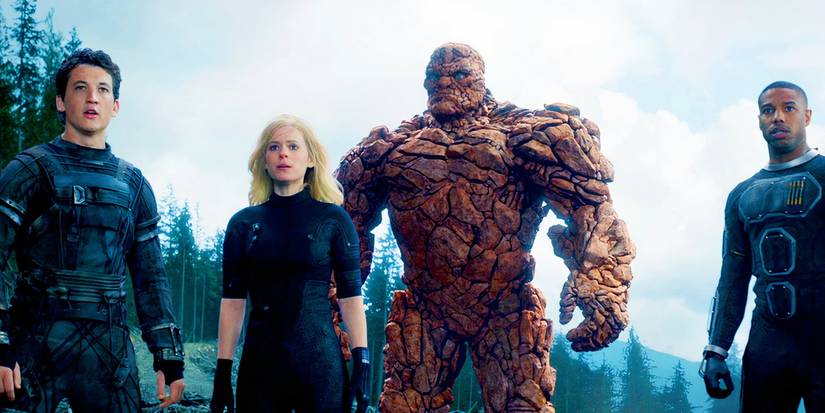
Fantastic Four was intended to reboot Marvel’s first family. It was also an attempt to lay the groundwork for a shared universe inspired by The Avengers using Fox’s Marvel properties. Consequently, the film adopts a more serious, grounded tone, but struggles to balance origin story elements with franchise aspirations.
Character development is rushed, and the team dynamic (central to any Avengers-style success) never fully materializes. Instead of feeling like a family, the group often appears disconnected and underwritten. Fantastic Four’s troubled production only worsened these issues, resulting in a final act that feels abrupt and incomplete.
While clearly influenced by the MCU’s success, Fantastic Four misunderstands the importance of chemistry and momentum. It lacked the warmth or payoff that made The Avengers a science fiction masterpiece. The film became another cautionary tale about imitating the formula too quickly.
Godzilla: King Of The Monsters (2019)

Godzilla: King of the Monsters was Legendary’s clearest attempt to turn the MonsterVerse into its own Avengers-style crossover. Instead of focusing on a single kaiju, the film assembles a roster of iconic monsters including Godzilla, Mothra, Rodan, and King Ghidorah. It framed them as larger-than-life characters converging for an epic showdown.
Much like The Avengers, King of the Monsters prioritizes spectacle and mythology. Unfortunately, this is often at the expense of grounded storytelling. Human characters exist largely to explain lore and move the plot between monster battles.
While some appreciated seeing so many legendary creatures share the screen, critics disagreed. They felt the film leaned too hard into franchise-building and fan service. It’s an Avengers-style team-up translated into kaiju cinema, ambitious in scale, but divided in execution.
G.I. Joe: Retaliation (2013)

G.I. Joe: Retaliation pivots the franchise sharply toward an Avengers-inspired ensemble approach. Following criticism of The Rise of Cobra, the sequel expands its cast. It introduced new team members, emphasizing squad-based action over a single protagonist.
The imagery, from slow-motion hero shots to globe-trotting missions, feels heavily influenced by contemporary superhero blockbusters. In fact, the whole visual design is clearly lifted straight from The Avengers (2012). Meanwhile, Dwayne Johnson’s Roadblock is positioned as a charismatic anchor, similar to how Iron Man functioned in The Avengers.
G.I. Joe: Retaliation is certainly more confident and streamlined than its predecessor. Yet it still struggles to establish meaningful chemistry between characters. The attempt to transform G.I. Joe into a cinematic team event is clear, but the result feels like a reaction to trends rather than an organic evolution of the franchise.
Justice League (2017)

Justice League is one of the most overt attempts to replicate The Avengers, especially after Joss Whedon took over during post-production. While the notion of a DC team-up began with Zack Snyder, after Whedon took over, he tried to transform Justice League into a full Avengers knock-off. The tonal shift is immediate, with quips, lighter color grading, and reworked character moments.
The whole movie was retooled to mimic the success Whedon had with The Avengers, but with a disregard for the rest of the franchise and DC’s tone. The result was a weak carbon copy. Batman assembles a team, characters trade banter mid-battle, and the film leans heavily on the idea of unity as its emotional core.
However, the rushed production and conflicting creative visions undermine the effort. Unlike The Avengers, which benefited from years of setup, Justice League introduces multiple heroes at once while struggling to give them depth. The result feels less like a natural team-up and more like a studio chasing The Avengers’ proven formula.
- Release Date
-
May 4, 2012
- Runtime
-
143 minutes
- Producers
-
Avi Arad, Chris Brigham, Jon Favreau, Kevin Feige, Louis D’Esposito, Victoria Alonso, Jeremy Latcham