The world of anime thrives on anticipation, a fact that cannot be overstated. The journey towards building reasonable expectations for an anime involves several factors, including a captivating trailer, a dedicated fan base, or a bold studio announcement. Each of these elements, alone or in combination, can set the stage for an anime to capture its audience’s imagination long before its premiere.
However, hype is tricky. It works well only for those who can deliver on their promise of anticipation. Most successful anime go beyond what is anticipated; others start off high-flying and ultimately buckle under the weight of their own ambitions.
That’s the story with these anime series below. All premiered with the promise of being the industry’s next big thing, offering flashes of brilliance, but were eventually unable to sustain the momentum fans expected. The reasons for their shortcomings range from production issues to narrative missteps, each contributing to their inability to live up to their expected potential.
9
Ex-Arm
Ex-Arm is infamous among modern anime for being a spectacular disappointment. While the trailers generated curiosity due to the series’ slick cyber-thriller vibe, the broadcast revealed severe production problems, and it went downhill from there.
The show is a messy mash of animation, produced with choppy, unpolished 3D elements that clashed with its 2D elements, making the show nearly unwatchable. Beyond its technical problems, the story’s narrative tone was also a mess, due to awkward dialogue and incoherent pacing.
Yet, what makes Ex-Arm particularly notable is not just substandard execution but how that poor execution destroyed any chance the show had of meeting reasonable expectations as a tight, techno-thriller. In the current world of instant streaming and social media buzz, Ex-Arm is a cautionary tale of how hype can collapse faster than it rises when the essentiality of competence is compromised.
8
BlazBlue: Alter Memory

Adapting a dense fighting-game universe of two games into twelve episodes was always a high-wire act for BlazBlue: Alter Memory. However, the decision built up all the anticipation needed for the series to plummet right back into global oblivion, thanks to the story’s consistently interlocking timelines and character histories that relied too heavily on game familiarity.
The anime’s central failure was that it attempted to serve both die-hard fans and newcomers within the same compressed runtime. The critical exposition arrived too late, and the characters lacked the necessary depth, missing all of its emotional beats because of a prematurely grounded narrative.
The result was a fragmented narrative stitched together into twelve episodes. The show’s combat sequences, while brilliant in flashes, also couldn’t compensate for the show’s overarching confusion. Instead of taking the necessary time to build narrative depth and character relationships, it chose to rush to the finish line of obscurity.
7
Aldnoah.Zero
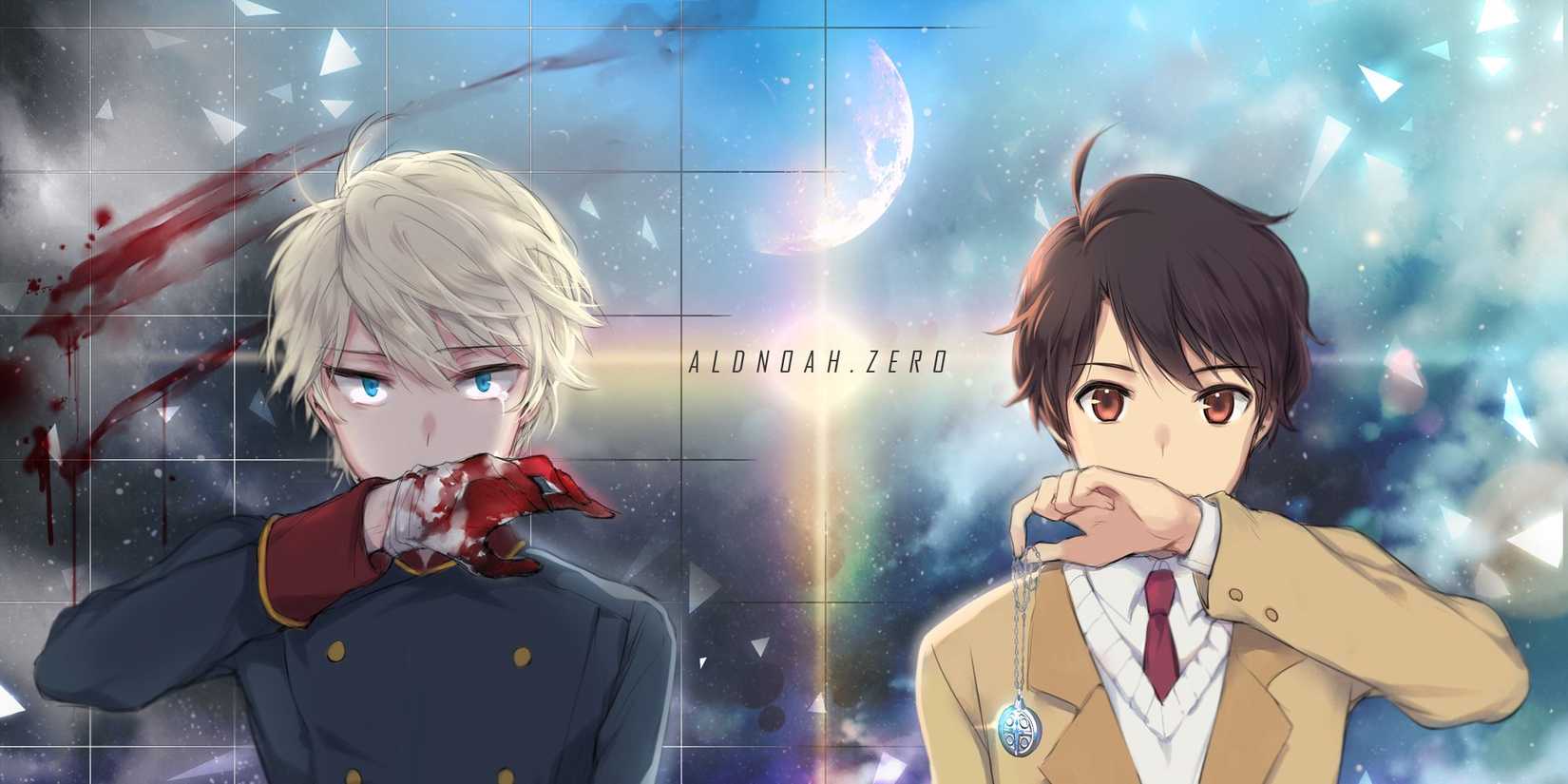
Aldnoah.Zero sold itself well on political intrigue, mecha spectacle, and the promise of an intergalactic battle that would reshape humanity’s future. However, the delivery on its promises fell flat due to an overreliance on visual amusement, rather than a qualitative narrative.
The series’ early episodes delivered high-production combat alongside a sense that strategic thinking would carry the subpar narrative. Yet, it made two critical mistakes: heavily relying on contrived narrative shocks and an uneven handling of its central intelligence characters. At some point, its plot progression depended more on improv and inexplicable in-the-moment decisions than on the logical consequences of earlier choices.
This meant that it continued to erode the audience’s earlier built-up trust. Additionally, pacing issues compounded the problem, meaning that the story’s significant political stakes and emotional beats were either glossed over or resolved offscreen. Summarily, Aldnoah Zero was an elaborate display of mecha battle choreography with little else to offer.
6
Darling in the Franxx

Given the studios and the sheer creative talent involved, Darling in the Franxx had more than enough substance to become a sci-fi classic. Its early episodes blended polished animation with emotionality centred on romance, identity, and adolescence. All of which hinted at something much more nuanced beyond the typical allure of mech battles.
The series’ decline primarily stemmed from its careless narrative drift: the series’ promising themes introduced early were later substituted for grand, metaphysical plotlines that felt disconnected from what made the characters compelling in the first place.
The series also suffered from tonal whiplash, as it constantly shifted between intimate character moments and cosmic-scale stakes, leaving many viewers unsure which story the show actually intended to tell. Finally, the rush to wrap up the story’s relationship arcs and ideological question marks ultimately did more narrative damage to the show’s already glaring inconsistencies.
5
Hand Shakers

Hand Shakers announced itself with a high-stakes gamble: hyper-stylised animation and a premise centred on paired fighters whose handshakes power reality-bending duels. In other words, it tried too hard. The show’s trailers promised dynamic battles and intriguing lore, but when the series aired, the execution fell short of the concept.
The show’s visual language, intending to be boldly disorienting, often translated into awkward frames, jarring CGI mixes, and questionable camera choices that obscured rather than showcased the action. On the other hand, the show’s character development was particularly subpar, lacking emotional depth in both its characters and narrative tone.
When spectacle dominates at the expense of comprehension and empathy, the audience also loses emotional investment. Ultimately, Hand Shakers wanted to be remembered for its style but forgot that style needs something human and authentic to latch onto.
4
God Eater

As a video game-to-anime adaptation, God Eater carried the promise of an already established fan base and a visually striking premise: an apocalyptic world where humanity’s survival hangs in the balance against ancient monster threats. The show’s early promotional content and concept art further fueled excitement for the cinematic action series, set in a bleak and immersive atmosphere.
However, the anime’s high points faded as production and pacing issues emerged. Periodic delays and inconsistent episode quality signalled that the show was not firing on all cylinders. Narratively, the worldbuilding felt relatively shallow, as the political stakes and game mechanics did not translate cleanly into episodes that needed to both explain and excite.
Characters who could have anchored the series received less screen time, resulting in fewer emotional climaxes than expected. The anime, therefore, sits awkwardly between spectacle and exposition, with moments of striking visual effects but lacking the narrative backbone to leave a lasting impression.
3
The Promised Neverland

The first season of The Promised Neverland demonstrated how tightly plotted suspense and resourceful protagonists can create a sense of viewing anticipation. Its initial episodes showcased the meticulous planning, escalating dread, and the intelligence of its child protagonists, which quickly put the series’ anticipation through the roof.
As such, season two bore both the pressure of expectations and the crucial responsibility to expand the world coherently. Rather than measure up, the adaptation opted for narrative shortcuts that compressed the detailed plotline into hurried sequences. Its patient plotting element was replaced with bland resolutions and compressed arcs that erased much of the strategic thinking that initially drew its audience in.
For the show, it’s especially painful because its first season proved its premise had enough bandwidth for both character work and high-stakes plotting.The Promised Neverland’s failure wasn’t because of ambition but the choices made to answer that ambition too quickly, which robbed the story of the precision that made its debut exceptional.
2
Akame ga Kill!

Akame ga Kill! arrived at a time audiences craved darker shonen with real consequences. And the series initially delivered the eye candy: high stakes, a rebel group committed to tearing down corruption, and no hesitation to axe main characters. That grim premise generated buzz and a sense that the show compromises nothing. Sadly, the execution didn’t fulfill that pledge.
After an intense opening stretch, the narrative began relying on shock deaths as a hook rather than building deeper emotional arcs for the cast. Characters getting killed without a clear, earned payoff has little impact on the audience; rather, it flattens into predictability. Moreover, the anime diverged significantly from the manga’s pacing and thematic concerns toward the end.
Thus, the finale felt rushed and tonally inconsistent. The result is a series that can still thrill in isolated moments but rarely produces the kind of layered political or moral examination the premise suggested. In short: the promise of meaningful cost turned into cheap theatrics, leaving viewers who wanted a tougher, more brilliant drama feeling shortchanged.
1
Tokyo Ghoul

When Tokyo Ghoul premiered, it felt like the right show at the right moment: gothic visuals, an aching identity crisis at its core, and a protagonist trapped between human and monster. The first season balanced horror and sentimentality so effectively that viewers expected a long, measured exploration of morality and trauma. The problem began when later seasons opted for compression over nuance.
Key psychological beats and character motivations that read strongly on the page were either shortened or discarded, resulting in plot jumps that confused more than they clarified. Uneven tonal shifts also undermined the series’ early psychological tension. Visually, the anime still offers striking imagery. Still, the voice of the story felt inconsistent.
A show that once took time to sit with suffering began moving too fast to make pain meaningful. Fans weren’t simply disappointed because some arcs changed; they were let down because the adaptation traded depth for spectacle, which drained the series of the moral ambiguity that made its debut season so compelling.

- Release Date
-
2014 – 2018-00-00
- Network
-
Tokyo MX
- Directors
-
Shin Matsuo, Taiji Kawanishi, Seo Hye-jin, Masayuki Matsumoto
- Writers
-
Chuji Mikasano
-

Natsuki Hanae
Ken Kaneki (voice)
-
Sora Amamiya
Touka Kirishima (voice)