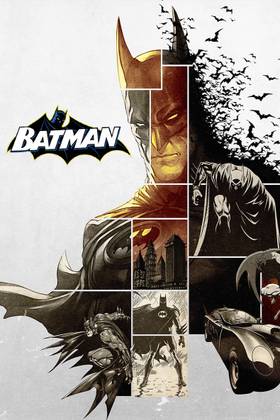
2026 marks 40 years since Batman: The Dark Knight Returns exploded on the scene, forever changing the Caped Crusader and comics in general. The series, written and drawn by Frank Miller, with inks by Klaus Janson and colors by Lynn Varley washed away the aftertaste of the wonderfully campy 1960s Batman TV series, showing the world that Batman could be grim, gritty, and cool. And while it is a great story, it’s hard to ignore the less desirable aspects of Miller’s opus.
There’s no disputing that The Dark Knight is a classic, but like any classic, there are elements to the story that don’t hold up well, and its lasting effect on the industry hasn’t been all positive. Some of the story, and the stories that followed its path, have aged worse than Robin’s green booty shorts.
Birth Of The Dark Age
While everyone pretty much agrees on the first three ages of comics — Gold, Silver, and Bronze — the last 40 years of comics haven’t had dedicated names for the eras the business has gone through. One discussed “era” is the “Dark Age.” This age, birthed by The Dark Knight Returns as well as Alan Moore and Dave Gibbons’s Watchmen, saw the rise of the anti-hero and comics becoming more “mature.”
There’s no denying that the original seven creators of Image! Comics, and a slew of other writers and artists, were heavily inspired by these books, and by Dark Knight Returns in particular. But it seemed that many, if not most, of these people took the wrong lessons from the two seminal works. Instead of looking at the philosophical and political pieces of these stories, creators went with “more violence, more anger” and stopped there. What came was a deluge of empty stories that were trying to prove how adult they were, but felt like what a child believes an adult story is.
No More Bat-Fun

Believe it or not, Batman used to enjoy himself. In the 1950s and ’60s, he was downright goofy. In the ’70s, the Caped Crusader became more grounded, but he wasn’t the always angry, always working vigilante we know today. 1978’s Justice League of America #152 opens with Batman enjoying a game of poker with Superman, Hawkgirl, Hawkman, and Elongated Man (with Hawkgirl winning the hand, and Batman complaining about his cards). In 1980’s New Teen Titans #1, we see Batman taking a night off to smoke a pipe and read a book.
These days, it’s almost sacrilege for Batman to have a little fun. If he isn’t hiding in the shadows, grimacing, or punching thugs, he doesn’t exist. This is Batman’s life in The Dark Knight Returns, but it is portrayed as a man who has nothing else in his life. Even in the book, Miller knew Batman needed more than just sulking alone. That’s why there’s a new Robbin and, at the end of the story, a whole group that Batman works with. Writers would do well to remember the “man” part of Batman.
Joker Lost His Sense Of Humor

Joker clearly still has his sense of humor in The Dark Knight Returns. He’s using foul-mouthed Kewpie dolls that explode, attacking a carnival, and kills the audience of a late-night talk show with laughing gas. But, over time, Joker lost his comedic style just as Batman lost his sense of humanity.
Tom King and Michael Janin’s “War of Jokes and Riddles” even touches on this, with Joker losing his humourous side and not having fun with his crimes anymore. These days, every Joker plan ends up being “I’ll blow up Gotham.” Gone are the days of Joker fish and deadly joy buzzers. All of this leads to Joker being a less interesting character. If anything, with Batman being such a grump now, Joker’s twisted humor should be more prevalent than ever. Instead, he’s just a clown without a bit.
Batman Became The Ultimate Hero, And That’s Boring

Every comics reader knows the joke these days: with enough prep time, Batman can defeat anyone. For a guy whose only superpower is being a billionaire, the World’s Greatest Detective has become an unstoppable force. He can take down the whole Justice League in a night, and still have time to hit the Taco Bell drive-thru before they close. This is part of Batman’s loss of humanity.
Once a man amongst gods, he is now the god who stands above them all. He is the master strategist, and his utility belt always has the exact thing he needs to beat any foe. And while Miller makes sure to show that every fight has a toll on Batman, the concept that he is an unstoppable force started with The Dark Knight Returns. Over time, the idea expanded to extreme proportions, and now there’s no threat that Batman couldn’t handle on his own. In turn, he’s become a less interesting character. We all know Batman will win in the end, but the question of how has been lost.
Batman’s Fascistic Tendencies Are Celebrated

While Moore used Watchmen to discuss the fascistic elements of superheros, and why they are concerning, Miller’s Dark Knight Returns almost revels in them. The series consistently cuts to TV talking heads showing “strong” men arguing in defense of Batman’s extreme actions, and “nerdy” men or older women arguing against them.
As the story progresses, it becomes clear that Batman truly believes that “might makes right,” and any sense of empathy he had for the people he fights has vanished. In the end, Batman faces the symbol of the American superhero, Superman, and while he loses that fight, he clearly continues his war against compassion. There is no accountability for Batman’s actions. He is, in his mind and the minds of his followers, the only one who can fix things, and that’s good. In reality, that only leads to more pain.
- Created by
-
Bob Kane, Bill Finger
- Latest TV Show
-
Batman: The Brave and the Bold