There’s a familiar pattern in streaming nostalgia. The loud returns get the headlines. The newer reboots get the flashy commercials and creative billboards. The older shows just keep playing, piling up hours because people never really stop watching them. You see it with The X-Files, with Lost, and with Battlestar Galactica, every time the world feels slightly off-kilter. Comfort viewing endures because, as the name implies, it’s a comforting place to revisit every once in a while.
The same thing is happening in science fiction television right now with every new show that comes to pass. But if you watch what people keep going back to without being nudged, Star Trek: The Next Generation never really goes away. It’s still viewed in households, and the latest streaming numbers suggest it’s doing better than anyone expected.
‘Star Trek: The Next Generation’ Is Still Everyone’s Favorite Star Trek
By the latest streaming counts, Star Trek: The Next Generation has logged 32.9 million hours watched, slipping past Star Trek: Voyager in the process. On paper, that feels backwards. Voyager is newer with longer story arcs. Its structure aligns more cleanly with modern binge habits. And yet, The Next Generation keeps pulling ahead.
That number isn’t driven by hype or a new release window. There’s no anniversary campaign behind it or a surprise remaster drop. It’s steady viewing. The kind that happens when someone clicks into an episode they’ve seen before and lets it run while doing something else. Or when they jump straight to a favorite without committing to a full season.
That’s the secret strength here. TNG doesn’t demand completion; it invites selection. You don’t need to remember where you left off. You don’t need a recap. You can drop into “The Measure of a Man,” or “Darmok,” or “Yesterday’s Enterprise” and be fully oriented within minutes.
Episodic Television Has an Advantage Over the Streaming Age
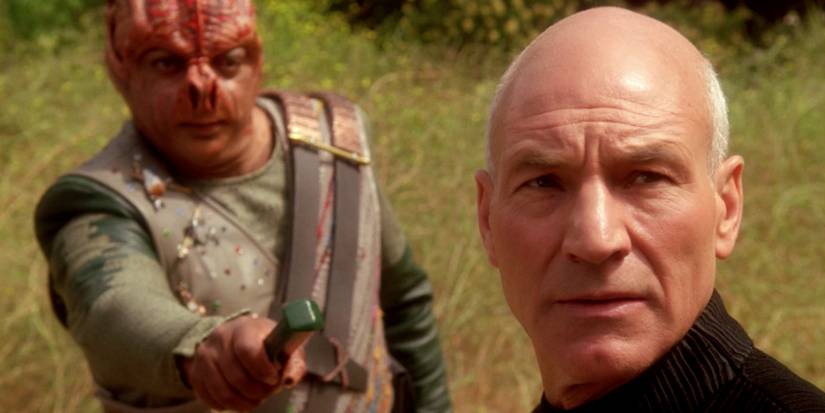
Modern discourse loves serialization. Long arcs feel prestigious and look better in trailers. But episodic television has quietly become ideal for streaming life. The Next Generation understood that decades before autoplay was a thing. Each episode has a beginning, a middle, and a clean emotional ending. You can stop anytime and start anywhere. That flexibility matters when you’re worn out. It’s why Columbo and Law & Order keep sticking around. You can half-watch and still feel caught up.
TNG also varies its tone without whiplash. One week, it’s a courtroom drama. The next is a philosophical puzzle. Then a bottle episode. Then a character study. That mix helps it stay interesting even when you remember the endings. You can settle into the episode you’re watching without feeling like you missed homework.
Voyager’s Strengths, TNG’s Reach
Part of The Next Generation’s durability comes down to its characters. Captain Jean Luc Picard (Patrick Stewart) isn’t defined by swagger. Lt. Commander Data (Brent Spiner) isn’t defined by punchlines or fish-out-of-water stories. Beverly Crusher (Gates McFadden) isn’t just there to react. These aren’t characters locked into a specific cultural moment. They argue about ethics, autonomy, duty, and fear. Those conversations don’t date themselves. They resurface differently depending on when you watch them. A line that felt academic in the ’90s seems rather unsettling now. An episode that once seemed abstract suddenly feels personal.
This isn’t a knock on Star Trek: Voyager. Its appeal is real and well-earned. Captain Kathryn Janeway’s (Kate Mulgrew) command style matters. The found-family arc of the crew works. The long journey home works because it builds over time and rewards patience. But it also turns watching Voyager into a familiar question: is this the episode where they finally get back to Earth, or are we still in uncharted territory? At a certain point, it starts to feel like Gilligan’s Island in space, where every coconut-based escape plan sounds promising, and you wonder, “Is this the episode where they’re rescued?“
Thirty-two point nine million hours isn’t flashy. It doesn’t trend on social media or get viewer spikes because of clever memes. People aren’t engaging in all-night arguments over various plot points, like whether the Enterprise-D carpet was a bold choice or a cry for help. Streaming rewards durability more than novelty, even if novelty gets all the attention. TNG was built for that kind of life before anyone knew what streaming would look like. It doesn’t age perfectly, and quite frankly, nothing does. But it adapts better than expected. That’s why, decades later, while newer shows cycle through the conversation and then slide out of it, Star Trek: The Next Generation just keeps playing.