While the Academy Awards are still subject to some major biases and gaps in representation, they remain the most prestigious form of recognition within the film industry. The acting categories, in particular, have become symbolic of talent, and Oscar nominations and wins are often used as a form of grand title placed in front of those actors’ names in all their future performances. It’s an honor just to be nominated, as the saying goes, but there are also a whole bevy of actors who weren’t even lucky enough to garner that distinction.
Many of the most egregious Oscar nomination snubs are well known among even casual film fans. Performances from the likes of Toni Collette in Hereditaryor Lupita N’yongo in Usthat were overlooked because they came out of horror movies, a genre often snubbed by the Academy, or Paul Giamatti in Sideways, who somehow got edged out in competitive years. There are also those unfortunate nominees of color who the Academy failed due to its inherent lack of diversity, like David Oyelowo in Selmaor Pam Grier in Jackie Brown. Every single one of those performances deserved a nomination, but there are also those performances that low-key got little to no attention from even the smallest of awards bodies and went wholly unrecognized. These are ten of those performances that should have been in the Oscar conversation.
John Candy in ‘Planes, Trains and Automobiles’ (1987)
Comedy performances haven’t always been given the fairest of treatment during awards season. Occasionally, a few will slip through, usually in the supporting performance categories such as Melissa McCarthy in Bridesmaidsor Robert Downey Jr. in Tropic Thunder, but more often than not, a performer’s chances will go up if the film itself is more dramatic with flecks of comedy sprinkled in. Even when there is such a deft mix of drama and comedy, as in John Hughes‘ Planes, Trains and Automobiles, there’s still a chance the actor will get left out in the cold.
Both Steve Martin and John Candy give pitch-perfect performances in this classic comedy two-hander, but it’s Candy’s ability to navigate his boisterous character from moments of genuine warmth to oblivious obnoxiousness that truly is worthy of awards recognition. Del Griffith is the kind of character who slowly kills with his kindness that has popped up in dozens of odd couple comedies, but is often overplayed into oblivion. Candy, ever the perfect match for Hughes’ writing, finds subtleties amidst the broader comedy that make his character all too believable and heartbreakingly relatable.
Alan Rickman in ‘Die Hard’ (1988)

That Alan Rickman left this world without ever getting an Oscar nomination is as criminal as some of his characters. Despite some wins and nominations from other groups such as the BAFTAs and the Golden Globes, he was unjustly shut out by the Academy for his scene-stealing turns in films like Robin Hood: Prince of Thieves (for which he won a BAFTA, thank you very much), Galaxy Quest, and the entire Harry Potterfranchise. Most unforgivably, his iconic film debut as the villainous Hans Gruber in the action masterpieceDie Hardwent completely unrewarded.
Action, even more so than comedy, almost never cracks into the Academy’s acting categories, but a colorful villain performance is often the ticket to do so, such as when Heath Ledger won for The Dark Knight. Die Hard did, naturally, get some requisite nominations in the more technical categories for editing, sound and visual effects, but in a year when Kevin Kline won an Oscar for his comedic villain in A Fish Called Wanda, it’s near sacrilege that Rickman wasn’t nominated. His effete villain, who is the perfect foil for Bruce Willis‘ blue-collar hero, set a template that so many action movie villains followed for years, and none of those performances have ever come close to touching Rickman’s.
Bob Hoskins in ‘Who Framed Roger Rabbit’ (1988)
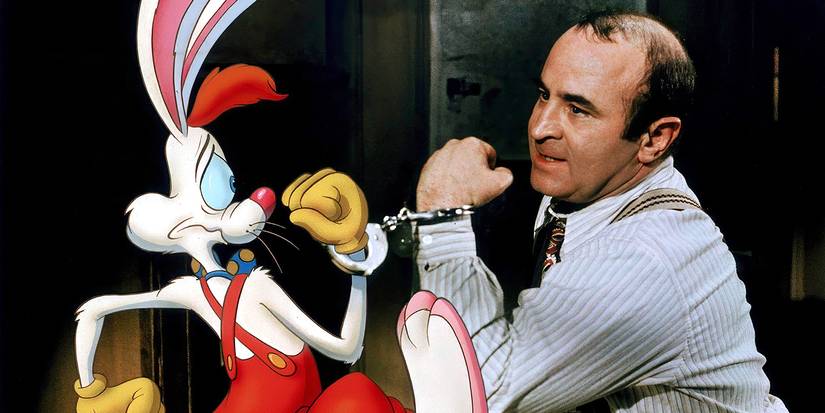
Bob Hoskins only ever received one Oscar nomination in his entire career for Mona Lisa, which he unfortunately lost to Paul Newman‘scareer recognition award for The Color of Money. The English actor continually gave committed performances in movies that sometimes didn’t deserve them, like Super Mario Bros., and while no one is ready to have the conversation about why his performance as Smee in Hook was Oscar-worthy, it’s high time to discuss how incredible and pivotal his performance was in Who Framed Roger Rabbit.
Many great actors were considered for the lead role in Robert Zemeckis’ hybrid animated comedy, and they all would’ve been wrong. So key is the lead role to the complete comedic and dramatic balance of Who Framed Roger Rabbit that only an actor of Hoskins’ commitment and comedic skill could pull it off. He has the technical precision required so that the audience never questions whether he is sharing the screen with his animated co-stars or not, and does it all while maintaining all the characters’ emotional arcs. It’s as much a part of the magic of the movie as the groundbreaking animation effects are.
Linda Hamilton in ‘Terminator 2: Judgement Day’ (1992)
Playing an action hero can be a deceptively difficult task. For as often as critics consign the success of an action star to their natural charisma or persona more than any transformative acting ability, it’s a special set of skills that allows an actor to carry an entire film or franchise on their broad shoulders. Bruce Willis is irreplaceable in Die Hard, Harrison Ford is Indiana Jones, and nobody but Keanu Reeves could be John Wick. It’s not perplexing that the Academy never recognizes these performances, but what is perplexing is how they will also overlook those that are transformative action performances, especially those that come with precedent.
James Cameron had already directed Sigourney Weaver to an Oscar nomination in Aliens, a role that saw her evolve her already strong-willed character into a full-blown action hero. That change was positively infinitesimal in comparison to Linda Hamilton‘stransformation from final girl in The Terminatorto lethal killing machine in the action-packed sequel. Cameron heavily championed Hamilton and her muscular performance, and it’s easy to see why. Alas, nothing came out such support, which is a shame since Hamilton gives the most pivotal and important performance in the film.
Bruce Willis in ‘Death Becomes Her’ (1992)

Campy performances have their place at the Oscars. They represent the more theatrical side of the acting spectrum, and that often finds a lot of support from the Academy’s acting branch. That support generally depends on the overall success of the film, and when the movie falls unfortunately flat, as Death Becomes Her did at the time, the performances get left out as well. All three of the film’s central performances are worthy of accolades, but only Meryl Streep received any, with a single Golden Globe nomination.
Willis’ flaccid performance as a weak-willed surgeon turned mortician caught in the crossfire of two immortal, and eternally vain, women is worlds away from the action star persona he had been pigeonholed into, and if the film itself had more immediate success, it could have opened all sorts of character doors for the actor. As it is, Death Becomes Her has become a camp classic, and while its embrace by the LGBTQ community has focused mostly on the female leads, Willis’ comedic work should not be ignored, as it was in 1992.
Tom Hanks in ‘Toy Story’ (1995)

There’s a much larger conversation to be had over the lack of recognition given to voice actors by many awards groups. It’s a skill set that comes with its own unique limitations and challenges, and there has never been any space given to it by the Academy. Maybe someday a category will exist for voice performances, even though they belong right alongside the physical ones, but that won’t fix the many that have been overlooked, starting with Tom Hanks’ iconic performance as everyone’s favorite cowboy doll, Woody, in Toy Story.
The leader of Andy’s toys, Woody is fiercely loyal but ugly with envy when his place is usurped by the new space toy Buzz Lightyear. He’s a flawed hero, and Hanks is the perfect vocal embodiment of his old-fashioned attitude mixed with the right amount of sardonic cynicism. Combined with the talents of Pixar’s animators, Hanks’ performance is what gives humanity to this plastic doll, and it’s just as award-worthy as any performance of flesh and blood.
Gary Farmer for ‘Dead Man’ (1995)

Jim Jarmusch‘s idiosyncratic Western Dead Mandoesn’t get near the praise it deserves. It subtly subverts many of the genre’s tropes without undue emphasis, and it’s filled with wonderful performances from its eclectic cast. The best embodiment of that is in First Nations actor Gary Farmer‘sperformance as the indigenous character Nobody, who joins Johnny Depp‘scharacter on his run from the law and provides wonderfully dry humor to the proceedings.
Farmer’s character is a fully developed one that purposefully eschews the clichés inherent to the genre’s depiction of indigenous characters, making for an off-kilter counterpart to Depp’s less-than-skilled outlaw protagonist. Farmer has continually put in solid work, which has earned him three Independent Spirit Award nominations, including for this performance. Alas, he has never been recognized by the Academy, which has an unfortunate precedent for many indigenous actors globally.
Samuel L. Jackson in ‘Resurrecting the Champ’ (2007)

Samuel L. Jackson has, shockingly, only ever been nominated for an Academy Award once, for his iconic performance in Pulp Fiction, despite being a prolific actor who has turned in stellar work in both blockbusters and critical favorites alike, including worthy turns in Django Unchained, Jackie Brown, Jungle Fever, and A Time to Kill. One of his all-time best performances, however, came in a film almost no one saw called Resurrecting the Champ. This sports drama features Josh Hartnett as a reporter who finds a potential story in Jackson, an unhoused man who claims to be a former heavyweight boxer.
It’s a role with almost none of the command or charisma that are commonly associated with Jackson’s other performances, and the actor completely disappears into the character, drawing in the audience even when the film’s narrative fails to do so. It’s a performance that stands in stark contrast to Jackson’s career and should’ve been rightly recognized at the time instead of being buried at the box office.
Alden Ehrenreich in ‘Hail, Caesar!’ (2016)

The Coen Brothers have directed a plethora of actors in career-best performances that have been overlooked by the Academy with alarming regularity. John Goodman in The Big Lebowski, Steve Buscemi in Fargo, Oscar Isaac in Inside Llewyn Davis, literally everyone in Burn After Reading. All of these deserved recognition, but even more overlooked was Alden Ehrenreich’s star-making turn in Hail, Caesar!
Ehrenreich was once tipped as the next big thing in Hollywood, but a series of non-starters unfortunately stunted his leading man career. Recently, he’s been experiencing something of a comeback narrative, with wonderful character work in movies like Oppenheimer and Weapons. His role as singing cowboy star Hobie Doyle in the Coens’ love-letter to Hollywood should have been the start of a hot streak for him, but, unfortunately, the movie was given a fairly muted response, and his follow-up as the lead in Soloonly succeeded in making headlines for its behind-the-scenes drama.
Jacob Tremblay in ‘Doctor Sleep’ (2019)

Child performances do get some notice from the Academy when warranted, but they are still rare occurrences. So, too, are horror performances and those supporting performances that only account for a single scene in a film. All three apply to Jacob Tremblay‘s appearance in Mike Flanagan‘s adaptation of Stephen King‘s Doctor Sleep, but it also happens to be one of the single scariest and most affecting scenes in 21st-century horror.
As a young boy who possesses the shining ability, Tremblay’s character draws the attention of the film’s villainous cult, who feed off the energy of others with psychic powers. Their method of harnessing that energy involves violent torture of their victims, which is played out in gruesome detail, with Tremblay giving a bravura performance that is truly gutwrenching. Any parent or person with a functioning sense of empathy will find the scene difficult to get through, which is all due to the effectiveness of Tremblay. It may be miles from the kind of work that gets Oscar attention, but it’s just as impressive as any other performance from 2019.