Making a movie is difficult stuff for an overwhelming number of reasons, but making your first movie is difficult for even more reasons. Some directors knock it out of the park with their feature-length directorial debuts, and some filmmakers even peak with their first movies. Orson Welles, who directed plenty of movies post-Citizen Kane (1941), is probably the best example, since that 1941 film is commonly regarded as one of the best of all time.
With the following directors, though, their debuts were often more a taste of things to come. That’s certainly not to suggest that all the directorial debuts mentioned below are weak, or anything, but more just that the director’s sophomore efforts were noticeably better. The films below also aren’t ranked in terms of quality (otherwise, the seventh would be ranked quite a bit higher), but more by how much of an improvement each represented. Also, short films are not taken into account below, yet a couple of debuts done with co-directors have been counted.
10
Kathryn Bigelow’s ‘Near Dark’ (1987)
Followed ‘The Loveless’ (1981) (Co-Directed With Monty Montgomery)
Even with it being co-directed by Kathryn Bigelow and starring a young Willem Dafoe, The Loveless is a largely forgotten movie. It’s not terrible, but it doesn’t really do a whole lot to make it feel exceptional, with it being a serviceable biker-related movie. Bigelow certainly stepped up her game with Near Dark, though, which is one of the best vampire films ever, maybe? Or if that sounds too hyperbolic, then maybe just consider it one of the most underrated.
It’s certainly a cult classic, though maybe it should’ve been more popular; like, a genuine full-on classic. It does some interesting things with expected vampire tropes and conventions, with the neo-Western setting and style of Near Dark also doing quite a lot to elevate it and make the whole thing a good deal more engaging than you might expect.
9
Darren Aronofsky’s ‘Requiem for a Dream’ (2000)
Followed ‘Pi’ (1998)

There’s another soon-to-be-mentioned filmmaker whose first movie came out in 1998, and his second in 2000, with the latter being significantly better, but Darren Aronofsky… well, he’s the first filmmaker who did that who’s being mentioned here. His first movie was Pi, and it was very good for a small-scale psychological drama/thriller about obsession and mathematics (quite a bit more exciting than it sounds).
Though Requiem for a Dream was kind of next-level stuff, and still might well be the heaviest and most emotionally intense film Aronofsky has ever directed. It’s not subtle, in how it looks at addiction and the way one’s life (or a few people’s lives) could fall apart because of drug use, yet the sledgehammer approach to the whole thing is powerful in its own way. The nightmarish quality of it all is also hard to deny and be unshaken by.
8
Paul Thomas Anderson’s ‘Boogie Nights’ (1997)
Followed ‘Hard Eight’ (1996)

Paul Thomas Anderson didn’t really waste any time making his sophomore film, as Boogie Nights came out just one year after Hard Eight. Regarding the latter, it’s probably the least exciting of all the films Anderson has made, but it’s still a strong debut, and functions well as a small-scale and character-focused crime drama. Then, with Boogie Nights, things are bigger in just about every way.
And more than just being bigger, it’s also better. Boogie Nights and Magnolia (his third film) now overshadow Hard Eight to a pretty dramatic extent, though the ramp-up in quality makes that inevitable. All of Paul Thomas Anderson’s movies are worth watching, even his first, but it’s certainly the case that some are more worth watching than others (or, put another way, maybe need to be prioritized).
7
Quentin Tarantino’s ‘Pulp Fiction’ (1994)
Followed ‘Reservoir Dogs’ (1992)
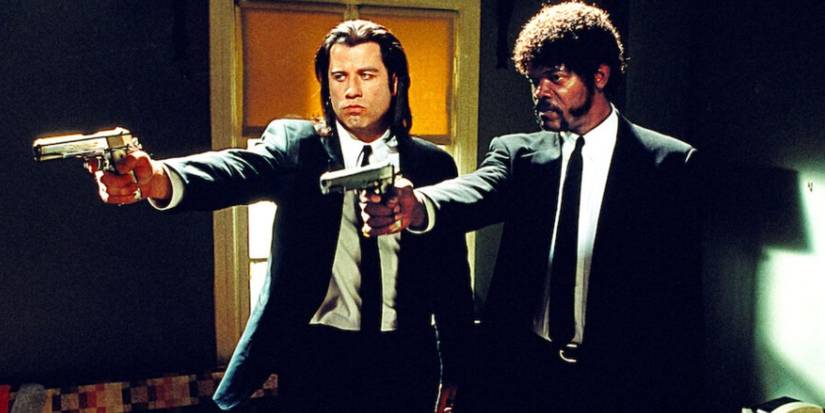
Of all the directorial debuts being mentioned here, Reservoir Dogs is certainly the strongest. It was a pretty wild mission statement of sorts for Quentin Tarantino, and it’s likely that many directors would be incredibly happy if they spent their directing careers building up to a movie as good as Reservoir Dogs. But Tarantino’s heist film was exceeded in quality, in almost every way, by his second film, Pulp Fiction.
He went from one great movie to a greater one, essentially. Reservoir Dogs might be up there as one of the best of the 1990s, while Pulp Fiction is easier to call one of the best movies of all time. But still, an improvement is an improvement, and the one here has to be noted, even if what was improved upon was already something quite special.
6
Greta Gerwig’s ‘Lady Bird’ (2017)
Followed ‘Nights and Weekends’ (2008) (Co-Directed With Joe Swanberg)

There was a massive amount of critical success for the first two movies that Greta Gerwig directed solo (Lady Bird and Little Women), and then quite a bit of critical success for Barbie… and a whole lot more by way of commercial success. She was a household name among film buffs and critics for those first two movies, and then more of a household name for everyone, thanks to Barbie.
She’d been acting and writing for quite a while before any of those movies, though, including starring in and co-directing a fairly obscure indie film called Nights and Weekends, alongside Joe Swanberg, who also starred in and co-directed it. It’s not terrible for what it is, but what it is isn’t much. Lady Bird, on the other hand, is a great coming-of-age movie, and if you wanted to count that as her first true film, then you might also be able to make the argument that Little Women was a further improvement for Gerwig and her filmmaking.
5
The Daniels’ ‘Everything Everywhere All at Once’ (2022)
Followed ‘Swiss Army Man’ (2016)
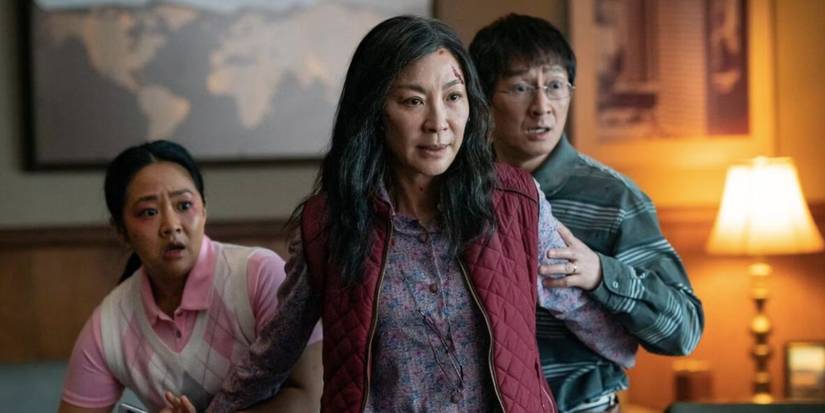
Swiss Army Man is up there among the most absurd comedies ever made, with a story that… look, there isn’t enough space to explain it. There’s a dead body, farting, crude humor, surprisingly brutal tragedy, all the things. It’s just hard to go into detail when you also need a bit of space to explain what Everything Everywhere All at Once is about, which was the follow-up to Swiss Army Man by directing duo Daniel Kwan and Daniel Scheinert (AKA the Daniels).
Well, actually, you could just say that Everything Everywhere All at Once lives up to its title by doing so much and within so many genres, including absurd comedy (again), science fiction (the multiverse is explored here), and martial arts cinema (there’s some surprisingly good action). It should be noted, though, that Everything Everywhere All at Once is only the second film for Kwan, since Scheinert directed 2019’s The Death of Dick Long solo, but as a Daniels film, Everything Everywhere All at Once is the second overall, and it’s an even stronger film than the already solid, ambitious, and fairly impressive Swiss Army Man.
4
Christopher Nolan’s ‘Memento’ (2000)
Followed ‘Following’ (1998)

Christopher Nolan didn’t really pick up a true following until after Following (1998). That one was his directorial debut, and it’s a pretty small-scale film that sometimes feels like a proof-of-concept for later Nolan films and stylistic things. There’s certainly an inventiveness to it, considering its budget and overall intimate feel, yet it doesn’t have nearly the same bite, confidence, and impact as Nolan’s second film, Memento.
Of course, after Memento, Christopher Nolan kept making bigger and more ambitious movies, to the point where Memento now feels most in line with Following, at least in terms of scope (Insomnia is also a smaller-scale Nolan film, but having some incredibly recognizable actors in it, like Al Pacino and Robin Williams, certainly made it feel a little closer to blockbuster territory). But Memento is still that first great Nolan film, and it’s the sort of thing where Following walked so Memento could run, fly, and confound to a greater extent, all at once.
3
Damien Chazelle’s ‘Whiplash’ (2014)
Followed ‘Guy and Madeline on a Park Bench’ (2009)
The first film Damien Chazelle directed, Guy and Madeline on a Park Bench, is obscure to the point that you might be forgiven for thinking Whiplash was his directorial debut. That’s the one that made him an exciting young director to keep an eye on, and deservedly so, since it’s such a perfectly intense and engaging film about something very simple: a young man’s dangerous obsession to become perfect in his chosen field.
Guy and Madeline on a Park Bench feels a good deal more amateurish and unfocused, though it’s not entirely terrible, and is somewhat interesting if you want to see Chazelle basically doing a feature-length warm-up for La La Land, since Guy and Madeline on a Park Bench is also a musical of sorts. Whether La La Land was a further improvement on Whiplash, on the other hand, is entirely up for debate, but it’s much harder to deny Whiplash was a phenomenal step-up for Chazelle, from his first movie.
2
James Cameron’s ‘The Terminator’ (1984)
Followed ‘Piranha II: The Spawning’ (1982)

With James Cameron, his first movie, Piranha II: The Spawning, has basically been disowned, so if you want to consider The Terminator his directorial debut, then that’s something the man himself would likely be more than okay with. In that instance, he’s still arguably someone who improved with his sophomore effort, since Aliens (released two years after The Terminator) is arguably better still.
The Terminator is the movie that established Cameron as a great filmmaker, and then Aliens showed that film wasn’t a fluke.
The Terminator and Aliens stand as his two scariest films, arguably, and then Piranha II: The Spawning, is also technically horror-centric, but not actually scary, nor particularly funny or entertaining. The Terminator is the one that established Cameron as a great filmmaker, and then Aliens showed The Terminator wasn’t a fluke, all the while also establishing Cameron as someone who could craft a genuinely great sequel (and, perhaps even more impressively, he did so within a movie series he didn’t begin).
1
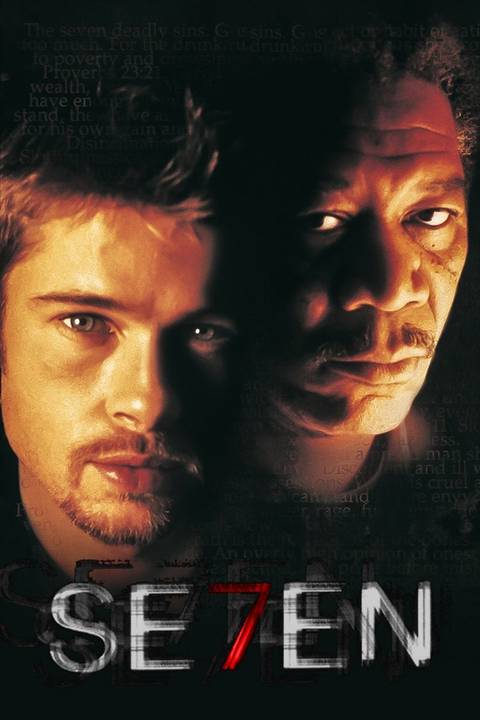
David Fincher’s ‘Se7en’ (1995)
Followed ‘Alien 3’ (1992)

Speaking of the Alien series, David Fincher made his feature directorial debut with the follow-up to Aliens, directing Alien 3 in 1992, after he’d already established himself as a music video director a little earlier. Now, Alien 3 isn’t as terrible as its reputation might suggest, and before the fourth movie, it felt like a not totally terrible place to end the series, but even its defenders can probably agree it’s flawed.
So, Fincher’s first great movie ended up being his second one: Se7en. It’s one where everything feels a bit tighter and more controlled, and then it also established David Fincher’s style and some of the ideas he’d explore further in later films. Se7en is memorably heavy, intense, and hard-to-shake, and unlike Alien 3, there are very few things in it that could be considered flawed or improvable. It’s all rather airtight, as a film.