This article contains unavoidable spoilers for the movies listed.
An ending can make or break a movie. It’s not the be-all, but it is the end-all. A good ending for a good movie is pretty much expected, while a bad ending to an otherwise good movie can make you question just how good the movie itself really was. And then if there’s a movie you don’t really like, but the ending is great while also recontextualizing what came before, then such an ending can indeed be redemptive.
As for movies with unsatisfying endings? Such an ending isn’t always a dealbreaker, because some movies tell stories that kind of need to leave things up in the air, with endings that are either ambiguous or just unresolved. The following all wade into that territory more than, say, Inception, and so if you’re after proper endings that feel entirely conclusive, then you’re –
10
‘Hiroshima Mon Amour’ (1959)
The whole of Hiroshima Mon Amour is fairly unusual, to say the least, not just the ending, as it’s very much on the arthouse side of things as far as romance movies go. It takes place in Hiroshima, deals with the nuclear attack on said city through conversations (and a startling/sobering opening sequence), and depicts two people from two different backgrounds falling in love.
The whole thing is a bit floaty and dreamy, and then it ends without much of an indication of whether the two main characters will continue to see each other. They also name each other after the city both are from. But a film like Hiroshima Mon Amour having a conventional, romantic, or even overly tragic ending would ring false, so it ending in an enigmatic way – after continually being a powerfully enigmatic film – works.
9
‘A House of Dynamite’ (2025)
Playing out the same small stretch of time on three different occasions, with each one focusing on a different group of important individuals, A House of Dynamite sure is interestingly structured, as a war/thriller film. There’s an imminent nuclear attack, and a whole lot of desperation involved when it comes to trying to figure out who fired the missile, where the missile might hit, and whether the missile can be intercepted.
It turns out, no one really knows anything, and right before Chicago is set to be decimated at the end of the first act, things go back in time, and the same events play out again with different people. The same goes for the third act, which largely focuses on the President and the idea of what to do by way of retaliation, but the viewer doesn’t get answers in terms of what the President chooses, either. Either way, doom seems imminent, and A House of Dynamite forces you to imagine all sorts of (potentially post-apocalyptic) horrors that await the world as depicted in this film, right after the story itself abruptly ends. Well, abruptly ends three times in a row. It’s cruel, but undeniably bold and thought-provoking.
8
‘The 400 Blows’ (1959)

Since The 400 Blows is a movie all about growing up, and the process of growing up arguably never ends, neither does The 400 Blows. That being said, it did receive some sequels showing later stages in the life of Antoine Doinel, with Jean-Pierre Léaud reprising the role and François Truffaut continuing to direct, but still, the first movie about Antoine does leave his future uncertain.
It still works, even with the follow-up movies, because The 400 Blows is particularly drama-heavy and focused on alienation, so an ending not belonging to the movie works because Antoine himself has been shown to struggle with finding something he can hold on to or belong to. It’s a disquieting way to end a coming-of-age movie, but also a very effective and honest one, and there’s good reason why the most memorable and well-known scene in The 400 Blows is its final one.
7
‘The Banshees of Inisherin’ (2022)

The Banshees of Inisherin has quite a bit of resolution for its side characters, with one getting a relatively optimistic ending that involves leaving the awful and claustrophobic island the film takes place on, and another getting a tragic ending: dying. But the two lead characters don’t get much closure, which is agonizing, considering most of the film involves the two feuding.
In this way, it’s like the bitterness will never end, or if it does eventually end, based on what’s been seen, it’s unlikely to end well for anyone. The Banshees of Inisherin is a film about bitterness, bad communication, and not really understanding what another person is going through, or how they might feel, and the ending lacking elements of a traditional ending suggests a sort of unending purgatory for the characters, and for perhaps anyone else stuck in a comparable predicament or feud.
6
‘All the President’s Men’ (1976)

Since All the President’s Men dealt with a then-recent historical event, the Watergate scandal, it sort of makes sense for it to just stop at a point. Things accelerate, in terms of the two main characters – a pair of reporters – feeling like they’re in increasing danger, but then the movie ends in a way that feels kind of abrupt.
The ending creates the sense that nothing will be the same for the main characters going forward, nor will American politics – and the way politicians are seen – ever be the same again.
It suggests a bit of a “the fight against corruption goes on” sort of thing, but it also works in a paranoid way, creating the sense that nothing will be the same for the main characters going forward, nor will American politics – and the way politicians are seen – ever be the same again. All the President’s Men wants to tell the story at hand as it was, and since there was no direct conclusion for things so soon after (and ongoing questions raised by the film, more broadly), the ending is a successful one.
5
‘The Sword of Doom’ (1966)

The title of The Sword of Doom should tell you that things will get dark, to some extent, but it’s still surprising just how intense and bloody this samurai movie gets, considering its age. It’s about a swordsman who seems willing to do just about any job thrown his way, no matter how brutal, and his psyche continually slips as he commits worse and worse atrocities.
And then, at the end of the film, he’s entirely broken, and he gets into the large action sequence of the movie, chopping away at people – and getting slashed at himself – all before things suddenly just… stop. It has the same effect as the ending of Butch Cassidy and the Sundance Kid, but while that film suggested they’d be immortalized as oddly heroic figures forever, the ending of The Sword of Doom suggests that the lead character is doomed to eternally – perhaps even in the afterlife – continue battling, committing acts of violence, and himself getting attacked.
4
‘Mean Streets’ (1973)

Not the first Martin Scorsese film, but arguably his first great one, Mean Streets was stylish in the way Scorsese would come to be famous for, and it was also an early film of his about organized crime. Granted, the characters here are more wannabe gangsters than they are full-on mobsters, aspiring to the sort of life and prestige found (to a higher extent, at least) in films like Goodfellas and Casino.
So, Mean Streets is very scrappy and rough around the edges in a way that kind of fits the characters and where they all are at that point in their lives. If there were more of a story, perhaps Mean Streets ending in such a confounding and anticlimactic way might feel frustrating, but since it’s all very slice-of-life, and that slice has got to end at some point, it generally works. Perhaps it functions thematically or tonally more than narratively, but still, it’s bold and jarring in a mostly good way.
3
‘Monty Python and the Holy Grail’ (1975)

A real middle finger of an ending, Monty Python and the Holy Grail just runs out of steam and/or money at a point, and then it concludes, but in a way that’s equal parts funny and frustrating. The whole film begins as a comedic take on the story of King Arthur seeking the Holy Grail, but there are so many diversions and eventual breaks from reality as things go along, including contemporary figures seen in supposedly medieval times.
Eventually, those figures catch up to the film’s main characters, and then Monty Python and the Holy Grail ends with King Arthur and his followers getting arrested by modern-day police before a battle can even start. It’s a joke of an ending for sure, but the whole movie is one big joke (and a pretty damn funny one at that), so that aforementioned (and metaphorical) middle finger right at the end mostly works.
2
‘No Country for Old Men’ (2007)
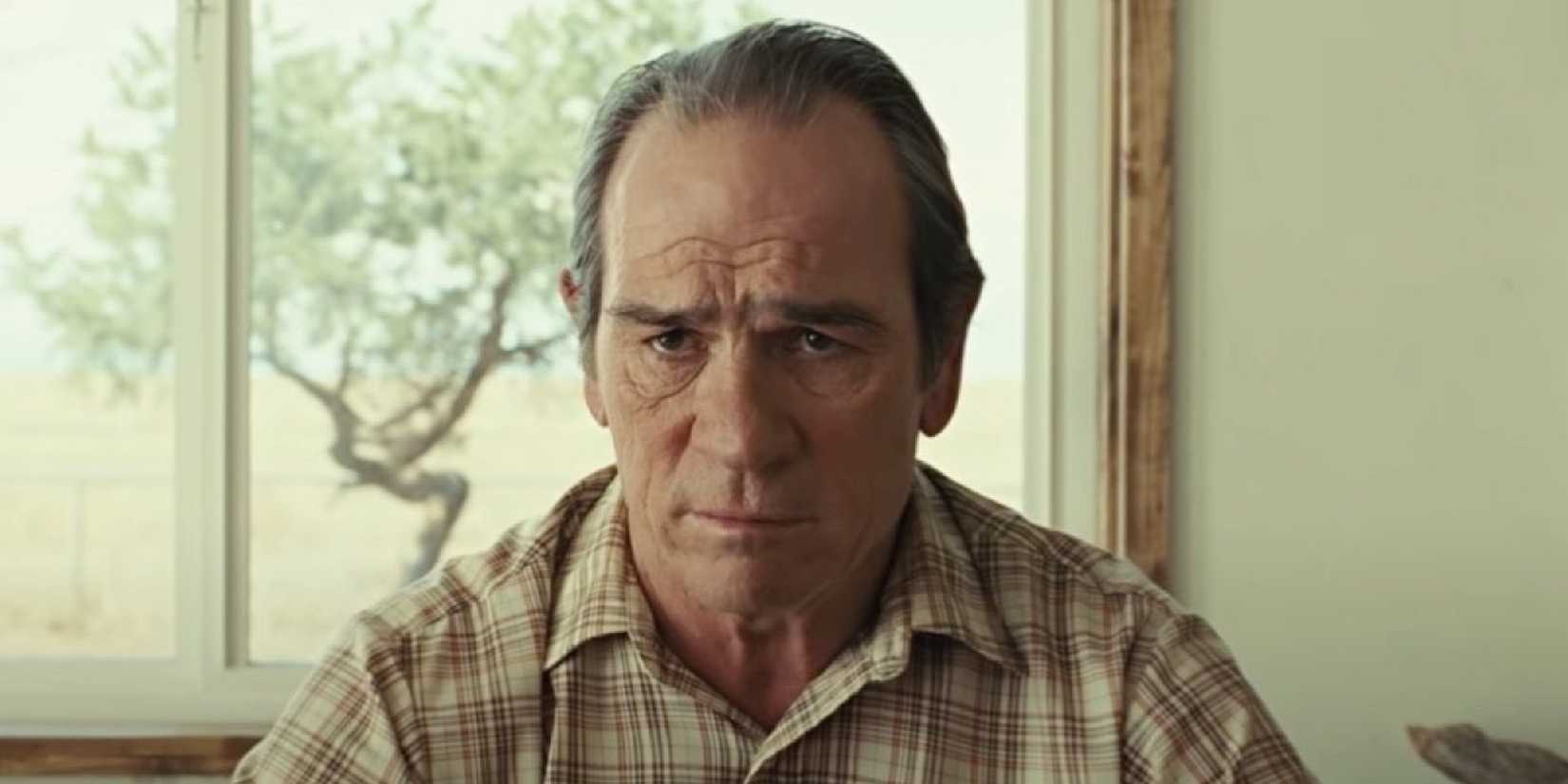
Like the ending to The Sopranos (also from 2007), the way No Country for Old Men concludes feels frustrating at first, but makes sense once you sit with it for a while. In hindsight, yeah, the kind of movie that kills off someone who feels like the closest thing to a protagonist (or like an antihero) when there’s still so much more movie left to go isn’t exactly the likeliest of films to end neatly.
The bad guy gets away with seemingly just about everything, though he’s also gravely injured, so his fate isn’t certain. And then a sheriff, who was also a prominent character in the movie, never comes into contact with the central antagonist. At the end of No Country for Old Men, he talks about a dream he had, then mentions waking up, and then the film abruptly ends. Do with that what you will, if you can.
1
‘The Thing’ (1982)
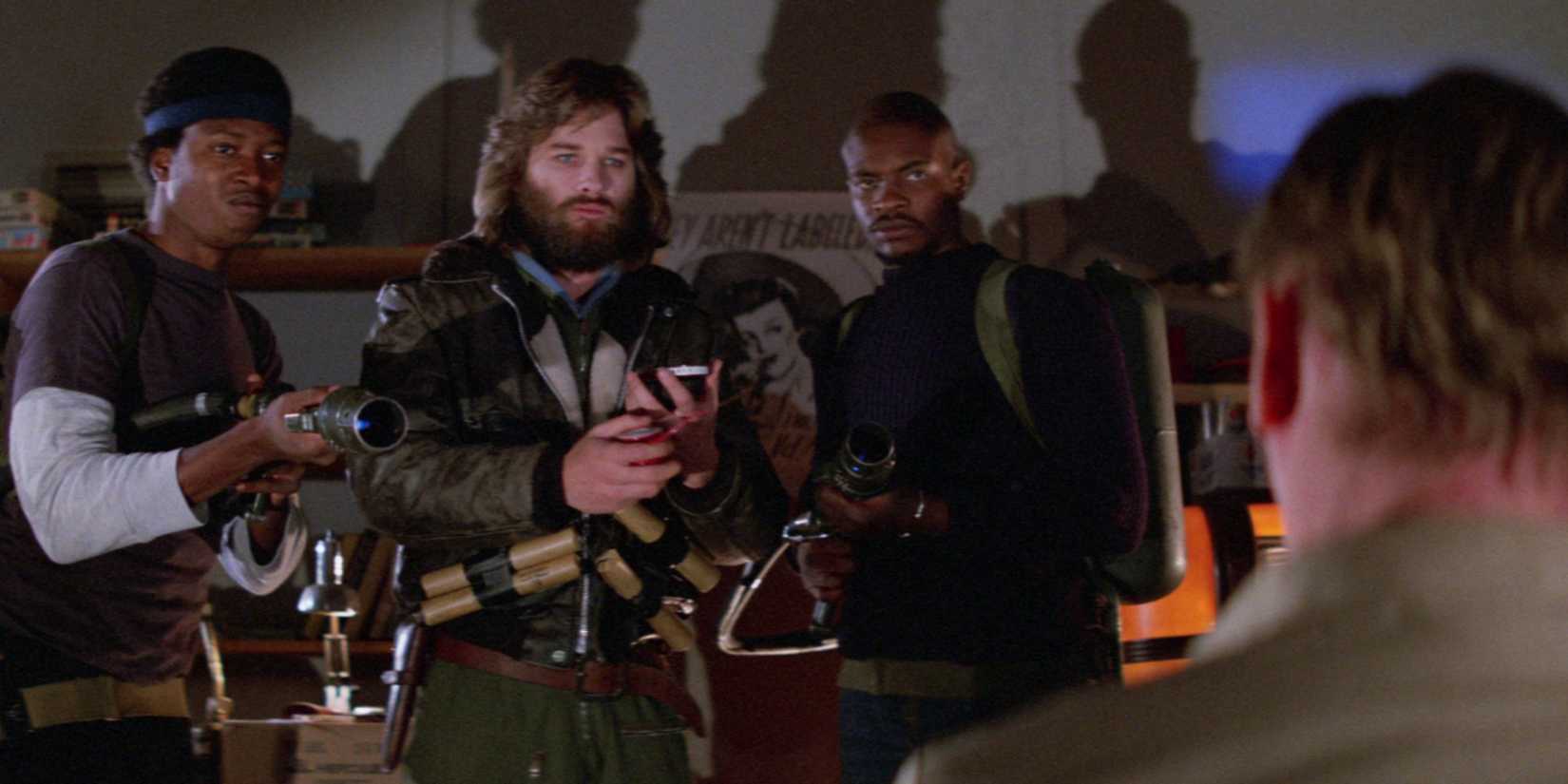
There’s a huge amount of paranoia throughout the entirety of The Thing, and the ending, though explosive, manages to find a way to basically make that paranoia never end. The film involves an alien life form disguising itself to hunt down a group of researchers in the Antarctic, and since it’s so skilled at deception, those who are fighting for their lives never really know who to trust.
After things have been destroyed and a good deal of blood has been shed, there are two survivors at the end of The Thing, but neither can be sure the alien’s gone for good, and neither’s certain the other one is still human. So they sit there, with their uncertainty, also knowing that they’re probably going to die from the elements if the alien is indeed gone, and then, bam. Closing credits. Uncertainty and ambiguity have never been quite so fitting or oddly satisfying.
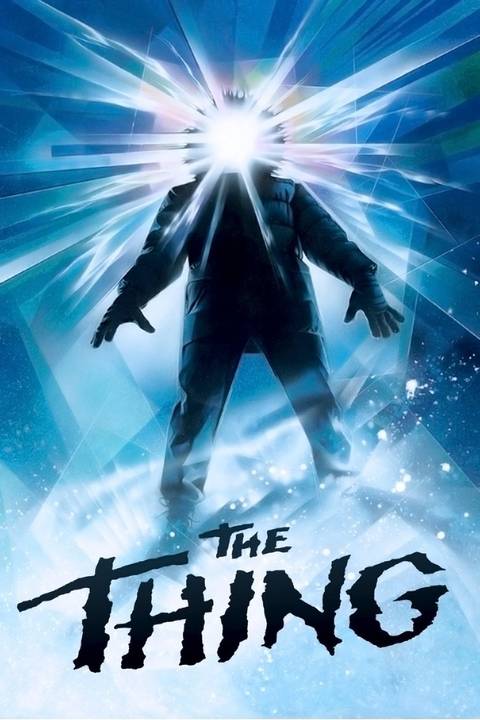
The Thing
- Release Date
-
June 25, 1982
- Runtime
-
109 minutes
- Director
-
John Carpenter
- Writers
-
Bill Lancaster, John W. Campbell Jr.