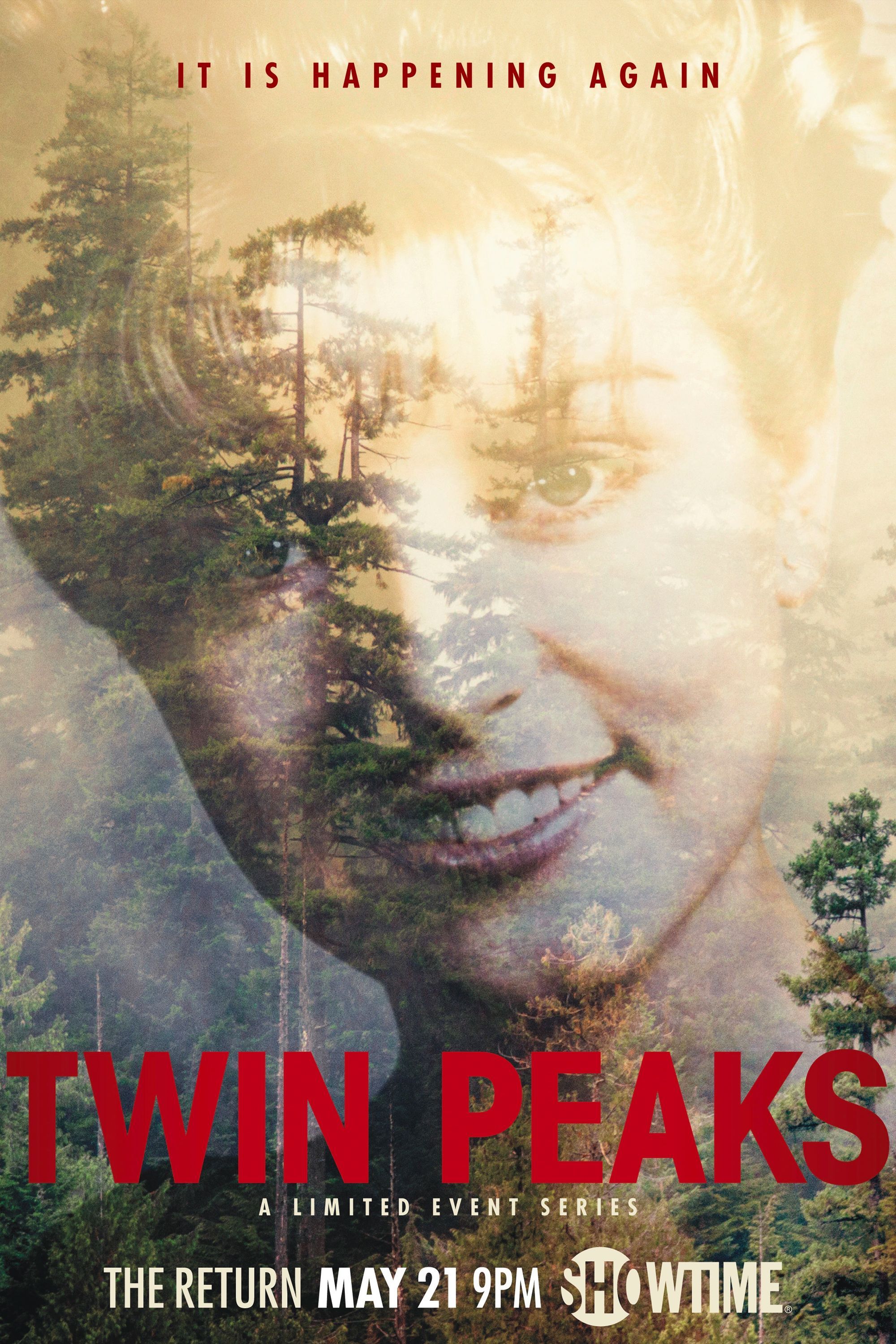
David Lynchwas never a filmmaker who was intersted in giving audiences exactly what they wanted, so it was no surprise that Twin Peaks: The Returnwas not the traditional “legacy sequel” that provided easy nostalgia. In the third season, which came over two decades after ending on a massive cliffhanger, Twin Peakstook a darker and more existential direction that challenged the preconceptions that audiences had of many of the beloved characters. Even though many of the character depictions were intended to be upsetting or frustrating, Dana Ashbrook’s reprisal of the role of Bobby Briggs was one of the most powerful storylines in Twin Peaks: The Return.
In the original series, Bobby is a school bully who regularly torments James Hurley (James Marshall), and is suspected by Agent Dale Cooper (Kyle MacLachlan) to be involved in the murder of his girlfriend, Laura Palmer (Sheryl Lee). Bobby and his best friend, Mike Nelson (Gary Hershberger), attempt to attack James, but it is revealed that he was deeply hurt by Laura’s death and had felt manipulated by her. Although the conclusion to his storyline was left ambiguous by the ending of the second season of Twin Peaks, Bobby returns in the third season, where it is revealed that he has become a member of the Twin Peaks Sheriff’s Department.
Bobby Briggs Becomes a Better Man in ‘Twin Peaks: The Return’
Bobby’s role in Twin Peaks: The Return fulfills a critical scene from the original series that hinted that he was a far more thoughtful, insightful, and caring person than he had been perceived as. Bobby’s father, Major Garland Briggs (Don S. Davis), was a member of the Air Force who aided Cooper in exploring the unexplained paranormal activity within the small town. Bobby’s rebellious activities often put him at odds with his father’s strict, military background, yet the two share a surprisingly intimate moment at the café owned by Norma Jennings (Peggy Lipton); Garland discusses having a prophetic dream in which he imagines the future that his son will have, and Bobby becomes emotional, deciding that he will fulfill what his father envisioned.
Bobby’s initial appearance in Twin Peaks: The Return is rather shocking, as it is a stark difference from the way that he appeared at the end of the original series. Although Bobby had slowly begun to receive some therapy by talking to Dr. Lawrence Jacoby (Russ Tamblyn) about his guilt over what Laura was involved with, Twin Peaks: The Return shows that he has set aside his wild past and actively helped to keep the community safe. Despite the fact that he had often clashed with Deputy Hawk (Michael Horse) and Andy Brennan (Harry Goaz), Bobby works alongside them when a new mystery comes into town. This indicates that Bobby had fully moved past his adolescent phase; while he was once willing to goad anyone into an argument or fight, he is now much quieter and more reserved.
Bobby is involved in one of the most emotional moments in Twin Peaks: The Return, in which he breaks down in tears after Hawk uncovers a photo of Laura, indicating that the investigation has resumed. Not only is it the first time in which Angelo Badalamenti’s score for “Laura’s Theme” kicks in for the first time, but it is the first instance in which Twin Peaks: The Return includes a truly emotional breakdown, as the earlier episodes had been quite bleak and procedural. Bobby’s response suggests that he has not entirely moved on from the past, as the memories of Laura bring him back to the same period of confusion that he had when he was a teenager. This resonated deeply with the viewing public, as fans who had waited for 25 years to get an answer about Laura’s fate may have reacted in the same way that Bobby did.
Related
Why ‘Twin Peaks: Fire Walk With Me’ Remains One of the Greatest Prequels of All Time
“Nighttime is my time.”
Dana Ashbrook Is One of the Best Actors in ‘Twin Peaks’
Twin Peaks: The Return develops a profound depiction of parenthood, as many of the show’s most disturbing moments involve the children of established characters. It is revealed that Richard (Eamon Farren), the psychopath who murdered a child in a hit-and-run, is actually the son of Audrey Horne (Sherilyn Fenn) and Cooper’s doppelgänger; Andy and Lucy Moran (Kimmy Robertson) have a strange child named Wally Brando (Michael Cera), who only briefly appears in a comic relief moment. However, it is revealed that Bobby has remained loyal to Shelly Johnson (Mädchen Amick), whom he had helped to save from an abusive relationship with Leo (Eric Da Re). Although their marriage has collapsed in the years since the original show, Bobby and Shelly reunite to offer support to their daughter, Becky (Amanda Seyfried), who is in the midst of her own abusive marriage with Steven Burnett (Caleb Landry Jones).
Ashbrook showed how Bobby had evolved into a paternal figure within Twin Peaks, as he aimed to aid its citizens on a personal level. Much of Twin Peaks is centered around the detectives following an unusual series of clues, but Bobby works to end feuds in the town, and in one particularly memorable moment, is forced to deal with an angry woman in traffic. It’s quite moving to see Bobby act so selflessly, as his family life has collapsed, and he doesn’t have the same community of friends that he did when he was younger. Nonetheless, Bobby is a rare Twin Peaks character who found self-actualization, as serving the greater good both gave him a purpose and offered a means to redeem his checkered past.
Ashbrook returned to Twin Peaks to give a mature, weathered performance that added dimension to his work in the original series. Although Twin Peaks: Fire Walk With Me had hinted that Bobby was perhaps more sympathetic than it had initially appeared, The Return turned him into a hero who was worth investing in. There’s not a lot in Twin Peaks: The Return that could be described as “optimistic,” as the series offers some blunt depictions of evil, but Bobby’s surprising change of direction is certainly Lynch at his most heartwarming.