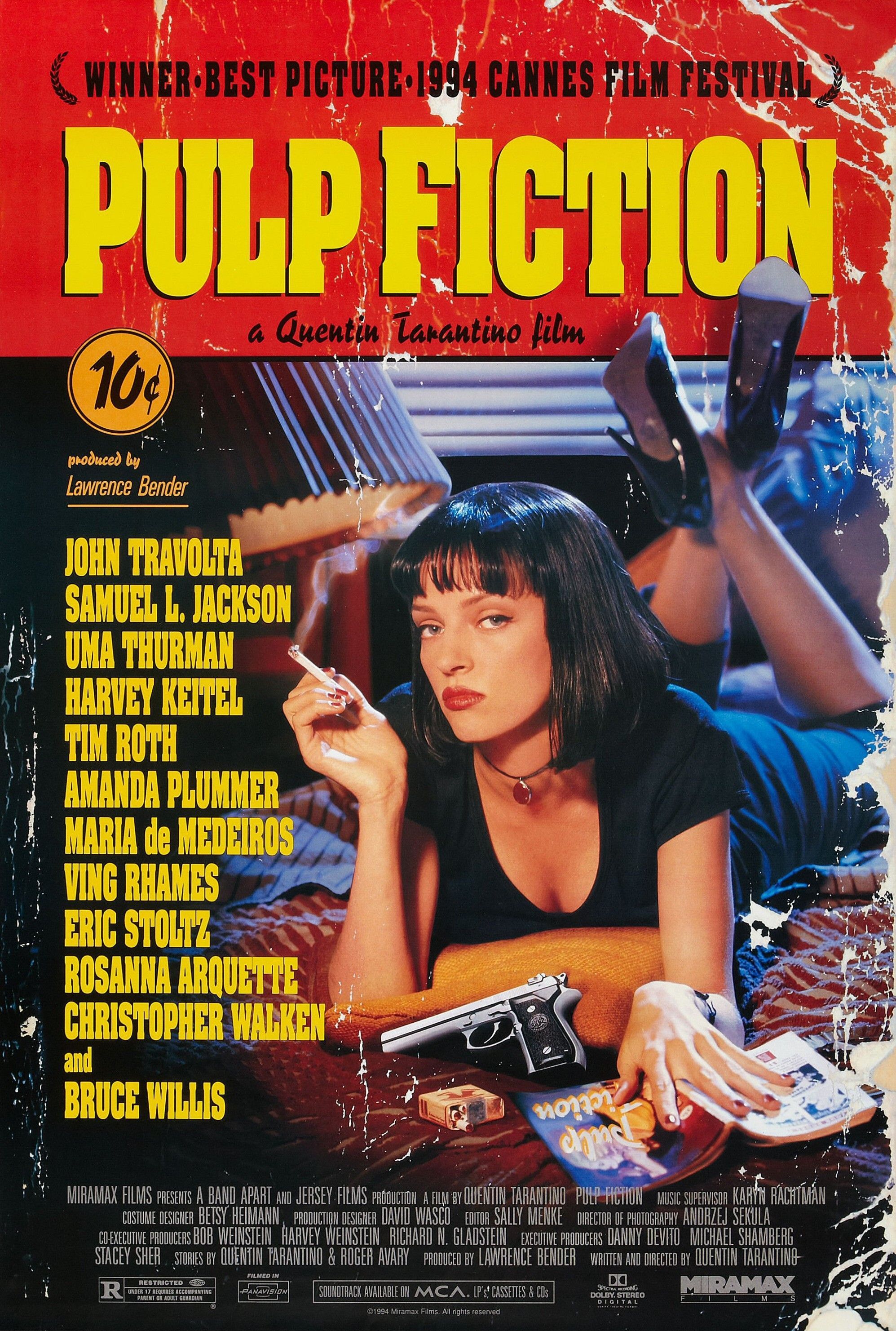
There’s been a lot that has been said, written, and argued about Pulp Fiction, and for good reason. Calling it a great movie is no longer an opinion but a widely accepted fact. A classic that is considered Quentin Tarantino‘s magnum opus, it shook up both independent cinema and the crime genre in the ‘90s. More than 30 years later, Pulp Fiction feels just as electrifying as it did when it first hit theaters. Of all its redefining elements, its out-of-order timeline stands out. Instead of telling a straightforward crime story, Tarantino and co-writer Roger Avary opted for a cinematic puzzle that chops the story into shuffled pieces that somehow make sense by the end. At first glance, it might feel chaotic, but when you put the pieces together, you’ll uncover a carefully crafted sequence of events that makes you realize that its scrambled structure is Pulp Fiction’s secret weapon.
Before we get into a timeline, first we have to explain what Pulp Fiction is about.
Before diving into the film’stimeline, let’s take a quick step back and break down the iconic story. Pulp Fiction follows three main interwoven narratives revolving around one man: Marsellus Wallace (Ving Rhames), the influential crime boss calling the shots in LA’s underworld. First, there’s the story of hitmen Vincent Vega (John Travolta) and Jules Winnfield (Samuel L. Jackson), two lethal and equally hilarious mercenaries who, when not out handling Marsellus’ dirty work, spend their time on mundane philosophical debates like foot massages and food culture. Then there’s the tale of Butch Coolidge (Bruce Willis), a washed-up boxer who’s paid by Marsellus to get knocked out in the fifth round of his next fight but decides to double-cross Marsellus instead.
Rounding out the mix is a small-time criminal couple, Ringo (Tim Roth) and Yolanda (Amanda Plummer), who think they’ve found an easy score, only to realize they’ve made a huge mistake. While Marsellus may not always be front and center, he’s the glue holding these stories together. At first, their connections might not be obvious, but when you put all the pieces in order, the bigger picture emerges. Let’s see what Pulp Fiction would look like if its scrambled vignettes were rearranged in chronological order.
1
Butch Coolidge’s Childhood – Captain Koons and the Gold Watch
Except for one key scene, almost all of Pulp Fiction unfolds over two chaotic days. Titled “Prelude to ‘The Gold Watch,'” this flashback takes us decades into the past, making it the earliest event in the film’s timeline. The scene follows a young Butch Coolidge as he receives a family heirloom —a gold watch that has been passed down through generations. His father, a soldier who died in Vietnam, entrusted it to his war buddy, Captain Koons (Christopher Walken), who now delivers it to Butch with a story that is as dark as it is unforgettable. In a grimly detailed monologue, Koons explains how both he and Butch’s father hid the watch in the most unthinkable of places to keep it safe during their time as prisoners of war. More than just a treasured family inheritance, it’s a symbol of rebellion that pushes Butch to take control of his own fate. It’s why Butch dreams about it before his big fight, and why, despite the life-or-death stakes, he risks everything to go back for it later.
2
Jules and Vincent Retrieve Marsellus Wallace’s Briefcase
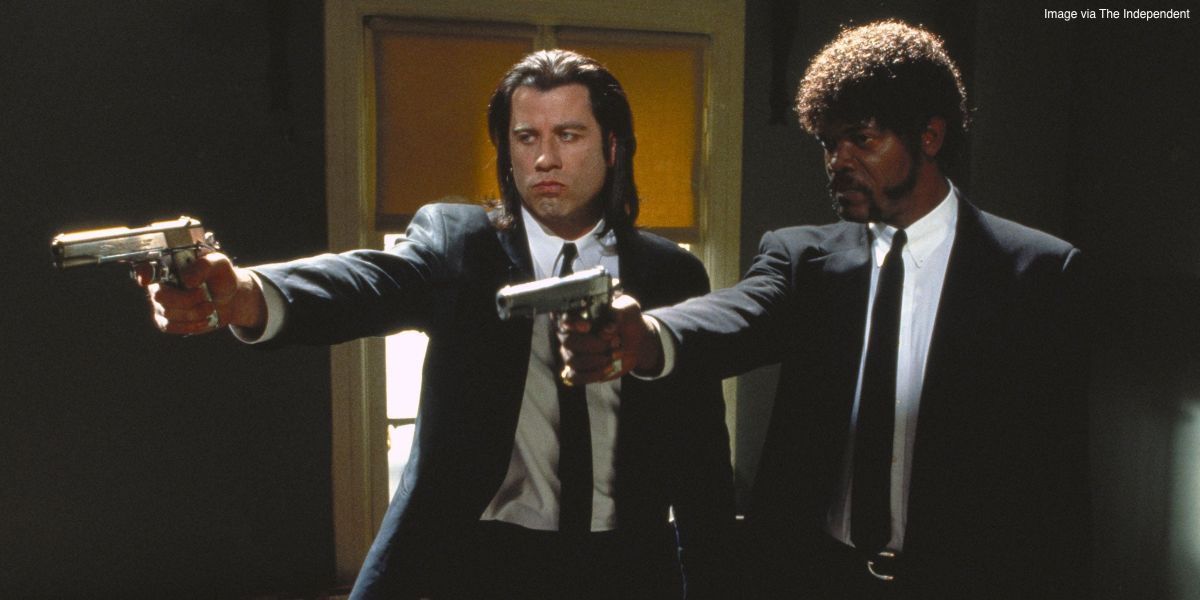
One of Pulp Fiction’s most iconic sequences is the one-two punch of Vincent Vega and Jules Winnfield as they retrieve a stolen briefcase for their boss, Marsellus. But in true Tarantino fashion, it’s never just about the job. The sequence blends tension, dark humor, and that unmistakable Tarantino dialogue; meandering and almost absurd. The wild dialogue stems from Vincent’s recent trip to Europe where they highlight the differences between American and European food — “a Royale with cheese” — to the discussion about Mia Wallace’s (Uma Thurman) foot massage that apparently prompted Marsellus to throw Tony Rocky Horror out of the window, resulting in his speech impairment.
This sequence not only introduces the two characters’ personalities but also lays the ground for both Marsellus’ character and Mia’s. Even before we meet him, we know that Marsellus is a man to be feared and that courting his wife Mia is akin to inviting the angel of death. The famed Ezekiel speech by Jules during Brett’s (Frank Whaley) execution, and the six-bullet strange miss by Brett’s friend are also significant in Jules’ character arc, which manifests during the confrontation in the diner scene. Titled “Prelude to ‘Vincent Vega and Marsellus Wallace’s Wife'” and ordered second in Pulp Fiction, it is also chronologically the second event of the film.
3
3. The Bonnie Situation—Vincent and Jules Take Marvin to Jimmie’s House
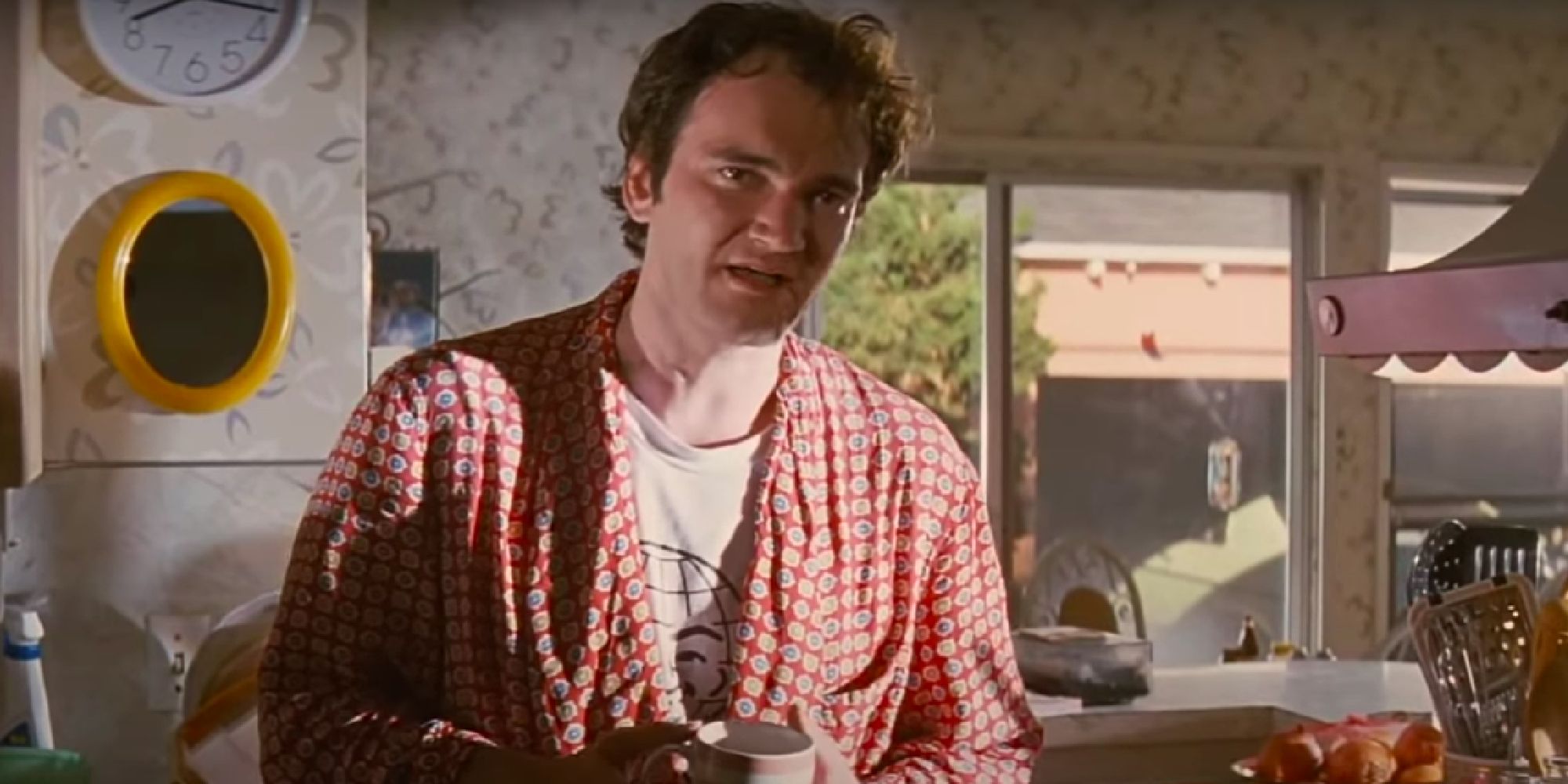
The third chronological event sees Vincent and Jules run into a problem after retrieving Marsellus’ briefcase. While driving from the execution mayhem, Vincent accidentally shoots Marvin, one of their informants, in one of the film’s most shocking yet darkly humorous moments. It gave us the quotable “Oh, man, I shot Marvin in the face.” Following the bizarre incident in the middle of a highway, Vincent and Jules panic and rush to the home of Jimmie Dimmick (Quentin Tarantino) to clean up the mess in their car before Jimmie’s wife Bonnie gets home. Marsellus sends the thorough, no-nonsense, and efficient “problem solver” Winston Wolfe (Harvey Keitel) to help the hitmen take control of the situation. It is here that Jules and Vincent change their clothes from suits into casual wear that we later see them in at the diner during breakfast.
Related
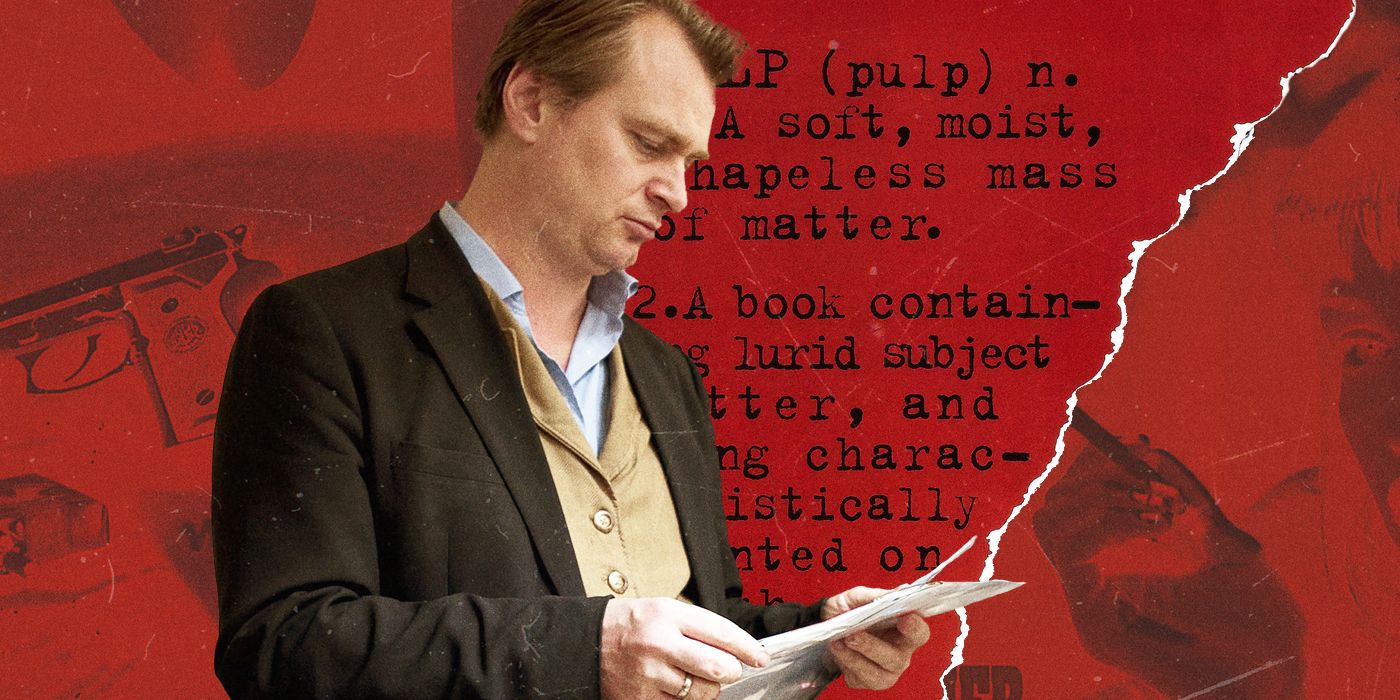
Christopher Nolan Regretted Reading Quentin Tarantino’s ‘Pulp Fiction’ Script Before Watching It
Maybe he wishes they didn’t shoot Marvin in the face.
4
4. The Diner Heist — Yolanda and Ringo Hold Up the Restaurant
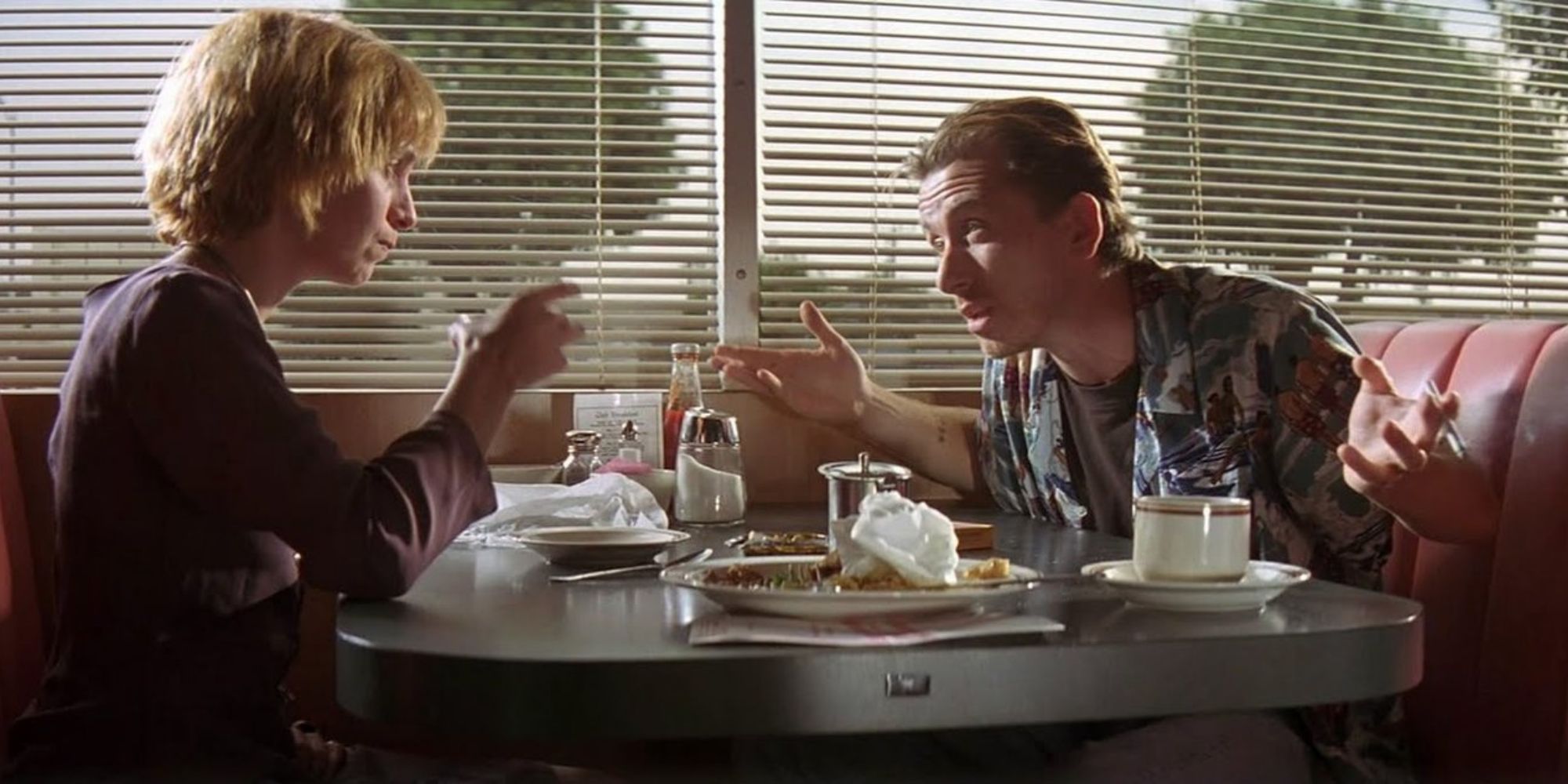
The film’s opening scene, where small-time criminals Yolanda aka Honey Bunny, and Ringo aka Pumpkin are discussing their thieving ways over breakfast, is actually in the middle of the film’s chronological order of events. It occurs nearly at the same time as when Jules and Vincent engage in their own philosophical talks about a pig’s personality and whether pork is an ideal meal just a few tables away in the same diner. Yolanda and Ringo decide to rob the diner after concluding it is easier than hitting a bank or a liquor store. Pulling out their guns and demanding everyone’s wallets, they are soon to be humbled by Jules while Vincent has stepped out to use the bathroom.
5
5. The Diner Heist—Jules Winnefield vs. Ringo and Yolanda
Serving as Pulp Fiction‘s bookend, the confrontation between Jules and Ringo is a genius move for how it encapsulates many elements that have permeated the film. On the one hand, it ends Yolanda and Ringo’s robbery journey at the diner — tying back to their prologue — in a somewhat anticlimactic but still successful heist. On the other hand, it completes Jules’ story arc. Jules, who, after quoting the Bible in the “Bonnie Situation” and interpreting the missed shots directed at him and Vincent as divine intervention, decides to quit violence and embrace a higher calling. Instead of punishing Ringo while citing the notorious Ezekiel verse, he de-escalates and, for the first time, peaceably resolves the conflict. He later tells Vincent that he has been reformed.
6
6. Vincent Takes Mia Wallace Out for the Evening
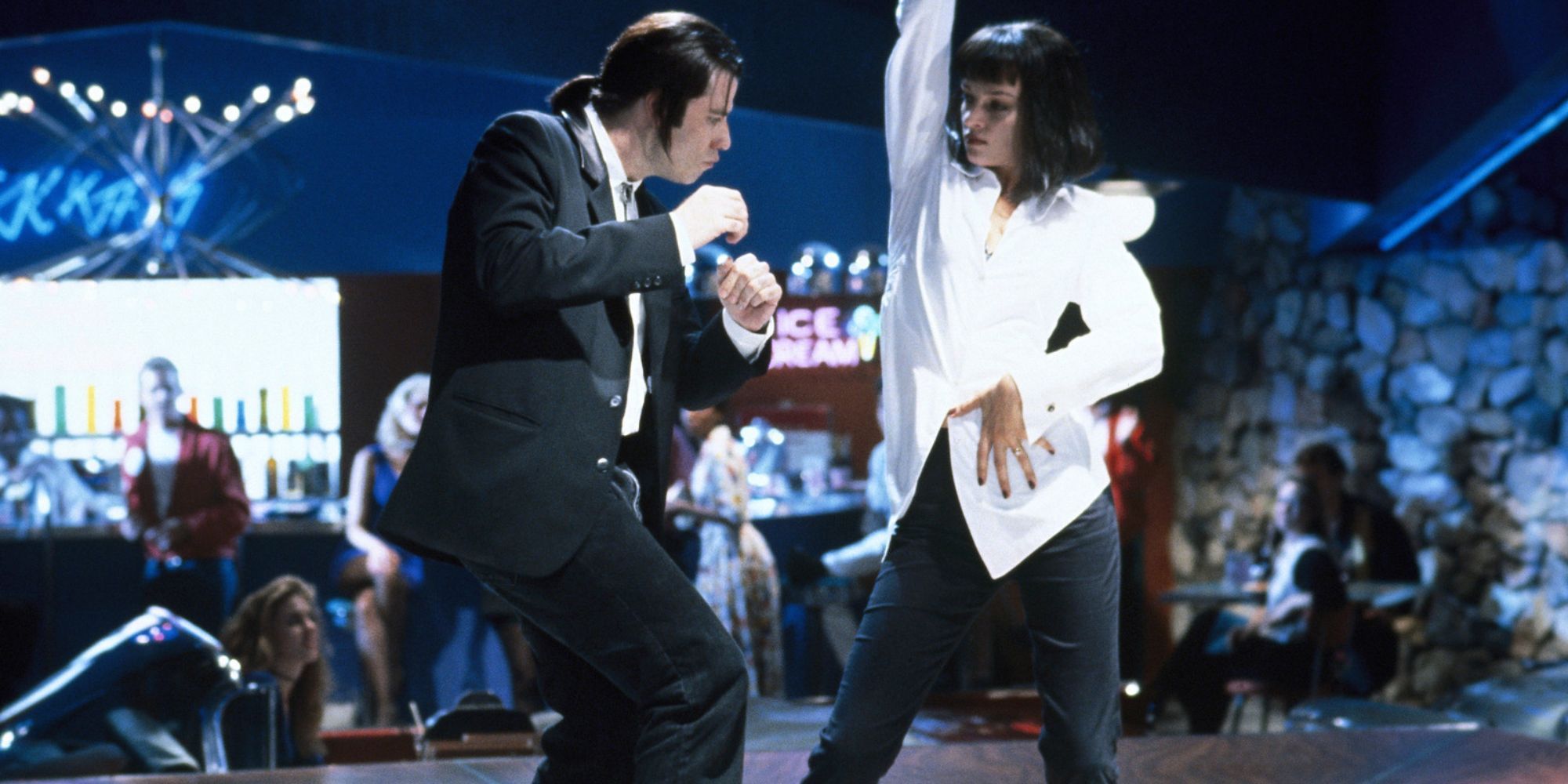
Pulp Fictionsets up the tension for the meeting between Mia Wallace and Vincent Vega early on when Jules and Vincent talk about foot massages and what befell the last man who got entangled with Marsellus’ wife. While Jules is ready to walk away from crime after retrieving the briefcase, handling the diner hold-up, and now delivering the briefcase to their boss, Vincent’s night is just getting started. Tasked with taking Marsellus’ wife out in his absence, Vincent accompanies Mia to Jack Rabbit Slim — a wild, 1950s-themed diner where the waitstaff are Hollywood icons and the milkshakes cost five bucks. But not before he gets a fresh stash of heroin.
In typical Tarantino style, despite the tension between them, their date is fun-baked, producing iconic scenes like the “Pulp Fiction dance,” in which the two twist to Chuck Berry’s “You Never Can Tell.” Tarantino is known for paying homage to other pieces of art, and this scene is no different; the dance was inspired by a cartoon cat. However, what was promising to be a great night turns disastrous when Mia finds Vincent’s heroin stash and overdoses. With frightening echoes of one of the most influential and brutal gang lords ringing in his mind, a panicked Vincent rushes her to his dealer, Lance (Eric Stoltz), and together they administer an adrenaline shot straight to Mia’s heart. She survives, and the two agree never to speak of what happened.
7
7. Butch Coolidge’s Fight and the Gold Watch
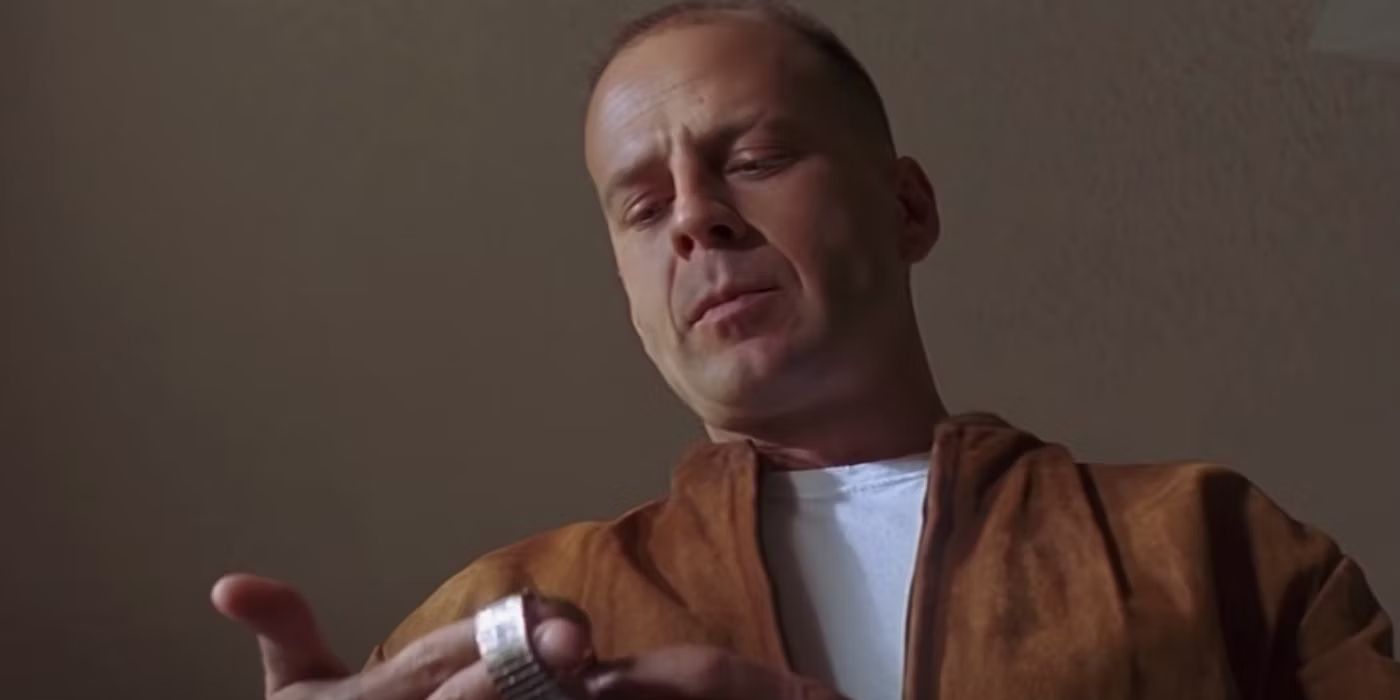
Rewind slightly back to when Vincent and Jules visited Marsellus’ to give him his briefcase, and it’s also our first meeting with Butch Coolidge. In Butch’s brief meeting with Vincent, we learn of the animosity that Vincent harbors toward him. Marsellus pays Butch to throw the fight, but Butch has other plans. He double-crosses Marsellus by winning and accidentally kills his opponent in the process before escaping to join his girlfriend Fabienne (Maria de Medeiros) at a motel. They attempt to flee town only to realize that Fabienne forgot to pack Butch’s gold watch. Butch is furious but is determined to retrieve it. Butch gets to the apartment where Fabienne forgot the gold watch and retrieves it but meets Vincent, who is hunting him down on behalf of Marsellus. Butch kills Vincent before setting off to reunite with Fabienne. This sequence ties nicely to the initial one that saw a young Butch receive the gold watch from Captain Koons. Tarantino and Avary make us understand Butch’s rage and the significance he attaches to the watch.
But before Butch makes it to the motel, he comes face to face with Marsellus on the street. They engage in a vicious fight and are shockingly held captive by two guys at a pawn shop. It is a scene that Tarantino uses to stretch the extent of his violence, with Marsellus going through unspeakable horrors meted to him by his captors. Butch saves Marsellus and the two men hatch their differences, with Marsellus giving him one condition: to leave LA pronto. Butch reunites with Fabienne, and they drive off on the motorcycle he stole from Zed — who’s dead, by the way.
While this chronological order provides a sense of Pulp Fiction‘s events fitting together neatly, the film’s brilliance is in how it scrambles them for maximum impact. The shifting timelines allow for unexpected surprises and poetic justice that is only possible with the film’s style. Pulp Fiction‘s magic is as much as in how its stories unfold as in the way they are told.