Before The Last of Us and Sonic the Hedgehog gave the video game adaptation genre the push it needed into genuine good territory, it was a really mixed bag of laughably bad projects and admirable attempts. In the midst of these prior releases was Christophe Gans’ Silent Hill in 2006, which was a little convoluted in trying to set up so much of the franchise’s lore while bringing an original approach to adapting the first game, but showed an overall welcome appreciation for the source material.
Which is why Return to Silent Hillis such a fascinating film in just how much it gets wrong. Gans and co-writers Sandra Vo-Anh and Will Schneider clearly wanted to try and make a faithful translation of the second game in the series, but between unnecessary lore changes and a lack of thematic heft in some of its storytelling, the filmmaker’s return to the franchise is a weird mix of exciting recreations, gorgeous visuals and disappointing execution.
Return To Silent Hill Makes All The Wrong Changes For The Screen
Finally fulfilling his original plan, Return to Silent Hill sees Gans and co. directly adapting 2001’s Silent Hill 2, regarded by most as the best game in the franchise, and one of the best horror games of all time. Its story centers on James Sunderland, a man in the deepest realm of grief over the death of his wife, Mary, from a terminal illness, only to suddenly get a letter from her asking him to come to the eponymous town, their “special place.”
Upon arriving in town, James meets a variety of people — the tragic runaway Angela, looking for her mother; the abrasive Eddie; the bratty young orphan Laura, who claims to have known Mary; and Maria, a more assertive and sexual woman who looks almost identical to Mary. More concerning, however, are the monsters James encounters in Silent Hill, ranging from bizarre-looking bugs with faces on them to the towering Pyramid Head, all of which come about as the area transforms from a fog-covered ghost town into a rusty hellscape.
Much like his first go-round with the franchise, Return to Silent Hill sees Gans doing a remarkable job of capturing the visual terrors of its source material. Every monster, both practical and CGI-based, feels brilliantly hand-crafted and pulled right from the games into live-action to give the uncomfortable sense of anxiety that players also experienced running through the semi-open-world map of the game.
Gans also commits the same cardinal sin as he did with his original Silent Hill in putting so much focus on trying to lay out the town’s backstory.
Even as Gans turns to utilizing more CGI for this adaptation, it surprisingly doesn’t prove too distracting across Return to Silent Hill‘s 105-minute runtime. A certain monster that arrives in the film’s latter half looked so intricately designed that it was a pleasant surprise to find that it was not only largely practical, but to recognize then that the elements that were CGI only worked to amplify their presence on screen.
However, Gans also commits the same cardinal sinas he did with his original Silent Hillin putting so much focus on trying to lay out the town’s backstory. Given the 2006 film was loosely based on the original game, while also incorporating elements from its first three sequels, there was more acceptable room for the filmmaker to try and highlight The Order, the cult whose efforts to manifest the entity they worship led to the town’s downfall.
When it comes to Silent Hill 2, the story notably shifted away from this cult focus and instead was a very psychology-driven effort. The various creatures James encounters are all physical manifestations of his subconscious meant to feed on the darker parts of his relationship with Mary. The iconic nurses, for instance, represent the lustful thoughts he had for some of the nurses who cared for his wife in the hospital.
But Gans has, instead, decided to try and incorporate the cult back into the story for Return to Silent Hill, and it proves to be one of the film’s biggest flaws. For starters, he tries to establish a deeper backstory linking Mary to the cult, something that not only feels like it’s adding forced drama to the mix, but also actively takes away from the core themes of the story.
James and Mary’s love story is meant to be one so strong that his search for her is just as much about his guilt over how certain things were handled near the end as it is about his genuine hope for her to be alive. And yet, even as Gans tries to retain that structure, his efforts to flesh out what their relationship was prior to James’ return to Silent Hill actively undermine this plot, as it’s shown Mary’s familial ties to the cult not only had a hand in her eventual demise, but even resulted in her and James breaking up for most of her illness.
Even more flagrant is the way Return to Silent Hill tries to explain why the other people James interacts with in town are there. Without getting too deep into spoilers for the film or game, Laura, Eddie and Angela all have their own dramatic backstories that led to their arrivals in town, which subsequently forces them to confront both the conscious and subconscious traumas in terrifying forms.
For Gans and his team, they instead find themselves so driven to center everything around James’ story that they actively take away these individual arcs and make them practically worthless entities. Laura’s connection to Mary is largely kept intact, but a final twist and the desire for the occasional moment of monster-driven tension rob the fact she’s meant to be the only innocent character of the story.

Which all makes the parts of Silent Hill 2 that Gans and co. get correct such a disappointment. Between the movie’s depiction of Maria and her interactions with James, his evolution of coming to understand the town’s actual purpose and final journey through the area, it’s clear there was something of an understanding about the psychological nature of the game that only ended up half-translated to the screen.
It’s even more of a letdown given the good work the Return to Silent Hill cast bring to their roles. Jeremy Irvine, playing a slightly more manic version of James, nicely captures the grief and underlying guilt of his character, while Hannah Emily Anderson is brilliant in playing the polar opposite Mary and Maria personas. But with such an uneven approach to a so-called “faithful” adaptation of its iconic source material, it’s hard to tell who Gans was ultimately making the film for.
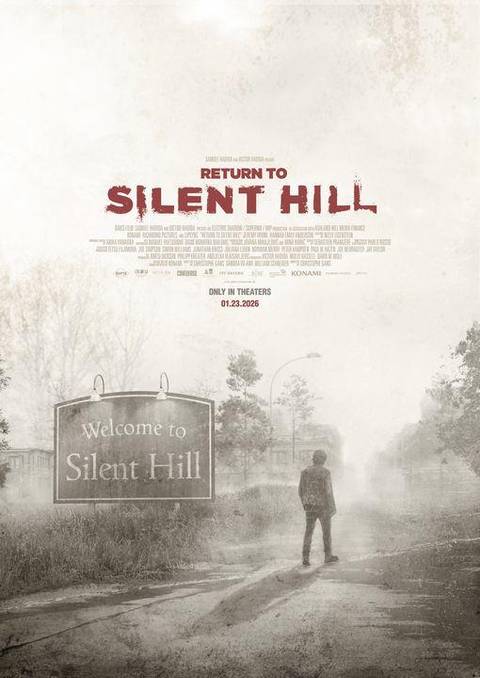
Return to Silent Hill hits theaters on Friday.
- Release Date
-
January 23, 2026
- Runtime
-
106 minutes
- Director
-
Christophe Gans
- Writers
-
Sandra Vo-Anh, William Josef Schneider, Christophe Gans
- Producers
-
Victor Hadida, John Jencks, Molly Hassell, Alexa Seligman, David M. Wulf, Jay Taylor
-

Jeremy Irvine
James Sunderland
-
Hannah Emily Anderson
Mary Sunderland / Maria


- Christophe Gans’ direction and Pablo Rosso’s cinematography make for the best-looking film yet.
- The monster designs are fantastic and creepy to see brought to life.
- The film’s recreation of certain beats works very well.
- Jeremy Irvine and Hannah Emily Anderson anchor the film well with their performances.
- The story makes too many unnecessary changes from the games that take away from the story’s themes.
- The pacing drags on in parts.
- There are not enough confrontation scenes between James and the monsters.