With the rampaging popularity of streaming series—and the medium’s ability to fine-tune season lengths to fit with storytelling needs rather than network runtime parameters—the days of the filler episode may be slowly becoming a thing of the past. Defined by their complete lack of plot progression, filler episodes are typically installments of series that boost a season’s episode count, edging a 10-episode storyline to 12 episodes with stagnant stories of background information, flash-back frustrations, or even isolated narratives that have no impact on the wider series.
Granted, some shows master this, including the beloved crime series Breaking Bad which produced possibly the greatest filler episode of all time in the form of the Season 3 episode “The Fly.” However, the series that have unfolded without the need for a single episode of filler content do deserve a nod of appreciation. This isn’t to say these are the 10 greatest crime series of all time, but their ability to ensure every single episode progresses the main story is something to behold.
10
‘Luther’ (2010–2019)
Marking one of England’s most prominent and popular crime shows, Luther is something of a staple of 2010s television, an engaging and often confronting examination of crime in London anchored by Idris Elba’s ever-captivating lead performance. Obsessive, relentless, and sometimes violent, DCI John Luther works within the Serious Crimes Unit, tackling everything from murder investigations to vigilante cases while striving to ensure his complex personal life doesn’t interfere with his focus on the job.
With just 20 episodes spread across five seasons, Luther presents the definition of lean-and-mean television, a gritty and gripping foray into intricate character drama and crime suspense where every scene is integral, if not to the nature of the case, then to Luther’s fractured and disturbed psyche. Its shortened seasons ensure that Luther never outstays its welcome, nor is it reduced to delivering pointless or meandering episodes to fill a runtime. Even as the series somewhat dips in quality in its latter seasons, it never loses its narrative focus.
9
‘Gomorrah’ (2014–2021)

One of the more underrated crime series of recent decades, Gomorrah thrives as a brutal and uncompromising look at gangland violence in modern-day Italy that finds an added punch with its loose basis on real events. The series follows the power struggle in the Savastano Camorra crime family after the head of the organization is arrested. Violence breaks out as the gang falls into two opposing sects, with the two key rivals—the boss’s son and the boss’s lieutenant—even resorting to working with other gangs to gain power over each other.
While its last two seasons do see the frenzied pace of the series subside somewhat while also featuring some less engaging narrative tangents, Gomorrah as a whole is still a series that is always in motion, progressing through its multiple character arcs and delivering twists and turns aplenty. With 58 episodes across five seasons of intense drama, this endeavor to make every episode vitally important is admirable, and it makes Gomorrah one of the best and most propulsive crime series of the past decade.
8
‘Peaky Blinders’ (2013–2022)

Peaky Blinders is an interesting series to analyze in the context of filler episodes. The series is known for its sense of style, its slow-motion shots, and its air of gangster suaveness that is often exhibited at the expense of narrative progression. Its aesthetic flourishes and its indulgence in its own decadence are sometimes “filler” in themselves, but the series never dedicates an entire episode to clogging up an hour of runtime.
Following the titular Birmingham-based street gang as, under the charge of Thomas Shelby (Cillian Murphy), they rise from being petty crooks to some of the nation’s most powerful criminals, Peaky Blinders presents a story of ambition, greed, and corruption steeped in a visual divinity which, while sometimes borders on glorification, ultimately presents a story of ceaseless progression and evolution. Its six-episode seasons almost impose a narrative efficiency and discipline upon it, forcing character-development and overarching seasonal stories to be compact, and every episode to be meaningful.
7
‘True Detective’ (2014–2024)

Not dissimilar to Peaky Blinders, True Detectivedemands a certain storytelling efficiency given the eight-episode limit of most of its seasons, and the even more condensed six-episode run of its fourth and most recent series dubbed “Night County.” Of course, this doesn’t necessarily mean every episode, or even every season, has been good. Season 1 is a masterpiece of crime mystery television, an engrossing and richly atmospheric descent into the unwinding of a decades-spanning case in the eerie feverishness of rural Louisiana.
Every single second of True Detective Season 1 is a work of utter perfection, a puzzle of mystery, intrigue, and simmering tension that culminates in arguably the greatest season of television of all time. While the ensuing seasons were met with varying levels of success, their narrative tautness was never an issue. Episodes within them shed new light on the central mysteries and expose greater depths to the characters investigating them, ensuring every entry is vital to the overarching story of each season.
6
‘Hannibal’ (2013–2015)

Gorgeous, gruesome, and gripping from the outset, Hannibal expands on the lore of the mythic menace of Dr. Hannibal Lecter with its loose inspiration from Thomas Harris’ novel series and its sublime appetite for sadistic style and savagery. Following FBI criminal profiler Will Graham (Hugh Dancy) as he embeds himself in the minds of serial killers to learn their motivations, all while he is monitored and manipulated by Dr. Lector (Mads Mikkelsen) and overseen by the head of Behavioral Sciences, Jack Crawford (Laurence Fishburne), Hannibal packs every episode of its run with narrative might and compelling suspense.
Even as some episodes drift to focus more on Lecter’s macabre activities or become more heavily involved with the at-large serial killers being pursued, the series evolves and expands with every entry. In fact, if anything, one could argue its condensed third and final season needed more episodes to explore its story—based on Harris’s ‘Red Dragon’—and the changing dynamic of Graham and Lecter’s relationship with the gravitas it deserved.
5
‘The Shield’ (2002–2008)
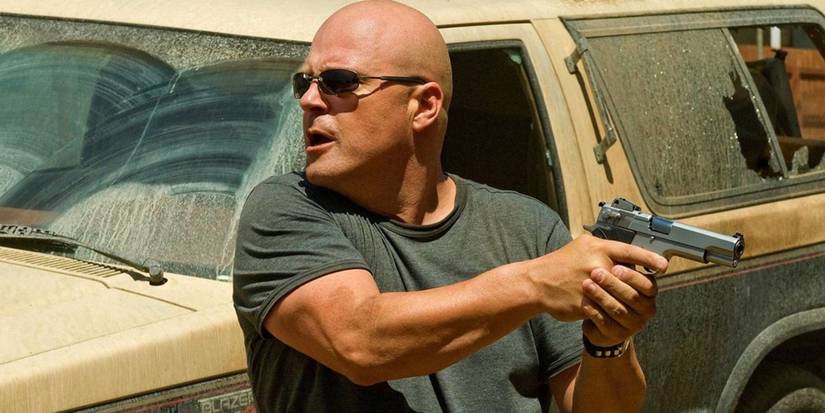
Following a corrupt outfit of cops in the LAPD who patrol one of the city’s highest crime areas, enforcing the law with unflinching brutality while engaging in illegal, underhanded dealings as well, The Shield is a pioneering series that pushed boundaries for television drama with its emphasis on immorality in the police force. While its early episodes may linger on establishing characters and the inner dynamics of the force, the series is always presenting essential information for the overall story.
It is an impressive feat for a network series with a total of 88 installments to not feature any filler episodes, but it is achieved through brilliant storytelling, an investment in the depth and nuance of the characters, and a commanding authority on its analysis of police corruption and its effects. The series ended with its seventh season in 2008, and yet it remains one of the most piercing and powerful dramas to explore systemic and cultural issues in law enforcement.
4
‘Better Call Saul’ (2015–2022)

As was mentioned in the intro, Breaking Bad did technically contain a filler episode, and while it was a joyous foray of obsession and irreverence, it does still disqualify the hit crime series from being on this list. Better Call Saul, however, is a different story. A spin-off to Breaking Bad, it follows Jimmy McGill, aka Saul Goodman (Bob Odenkirk), in his journey from being a street-savvy con-artist to a low-level lawyer to a legal advisor for one of the most powerful drug dealers in America.
While the prequel series does take its time in getting into McGill’s corruption arc, every episode presents important story information, be it laying the groundwork to delve into McGill as a character in more detail, establishing his relationships, and, as the series evolves, highlighting his own moral dilemmas as he is embroiled in a world of high crime and brutality. Better Call Saul’s masterful six-season run came to a close in 2022 after 63 episodes of engrossing drama and nerve-shattering suspense.
3
‘Mindhunter’ (2017–2019)
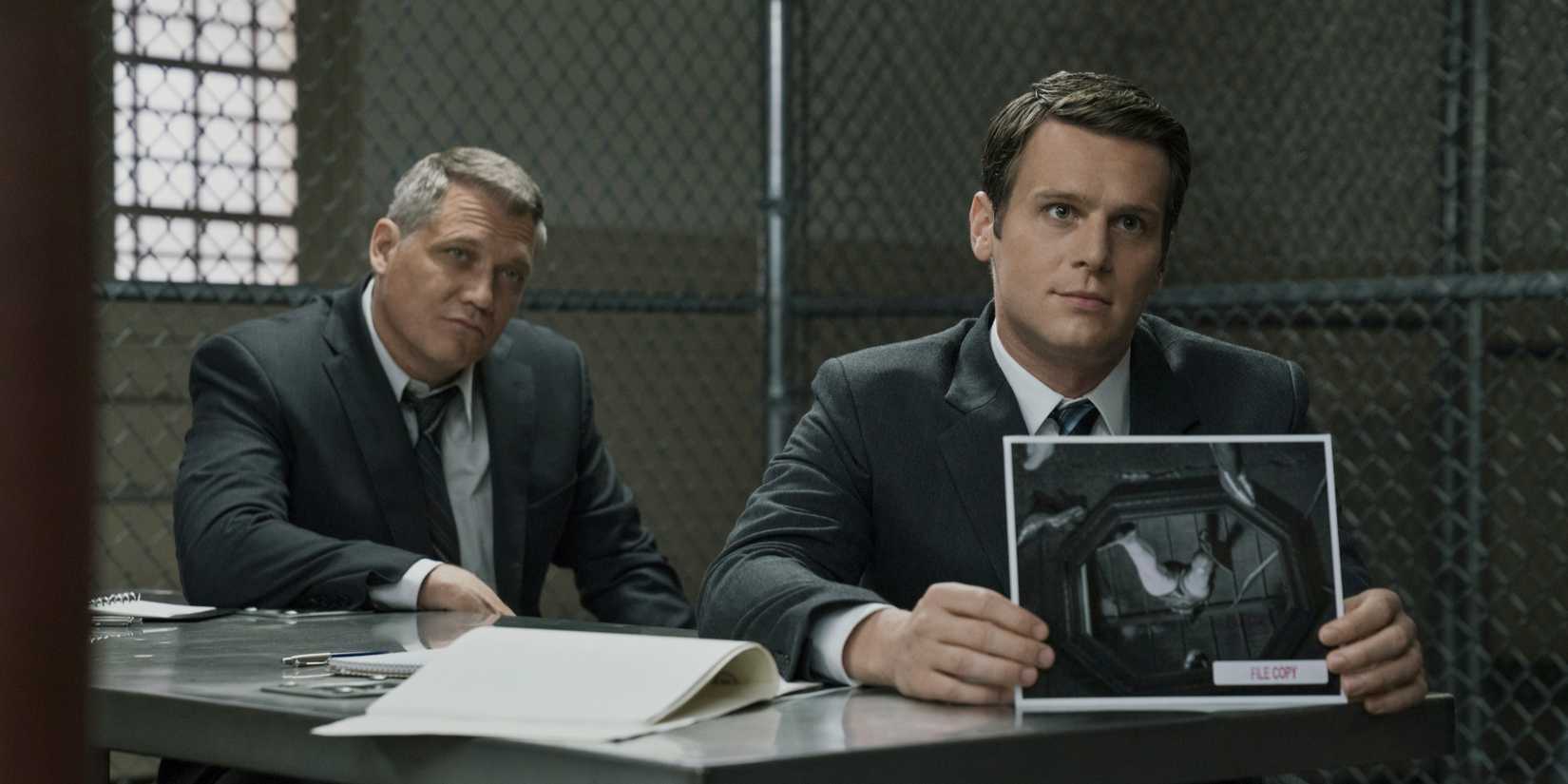
Why Mindhunter was cut short after just two seasons despite widespread fanfare and overwhelming critical approval is truly bizarre. However, that small tragedy certainly means that Netflix’s hit period crime drama can’t be accused of having any filler episodes. Set in the 1970s, it follows an FBI team comprised of two agents and a psychologist as they interview detained serial killers, learning about their experiences and motivations to understand what causes people to commit such heinous acts. They spearhead the bureau’s Behavioral Science Unit and pioneer criminal profiling in the process.
Enriched by its richly cinematic visuals, Mindhunter’s two-season run is a masterclass in thrilling drama and stylized intrigue, with David Fincher at his typically meticulous best behind the camera while every actor in front of it commands the screen when their moment comes. A horrifying deep-dive into the complexities of human psychology, Mindhunter is both fascinating and ferociously frightful, an engulfing yet deeply disturbing crime series defined by its chilling atmosphere that immerses viewers with every second of screen time and advances the story with every one of its 19 episodes.
2
‘The Sopranos’ (1999–2007)
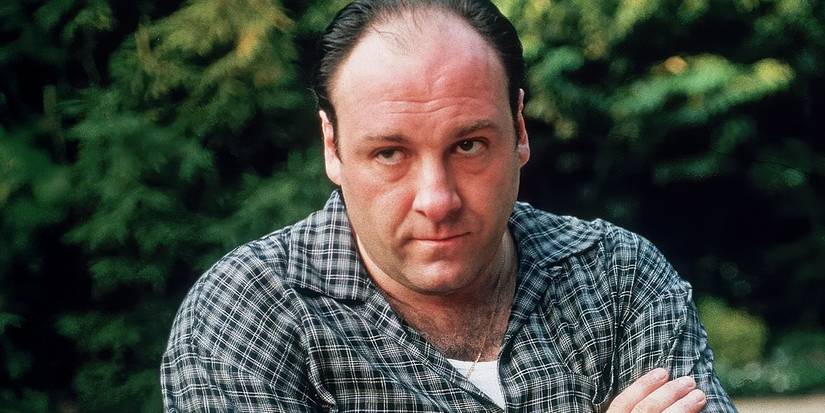
One of the richest and most nuanced character dramas audiences have ever seen, presented as an authentic immersion in a criminal organization in New Jersey, The Sopranos isn’t just a sublime crime series; it’s one of the greatest television shows of all time. It follows Tony Soprano (James Gandolfini), the head of the New Jersey branch of the mafia, as his complicated work-life balance leads to a series of panic attacks. In therapy, he speaks about the hardships he faces in his professional and personal life.
The HBO crime series is obviously admired for its dramatic heft, faultless writing and acting, and its groundbreaking impact on television as a whole, but the manner in which every single episode proves to be pivotal to the story and Tony Soprano’s journey is a feat to behold. Across its 86-episode run, The Sopranos is always exploring new depths, layers, and fascinating contradictions in Tony, while his violent life of mobster politics enraptures viewers throughout its six seasons.
1
‘The Wire’ (2002–2008)

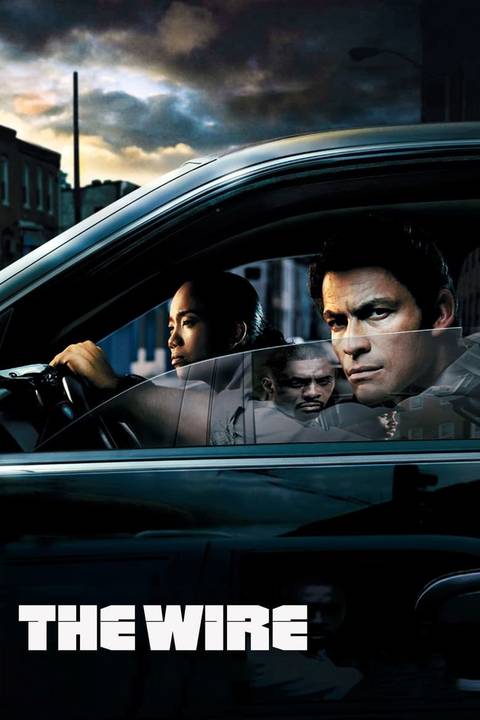
Excelling as an all-encompassing examination of crime and justice in Baltimore, from the hierarchy of the drug trade to the inner machinations of the police department and even the shifting priorities of city hall, The Wire is an epic of modern society’s failings from an institutional standpoint. With each of its five seasons exploring a different area of crime in the city, be it the docks, the housing projects, or even the public school system, the HBO series presents a masterpiece of scale and authentic drama anchored in the real-world emphasis of writer and creator, former crime reporter for the Baltimore Sun, David Simon.
With such scope and such a vast array of central characters across both sides of the law, in politics, and even civilians in the streets, The Wire simply doesn’t have the time to indulge in filler episodes looking at backstories or subplots. In fact, so broad is its web of characters that there isn’t a single one who appears in all 60 episodes. Every second of every episode is committed to efficient and meaningful storytelling, precise and impactful drama that highlights the depth of the characters and the visceral stakes of the criminal world.
The Wire
- Release Date
-
2002 – 2008-00-00
- Network
-
HBO
- Directors
-
Ernest R. Dickerson, Ed Bianchi, Steve Shill, Clark Johnson, Daniel Attias, Agnieszka Holland, Tim Van Patten, Alex Zakrzewski, Anthony Hemingway, Brad Anderson, Clement Virgo, Elodie Keene, Peter Medak, Rob Bailey, Seith Mann, Christine Moore, David Platt, Dominic West, Gloria Muzio, Jim McKay, Leslie Libman, Milcho Manchevski, Robert F. Colesberry, Thomas J. Wright