To paraphrase the great Jane Austen, it’s a truth universally acknowledged that Star Trek: The Next Generation doesn’t hit the ground running. Star Trek: The Original Series‘ first spin-off accrues its outstanding reputation inch-by-inch and season-by-season, maturing from its haphazard origins into a humanistic trailblazer with an intrepid creative voice.
Season 2’s ninth episode, “The Measure of a Man,” has earned its place within the Trek pantheon as an arresting masterpiece that slices through the early clutter to illuminate The Next Generation‘s potential and launches influential ripple effects, to boot. What’s more, this pièce de résistance of an episode unfolded because The Next Generation was, at the time, a show in crisis.
George R. R. Martin and the 1988 Writers Guild Strike Impacted ‘Star Trek: The Next Generation’ Season 2
Screenwriter Melinda M. Snodgrass discussed the origins of “The Measure of a Man” on a 2023 episode of The 7th Rule, a podcast hosted by Cirroc Lofton (Star Trek: Deep Space Nine‘s Jake Sisko) and producer-actor Ryan T. Husk. Several years before her time as a staff writer and script consultant on The Next Generation, Snodgrass was a published novelist and the co-creator of the Wild Cards book series alongside her “best friend,” George R. R. Martin. Martin promised her, “If you write a spec [television] script,I’ll show it to my agent.” Brainstorming, she tapped into her experience as a former attorney:
“Constitutional law was my specialty, and as I was watching [The Next Generation] I thought, oh my gosh, I can use [for Data] the Dred Scott decision, which was an infamous Supreme Court decision which ruled that a slave brought into a free territory was still just property, and he could not sue for his freedom even though he was in now a free territory.”
When Snodgrass’ script reached The Next Generation‘s production team, the coincidental timing couldn’t have been better for both parties. The television industry was participating in the 1988 Writers Guild of America strike, a 153-day protest insisting that the Alliance of Motion Picture and Television Producers provide equitable residuals and more artistic leeway (among other items). The Next Generation‘s sophomore outing was one of several affected shows, its customary 26-episode season dropping to 22. Frantic for available scripts and impressed by Snodgrass’ acumen, the powers-that-be greenlit her submission. Franchise inventor Gene Roddenberry threw another spanner in the works when he opposed Snodgrass’ concept, but the team stealthily filmed “The Measure of a Man” when Roddenberry was absent.
‘Star Trek: The Next Generation’s “The Measure of a Man” Episode Is a Human Rights Allegory
Ostensibly the Star Trek version of a courtroom drama, the episode’s dramatic crux surrounds Bruce Maddox (Brian Brophy), who boards the Enterprise intent upon dismantling Commander Data (Brent Spiner). Maddox’s study will essentially kill Data, a horror that doesn’t phase the cybernetics engineer. He regards Data, a decorated officer, as nothing more than a mechanical puzzle to admire, solve, and duplicate. Data refuses, but Starfleet overrides his decision; since they classify Data as their property, they consider his loss an acceptable sacrifice if it means receiving beneficial tools in return. A visiting legal official, Captain Phillipa Louvois (Amanda McBroom), convenes a special hearing where the furious Captain Jean-Luc Picard (Patrick Stewart) and his second-in-command, William Riker (Jonathan Frakes), serve as Data’s defense and the opposing prosecutor, respectively.
Directed by Robert Scheerer, “The Measure of a Man” is a masterful endeavor by all accounts. Snodgrass’ piercing dialogue operates on a higher plane, Maddox replaces the traditional alien-of-the-week mystery with life-threatening tension, and the philosophical dilemma epitomizes the franchise’s theology with bullseye precision: indisputable allegories about identity, prejudice, and dominant powers enslaving and dehumanizing individuals who don’t match their pre-determined specifications. Maddox’s casual disregard for Data’s consent, down to violating his privacy and splitting hairs about his dignity, strikes a raw nerve because real-world rulers continually refuse to meet the bare minimum — i.e., diverse communities existing without unjust interference and with intact free will.
“The Measure of a Man” Launches Data’s Arc in the Star Trek Series

Without overtly stating as much, “The Measure of a Man” wonders whether our default assumptions about life itself are limited. When Picard places Maddox on the witness stand, the latter lists the criteria for determining sentience as “intelligence, self-awareness, consciousness.” Data already contains this in spades, and he discovers infinitely more over the subsequent years. “The Measure of a Man” takes the promising Data-related seeds that Season 1 plants — a singularly advanced android who longs for the emotion-based human experience he’s been denied — and lays the bedrock for his tremendous seven-season arc.

‘Strange New Worlds’ is set to end with Season 5.
For one, Snodgrass’ debut episode highlights the poignancy behind Data’s developing relationships with the accepting crew he’ll eventually call his friends. His steadfast fealty to Picard, the closest he has to an aspirational father figure, takes center stage, as does his growing bond with Geordi La Forge (LeVar Burton), his past intimacy with the deceased Tasha Yar (Denise Crosby), and his ongoing, unquantifiable dismay over losing a woman he describes as “special to me.”
Future events expand upon the vulnerable yet thorny notions “The Measure of a Man” facilitates: Season 3’s “The Offspring,” where Data creates his android daughter (Hallie Todd), his Season 5 heart-to-heart with Spock (Leonard Nimoy), the character he echoes, his decision to install an emotion chip, Maddox’s return in Star Trek: Picard‘s first season (played by John Ales), and Data’s long-awaited resurrection in Picard Season 3. Snodgrass even introduces the crew’s recurring poker games, an iconic symbol of camaraderie and affection that gives Data more insight into humanity’s unpredictable quirks.
“The Measure of a Man” Foreshadows the Heartfelt Masterpiece ‘Star Trek: The Next Generation’ Becomes

As for Picard, “The Measure of a Man” progresses his development in leaps and bounds. A loyal Federation representative, Picard won’t hesitate to stare corruption in the eye, demand accountability, and wage war against his superiors in order to protect Data’s autonomy. He demonstrates no uncertainty regarding Data’s sentience, either; his subordinate is respected and trusted, not a “toaster” for one man’s egotistical curiosity to dissect. Picard’s ferocious advocacy and impassioned morality grant him the dimensionality he needs to outgrow his straight-laced, inaccessible start, and those ethics anchor the captain’s own harrowing journey.
Suitably, Stewart’s astonishing performance is one of his finest Trek hours. For the first time, “The Measure of a Man” sets loose the breadth of his earth-shattering talent. Meanwhile, Spiner’s softer work is just as remarkable. Later seasons provide him with richer material, but by Season 2, the actor has already mastered the balance between portraying Data’s smooth, fact-based cadence and emoting understated sensitivity and endearing charm. Spiner’s tightrope act crafts one of the franchise’s most celebrated and ever-evolving characters, one cultivated over time like an aged wine. Data might insist that feelings run counterintuitive to his programming, but he has always possessed a soul.
Spiner declared “The Measure of a Man” his favorite episode, while Stewart agreed with the general sentiment that it’s the series’ first superb installment. What would be a stand-out achievement for any season represents a turning point that steers The Next Generation from shaky ground onto a coherent path toward its introspective, progressive, and convention-defying legacy. Hectic need for scripts aside, everyone involved with The Next Generation seemed to sense they had a rare gem on their hands.
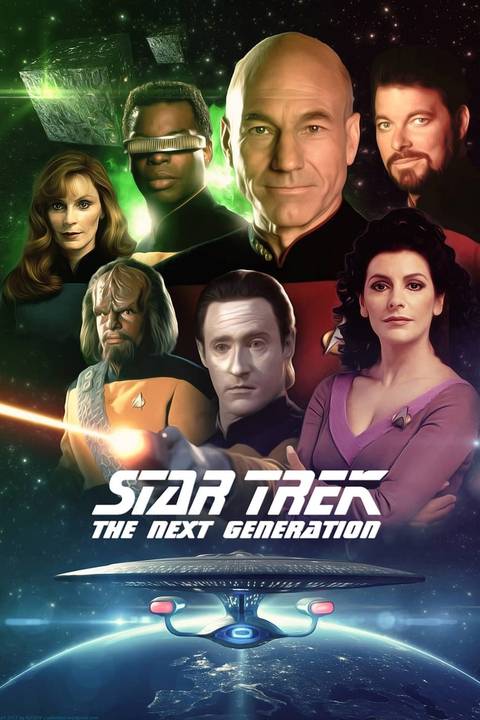
Star Trek: The Next Generation
- Release Date
-
1987 – 1994-00-00
- Network
-
Syndication
- Showrunner
-
Gene Roddenberry
- Directors
-
Cliff Bole, Les Landau, Winrich Kolbe, Rob Bowman, Robert Scheerer, Jonathan Frakes, Robert Wiemer, Gabrielle Beaumont, Alexander Singer, David Carson, Paul Lynch, Corey Allen, Patrick Stewart, Chip Chalmers, Joseph L. Scanlan, James L. Conway, Robert Lederman, Tom Benko, Timothy Bond, Robert Legato, Adam Nimoy, Robert Becker, David Livingston, LeVar Burton