Following Amazon MGM’s announcement that the Stargate TV franchise is being revived, it’s time to cast our minds back to the greatest small-screen sci-fi reboot of all time – Battlestar Galactica. This peerless revival of a half-baked franchise by Ronald D. Moore will continue to be the benchmark for the genre’s comeback shows going forward.
Not many TV reboots are better than their original series, but Battlestar Galactica bucked this trend in truly spectacular fashion. Moore’s dark and daring 2004 version of the show didn’t just outdo its 1978 original. It redefined what TV sci-fi could be, and paved the way for other boundary-pushing series like The Expanse.
More than 20 years later, Stargate’s Prime Video reboot could do the same, saving the space opera subgenre in the process. As long as this upcoming show learns the valuable lessons that Battlestar Galactica has to offer, it can go much further than its franchise’s commendable but not so groundbreaking previous releases did in the 1990s and 2000s.
Battlestar Galactica Has The Greatest Sci-Fi TV Reboot Of All Time
The 2004 reboot of Battlestar Galactica is a must-watch sci-fi masterpiece, which tapped into the zeitgeist of its era while driving the sci-fi genre forward towards a brave new generation. It was arguably the first true prestige sci-fi show, with visual mastery and narrative depth far beyond previous series in the genre.
This Battlestar Galactica effectively did what The Sopranos managed to do for TV crime dramas, and what Deadwood did for TV Westerns. To this day, it remains the benchmark for high-fantasy intergalactic sci-fi on the small screen.
The Expanse might have raised the bar for series set in outer space further still, along with some bold new TV iterations of both Star Wars and Star Trek. But for genre purists, Battlestar Galactica at its best tops the lot.
Ronald D. Moore’s Battlestar Galactica Is So Much Better Than The Original

In the early 2000s, Ronald D. Moore somehow turned a camp and chaotic ‘70s space opera into a timeless classic, which gets to the very heart of human society in the 21st century. Unlike the dated 1978 version of the show, Moore’s Battlestar Galactica is character-driven, with sophisticated plots and complex philosophical themes.
Gaius Balter’s character change in the 2004 iteration is a case in point, from a wacky stock villain to a morally conflicted malcontent. Then there is the second Battlestar Galactica’s transformation of the Cylons into a cybernetic workforce created by humanity, and capable of taking on human forms.
The later show is also much darker and grittier than its predecessor, incorporating elements of noir and wry social commentary. What’s more, its production values are off the scale, especially when compared with the 1978 original.
Stargate Can Learn From Battlestar Galactica For Its Amazon Revival
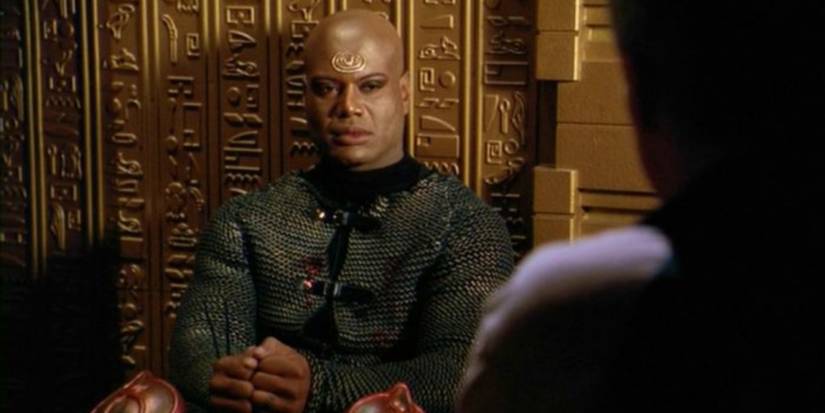
Unlike Ronald D. Moore’s Battlestar Galactica, Prime Video’s Stargate franchise reboot comes off the back of some impressive TV shows in previous decades, particularly in the case of the SG-1 series. They have an important place in sci-fi TV history, and are nothing like the dated and superficial ‘70s iteration of Battlestar Galactica.
It’s also important to note that the new Prime Video series won’t be a reboot per se, but an original story. However, there are still some key takeaways from what Moore did in the early noughties.
He made his stories more current and relevant to its contemporary surroundings, in both visual and thematic terms. The 2004 Battlestar Galactica went darker and deeper with its characters than any sci-fi show before it. Amazon needs to take heed of these lessons when reinventing Stargate, to ensure this series becomes the landmark success it has the potential to be.