When it comes to the Western genre, it was most prolific in the 1950s and ’60s. Horse operas were everywhere at the time, and in the ’60s, especially, the genre began to shift and change. There’s no denying that the Western was Hollywood’s most important genre in the early 20th century, but as its popularity became one of global promise, other countries tried their hand at bringing the Old American West to life on their own. As the genre expanded, audiences were presented with some exceptional features that offered a new take on tradition.
The 1960s were a great decade for the Western. Each year produced a series of powerful pictures that breathed new life into the genre, with some going above and beyond with several films of note. In hopes of narrowing all that down, we’ve chosen what we believe are the best films from each year of the ’60s. While we’ve been forced to leave off some other powerful narratives in the pursuit, you’ll be sure to get your John Wayne, James Stewart, and (especially) Clint Eastwood fix here.
1960: ‘The Magnificent Seven’
A, dare we say, magnificent way to begin the decade, The Magnificent Seven may technically be a remake of the Japanese picture Seven Samurai, but it still feels mighty original despite that. Headlined by a righteous combination of Yul Brynner, Steve McQueen, Charles Bronson, and James Coburn (along with several others), director John Sturges more than proved his worth with this excellent addition to the Western canon. For some, the genre doesn’t get much better than this.
As seven gunfighters are hired to protect a small Mexican town from a ruthless outfit of bandits, they teach the villagers how to defend themselves while preparing for war. If one hired gun is enough to carry most features, then the added six more do The Magnificent Seven some extra good, with exceptional performances, electric action sequences, and heart to boot. It’s no wonder this film produced not only several sequels, but a television series and a remake, too.
1961: ‘The Comancheros’

From the brilliant mind of director Michael Curtiz, known best for his previous work in Casablanca and White Christmas, this John Wayne-led Western may be the most underrated on this list. After Curtiz took ill and was unable to finish the production (he died not long after the project was completed), the Duke took over to ensure that The Comancheros was finished properly. Arguably the most “traditional” Western on this list—and certainly a holdover from the pictures popular in the 1950s—there’s enough action and style to keep one thoroughly entertained.
The Comancheros follows Wayne as Texas Ranger Captain Jake Cutter, who captures gambler-turned-murderer Paul Regret (Stuart Whitman), only to be forced into an uneasy alliance as a notorious band of Comanches arrives to stir up some trouble. The Duke is as iconic here as he ever was, with an over-the-top performance that feels a bit outlandish to be fully plausible. Still, The Comancheros is a true classic that feels like a farewell of sorts to this style of Hollywood filmmaking.
1962: ‘The Man Who Shot Liberty Valance’
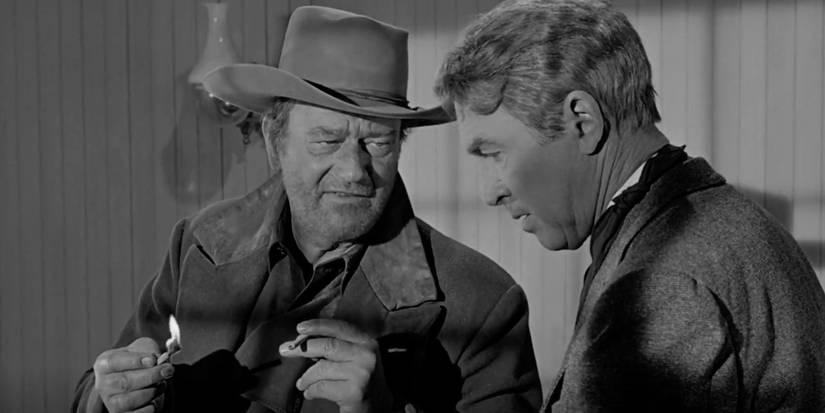
By the 1960s, few Westerns were still shot and released in black-and-white, but in order to unite John Wayne and Jimmy Stewart on the screen for the very first time, director John Ford wanted to honor tradition. Based on a short story by famed Western scribe Dorothy M. Johnson, The Man Who Shot Liberty Valance has often been considered one of the very best films that the genre has to offer, and with Wayne, Stewart, and Ford all working together, it’s hard to argue the point. It’s certainly one of the most enduring Westerns of the age, doubling as a signpost for its end.
As Senator Ransom “Ranse” Stoddard (Stewart) returns to the wild frontier for the funeral of his longtime friend, Tom Doniphon (Wayne), he recounts the tale of how the two first met, with the bulk of the picture being a flashback to decades earlier. Wayne and Stewart are true masters on the screen here, with these powerhouse stars of the ’40s and ’50s proving that not only do they still have what it takes to carry such a powerful drama, but they can do so with relative ease. Even Spaghetti Western filmmaker Sergio Leone considered it his favorite of Ford’s Westerns.
1963: ‘How the West Was Won’

Okay, this is admittedly a bit of a cheat, because How the West Was Wontechnically premiered in November 1962. However, the film itself wasn’t released nationwide until February of the following year. Because of that—and because of how influential this Western epic has been on the genre ever since—we felt compelled to put it here (although, for another great ’63 Western, you can always give McClintock! a go). What happens when you bring directors Henry Hathaway, George Marshall, and John Ford together to make a Western? You come up with a powerful epic that brings the genre’s most memorable faces together for one enormous romp.
While James Stewart’s Linus Rawlings is arguably the closest we come to a leading character, How the West Was Won follows the Rawlings family and others throughout the changing landscape of the American West. From the early frontier era to the Civil War to the end of the 19th century, it covers nearly the whole span of the 1800s in traditional Hollywood style. With breathtaking scenery, engaging performances, memorable cameos, and a grand drama, How the West Was Won is a profound horse opera that lives up to its name.
1964: ‘A Fistful of Dollars’
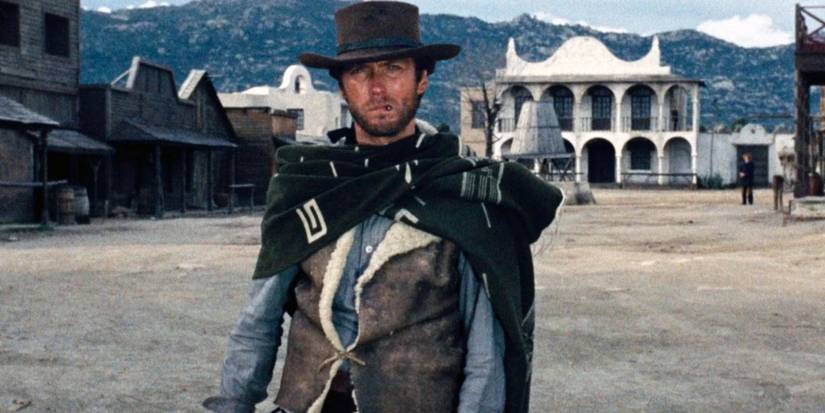
By the mid-1960s, the Western genre shifted forever. Although Spaghetti Westerns existed before Sergio Leone, the Italian filmmaker perfected the subgenre, launching it into international popularity alongside Rawhide star Clint Eastwood. A Fistful of Dollars follows Eastwood’s “Man With No Name” character (called “Joe” here), as he wanders into San Miguel just in time to get caught in between two rival gang families, pitting them against each other to bring them both down. In just 99 minutes, Eastwood proves that he has the chops to redefine the genre and claim the reins for himself.
A Fistful of Dollars is one of those films that you just can’t get enough of. Its fast-paced action, intricate exploration of the decay of the Western myth, and compelling leading man gave it an edge that shattered a more traditional view of the genre. From here, Eastwood and Leone would spiritually succeed Wayne and Ford as the quintessential Western duo.
1965: ‘For a Few Dollars More’

While one could argue that James Stewart’s Shenandoah belongs in this spot (and, to be fair, it’s a fabulous film), its status as a Western is in doubt. That said, For a Few Dollars More is a worthy successor to Eastwood and Leone’s previous outing, as the iconic “Man With No Name” returns (here called “Manco”), this time going hard after a notorious Mexican outlaw. But he’s not the only one gunning for Indio (Gian Maria Volonté), as Lee Van Cleef‘s Colonel Mortimer is also after the bandit — though for more personal reasons.
For a Few Dollars More takes everything that you loved about the last film and adds even more action, drama, and suspense to the mix. The uneasy partnership between Manco and Mortimer is one of the best found in the genre, and Van Cleef is just as memorable here as Eastwood. Although often overlooked in comparison to the first and final Dollars Trilogy entries, For a Few Dollars More is just as exceptional.
1966: ‘The Good, the Bad and the Ugly’
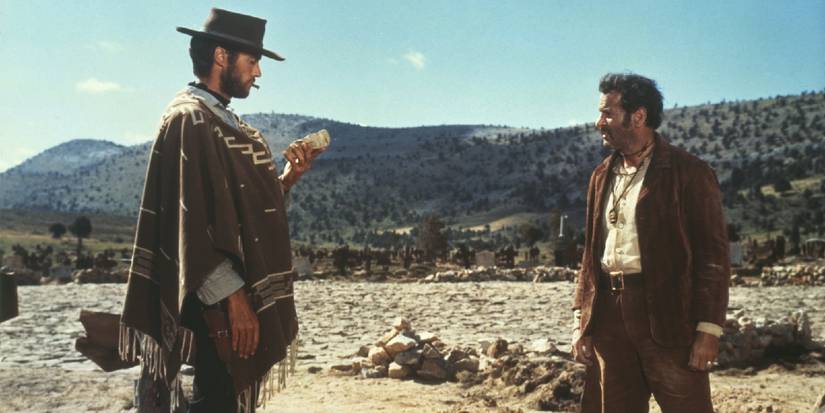
Even though the original Django hit theaters in 1966, it’s hard to justify any other Western film being considered the best of 1966 other than The Good, the Bad and the Ugly. A Spaghetti Western epic, this final romp for the “Man With No Name” (referred to as “Blondie” this time) takes place at least a decade before the rest, technically serving as a prequel (though the chronology of the Dollars Trilogy is certainly up for debate). Between Eastwood’s “good,” Van Cleef’s “bad” (playing a new character, “Angel Eyes”), and Eli Wallach‘s “ugly” Tuco Ramirez,this Western is a profoundly elongated take on the American West.
Full of extended long takes and extreme close-ups, The Good, the Bad and the Ugly offers the best Mexican standoff ever put to film. Leone proves himself a master of cinematic tension, made only more unbearable by Ennio Morricone‘s instantly recognizable score. If you thought that Eastwood was good in the last two, he’s arguably at his very best here.
1967: ‘Death Rides a Horse’

Following up his work in the last two Dollars Trilogy films, Lee Van Cleef took on leading man duties with the vastly underrated Death Rides a Horse. Although not his only solo horse opera released in ’67, this Giulio Petroni-directed revenge picture is just about everything you could ask for from a Western of this caliber. From a screenplay by The Good, the Bad and the Ugly co-writer Luciano Vincenzoni, it’s hard to go wrong with this picture, which elevates Van Cleef’s on-screen talents to the next level.
Death Rides a Horse may not be the most popular Western on this list, and has been forgotten by many over the years, but it certainly deserves its spot here. The action-packed narrative is full of copious amounts of fake blood and expert gunplay that shocks and awes as Van Cleef’s Ryan aims to see justice properly served. In the same way that The Comancheros represents the traditional Hollywood Western,Death Rides a Horse could be synonymous with the tropes presented by its Italian-made counterparts.
1968: ‘Once Upon a Time in the West’

After the Dollars Trilogy, Sergio Leone returned to the big screen for another Western outing that many still consider one of the best takes on the entire genre. Once Upon a Time in the West is largely your usual Western fare, as the mysterious Harmonica (Charles Bronson) arrives in town just in time to deal with an outlaw terrorizing the wild frontier. However, the Italian Western epic flipped typical audience expectations here by casting Henry Fonda (usually a heroic type) as the villainous Frank, whose merciless demeanor shocked all.
In Leone’s attempts to leave the Dollars Trilogy behind, he crafted an epic that still stands out in a genre highly populated with memorable characters, iconography, and rousing scores. Once Upon a Time in the West may be a bit long, but it never makes you question that length. Branson is at his best here, with a cool, steady hand that gives us a character as complicated as he is fascinating.
1969: ‘Butch Cassidy and the Sundance Kid’
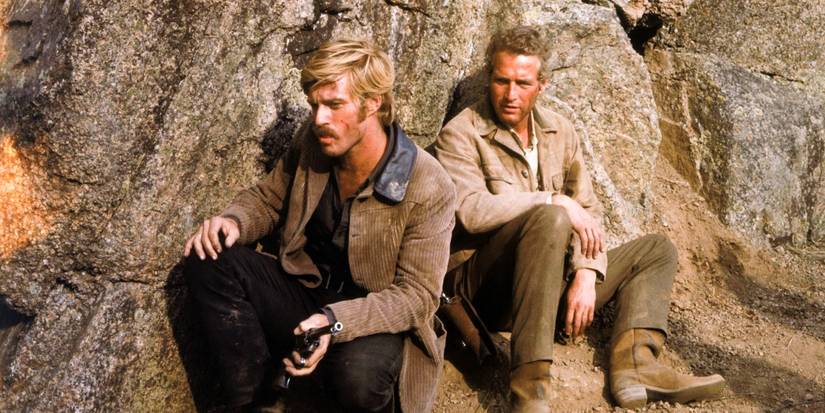
No matter what we put in the 1969 spot here, someone is bound to be disappointed. True Grit hit theaters this year, as did The Wild Bunch and plenty of other memorable Westerns. But there’s something about Butch Cassidy and the Sundance Kid that simply cannot be ignored. Paul Newman and Robert Redford are the finest duo the Western ever had, playing the titular outlaws with such levity and conviction that we begin to sympathize with these deviant train robbers.
The chemistry between Redford and Newman is simply brilliant, adding a New Hollywood-style of character development into an age-old genre. As Butch and Sundance run from the law, they become more than just a pair of criminals: they instead turn into symbols for the fading West—both in terms of the genre’s shifts from mythic tradition and the historical decline of westward expansion. Talk about a relevant picture for 1969.