Cinema was never the same after 1999, a year many consider a high watermark for the medium. The anchors of groundbreaking innovations and visions of the future on the cusp of the new millennium were Lana and Lilly Wachowski, co-writers and directors of The Matrix, the action-adventure science fiction experience that filmmakers are still trying to copy today. Following this overwhelming triumph, the directing duo’s output has been a mixed bag, to say the least, marked by two underwhelming Matrix sequels, a cult classic in Speed Racer, and a heavily divisive legacy sequel, The Matrix Resurrections.
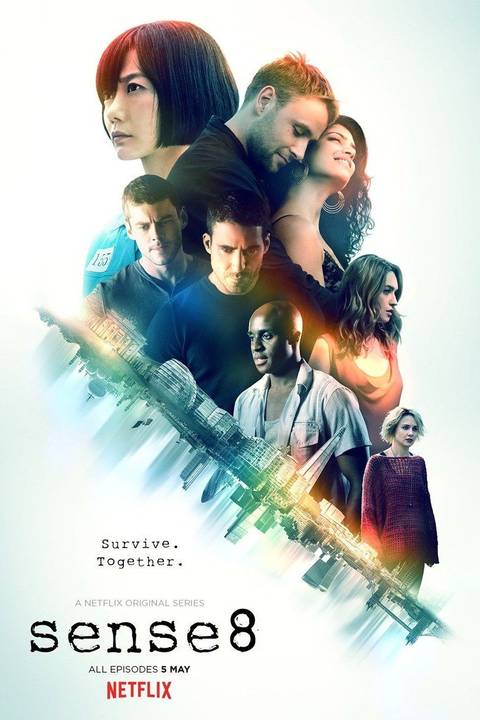
Before going back to The Matrix with Neo (Keanu Reeves) in 2021, the Wachowskis pivoted to television with one of Netflix’s early original shows in Sense8. It’s hard to describe the themes, style, and messages of this sci-fi series, which ran for only 24 episodes across two seasons, in just a few words. For some, it represents the nadir of their cryptic storytelling and extreme style, but for others, it marks the peak of their imaginative and soulful vision.
‘Sense8′ Expanded the Wachowskis’ Creative Freedom
Converging their love of science fiction, philosophy, and interconnectivity between lost souls, Sense8 tells you everything you need to know about the Wachowskis, even if what’s portrayed on the screen is confounding to many. Co-created by J. Michael Straczynski and featuring contributions by their frequent collaborators, including Tom Tykwer and V for Vendetta directorJames McTeigue, the series, debuting in 2015, is an epic, kaledoscopic story about eight strangers across the globe who are suddenly linked mentally, and must find a way to survive being hunted by those who view them as a threat to humanity and world order. Hence, the series’ title, the group, known as the August 8th cluster, connect through various senses and share similar headspaces and feelings of isolation from the world. Despite cultural and language barriers, they both become uplifted individuals and coexist as one unit.
Sense8 is emblematic of the Wachowskis’ creative liberty. Few directors are as audacious and formally daring as the duo, who have shown little interest in holding the audience’s hand or conforming to contemporary media trends. The series is in conversation with their previous bizarre but deeply personal films, Cloud Atlas and Jupiter Ascending, stories that transcend the walls of space and time and operate on a unique emotional register. These movies were not met with especially high praise, but Sense8, thanks to the open-ended nature of television, was generally held in higher regard. In 2015, audiences and critics were still in love with the novelty of a DVD mailing service producing original series and giving artists carte blanche to realize any bold passion project that the studios and networks balked at.
‘Sense8’ Pushed the Boundaries of Episodic Television
Lana and Lilly, who publicly revealed that they transitioned in 2008 and 2016, respectively, confront topics of identity in Sense8. Beginning with The Matrix, transgender allegories are sprinkled throughout the filmography, but the series sees them dealing with these themes head-on with the character Nomi Marks (Jamie Clayton), a trans woman hacktivist who is shown in flashbacks to have been bullied in the boys’ locker room (a moment pulled right from Lana’s life). However, the show is not just confined to the trans experience, as theWachowskis channel the spirits of various lonely souls who feel disaffected by life in one way or another, from Capheus Onyango (Aml Ameen), who is trying to earn enough money to pay for his mother’s HIV/AIDS treatment, to Will Gorski (Brian J. Smith), a Chicago police officer haunted by an unsolved murder from his childhood.
Some of the characters, such as Kala and Wolfgang, are light on background detail, but each cast member expresses a lifetime’s worth of guilt and sorrow through minimal gestures. A testament to the show’s lack of traditional plot structure, characters often speak in emotional logic, freed from the norms of rudimentary dialogue in scripted television shows. The heavily theatrical manner in which they speak to each other helps make the Wachowskis’ stark creative flourishes, such as when the eight simultaneously sing along to 4 Non Blondes‘ “What’s Up?” The telepathic communication blends characters together, causing confusion as to which of them exists in space, but the Wachowskis relish the distortion of reality.

“Stay in Wonderland, and see how deep the rabbit hole goes.”
Sense8 features visuals and a lofty production design seemingly not designed to fit the rigid structure of episodic television. Even when shots disrupt the narrative flow, the Wachowskis’ unbridled ambition and expressive eye are enough to carry the momentum forward. While more grounded and performance-focused than their theatrical efforts, Sense8 has all the magic and wonder of The Matrix and Speed Racerthanks to its sensual direction. The duo turns what would’ve been an onslaught of trauma porn into a swooning portrayal of love and loss between spiritually linked characters, and they imbue so much fascination and reverence into these unconventional leads. Between all the absurd plot beats and character components (Capheus drives a Jean-Claude Van Damme-themed bus, after all) is an unlikely tenderness running through this series that underlines just how cruel the world can be.
‘Sense8’ Soulfully Explores Life and Human Connection

Being that this is a Wachowski project, expect to be utterly confused, baffled, and perhaps even enraged by some of the creative choices in Sense8. Its broad ideas about the profundity of human life and existing in a time continuum may come off as treacly, but if you buy into their wavelength, the emotional impact is undeniable. Where most television these days operates in familiar territory and plays it safe for easy consumption, the Wachowskis proudly bite off more than they can chew, which often leads to sloppy and disorganized pacing.
The deep ensemble cast demonstrates the most overwrought emotions and weighty themes, notably displacement, absent fathers, and paranoia about the morality of authority, but Lana and Lilly, bless them for it, can only approach the world in the most theatrical manner. Many will bump against the stilted, sometimes awkward dialogue, but since the series exists in an off-kilter universe with emotionally jaded characters, it fits the tone and the Wachowskis’ fascination with deemed outcasts. 10 years since its debut, Sense8 is more urgent than ever before. In a time when we feel more separated from each other and driven by hate, this innovative series by Lana and Lilly Wachowski suggests that, if you try hard enough, you can find love with someone completely unexpected. At the end of the day, we’re all longing for affection and understanding.