There will never be 100% agreement on the topic of which movie stands as the best any director has made, within their overall filmographies, but some directors have a bit more by way of consensus here than others. With Quentin Tarantino, it feels like the go-to answer is usually Pulp Fiction, and with Christopher Nolan, it’s probably The Dark Knight… maybe Inception on Oppenheimer, too, or likely one of those in any event.
But then there are the following filmmakers, and yeah, this is all quite subjective, but the ones below all have potentially underrated or underappreciated best films. The following will not be written in a subjective way, with any “I think” or “I feel” kind of phrases, but it is effectively that; a ranking about “I think” and “I feel” sorts of things. It’s an experiment, and it’s at least interesting to think about instances where you yourself might have a favorite title from a director’s body of work that isn’t typically looked upon as their best by most viewers.
10
‘Gloria’ (1980)
With Gloria, John Cassavetes kind of had fun for once, and tried to make something with mass appeal, and maybe that had the effect of making it less appealing to those who like his weightier and more challenging movies. The easy pick for his best film, of those he directed, is likely A Woman Under the Influence, which is a grim character study without much plot, and with a runtime of nearly 2.5 hours.
It does feature maybe Gena Rowlands’ best performance, so that helps, but she’s almost just as great in Gloria. She plays a badass, really, and though it’s not quite an action movie, it’s definitely thrilling, and with more of a narrative than most Cassavetes movies, following the titular character becoming an unlikely hero by protecting a young boy from gangsters who’ve recently murdered his family. It’s entertaining and surprisingly moving, compared to the other John Cassavetes movies, and it’s a great entry point for anyone who might be new to his style. Oh, and it’s his best film. People don’t want to admit it. But it rocks.
9
‘Ed Wood’ (1994)

This pick is cheating a little, because if you go by Rotten Tomatoes, Ed Wood is the highest-rated movie that Tim Burton has directed to date. But it is also a cult film, and maybe one that doesn’t have a huge amount of broad appeal, since it’s about the titular, infamous, and eventually oddly beloved director who made a bunch of weird B-movies people didn’t understand, though others, as time’s gone on, have proven unable to look away from them.
Ed Wood is a well-made portrait of its titular director, celebrating his odd life and body of work with style, a lot of humor, and some genuine emotion, too.
There’s something to the films of Edward D. Wood Jr. that Ed Wood aims to capture and celebrate, and it does so with style, a lot of humor, and some genuine emotion, too. It’s a lot all at once, but also incredibly well-balanced, and though Batman (1989) and Edward Scissorhands (1990) are also rightly held up as Tim Burton classics, there’s just something extra special about Ed Wood.
8
‘Inside Llewyn Davis’ (2013)

As a duo, the Coen Brothers are close to untouchable, as even the pair’s misfires (very few, in total, it should be noted) usually have redeeming qualities. Still, as far as their best films go, most would say Fargo, No Country for Old Men, or The Big Lebowski, so Inside Llewyn Davis would be a slightly less expected pick, even though it’s in the same camp as Ed Wood in terms of being critically adored.
It’s just not quite as approachable as the broadly comedic The Big Lebowski, nor the stupendously intense No Country for Old Men. And then tonally between those two is the remarkably well-balanced Fargo. They’re all great. Maybe Inside Llewyn Davis is merely as good, rather than outright better, but hey, if it deserves an equal amount of consideration when the topic of conversation is “Which Coen Brothers flick is the best?”, then that’s enough of a reason for it to be included in this here ranking.
7
‘Rope’ (1948)
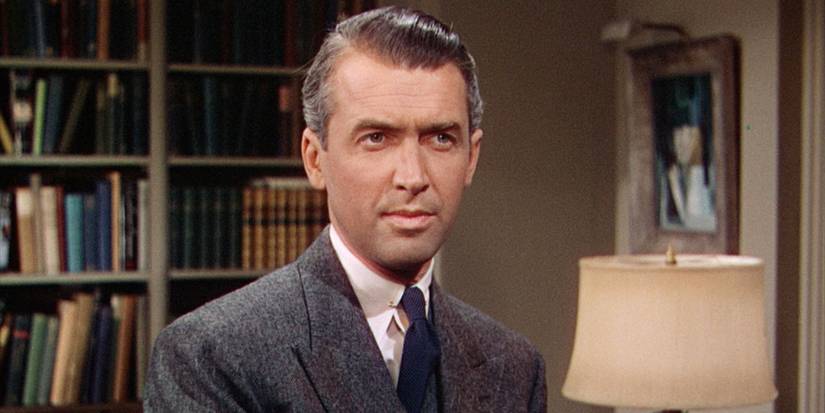
It would be a stretch to say Alfred Hitchcock entirely disowned Rope, but he did view it as a failed experiment, and history isn’t entirely in disagreement, since Vertigo, Psycho, Rear Window, or North by Northwest are more likely to be considered top-tier Hitchcock. Still, Rope is radical and just as impressive as those for its technical qualities, and its attempt to string out one suspense-filled idea in near real-time, and with a series of very long takes.
Watching it feels a bit like an immersive stage play, where you can roam around while the actors are all acting, and with respect to Hitchcock, he’s wrong about the experiment failing. Rope continues to feel like one of the director’s most entertaining and suspenseful movies, with lots of it holding up well, and the stuff that doesn’t feel as timeless being easier to forgive, since the film is so old and they had to make do with technical limitations of the time. Rope does have its fans for sure (dozens of them! Dozens!), but it should have even more.
6
‘Magnolia’ (1999)

So, Paul Thomas Anderson is consistent enough that you could argue almost any movie of his is his best, with the possible exception of Hard Eight, his first movie, which is still pretty damn good, especially for a directorial debut. There Will Be Blood is usually the most popular choice, and time will tell whether the already beloved and acclaimed One Battle After Another will be elevated even higher into true classic status… but then there’s Magnolia.
This is a big movie, and it’s kind of overwhelming in some regards, and certainly messy. Anderson himself once said it was the best movie he’ll ever make, but then, more recently, he doesn’t seem to view it as favorably. Oh, well. It’s the most Paul Thomas Anderson movie, and that might make it the best Paul Thomas Anderson movie, since everything he’s capable of, as a writer/director, is thrown into this, like it’s the Long Island iced tea of Paul Thomas Anderson’s filmography. Phenomenal use of music, too.
5
‘Soldier of Orange’ (1977)

Before he made movies in Hollywood, Paul Verhoeven had made quite a few in the Netherlands, and these ones sometimes get less attention than the likes of RoboCop, Total Recall, and Starship Troopers. It’s worth exploring his older films for sure (and he’s made some non-English-language ones in more recent years, too), and it’s especially worth checking out Soldier of Orange, which could well be his best movie overall.
It’s a somewhat exciting movie, perhaps a thriller, and with a bit of action thrown in for good measure, but also a pretty bleak and uncompromising one, exploring how the outbreak of World War II impacted a group of friends living in the Netherlands. Soldier of Orange is fairly long, though it more than earns its runtime and does a lot within about 2.5 hours, proving emotional, unnerving, and also plain engaging (“entertaining” might not be the best word to use) throughout.
4
‘Babylon’ (2022)

There’s a temptation to be annoying about Babylon, getting it and feeling like others don’t appreciate it, but then again, just saying it’s great is probably already going to annoy people, so what’s the problem with engaging in further adoration? It’s like, if you’ve just been hit by a tsunami, are you going to be bothered about “getting wet” when it starts raining just a few moments after that wave’s crashed down?
Damien Chazelle is still a fairly young director, and hasn’t made a ton of movies, but still, Whiplash and La La Land are the two that get held up as his best. Babylon is comparable thematically, exploring the pursuit of making great art and struggling with other things in the process, but plays out on an epic scale, looking at a whole industry, rather than just a person or two. It’s aggressive, sprawling, beautiful, ugly, and confounding all at once. It’s Chazelle’s most ambitious film for sure, and maybe his best, too, if you’re one of those annoying people who actually get it.
3
‘Letters from Iwo Jima’ (2006)

If you count movies he starred in and movies he directed (some have him doing both, too), then the best Clint Eastwood movie is likely The Good, the Bad and the Ugly. Just looking at those he directed, though, you’re probably going to see Unforgiven, Mystic River, or Million Dollar Baby pop up the most as personal favorites, with Letters from Iwo Jima being just as worthy of consideration, even if it’s not quite as well-known.
It’s part of a duology with Flags of Our Fathers, which is about the Battle of Iwo Jima – and its aftermath – from the U.S. perspective, while Letters from Iwo Jima is about the same event, but from the Japanese perspective. It’s a devastating war film, and while it does have some impressively filmed combat sequences, it’s most effective as a drama about confronting death and the futility of war. Eastwood’s directed a fair few powerful films, but Letters from Iwo Jima could well be his most hard-hitting.
2
‘The Life Aquatic with Steve Zissou’ (2004)
It’s not The Grand Budapest Hotel, which had all the Wes Anderson-isms right up to the line of being too much, nor Rushmore or Moonrise Kingdom, which are a little smaller in scale and successful in being intimate and moving. It’s The Life Aquatic with Steve Zissou. This one is the best Wes Anderson movie. And that’s genuinely a hot take, since some people really don’t like this one.
It has an ensemble cast that’s actually pretty well-balanced, but Bill Murray, in the titular role, is the standout, and it’s great to see him carry a Wes Anderson movie rather than being an amusing side character. There’s a lot of style and quirkiness here, but not an overwhelming amount, and it doesn’t clash with the more down-to-earth and emotional stuff. The Life Aquatic with Steve Zissou just gets the balance right. It doesn’t feel totally fantastical, but it also feels just far enough removed from reality to be eye-catching and unique. It’s hard to put into words what makes it all so good, but if you feel it, you feel it, and there’s a lot to feel here.
1
‘Twin Peaks: Fire Walk with Me’ (1992)

Time has been kind to Twin Peaks: Fire Walk with Me, which seemed to confound people even more than most David Lynch movies did when it was first released. It came out not long after Twin Peaks was canceled (this was well before Twin Peaks: The Return), but didn’t really continue the story all that much, instead mostly going back in time to show the lead-up to the murder of Laura Palmer, with the discovery of her body being the thing that kicked off the TV series.
Twin Peaks could well be the best thing Lynch was involved with making, but if you’re focusing on his movies, then the #1 spot will usually be reserved for Mulholland Drive, Blue Velvet, or maybe The Elephant Man. So, Twin Peaks: Fire Walk with Me is a slightly offbeat selection, but it hits incredibly hard and feels like Lynch at his simultaneous best and darkest.