Netflix has already proved it can bring anime to live action with hits like One Piece and Alice in Borderland, yet its upcoming Solo Leveling adaptation could be one of its most significant projects. The streamer embracing a property this new signals real confidence. Rather than waiting for long-term legacy status, Netflix is acting on Solo Leveling’s immediate cultural impact.
The series is getting a Korean live-action adaptation with Byon Woo-seok taking up the role of Sung Jinwoo (via Netflix). The live-action Solo Leveling is set to reimagine the action-heavy universe through a prestige Korean drama lens. With the directing team of Ashfall and My Dictator’s Lee Hae-jun and Kim Byung-seo taking the helm, expectations are already sky-high.
Netflix developing a live-action adaptation is yet another way that Solo Leveling keeps reshaping its medium. The anime arrived with huge anticipation, and its jump to live action shows how quickly it has outpaced typical adaptation timelines. Every major move around the property reinforces its growing influence, and it shows no signs of slowing down.
Solo Leveling’s Live-Action Adaptation Is Already Groundbreaking
Solo Leveling Is Racing Ahead Faster Than Almost Any Modern Anime Property
The speed at which Solo Leveling is moving into live action is remarkable, even by current franchise standards. The anime’s debut in 2024 only amplified its presence, yet Netflix greenlighting a large-scale adaptation this early places it in rare company. This is not the typical progression for a new hit, especially one rooted in manhwa rather than long-running manga.
Past rapid live-action anime adaptations from Netfllix have usually been minor, niche projects, such as the Zom 100: Bucket List of the Dead live-action movie. Plus, those releases were never positioned as major streaming tentpoles (as opposed to shows like One Piece, which are built on years of anime and manga history).
Netflix’s success with live-action adaptations suggests the streamer is willing to elevate anime properties to flagship status. One Piece demonstrated that faithful, high-budget adaptations can win over skeptical fans. Alice in Borderland did something similar for manga-inspired thrillers. Solo Leveling now stands to benefit from the lessons learned on both fronts.
The involvement of an accomplished Korean creative team adds further weight. Lee Hae-jun and Kim Byung-seo’s track record signals Netflix’s intent to create a prestige production rather than a quick turnaround. It mirrors their strategy behind Alice in Borderland, bringing a focus on character-driven storytelling and meticulous visual design.
That level of ambition is groundbreaking because it elevates a still-young anime into premium global content. Instead of waiting years to gauge staying power, Netflix is treating Solo Leveling as an IP with long-term potential immediately. It reflects a broader shift where streaming platforms chase emerging international hits rather than relying solely on established legacy franchises.
The live-action Solo Leveling adaptation could become a template for future manhwa-to-live-action pipelines. If successful, it may prove that modern anime hits don’t need decades of nostalgia to earn major studios’ attention. They only need cultural momentum, and Solo Leveling has plenty.
Is Solo Leveling The Right Anime For A Live-Action Adaptation?
Solo Leveling Is Both Perfect For Live Action And Uniquely Challenging To Adapt

On the surface, Solo Leveling seems ideal for a live-action anime adaptation treatment. Its premise is clean, its progression system is visually defined, and its action-heavy structure provides obvious opportunities for high-impact set pieces. Sung Jinwoo is a character whose transformation arc lends itself well to serialized drama, especially with an actor like Byon Woo-seok anchoring his evolution.
The story’s dungeon raids, guild politics, and monster battles fit the tone of recent Korean genre hits. Korean studios have already shown their ability to deliver high-quality fantasy, thriller, and action-driven storytelling. With careful choreography and strong creature design, the adaptation could capture the anime’s intensity without losing its emotional grounding.
However, adapting Solo Leveling also presents real challenges. The anime’s scale is enormous, especially in later arcs. The sheer number of monsters, environments, and large-scale battles could strain even Netflix’s budget. The adaptation will need to prioritize specific storylines to avoid overextension during early episodes.
Another concern is the protagonist’s power creep. Jinwoo’s rapid leveling works well in animated form, but translating that progression to live action demands nuance. Too much too fast risks undermining dramatic tension, while slowing it down could disappoint fans expecting a faithful rhythm.
There’s also the matter of tone. Solo Leveling balances dark fantasy with slick, game-inspired mechanics. Maintaining that balance in live action will require a visual style that supports both grounded drama and heightened spectacle. Leaning too heavily into realism could dull the series’ fantasy edge, while excess CGI risks looking artificial.
Still, the narrative’s emotional hooks, such as loss, growth, responsibility, are universal. If Netflix’s adaptation embraces character-first storytelling while respecting the spectacle that defines the franchise, Solo Leveling could become one of the most successful anime-to-live-action transitions yet.
Solo Leveling May Have Changed Anime Forever
Solo Leveling’s breakthrough success is reshaping anime, manhwa, and global adaptation trends

Solo Leveling began as a manhwa in 2016 and quickly evolved into one of the most-discussed modern anime releases, demonstrating the global appetite for stories outside traditional manga pipelines. Its success has created new visibility for Korean webtoons, encouraging studios to explore fresh international sources for adaptation.
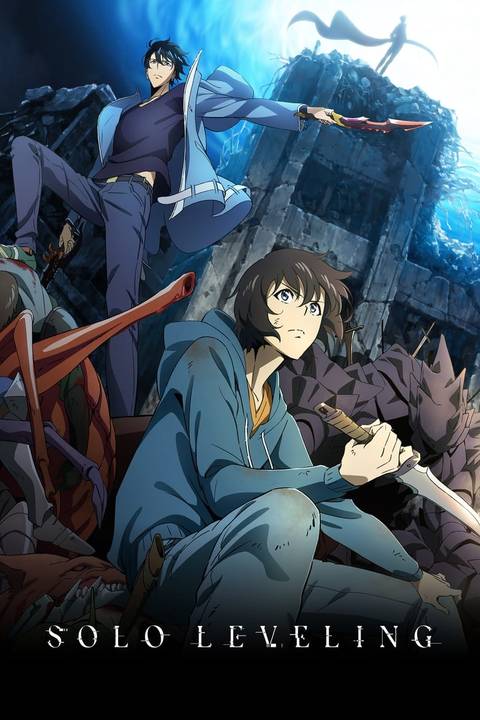
The Solo Leveling anime arrived in 2024 with high expectations and exceeded them, attracting viewers beyond typical genre boundaries. Some consider it overrated, yet its impact is undeniable. It set new engagement benchmarks for a debut season and proved that manhwa adaptations could compete with major manga-based franchises in hype and execution.
This momentum of a manhwa-based show like Solo Levelingis significant because the anime industry has long relied on Japanese manga as its primary source material. Solo Leveling’s ascent challenges that hierarchy. It broadens the landscape, giving Korean creators a stronger foothold in the global animation market and encouraging studios to diversify the projects they greenlight.
Solo Leveling’s popularity also signals that audiences are hungry for high-concept power fantasies with serialized progression systems. Future studios exploring similar stories may owe a debt to how effectively Solo Leveling captured the formula. The show’s combination of modern pacing, stylish visuals, and game-inspired mechanics is already influencing upcoming anime lineups.
Its live-action adaptation will likely amplify that effect. The more Solo Leveling succeeds across mediums, the more it validates manhwa as fertile ground for multimedia franchises. The industry has noticed, and the wave of future adaptations, both animated and live action, may well trace back to the path it carved.
- Release Date
-
2024 – 2025-00-00
- Network
-
Tokyo MX, Gunma TV, BS11, Tochigi TV
- Directors
-
Tatsuya Sasaki, Toru Hamasaki
- Writers
-
Shigeru Murakoshi, Shingo Irie, Fuka Ishii
-

-
Genta Nakamura
Yoo Jin-ho