The 1970s were a decade poisoned by doubt and distrust (though the present is arguably even worse in this regard). Watergate, Vietnam, assassinations, and shifting media power left America questioning every institution it once trusted. As it often does, art imitated life, and filmmakers responded to this public paranoia, crafting thrillers where the system was the threat.
These movies tended to focus on ordinary people glimpsing the machinery of corruption, often fighting against it and other times merely trying to survive its seemingly inescapable claws. With this in mind, this list ranks the very best conspiracy thrillers of the 1970s, the best movies to emerge from this wave. The titles below remain the blueprints for modern conspiracy cinema: intelligent, cynical, and disturbingly prophetic.
10
‘Capricorn One’ (1978)
“It’s not that I don’t believe in you… I just don’t believe what’s happening.” What if the moon landing was fake? Capricorn One, directed by The Relic‘s Peter Hyams, turns this thought experiment into a taut and unnerving thriller. When NASA stages a Mars landing to save its reputation, three astronauts become unwilling participants in a national lie. But once they learn too much, the cover-up spirals into a deadly pursuit. Along the way, the movie mixes sci-fi and government distrust into something that feels alarmingly plausible, even today.
Tappting into a genuine conspiracy theory that persists today, Capricorn One endures thanks to its eerie blend of satire and sincerity, absurd and believable at once. Stars Elliott Gould and James Brolin ground the spectacle with human desperation, while the editing and desert cinematography evoke the paranoia of The Parallax View. In an age of deepfakes and misinformation, its central fear, that truth itself can be manufactured, hits harder than ever.
9
‘Black Sunday’ (1977)

“The world will know that I was not afraid.” Black Sunday is one of the most technically assured thrillers of the 1970s, and one of the most disturbing. The plot zeroes in on a terrorist plot to attack the Super Bowl using a Goodyear blimp rigged with explosives. In this combustible scenario, Robert Shaw’s weary Israeli agent and Marthe Keller’s fanatical operative represent two sides of obsession: one to protect, one to destroy.
The realism is impressive. Director John Frankenheimer (The Manchurian Candidate, Ronin) shoots the action like a news broadcast, collapsing the distance between fiction and televised terror. Indeed, what’s chilling is how mundane the evil feels. It’s never overplayed, building up to the striking final sequence, with the blimp descending on a packed stadium, which remains one of the most nerve-shredding set pieces ever shot. Overall, Black Sundaytransforms spectacle into sheer anxiety, a perfect reflection of post-Vietnam America: glued to the screen, terrified of what might happen live.
8
‘Executive Action’ (1973)

“Never before in American historyhas one family held such an enormous concentration of political power.” Few conspiracy thrillers dare to be as direct as Executive Action. Released a decade after JFK’s assassination, it posits, without ambiguity, that the president’s death was orchestrated by shadowy elites to preserve corporate power. Co-written by Dalton Trumbo, the film explores this idea through an atmosphere of cold, bureaucratic dread. Burt Lancaster and Robert Ryan play the conspirators as calm, professional men who treat murder like paperwork.
That restraint is precisely what makes the movie work. There’s no chase scene, no grand revelation. All we get is the slow, horrifying realization that such crimes could be organized in plain sight. Executive Action is less a thriller than a procedural for the death of democracy. It may not have the visual polish of its peers, but it captures something few others do: the casual efficiency of conspiracy as business as usual.
7
‘Klute’ (1971)
“There are people who just sit and listen to you talk. You can say anything you want.” Before the paranoia boom truly began, Alan J. Pakula’s Klute introduced the tone of unease that would define it. Ostensibly a detective story, it’s really about surveillance, alienation, and the cost of looking too closely. In it, Donald Sutherland‘s quiet investigator searches for a missing man with the help of Jane Fonda’s Bree Daniels, a call girl whose vulnerability hides razor-sharp self-awareness. Fonda won an Oscar for a reason: her performance is volcanic, turning every therapy session and monologue into an emotional autopsy.
The aesthetics deliver, too. Pakula films New York like a psychological maze, all sterile offices, dark apartments, and telephones humming like threats. Every conversation feels overheard, every shadow feels sentient. Ultimately, Klute isn’t about finding the truth but about realizing the truth has already found you. It’s a masterpiece of tone, the moment the ’70s paranoia thriller found its voice.
6
‘Marathon Man’ (1976)

“Is it safe?” Three words, infinite terror. Marathon Man is one of the most nightmarish political thrillers ever. Dustin Hoffman stars as an innocent grad student pulled into an international conspiracy involving stolen Nazi diamonds and a sadistic ex-war criminal (Laurence Olivier). Olivier is especially great in his part, aided by a killer script from the great William Goldman. The film bridges the gap between Hitchcock and the post-Watergate paranoia era, combining espionage with body horror and psychological trauma.
The infamous dental torture scene remains one of cinema’s most agonizing moments. While Marathon Man is exquisitely suspenseful, it all goes deeper than most thrillers. Indeed, the real horror is existential: how quickly ordinary people can be crushed by hidden systems. In this regard,the movie is deeply cynical about institutions, morality, and the illusion of safety.After all, it’s not paranoia if they really are out to get you, and here, they always are.
5
‘Three Days of the Condor’ (1975)
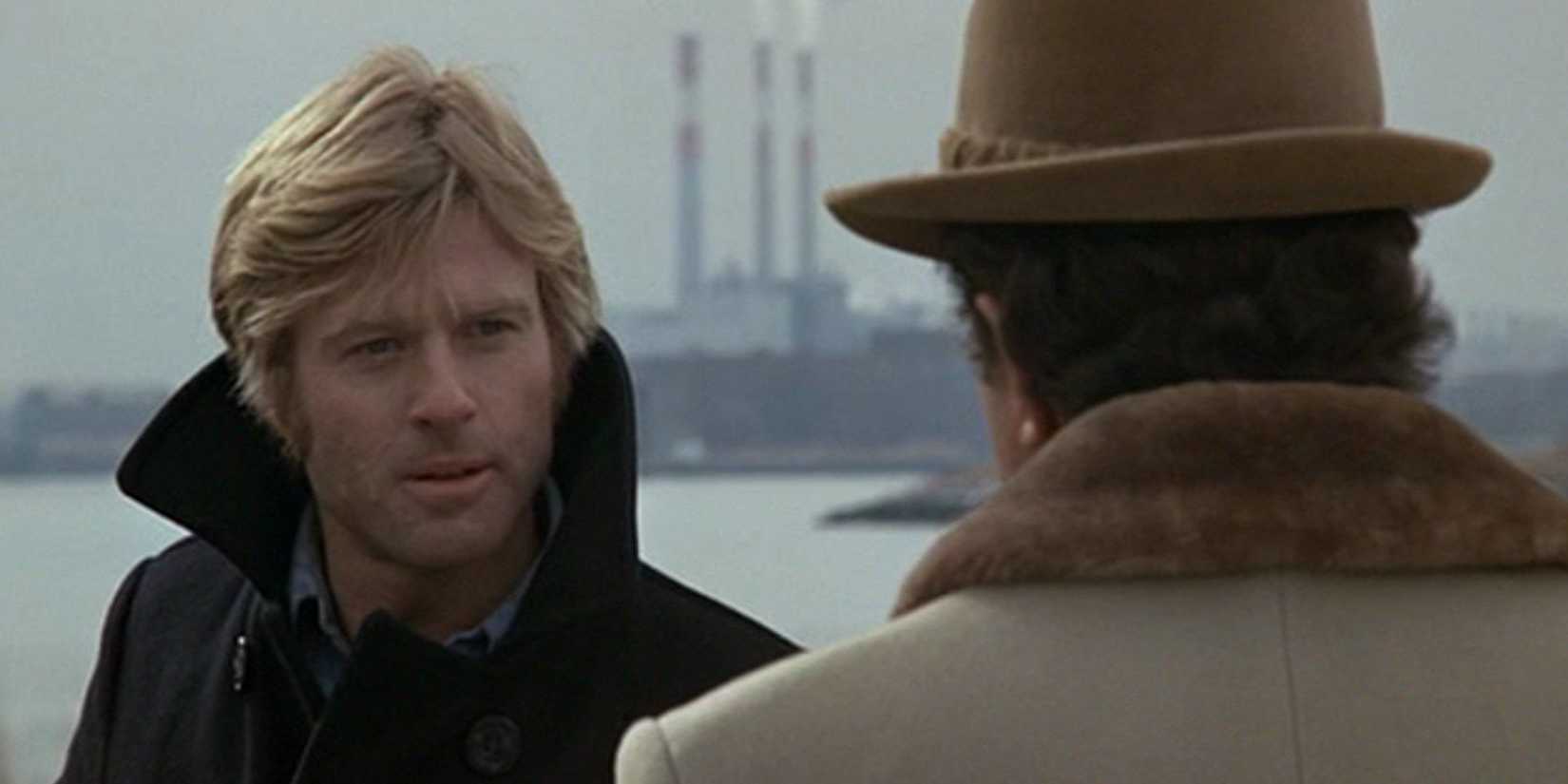
“I read books. I get ideas.” Robert Redford leads this one as a low-level CIA analyst who returns from lunch to find his entire office slaughtered. What follows is a sleek, stylish chase through wintry New York, where even payphones feel like traps. The tale blends romance and spycraft, as Faye Dunaway’s photographer becomes an uneasy ally to Redford’s Condor.
From here, the movie delves into some intriguing ideas, particularly around the way systems can become so convoluted that people forget how and why they even started. For example, the CIA orchestrates conspiracies just to “keep the game going.” Redford’s charisma gives the story heart, but it’s Sydney Pollack‘s tone — elegant, disillusioned, and deeply American — that cements Three Days of the Condor‘s legacy, handling the material with icy precision. The finished product is both a thriller and a lament, proof that the real conspiracy is sometimes the machinery itself.
4
‘The Parallax View’ (1974)
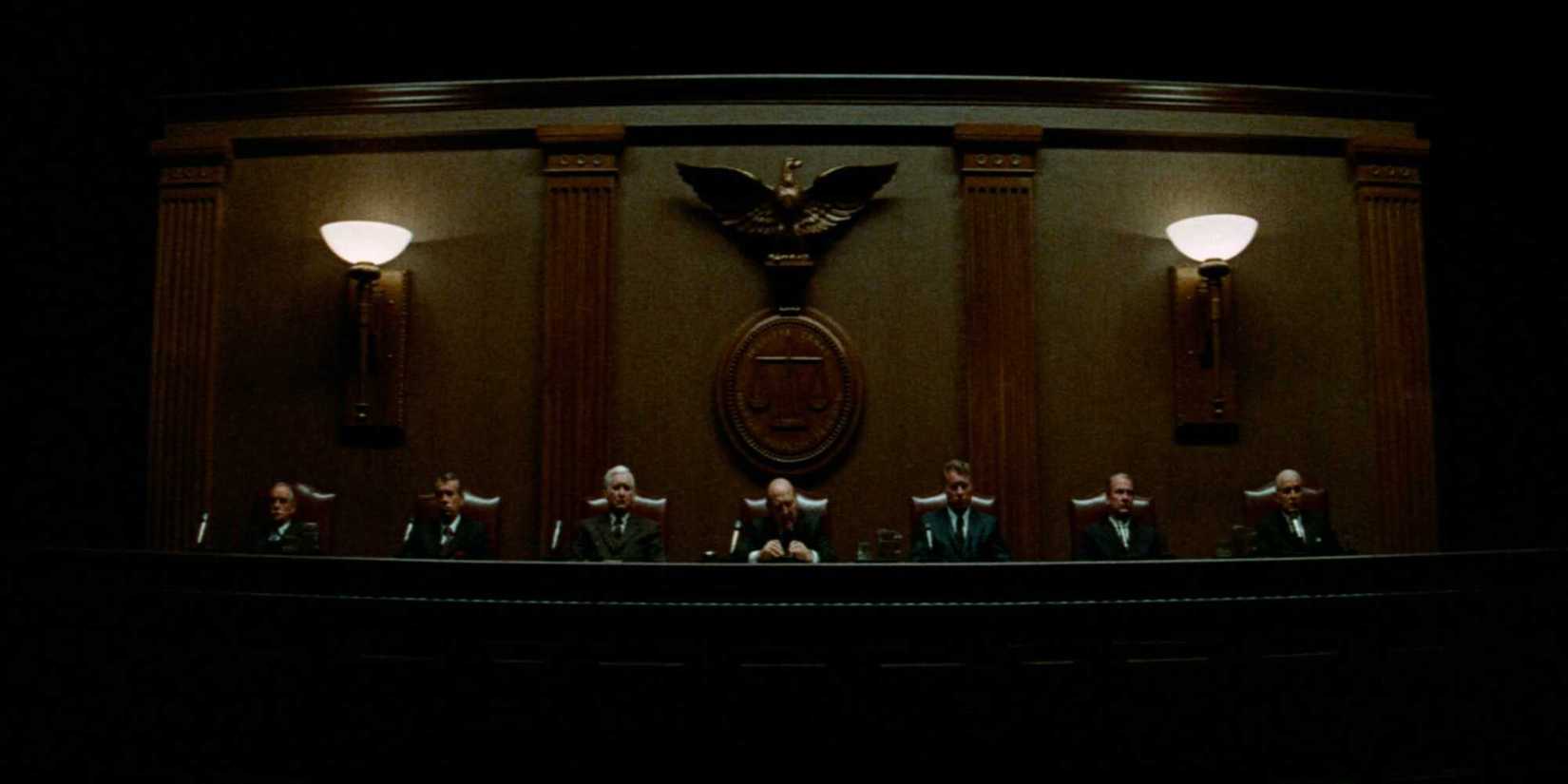
“There is no cause. There are only people who want power.” Pakula strikes again. Even more chilling than Klute, The Parallax Viewfeatures Warren Beatty as a journalist investigating a series of mysterious political assassinations. In the process, he uncovers a corporate recruitment program for killers. The story is fragmented, abstract, and unnervingly plausible. Its centerpiece, a brainwashing montage of American imagery and propaganda, remains one of the most unsettling sequences in ’70s cinema, a disorienting kaleidoscope that mashes together shots of Nixon, Hitler, Thor, and Lee Harvey Oswald.
The whole movie is masterfully constructed and visually intriguing. Paula’s visuals are austere and architectural, reducing humanity to ants crawling through monolithic spaces. Arguably, no film has ever captured institutional evil with such elegance. It’s an effective portrait of the instability of post-Kennedy America. The ending, blunt and merciless, is less a twist than an inevitability — the system wins because it never had to explain itself.
3
‘The Conversation’ (1974)
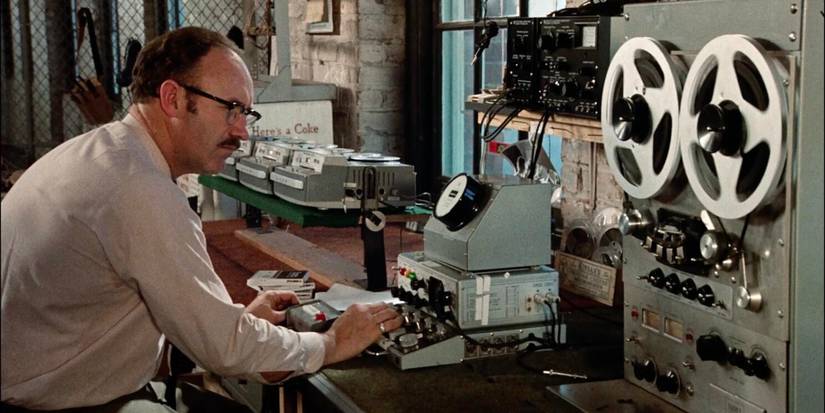
“We’ll be listening to you.” Francis Ford Coppola casually banged out this masterpiece between Godfather films. The Conversation might be the definitive study of surveillance anxiety. Gene Hackman delivers one of his finest performances as Harry Caul, a sound technician whose obsession with privacy leads him to uncover (or imagine) a murder plot through the fragments of a recording. The movie is brilliantly ambiguous: what Harry hears may be nothing, or it may be everything.
The Conversation is haunting not because of what’s revealed, but because of what’s never confirmed. In a world saturated with information, it asks the question that defines the modern era: how can you trust what you hear? The visuals and sound design amplify this message. Coppola and cinematographer Bill Butler turn San Francisco into a ghost city of reflections and echoes, where every pane of glass conceals another secret. Finally, David Shire’s minimalist piano score mirrors Harry’s isolation: mechanical, repetitive, doomed to replay.
2
‘All the President’s Men’ (1976)

“Follow the money.” This one stands out because it’s based on a true story, and because it offers at least a little hope. Plus, All the President’s Men is the rare film that makes journalism heroic without romanticizing it. Alan J. Pakula’s methodical, unglamorous direction mirrors the investigative grind of The Washington Post’s Watergate reporting. Robert Redford and Dustin Hoffman as Woodward and Bernstein bring charisma and obsession in equal measure, portraying truth-seeking as a form of madness, especially when the odds seem insurmountable.
The genius of the movie lies in its restraint. There are no gunfights or elaborate set pieces; instead, it wrings tension out of just phones ringing and typewriters clacking. Pakula’s framing is wide, clinical, and oppressive, making even fluorescent office light feel dangerous. It makes palpable the sense that the entire government might collapse under the weight of one secret. In the end, All the President’s Men is history turned thriller, and it still defines how on-screen corruption looks, sounds, and feels.
1
‘Chinatown’ (1974)

“Middle of a drought, and the water commissioner drowns. Only in L.A.” At the peak of the ’70s paranoia wave came Chinatown. It’s the apotheosis of noir,a film that transcends genre to become existential tragedy. Jack Nicholson’s private eye Jake Gittes uncovers a web of corruption that stretches from the city’s water supply to the heart of power, and the revelation destroys him. Robert Towne’s screenplay (frequently ranked among the greatest ever) and Polanski’s direction fuse noir fatalism with modern despair.
The film’s sun-baked Los Angeles is beautiful yet rotting, its gleaming surfaces hiding incest, greed, and civic decay. Alongside Nicholson, Faye Dunaway‘s performance is both luminous and devastating, while John Huston‘s Noah Cross is deeply chilling, not because he’s insane, but because he’s utterly logical. Their intertwined stories end not with justice, but resignation: “Forget it, Jake, it’s Chinatown.” It’s the purest distillation of the 1970s conspiracy ethos. Here, corruption is infinite.