Most genres benefit from keeping things simple, and you can probably see that plainest of all when it comes to the horror genre. Look at Alien, for example. The plot is: “Hey, we need to survive this deadly alien.” And Jaws, where the plot is: “Let’s kill this very dangerous shark.” Even The Shining, written by someone who’s penned some complex stuff, and directed by the often enigmatic Stanley Kubrick, boils down to: “Guy is driven mad in an isolated hotel, and his wife and kid have to survive him.”
Up another level comes horror movies that go the extra step and tell relatively complex stories, all the while also delivering strong scares. As some of the best horror movies are narratively quite straightforward, there will be a fair few classics that don’t appear here. What follows is some space for masterfully done horror movies that got truly ambitious with character arcs, topics/themes explored, and emotional (or, sometimes, physical) ground covered over the course of an expansive filmed story.
10
‘The Sixth Sense’ (1999)
Yeah, The Sixth Sense is on here for the reasons you’d probably expect, since it has that big old twist that’s so iconic, most people know about it before they ever see the movie. And that’s okay, because The Sixth Sense can still be appreciated even if you are aware of what’s in store. But if you’re not… then it’s a whole other thing entirely.
And it takes clear skill, as a writer and director, to do that kind of misdirection so well, your film instantly becomes one of the most famously twisty of all time. There are various other things that can be said about a whole bunch of other M. Night Shyamalan movies, but he knew what he was doing with The Sixth Sense, and it has some solid scary moments that also work in tandem with the overall excellent storytelling experienced throughout.
9
‘Weapons’ (2025)
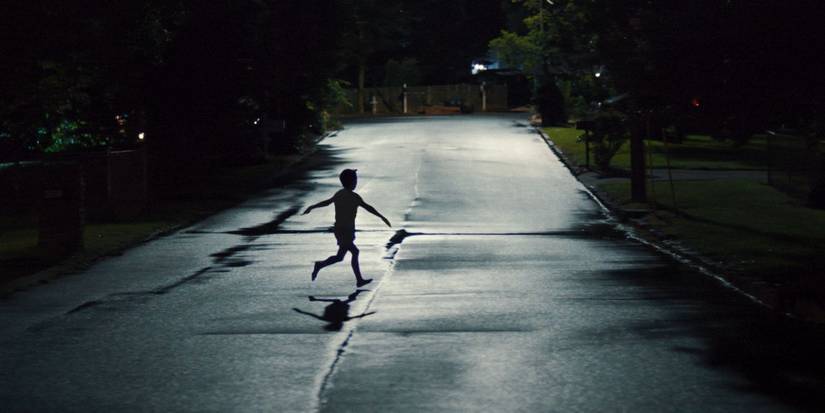
If you don’t like the idea of modern-day horror movies being called masterful or close to perfect, then you might reject seeing Weapons here, and you’ll probably have a similarly grouchy reaction to another movie that’ll be mentioned in a bit. Look, take a step back and try to think about what Weapons does, as a narrative, within just one movie that’s not based on any other pre-established characters, comic books, movies, or books.
Weapons also finds itself having to be creepy at points, throwing in some unique and instantly memorable horror imagery, and humor was also at the forefront here a fair few times.
It’s just its own thing, and it has to introduce a bizarre occurrence early on, provide conflict between people who want to know what happened, and then resolve things in a way that makes just enough sense within the previously (slightly) heightened world Weapons was established to take place in. Oh, and it has to be creepy at times, throwing in some unique and instantly memorable horror imagery, and humor was also at the forefront here a fair few times. It’s a lot, and it all works quite well, feeling original and confident in terms of how its narrative is told.
8
‘Godzilla Minus One’ (2023)
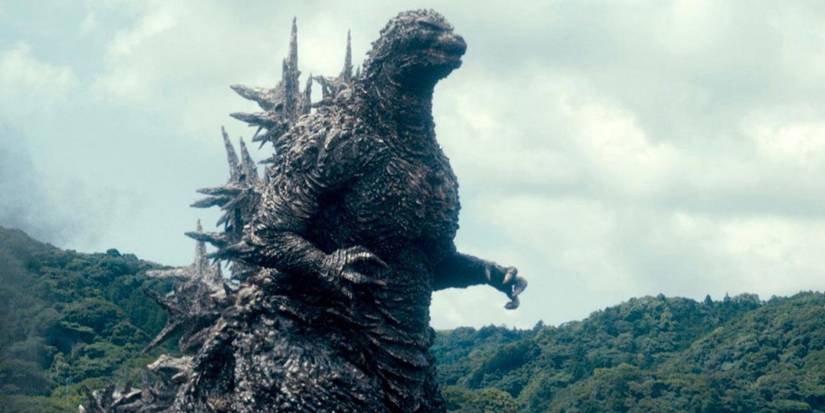
Yes, Godzilla Minus One has Godzilla rising up and attacking Japan, and there’s usually only one way a story like that can go: someone – or something – has to fight back. In certain movies, there’ll be a giant robot or another big monster that might be able to stop Godzilla, but in Godzilla Minus One – as was the case in 1954’s original film – it’s just humanity vs. Godzilla, really.
And the people of Japan find the whole endeavor even more difficult, as this Godzilla is especially mean, and he’s also attacking Japan’s population and cities at a time when the damage done from World War II is still being rebuilt. Godzilla Minus One has to establish all this, make you feel the desperation everyone’s experiencing, let certain characters come up with plans to defeat Godzilla organically, and then, all the while, make sure you continue caring about the human characters, as people. It all works much better than you might expect – or fear – it to.
7
‘Hereditary’ (2018)

At the start of Hereditary is a family that’s very troubled, and clearly has a history of dysfunction going back a while, but the truths behind such things only become clearer later. Also, there is a tragic event that happens surprisingly early on that reshapes so many lives in detrimental ways, meaning that no matter how many supernatural elements are involved, people would’ve likely imploded entirely on a psychological basis alone.
In that sense, Hereditary is effective and scary in similar ways to Kubrick’s The Shining, which is probably the more visually striking film, but Hereditary has more moving parts narratively. It has to do a lot, in terms of character arcs, hinting at histories we don’t see, and then revealing some initially surprising stuff that does make a certain amount of sense, once you’ve processed it all. It also squeezes so much trauma and anguish into a single screenplay, and that can’t have been easy.
6
‘Sinners’ (2025)
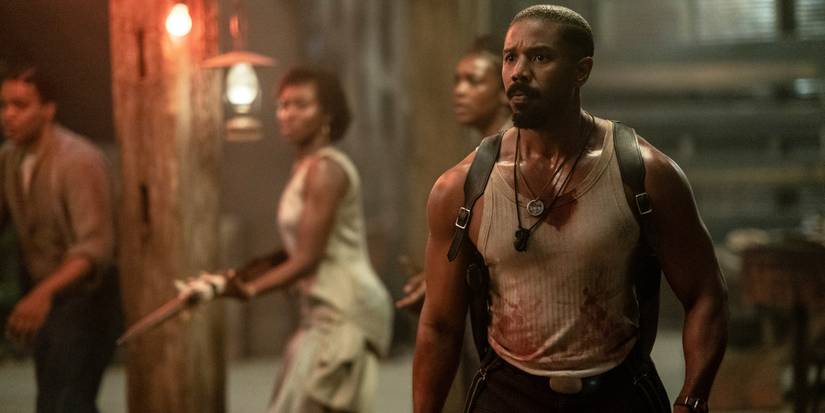
Sinners has been hit with so much acclaim that backlash was inevitable, so it feels like a potentially controversial movie to include here, alongside the also fairly recent Weapons. Look, once enough years have passed, if people think back on horror movies released in 2025, there is a good chance Weapons and Sinners will be the two people remember the fastest. Maybe that won’t happen, but it seems likeliest.
With Sinners, it’s a very confident film that takes on a lot of genres at once, makes some bold choices with structure and time jumps (though not an excessive amount), has a large cast of largely interesting characters, and delivers bloody violence, action, some humor, and even tragedy without it ever feeling overstuffed or messy. It’s a full-course meal of a movie, and so undeniably satisfying to just dig into, almost – but not fully – overwhelmed by all Sinners has to offer.
5
‘Scream’ (1996)

So, Scream is the first very clever slasher movie (of sorts) created by Wes Craven worth mentioning here, though it wasn’t his first rodeo. With Scream, he made the best slasher series of the 1990s, and then in the 1980s, he also helmed, for a while at least, the top-quality slasher movies in that decade. Craven clearly loved horror, but not the derivative kind, and the way he kept thinking outside the box ensured his horror/slasher movies ended up so much more interesting than most other efforts.
With Scream, things get meta, but not to the point where all rules and laws can be ignored, and also not to the extent where everything’s a joke. Some things are jokes, and the more slasher movies you’ve seen, the more jokes you’ll appreciate, but then Scream also delivers when it comes to horror and some pretty neat mystery-related reveals late in the film. It surprises right from the start, keeps the energy going throughout, and occupies a strange zone between straightforward horror and horror-focused satire.
4
‘A Nightmare on Elm Street’ (1984)

Just over a decade before Scream, Wes Craven made something arguably even more creative, albeit less post-modern. In the first A Nightmare on Elm Street, viewers are introduced to one of the most fearsome killers in slasher movie history, Freddy Krueger, who operates in the dreams of the people he wants to target, as they’re more vulnerable then, and their deaths, outside the dreamworld, become much harder to understand or explain.
Laying it out like that might make A Nightmare on Elm Street sound confusing, as there is quite a bit by way of backstory, lore, and rules here that need explaining, but it’s the seamless way the film does it that makes it feel like an exceptionally well-written (and surprisingly complex) horror movie. Plenty of the sequels were interesting, especially the ones Craven either wrote or directed, but you still can’t top the original here, for so many reasons.
3
‘Noroi: The Curse’ (2005)

The best horror film of its year, and one of the best of the 21st century so far all up, Noroi: The Curse is presented in such a subdued way that does wonders toward making it feel weirdly realistic. It’s kind of like a more ambitious The Blair Witch Project, scaring in similar ways, but going to more places, having more ideas, and also focusing on a great number of characters throughout.
It doesn’t do that to the point that it becomes an epic or anything, but it is pretty expansive for a horror movie, and when it wants to terrify you, it really knows how to do just that, too. Paranormal fears have seldom been captured in ways that make them feel as possibly real as they are in Noroi: The Curse, and the main mystery-heavy narrative throughout is always engrossing, not to mention a perfect way to deliver all the equally effective – and uncomfortably engrossing – moments of horror.
2
‘Twin Peaks: Fire Walk with Me’ (1992)
After Twin Peaks was canceled, David Lynch made the decision to continue the show, but in the format of a movie. Also, it would not be a typical follow-up, by any means, instead mostly focusing on the lead-up to the murder of Laura Palmer, which happens right before the events of the first episode of the TV show.
She was already a tragic figure, as it was possible to learn about her – and what she meant to people – throughout the show’s run, but seeing her again, and following her getting closer to such a horrible event… it makes Twin Peaks: Fire Walk with Me a surprisingly powerful prequel, if you don’t mind calling it a prequel (it feels a bit wrong; it’s more than just a prequel). In doing something weird, but also building so much upon an already complex and narratively fascinating show, Lynch did something really special with this Twin Peaks movie, and it is – without a doubt – one of the most important pieces of the overall decades (and medium)-spanning story that is Twin Peaks.
1
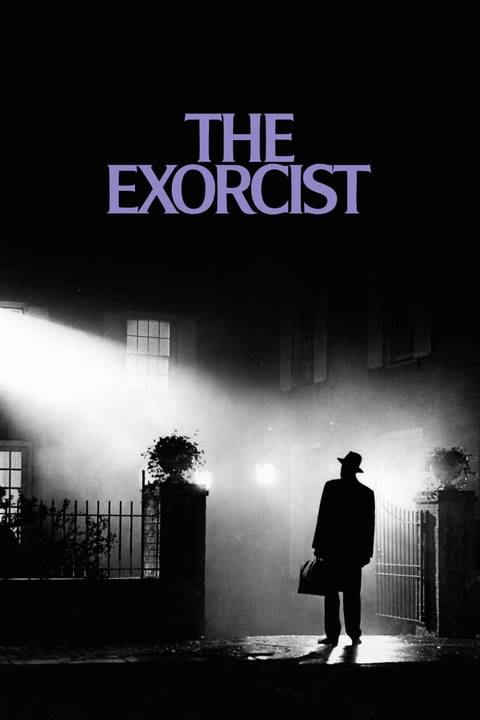
‘The Exorcist’ (1973)

It’s a bit hard to talk about all the stuff going on in The Exorcist, because at the same time as it’s complex, it’s also simple, in other regards. There is a young girl, she is doing bizarre things, and her mom eventually has an idea that she really could be possessed, and so eventually, an exorcism is set up and performed, which takes up much of the film’s nail-biting final act.
There are quite a few important characters here, and the film tells its story well in the sense that it moves slowly at times, but never so slowly that it runs the risk of making you feel bored. That’s a controlled kind of screenwriting (and direction, of course) that should be admired, even if it’s so very hard to copy or even learn from. The Exorcist has a simple premise, complex characters and themes, and then a distinctive pace that works shockingly well. It’s masterfully written and assembled, all the while also being a pretty much perfect horror movie in all the other ways it needs to be.