Christopher Nolan has firmly established himself as one of the most influential filmmakers of the 21st century, known for his ability to create complex characters with compelling stories and breathtaking visuals. From psychological thrillers to sprawling sci-fi epics, his movies challenge viewers to think deeply while delivering unforgettable cinematic experiences. One of Nolan’s signature strengths is his ability to craft movies that reward repeated viewings, offering new insights and hidden details each time.
At the heart of Nolan’s appeal is his fascination with time, memory, and perception. His greatest and most rewatchable movies invite viewers to get to know characters who are often driven by obsession, loss, or moral conflict. His movies frequently ground fantastical stories in the human experience. This careful balance of heart and mind makes Nolan’s movies enduring experiences that engage viewers on multiple levels.
1
‘Following’ (1998)
Following is a British neo-noir thriller about a young, unemployed writer in London (Jeremy Theobald) who begins following strangers through the city to find inspiration for his stories. He becomes fascinated by a charismatic burglar named Cobb (Alex Haw), who introduces him to the art of breaking into homes, not for money, but to invade people’s lives and understand them. As the writer becomes more deeply involved in Cobb’s world, his identity begins to blur, and he is drawn into a web of manipulation and crime.
As Nolan’s feature directorial debut, Following is an essential project in understanding his artistic vision. The nonlinear structure, unreliable narration, and themes of identity, deception, and obsession all foreshadow his later works. At just over an hour long, there’s no wasted moment. Every shot and line of dialogue serves a purpose, showcasing Nolan’s meticulous control over pacing and structure. Ultimately, Following gives viewers a glimpse of Nolan’s creative DNA before Hollywood budgets entered the picture.
2
‘Insomnia’ (2002)

Insomnia is a psychological thriller that introduces Will Dormer (Al Pacino), a seasoned Los Angeles detective sent to a small Alaskan town to investigate the murder of a teenage girl. During the case, Dormer accidentally kills his partner in a fog-shrouded chase and, fearing exposure, covers it up. Meanwhile, the main suspect, a local writer named Walter Finch (Robin Williams), discovers Dormer’s secret and manipulates him into a tense game of psychological cat and mouse.
Insomnia is one of Christopher Nolan’s greatest movies that can be watched over and over because it represents his ability to blend psychological depth, atmosphere, and moral complexity. Unlike many of Nolan’s later, large-scale projects, Insomnia is grounded in human emotion and moral ambiguity. It’s less about plot twists and more about the unraveling of conscience, showing Nolan’s skill in exploring the psychology of guilt and corruption.
3
‘Inception’ (2010)
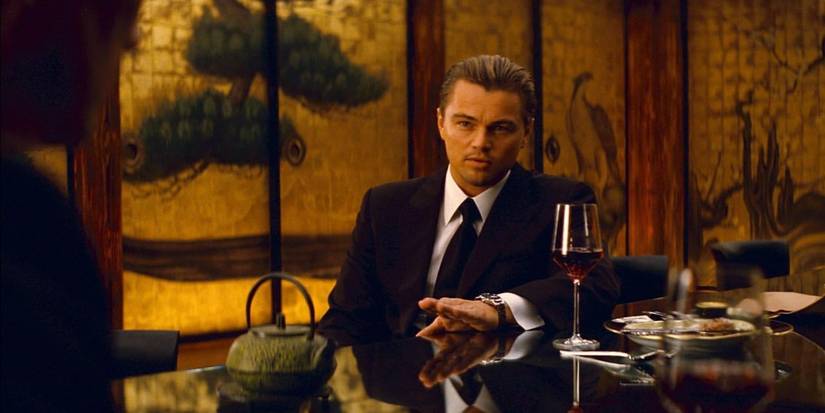
Inception is a science fiction thriller about Dom Cobb (Leonardo DiCaprio), a skilled thief who specializes in entering people’s dreams to steal their secrets. Haunted by the memory of his late wife, Mal (Marion Cotillard), Cobb is offered a chance to clear his criminal record if he can pull off an “inception” by planting an idea in someone’s subconscious rather than stealing one. To succeed, he assembles a team of specialists to construct a multilayered dream world.
Inception is one of Nolan’s best movies that can be revisited time and time again because it perfectly encapsulates his filmmaking philosophy and combines massive ideas with emotional storytelling. Nolan takes a complex, abstract idea, the architecture of dreams and shared consciousness, and transforms it into a thrilling, accessible blockbuster. At its heart, Inception isn’t just about a dream heist. Instead, it’s about grief, guilt, and the desire for redemption.
4
‘Dunkirk’ (2017)

Dunkirk is a World War II thriller that follows the evacuation of Allied soldiers from the beaches of Dunkirk, France, in 1940. The movie specifically spotlights the stories of soldiers trapped on the beach, civilians crossing the English Channel in small boats to rescue them, and Royal Air Force pilots defending the evacuation from enemy attacks. Dunkirk is sparse on dialogue and instead creates an almost documentary-like experience of one of history’s most harrowing military evacuations.
Dunkirk is one of Nolan’s most notable movies that can be revisited over and over again because it demonstrates his mastery of tension, structure, and immersive filmmaking. The movie showcases Nolan’s ability to tell a deeply human story while showing off his technical prowess. Dunkirk is so powerful because it focuses on survival and collective effort rather than personal drama. Nolan focuses on the heroism that comes out in small moments rather than those that are described in dramatic monologues made by military leaders.
5
‘The Prestige’ (2006)

The Prestige is a psychological thriller about two rival magicians in late 19th-century London, Robert Angier (Hugh Jackman) and Alfred Borden (Christian Bale). Driven by obsession, jealousy, and the desire to outperform each other, their personal and professional lives spiral into a dangerous game of one-upmanship. As each magician attempts increasingly elaborate illusions, including Borden’s mysterious “Transported Man” trick, the rivalry culminates in tragedy.
Like the best Christopher Nolan movies, The Prestige uses a nonlinear structure to present its story and allows viewers to get to know these characters on a deeper level. This movie can be revisited again and again because, beyond being a compelling story about magic and magicians, it’s a timeless reflection on the destructive nature of obsession. Despite the elaborate tricks and narrative games, the story remains emotionally grounded, particularly in its exploration of love, grief, and the human desire for recognition.
6
‘Interstellar’ (2014)

Interstellar is a science fiction epic set in a near-future Earth ravaged by environmental collapse. Former NASA pilot Cooper (Matthew McConaughey) is recruited for a secret mission to find a new habitable planet for humanity through a wormhole near Saturn. Leaving behind his daughter Murph (Jessica Chastain), Cooper joins a team of astronauts traveling to distant galaxies, facing black holes, time dilation, and the limits of human endurance.
Interstellar can be watched repeatedly because it showcases the full scope of Nolan’s ability as a filmmaker. Interstellar balances complex astrophysical concepts, including black holes, time dilation, and higher dimensions, with a profoundly emotional core centered on the bond between a father and daughter. Ultimately, this movie is a love letter to science, human intellect and ambition, and the power of family connections.
7
‘Batman Begins’ (2005)

Batman Begins introduces Bruce Wayne (Christian Bale), who, haunted by the childhood murder of his parents, travels the world seeking the means to fight injustice. Trained by the League of Shadows under Ra’s al Ghul (Liam Neeson), Bruce learns martial arts and the philosophy of fear, but he ultimately rejects their extreme methods. Returning to Gotham City, he adopts the persona of Batman to battle crime and corruption.
Batman Begins reintroduced the iconic superhero to an entire generation of fans. More broadly, it redefined what a superhero movie could be. Batman Begins can be revisited over and over because it’s both a solid origin story for a beloved hero that invites new fans into his story and a reinvention of Batman as a more complex character for those who have been fans of this character for years. In short, Batman Begins is one of Nolan’s best because it presents a character who’s morally complex and easy to invest in.
8
‘Oppenheimer’ (2023)
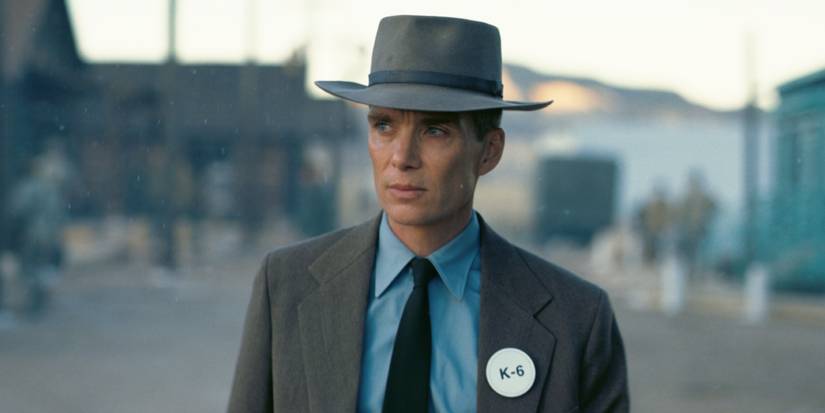
Oppenheimer is a historical biographical drama that chronicles the life of J. Robert Oppenheimer (Cillian Murphy), the theoretical physicist who led the Manhattan Project and helped create the atomic bomb during World War II. The movie follows Oppenheimer’s rise from a brilliant but troubled young scientist to the director of the Los Alamos Laboratory, where he wrestles with the moral and scientific implications of his work that had catastrophic consequences.
In Oppenheimer, Nolan trades spectacle for psychological depth, focusing on the inner torment of J. Robert Oppenheimer. The movie explores the paradox of scientific progress, and how human brilliance can lead to both advancement and devastation. Oppenheimer is one of Nolan’s memorable movies that can be watched time and time again because it transcends the boundaries of the biopic and the blockbuster.
9
‘The Dark Knight’ (2008)
The Dark Knight is a crime thriller and superhero epic that follows Batman as he faces his greatest challenge yet in the form of the Joker (Heath Ledger), a chaotic criminal mastermind who seeks to plunge Gotham City into anarchy. As Batman, aided by Lieutenant Jim Gordon (Gary Oldman) and District Attorney Harvey Dent (Aaron Eckhart), fights to dismantle organized crime, the Joker manipulates events to test the moral limits of Gotham’s heroes and citizens alike.
The Dark Knight is remembered for its legacy of elevating comic book movies into serious, emotionally and narratively rich stories. It blends action, crime drama, and psychological thriller elements into a sophisticated narrative that appeals to both blockbuster audiences and critics alike. The Dark Knight is so rewatchable, and one of Nolan’s most notable projects, because Nolan frames Batman and the Joker as opposing philosophies in an accessible way to fans of the superhero genre and those wanting something more.
10
‘Memento’ (2000)
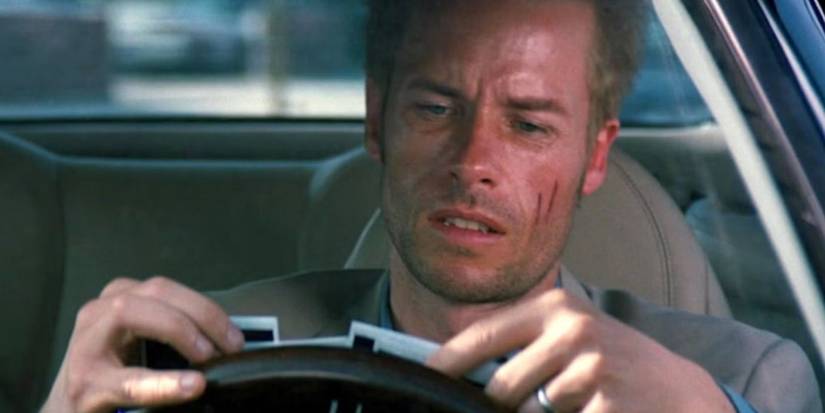
Memento is a psychological thriller that tells the story of Leonard Shelby (Guy Pearce), a man suffering from short-term memory loss who is determined to find his wife’s killer. Unable to form new memories, Leonard relies on Polaroid photos, handwritten notes, and tattoos on his body to piece together clues about the murder. The movie’s unique structure, told in two interwoven timelines, one moving forward and the other backward, mirrors Leonard’s disoriented mental state.
Because Memento is told in reverse chronological order alongside forward-moving sequences, the movie immerses viewers in Leonard’s fractured memory, making every scene feel like a puzzle piece. Watching it multiple times reveals details and connections that may have been missed initially. This is one of Nolan’s most iconic projects because the lines are blurred between reality and manipulation while still presenting Leonard as someone who’s worth getting to know on a deeper level.