[Editor’s note: The following contains spoilers for It: Welcome to Derry.]
Summary
- Set in 1962, the HBO prequel series ‘IT: Welcome to Derry’ probes the entity’s origins in the quaint town of Derry.
- The slow-burning dread building in the gruesome car scene and the different perspectives of the movie theater massacre set a very specific tone.
- Pennywise the Dancing Clown will remain mysterious, his presence delayed to keep him unpredictable.
Developed for television by filmmakers Andy Muschietti and Barbara Muschietti and co-showrunner Jason Fuchs, the HBO series IT: Welcome to Derryserves as a prequel to IT and IT Chapter Two as it delves deeper into the origins of the entity that permeates through the quaint town of Derry. Set in 1962, the eight-episode season starts by following Matty Clements (Miles Ekhardt) on a car ride that turns into a horrific trip from Hell when a mutant baby attacks. Missing without a trace, when Lilly Bainbridge (Clara Stack) thinks she heard Matty singing a song through the drainpipe, she begins to question her own sanity. But after meeting up with a couple of Matty’s friends at the local movie theater, it turns into a gruesome bloodbath and there’s no denying that evil exists in Derry.
During this interview with Collider, the Muschiettis, who are executive producers while Andy directed episodes of the series, discussed the growing levels of creepy as the car scene builds into something truly terrifying, devising the two different perspectives of the movie theater massacre, preserving the mystery of IT while keeping the entity unpredictable, having a clear reason for telling this story backwards with each season jumping back in time, and how they think viewers will feel about the finale.
The Gruesome Car Scene in ‘IT: Welcome to Derry’ Raises the Volume of Horror and Tension
“This is not a normal family.”
Collider: How did the whole car sequence with the kid hitchhiking and getting in the car with his family, and it just gets creepier and creepier, all come about? There were so many layers to that sequence, so what was it like to figure all of that out, including the birth in the car?
ANDY MUSCHIETTI: It plays on different levels. I wanted to start our story with a sequence that set us up in the time that we’re living, in 1962 with the Cold War and the fears of nuclear attack and radiation and birth defects. That’s one of the elements I wanted to play with, to set the audience into this era, and what the fears of everyone, but especially the kids, were. That’s why we have the broadcast in the car and on the radio, and eventually the appearance of the mutant baby. The other thing to consider was the monster itself. That baby is related to one of the themes in the book. For people who read the book, when the Losers come back 30 years later, none of them have had children. That is something to be thought about, not bringing kids into this world of horror. So, I wanted to bring that theme back and use birth as an element of horror. It’s recurring. In the series, you will see birth, over and over.
The construction of the scene was very much spiraling into dread. It’s a bit of a slow burn. We have Matty, our character, which is presented only visually. He’s a 12-year-old kid alone in a theater with his pacifier and a black eye. Visually, you fill the spaces in your mind with what kind of situation this kid is in. When he’s picked up, you understand that he’s leaving town in the middle of the night. And then, he’s picked up by this seemingly nuclear, wholesome family. That turns slowly and goes into something very dreadful. It’s a slow burn into the realization that this is not a normal family, but instead is an incarnation of IT. It’s the kind of beginning that I wanted to start the story with. I wanted to raise the volume a little bit, in terms of horror and tension.
You don’t just get rid of the baby and leave it there. The baby comes back again in the theater and is even worse and bigger and more grotesque. How did you want to handle the scene in the theater? How did you figure out what you wanted to show in the first episode versus what you actually then show in the second episode?
ANDY: The first episode is told from a different point of view, like in a proper movie. In the second episode, it’s from the perspective of Lilly, so we see everything that happened, which is much more graphic. It’s everything that was left out of episode one, even though it’s pretty grotesque. We cut to Ronnie in the projection booth. The intention of showing it as a oner in the second episode was staying in the perspective of Lilly and showing a little more of how horrific her experience was.
BARBARA MUSCHIETTI: We showed the studio the first episode and they loved it. The one note that they had was, “We want to remember, in episode two, right away, how episode one ended. We need to go back to that shock.” That’s when Andy thought of giving them another perspective,
ANDY: Instead of repeating.
Some horror villains are more interesting, the less you know about them. Did you ever worry about making Pennywise less scary by telling us more about him? How do you balance that, and not just what you tell us but when you tell us?
ANDY: The mystery of IT will be preserved. It’s a slow burn. We are aiming to know more about IT’s nature and IT’s intentions and IT’s reasons to be in this plane of existence, but that will happen in the longer arc across the three seasons of the show. That cryptic nature of the monster will be preserved for a longer time. We will know more about the circumstances around IT’s particular transformation from being It, the shapeshifter, into the central form of Pennywise. That’s one of the big questions that I wanted to shed light on and build the story around.
BARBARA: It is important to keep Pennywise and to keep any form of IT unpredictable. We do not want to be ahead of them. It’s very different to get to know Bob Gray before the transformation. But when it comes to Pennywise or any forms of IT, we need to not know them too much.
It’s Important for Pennywise To Be Unpredictable in ‘IT: Welcome to Derry’
“You don’t want the audience to be able to dissect him.”
When you start to give glimpses, is it harder to then pull back and wait before showing even more? Did you just want to delay as long as possible?
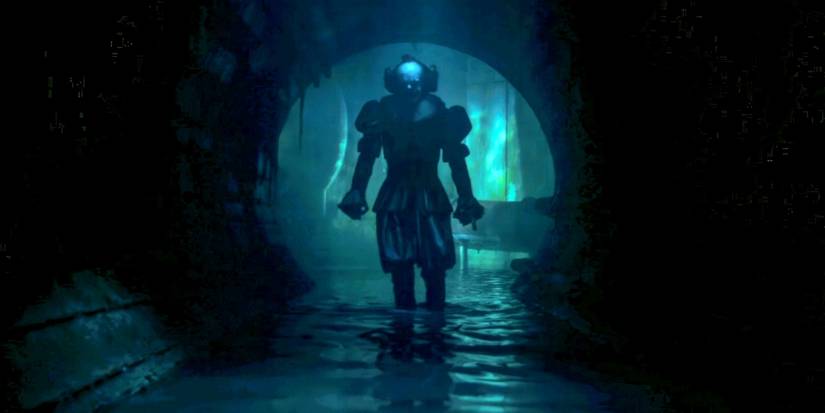
ANDY: The presence of Pennywise is delayed on purpose. I created an intentional vacuum there, where people are like, “Where is the clown?” The truth is that IT appears in different incarnations and there are hints of his presence. It’s an interesting game. I wanted to play that game with the audience of, “Okay, where is the clown?”
BARBARA: He is definitely our shark. He can’t be everywhere. He can’t be on-screen too long. You don’t want the audience to be able to dissect him. He has to be unpredictable. He has to come out of left field. The audience should never feel comfortable with him.
Because these seasons are going to explore different eras of time, with this season set in 1962, Season 2 in 1935, and Season 3 in 1908, do you then have to make sure that you have a closed ending to your story at the end of this season, or are you planning on connecting all the seasons in some way?
ANDY: There is a reason why there are three seasons and there is a very clear end goal of a bigger arc. It’s not just, “Let’s see what happens in Season 2.” There is a reason why we decided to tell this story and specifically tell it backwards. There is satisfaction at the end of Season 1, but there is definitely a question mark at the end of it. I cannot spoil it yet, but you will meet it in episode eight and then decide if you want to see more.
Nothing Is What It Looks Like in the World of ‘IT: Welcome to Derry’
“Everybody that knows the movies knows that IT is alive in 1989, but there is a trick.”
Without revealing anything, how are viewers going to feel about the finale and where you leave these characters? How do you think we’re going to react to that emotionally?
BARBARA: Destroyed.
ANDY: It’s a very emotional ending, if you ask me. The work we did in the writers’ room, and then in the execution [with the actors] , all the feelings were really magnified. I think it’s a very emotional ending. There’s a feeling of closure. Of course, everybody that knows the movies knows that IT is alive in 1989, but there is a trick. There’s something that happens and it’s related to the reason we’re telling the story backwards. Nothing is what it looks like in this world, let me put it that way. I can’t be too clear about it. Nothing is what it looks like.
- Release Date
-
October 26, 2025
- Network
-
HBO
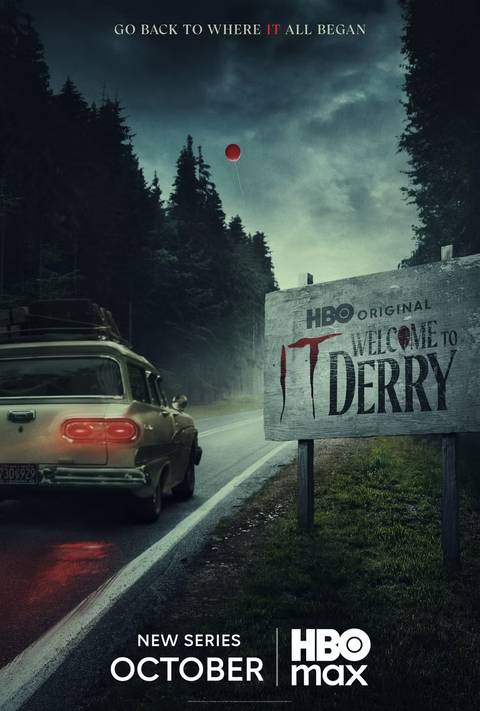
It: Welcome to Derry airs on HBO and is available to stream on HBO Max. Check out the trailer: