The self-sacrificial hero has always been a common trope in storytelling to the point that some might argue that it’s overused. In many narratives, it’s seen as the ultimate act of bravery and selflessness, as well as an easy way to evoke an emotional response from the audience. Many franchises, including the MCU, have repeatedly leaned on this trope.
For years, fans of My Hero Academia felt the series would lead to a similar outcome, yet in its final chapters, the series took a different approach. In doing so, the story effectively dodged the same mistake other franchises made by over-relying on mentor deaths for emotional impact or using sacrifice as a plot device to drive the story forward.
The self-sacrificial mentor is one of storytelling’s oldest and most used archetypes, typically represented as an older, wise figure who lays down their life so the hero can then rise. It’s often done to symbolize the passing of the torch, a strong theme in My Hero Academia, and the idea that growth demands loss.
When done well, this trope can be powerful and even poetic, showing how strength can come from letting go. In the Marvel Cinematic Universe, this has been seen with the Ancient One, Yondu Udonta, Tony Stark, and many others. The most shocking of these is arguably Iron Man’s sacrifice in Avengers: Endgame.
However, despite how cinematic and resonant the scene was, the years following Stark’s death, along with the deaths of several other key characters, marked the end of an era, and ever since, the MCU has struggled to regain its footing. While successors have been introduced, none carry the same weight and influence as Tony Stark.
That’s the danger of the self-sacrificial mentor in storytelling. When it’s handled without care or solely to create a sense of shock, it can drain the narrative of meaning. When mentors are to die in a story, it’s usually done to force the protagonist to grow and assume the role of hero; however, in recent years, it has felt overdone.
Many Fans Believed All Might’s Journey Would End With His Death

For years, it seemed inevitable that My Hero Academia would follow this pattern, culminating in All Might’s sacrifice. The storyline had long revolved around his decline and departure from heroism, paving the way for a new generation. As the Symbol of Peace gradually lost his power, many believed that he was heading toward tragedy.
Many fans believed that signs pointed to an ending where All Might’s legacy would be secured through his death. As Izuku Midoriya grew stronger, he inherited the collective will and knowledge of past users, including an incomplete vestige of All Might himself, leading many to believe that by the series’ end, he would become part of this collective.
Along with Nighteye’s explicit warning that All Might was heading for a gruesome death, the storyline felt as if it were priming audiences for loss. This was strengthened by the fact that All Might’s power and ability to fight weren’t what they once were, suggesting that another confrontation might be his last.
So, when he returned to the battlefield as Armored All Might to stop All For One, the fans had no choice but to brace themselves for what was coming. The setup itself felt like the perfect final act in his character arc. It was both symbolic and inevitable, the last battle before the curtain falls on the hero’s legacy.
My Hero Academia Made the Right Choice Saving All Might

Rather than Nighteye’s prophecy coming to fruition, the final battle experienced a shift with the return of Bakugo. With no prior planning or verbal communication, Deku immediately knew to launch Bakugo toward All For One, the two trusting one another to intercept what would have been All Might’s final moments.
The moment wasn’t framed as divine intervention or destiny; it was simply the result of growth, teamwork, and trust paying off between two young heroes in a moment when it mattered most. Rather than creating another story in which the mentor dies to motivate the student, My Hero Academia broke the pattern by allowing the students to save the mentor.
By keeping All Might alive, My Hero Academia avoided the hollow finality that has weakened other stories and franchises.
The significance of this act lies in its mirroring previous seasons, creating a parallel in which the characters save the person who once saved them. Had All Might died in this moment, the series would have missed an opportunity to demonstrate growth, redemption, and the idea that heroism is about protecting others rather than carrying the burden alone.
By keeping All Might alive, My Hero Academia avoided the hollow finality that has weakened other stories and franchises. The show chose not to close the book on one of its most important figures, reinforcing the idea that sacrifice is not the only way to push the story’s hero forward and that the mentor can evolve and represent something new.
All Might Represents the Persistence of Hope and Peace

All Might has always been more than a hero in My Hero Academia; he is a symbol, one that persists even in his retirement. At the height of his career, he embodied unshakable will, strength, optimism, and the ideal of peace. Citizens looked up to him as a figure who could prevent disasters simply by existing.
Even when his power began to fade, the symbol he created continued to inspire those around him and those who believed in his legacy. When he stepped away from pro-hero work, he became a representation of resilience and bravery. His continued presence in the story became defined not by strength but by ideals, hope, and perseverance.
Despite no longer being invincible, he remained a steadfast guide to the new generation of heroes and was loyal to his own ideals. This pushed him to take one final stand against All For One in support of his students, despite knowing the potential outcome. When he was ultimately saved, it felt as if the story rewarded his contributions to heroism.
By choosing to keep All Might alive, the series rejected the overused trope of the self-sacrificial mentor, proving that heroes can grow and endure without martyrdom. For a series that explores growth, trust, and the lasting impact of guidance, losing All Might would have felt like a betrayal of My Hero Academia’s core values.
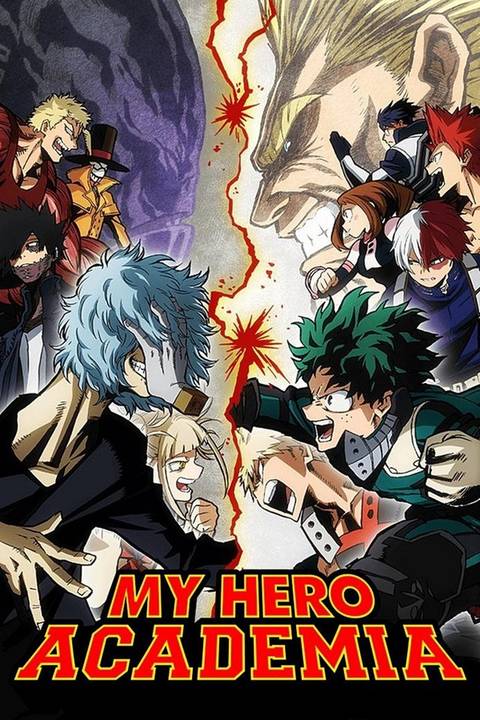
- Release Date
-
April 2, 2016
- Network
-
TBS, MBS, Nippon TV
- Directors
-
Shouji Ikeno, Tsuyoshi Tobita, Ikuro Sato, Takudai Kakuchi, Masashi Abe, Tetsuya Miyanishi, Kazuma Komatsu, Yoshifumi Sasahara, Masayuki Otsuki, Daisuke Tsukushi, Takayuki Yamamoto, Yohei Fukui, Takuro Tsukada, Masatoyo Takada, Naomi Nakayama, Sayaka Morikawa, Takanori Yano
-

Daiki Yamashita
Izuku Midoriya (voice)
-
Kaito Ishikawa
Manga Fukidashi (voice)