In 1982, it seemed that Blade Runner was a sure thing. DirectorRidley Scott was riding high off Alien. Harrison Fordwas smack in the middle of his “can do no wrong” streak. The trailer promised we would get rain-soaked neo-future that was the opposite of antiseptic, optimistic science fiction from just a few years prior. But many audience members didn’t understand what they had just seen, critics were divided, and the box office was lackluster for what should have been a hit.
On paper, the film seemed like a moody, expensive experiment that didn’t connect. However, looking back, that was actually a blessing in disguise. A film that doesn’t hit right away often finds its people — slowly, quietly, obsessively. And that’s exactly how Blade Runner transformed from a “what went wrong?” cautionary tale into a myth-soaked cornerstone of modern sci-fi.
‘Blade Runner’ Got Lost in the Summer Noise
Let’s rewind to that crowded summer. 1982 was a monster year for films. E.T. the Extra-Terrestrial was scooping up family audiences. Star Trek II: The Wrath of Khan shed a spotlight on the “action Star Trek,” making it enjoyable to Trekkies and non-Trekkies alike. Conan the Barbarian and Poltergeist were carving out their own box office heaven. And right in the middle of that, with its retro-noir look and feel, was a film that questioned what it means to be human. Audiences weren’t prepared for its cold, slow-burning. They didn’t take the time to soak in every glorious frame of the film that was ahead of its time in terms of special effects. The hero’s journey wasn’t very clear at first, and the ending didn’t hold the audience’s hand. Even the studio didn’t quite trust it — hence the tacked-on voiceover and “happy ending” that Ford famously hated recording. It was the worst possible environment for a film like this to thrive, and it sank quietly.
But here’s where the story flips. Because if Blade Runner had blown up at the box office, we might’ve gotten quick sequels, studio meddling, tie-ins that sanded down the weirdness. Instead, the movie was left alone — and that’s where the magic began. Flops don’t get corporate control. They don’t get endless notes. They don’t get polished into something “accessible.” They’re left by the wayside. But the engaging and mesmerizing feel of Blade Runner was passed on by word of mouth and through shared, grainy VHS tapes, and late-night cable airings. It was the opposite of a Marvel rollout — no hype cycle, no merch wall, no studio forcing you to care. You either stumbled onto it, or someone who loved it pulled you in.
Every rewatch revealed something new: a neon sign you hadn’t noticed before, a line delivery that suddenly cracked open a theme, a shadow on a wet street that said more than any exposition could. The film’s ambiguity became its greatest strength. It didn’t need to explain itself because it wasn’t trying to please everyone anymore. It belonged to the people willing to dig into it. That’s why its cult status grew so fiercely.
‘Blade Runner’s Director’s Cut That Changed Everything
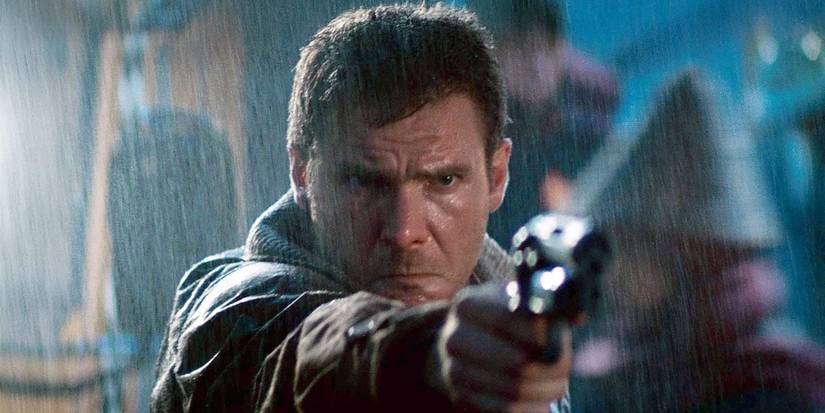
In 1992, something happened. A version of the film was accidentally released without its voice-over narration or the studio-mandated happy ending, and set fandom on fire. Fans and critics suddenly realized that buried underneath the compromise was a far bolder, stranger film. That moment set off a chain reaction. Ridley Scott reclaimed the film, later releasing it as Blade Runner: The Final Cut, and people who dismissed it the first time had a new chance to experience it. Thus, its reputation skyrocketed, not as a curiosity, but as a serious work of science fiction art. And the reason this could even happen is because it hadn’t been a hit. No one had churned out half-baked sequels or pinned the studio’s future to the IP. It stayed pure — flawed, but intact.
Here’s the thing about most blockbusters: they live fast and fade faster. The big summer winners of 1982? Many have their place in pop-culture history, but none had the mesmeric pull that Blade Runner did. The dark and gritty city presented in the film started to reflect our own real-world cities. Everything from the practical special effects to the haunting Vangelis score not only holds up over time, but they got better. While other movies got stuck in their own era, Blade Runner grew into its prophecy. Its failure gave it time to marinate. To be reinterpreted. To breathe. And when the rest of the world finally caught up, the film wasn’t some dusty relic. It was waiting.
Films that aren’t hits right away tend to find their own audience, making them a personal discovery, not something that’s marketed aggressively. Fans started to dissect scenes and argue over the themes, trying to uncover hidden meanings and subtext. Every cut of the film became its own conversation. It wasn’t just a movie anymore. It was a puzzle box. And because that fandom was built slowly, it wasn’t built on hype or marketing slogans. It was built on love, on fascination, on the feeling that you were part of something bigger and stranger than a summer release calendar.
Fast-forward a few decades, and Blade Runner isn’t remembered as a box-office disappointment. It’s hailed as one of the most influential science fiction films ever made. From The Matrix to Ghost in the Shell, its DNA resonates in modern films. Even sitcoms like Futurama found themselves throwing it a nod.
It didn’t just inspire filmmakers. It rewired how people thought about sci-fi. It proved that the genre could be slow, moody, and philosophical — not just pew-pew space battles. And it did all of that because it wasn’t swallowed by mainstream expectations on day one.
‘Blade Runner’s Box Office Shows the Irony of Failure
The delicious irony here is that Blade Runner might not have become a legend if it had succeeded right away. Had it been a mega-hit in 1982, we probably would’ve gotten Blade Runner II by 1984, complete with toy tie-ins and a simplified mythology that ironed out the ambiguity. Instead, its commercial failure gave it what so few films ever get: room to breathe. It grew with its audience so that when Blade Runner 2049 was released in 2017, it wasn’t part of a tired IP. It was something that had been simmering for decades. That’s a rare kind of cultural endurance. You can’t fake that with marketing.
The next time someone slams Blade Runner for not doing well on its release, remember: its so-called failure is why it’s now immortal. It slipped through the cracks, found its people, and came out the other side not just as a film but as a cornerstone of science fiction. It’s taught in film classes, quoted in songs, referenced in fashion editorials, and echoed in the neon glow of almost every cyberpunk story that followed.
In an age where studios panic if a film doesn’t hit opening-week numbers, Blade Runner is proof that the long game can be more powerful than the instant win. Its failure carved out a space for it to become something timeless — not a product of 1982, but a story that feels more relevant with each passing year. Sometimes, the best thing that can happen to a great movie…is that nobody gets it at first.
- Release Date
-
June 25, 1982
- Runtime
-
118 minutes
- Writers
-
David Webb Peoples, Hampton Fancher, Philip K. Dick
- Producers
-
Michael Deeley, Run Run Shaw