There’s a reason Anthony Hopkins’ Hannibal Lecter feels less like a man and more like something otherworldly, like an alien quietly watching from behind the glass in The Silence of the Lambs. He doesn’t blink on camera, as he once confirmed to Barbara Walters. Not once. It’s a small detail — one so subtle you may not even consciously register it — but it changes everything. Blinking is one of the most human reflexes we have. It shows life, empathy, nerves, and all the little moments of thought we can’t hide. Remove it, and something inside us reacts. When we see someone who doesn’t blink, we recognize them as “off,” even if we can’t explain why. Hopkins weaponizes that instinct. He removes a basic human rhythm and, in doing so, strips Lecter of all humanity.
Hannibal Lecter Is an Intimidating Predator Who Never Looks Away
When Clarice Starling (Jodie Foster) first walks down that sterile hallway toward Lecter’s cell, everything about the scene is designed to make us uneasy. The lighting, the silence, the way other prisoners jeer and howl — all of it builds tension. But when she reaches Lecter, the tension collapses into stillness. He’s standing there, waiting, perfectly calm. His eyes meet hers, and they don’t move. They don’t blink. At that moment, Hopkins defines Lecter with an aura unlike any other. He’s not a raving lunatic or a horror-movie boogeyman; he’s composed, courteous, and terrifyingly alert. His stillness feels predatory. Every second Clarice looks at him, she’s aware that he’s looking back — not just at her face, but through it. The longer his gaze lingers, the smaller the room feels.
That unbroken stare makes every flicker of emotion from Clarice feel magnified. When she swallows, as her eyes dart, or every time she flinches at his questions, we notice because he doesn’t do any of those things. The imbalance of movement tilts the power dynamic immediately. Clarice might be the one with freedom, but Lecter is in control. Hopkins doesn’t need to raise his voice or move a muscle; the absence of a blink establishes control for him.
Anthony Hopkins Makes His Unblinking Monster Feel Like an Otherworldly Threat
Actors often talk about eye contact as a tool for connection — to build empathy between characters and, by extension, with the audience. Hopkins uses it in the exact opposite way. His gaze doesn’t invite; it traps. The eyes are the window to the soul, and Lecter’s window is sealed shut. Without the natural pause of a blink, he feels as though he’s operating on a different timeline from everyone else. It’s as if he doesn’t need to reset, breathe, or recharge. That’s what makes his intelligence so frightening: it feels mechanical, endless, unrelenting.
In interviews, Hopkins has said he wanted Lecter to seem more like a predator than a person, an apex intellect that feeds not on flesh but on fear and understanding. The lack of blinking makes that metaphor literal. Predators don’t blink when they hunt. They wait, motionless, calculating the distance between themselves and their prey. Lecter does the same, studying the people around him like victims he has already decided how to consume. The audience, consciously or not, picks up on that. We hold our breath during his scenes, mirroring Clarice’s anxiety. We can’t look away either. It’s a primal reaction, the same one that makes your heart race when you realize something’s staring back at you from the dark, but you can’t fully see who, or what.
Not Blinking Helped Make Hannibal Lecter One of Cinema’s Greatest Villains
Silence and stillness are The Silence of the Lambs’ most dangerous tools. Director Jonathan Demme shoots the film with a closeness that feels invasive. When Clarice and Lecter speak, the camera doesn’t just watch them, but confronts them. Demme famously had actors look directly into the lens during key exchanges, breaking the invisible wall of cinematic safety. Combined with Hopkins’ unblinking stare, it creates the sensation that Lecter is looking straight at you, and deep within you. That’s what makes the performance so bone-chilling and unforgettable. The horror doesn’t come from jump scares or gore, but from intimacy. Hopkins’ restraint turns the space between words into something unbearable. His face barely moves, but every line lands like a strike. The result is a villain who commands absolute attention and never once needs to blink to do it.
What’s remarkable is how this choice reverberates beyond the film. Hannibal Lecter became an icon of cinematic evil, and yet much of his terror stems from what he doesn’t do. No wide eyes, no snarling outbursts, no twitching mania. Hopkins gives us a monster whose stillness becomes a mirror, reflecting our own discomfort back at us. It’s the rare kind of performance that makes the audience complicit — you keep watching even as every instinct tells you to look away.
What makes Hopkins’ decision not to blink truly brilliant is how natural it feels within the logic of the character. Lecter would never blink because he doesn’t need to. He’s beyond nervous tics, beyond empathy or humanity. The physical stillness becomes a window into psychological horror, proof that the scariest performances don’t come from grand gestures, but from precision and control. In a movie filled with unforgettable moments and lines of dialogue — “What did you see, Clarice, what did you see?” and “I ate his liver with some fava beans and a nice Chianti” — it’s that silent, unblinking stare that lingers longest. The eyes that never close, never soften, never let you escape. It’s the smallest choice with the biggest impact, turning Hannibal Lecter from a brilliant character into something elemental and one of the genre’s most defining presences.
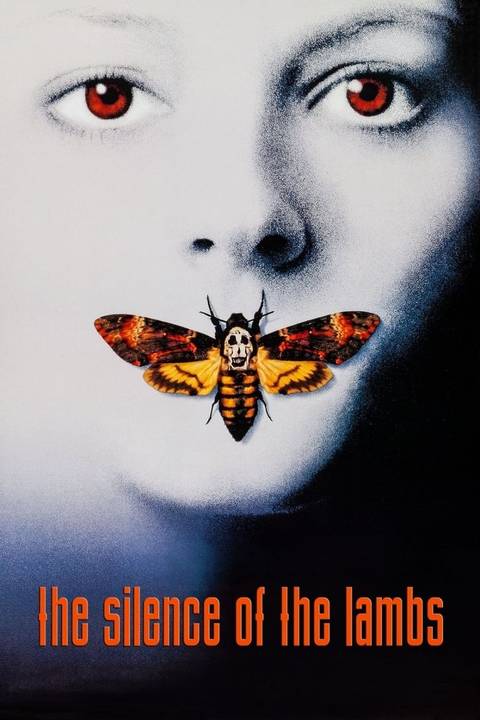
- Release Date
-
February 14, 1991
- Runtime
-
119 minutes
- Director
-
Jonathan Demme
- Writers
-
Ted Tally, Thomas Harris
- Producers
-
Edward Saxon, Kenneth Utt