Some movies stick with you not because they are flashy or over-the-top but because they perfectly capture a certain kind of melancholy through their writing, their visuals, and overall production. This feeling, often mixing sadness and longing, is very much present on screen. How? Well, through connections that almost happen, words that are left unsaid, and the inescapable passage of time.
We’re not talking about films that are downright bleak, so don’t expect to see the obvious choice here (spoiler: Melancholia, despite the name, is not on this list). Instead, we explore the films that meditate on loss, longing, and the fleeting nature of connection in a way that feels both devastating, real, and human, but somehow comforting too, even as they tug at your heartstrings. Without further ado, here are the best and most melancholic films that stay with you in the quiet moments afterward.
10
‘The Assassination of Jesse James by the Coward Robert Ford’ (2007)
Starring Brad Pitt as the legendary outlaw Jesse James, Casey Affleck as the starstruck Robert Ford, and Sam Rockwell as Charley Ford, this Andrew Dominik picture, based on Ron Hansen‘s novel,tells the story of the final months of Jesse James’ life and his complicated relationship with Ford.
At its core, Dominik’s film is a meditation on the inevitable decay and loss, subverting the usual Western tropes to focus less on action and more on the emotional and psychological toll of living in the shadow. Anchored by stunningly muted, autumnal cinematography and strong performances, The Assassination of Jesse James by the Coward Robert Fordis a profoundly melancholic picture, not merely through its capture of mood and atmosphere — though Roger Deakins‘ nostalgic cinematography is phenomenal — but also in how it portrays the loneliness of fame and the impossibility of belonging.
9
‘Portrait of a Lady on Fire’ (2019)

Set on a windswept coast in 18th-century France, Portrait of a Lady on Fire is a devastating meditation on desire, memory, and the fleeting nature of human connection. At its center is Noémie Merlant‘s painter-for-hire, Marianne, and Héloïse (Adèle Haenel), whose wedding portrait has been secretly commissioned to paint.
Céline Sciamma‘s queer romance casts a spell on viewers by transcending the confines of a conventional period love tale — it’s a mesmerizing, slow-burning meditation on yearning and restraint, and thus melancholic by nature. It feels like peering into a world held in secret, where the romance unfolds against the backdrop of the characters’ isolated world, and they are both aware it cannot survive beyond its confines. Although the dialogue is spare, Portrait of a Lady on Fire is always inviting, immersing audiences in its painterly world where they will most certainly linger inside the intimate space the two women share.
8
‘L’Avventura’ (1960)

Far from your typical mystery thriller, Michelangelo Antonioni‘sL’Avventura is a slow, haunting dive into the quiet despair of contemporary life, depicting the melancholy of a disappearing connection. At its center is Anna (Lea Massari), who vanishes during a yachting trip in the Mediterranean. Her lover Sandro (Gabriele Ferzetti) and friend Claudia (Monica Vitti) set out to find her, but the search feels less like a mystery and more like an exploration of loneliness and intimacy.
Whether it’s the sun-drenched, empty landscapes or abandoned ruins, this must-see mystery movieis as visually melancholic as it is narratively. The film captures isolation and heartbreak perfectly, with a pacing that lets audiences marinate in the void; it is both hypnotic and entertaining, with a deceptively simple plot elevated by impeccable direction: conversations trail off, glances hold, and every subtle movement feels intentional. Coupled with Giovanni Fusco‘s brilliant score, it’s easy to see why this initially divisive film is considered a masterpiece of modernist cinema.
7
‘Manchester by the Sea’ (2016)
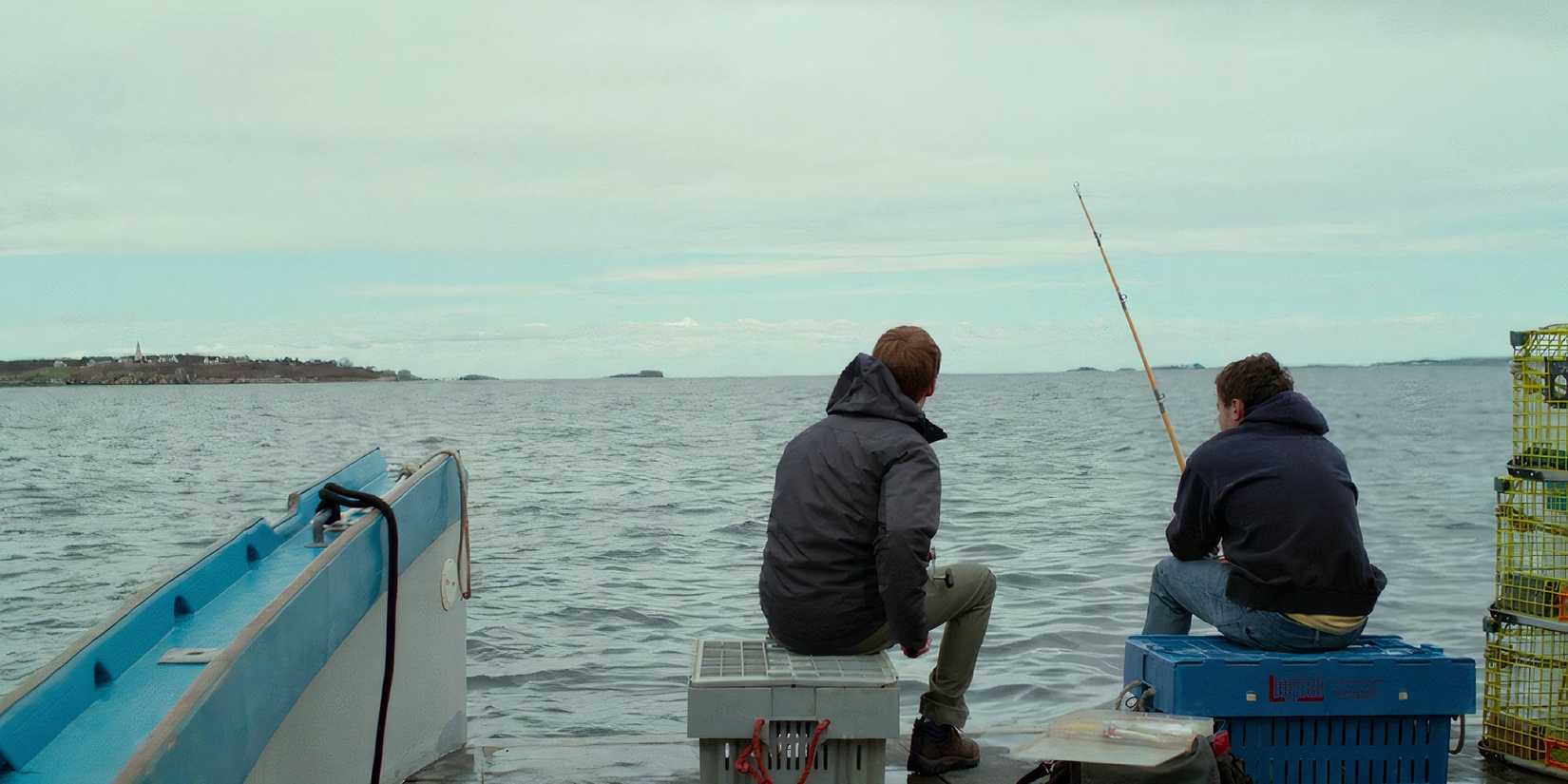
Set against the coastal backdrop of Massachusetts, Manchester by the Seahas long been described as a silent, quiet punch to the heart, and it’s not exactly difficult to grasp why. The story follows Lee Chandler, played by Casey Affleck in another intriguing effort, as he grapples with grief following his brother’s death. There, he must face the ghosts of his past, especially the loss of his children in a tragic accident, and navigate his reluctant guardianship of his teenage nephew (Lucas Hedges).
Supported by a devastating central performance and an equally strong turn by Michelle Williams as Lee’s ex-wife, Kenneth Lonergan‘s movie is guaranteed to stick with audiences. It is especially moving through its realism and the way it approaches its touching narrative and themes, capturing the painful moments of grief and mourning. For those expecting an easy and tidy closure, though, this is not the right pick.
6
‘Synecdoche, New York’ (2008)

Charlie Kaufman‘s directorial debut stars Philip Seymour Hoffman as a theater director plagued by failing health and personal despair. A surrealist epic perfect for those intrigued by unconventional narratives, the metafictional Synecdoche, New York follows Caden as he embarks on an ambitious project: a sprawling, life-size replica of New York City inside a warehouse.
Sure, a big part of what makes Kaufman’s almost-claustrophobic movie melancholic is its bleakness — loss, aging, isolation, the fleeting nature of time. But it’s also how it portrays the struggle to control and understand life, and the ultimate realization that the very attempt is absurd. It’s no wonder that Synecdoche, New York has been praised for its ambitious story and moving themes, often hailed as a meditation on mortality, identity, and the human need to be seen and understood, even as life slowly slips away.
5
‘The Umbrellas of Cherbourg’ (1964)

Image via 20th Century Studios
A musical in which every line is sung, The Umbrellas of Cherbourgis a vivid yet deeply melancholic masterpiece that dresses heartbreak in breathtaking Technicolor. It features two memorable and moving performances by Catherine Deneuve as Geneviève and Nico Castelnuovo as Guy at its center. The movie traces the incandescent love between a young girl and a mechanic in the seaside town, with a tender and immediate romance blossoming between the two that is soon torn apart by circumstances beyond their control.
Despite its uplifting format, Jacques Demy’s bright film is often hailed as a melancholic essential because it captures the fleeting nature of first love and all its intensity while also portraying the inevitable ache of what is not meant to last. Add in ethereal, dreamlike, almost hypnotic visuals, and it’s no surprise that this musical and French New Wave essential has left a strong imprint on cinema and cinephiles worldwide.
4
‘In the Mood for Love’ (2000)

Arguably one of the cinema’s most exquisite and visually stunning films, Wong Kar-wai‘s fan-favoriteIn the Mood for Love is a touching love letter to longing and restraint set against the enchanting backdrop of 1960s Hong Kong. Starring Tony Leung and Maggie Cheung, the film follows two neighbors as they forge a platonic connection, bonding over the fact that both have been betrayed by their unfaithful spouses, who are having an affair with each other.
Rather than following the usual romantic storyline, In the Mood for Love invites us into the space between what happens and what’s left unsaid, untouched, and unrealized.It’s tender, sensual, and haunted by a melancholy that touches romance fans and skeptics alike. Paired with breathtaking cinematography by Christopher Doyle, who bathes every frame in warm and moody hues, this slow-burning meditation on missed connections transcends mere storytelling to become a full sensory experience.
3
‘Paris, Texas’ (1984)

Directed by Wim Wenders, Paris, Texas is a sublime portrayal of fractured identity and loss. The story transports audiences to the vast American Southwest, where the landscape symbolizes desolation and fleeting hope. Starring Harry Dean Stanton as Travis, it depicts a man who reemerges from a desert with no memory and embarks on a journey to reconnect with his estranged family.
It would be impossible not to mention Paris, Texas when the topic is melancholic films. With its deserts, motels, and empty highways, and Ry Cooder‘s score,this existential, stunningly shot voyage through regret, redemption, and attempts at human connection is an unforgettable, almost poetic meditation on absence that stays with audiences long after the screen fades to black. It’s melancholic, not through spectacle but through feeling and restraint.
2
‘Ikiru’ (1952)

Ikiru tells the story of a bureaucrat (wonderfully played by Takashi Shimura) who, upon learning he has terminal cancer and is confronted with the futility of his decades spent shuffling papers, sets out on a quest to find meaning and purpose before time runs out. The filmis infused with a gentle and reflective sadness that contemplates mortality, the passage of time, and the human desire to leave a meaningful legacy behind.
Anchored by iconic director AkiraKurosawa‘s delicate hand, which balances existential heaviness with fascinating grace, Ikiru is a masterclass in cinematic melancholy. While the movie resists being too sentimental, it reflects the brevity of life with clarity, still offering solace in the idea that even the smallest acts can ripple outward with profound significance. Beyond its astounding performances, unhurried pacing, and beautiful chiaroscuro lighting, the 1952 film is starkly honest and unforgettable, above all, because of its timeless, universal message.
1
‘Tokyo Story’ (1953)

For those on the lookout for a shattering exploration of family, time, and loss, Tokyo Story is the perfect pick. The film follows an elderly couple (ChishūRyū and ChiekoHigashiyama) who travel from their seaside hometown to Tokyo to visit their grown children, only to find polite neglect, as their busy lives leave little room for aging parents. Only their widowed daughter-in-law, Noriko (Setsuko Hara), offers them companionship.
Visually, Tokyo Story is elegant and simple: tatami-level camera angles, a patient rhythm that mirrors the flow of everyday life, and incredible, understated performances make it a must-see. However, what truly sets it apart is its approach to melancholy and the resonance that lies in the ache of time passing, relationships fraying, and love being expressed too late. Although it received modest attention upon its release, Tokyo Story has become a cornerstone of world cinema over the years, enchanting viewers with its stillness and deep, moving humanity.
NEXT: 15 Sci-Fi Movies That Will Give You An Existential Crisis