When “The Monsters Are Due on Maple Street” from The Twilight Zone aired in March 1960, it presented an unsettling proposition that was more than just an alien or supernatural hoax. Written by Rod Serling, the episode set a quiet suburban neighborhood, or, more accurately, a parade of angry and suspicious neighbors, into a battleground of paranoia. A power outage signals the start of the episode that soon spirals into finger-pointing, suspicion, and mob violence. By the episode’s end, a once-idyllic street has collapsed into chaos, proving the only monsters needed are human ones.
Now, decades later, the story has, if anything, even more impact. Serling distilled Cold War paranoia, McCarthy-era witch hunts, and the fragility of bonds in community into a parable that feels uncomfortably close to home. More than 60 years later, those same concerns — disinformation, mob scene thinking, fears of “the other” (whomever that may be) — are still buzzing determinedly through American life. It is this sense of timelessness that transforms “Maple Street” from being, among other things, the most chilling of episodes, to potentially the one that sparks the most terror due to its relevance.
Why Rod Serling’s ‘The Monsters Are Due on Maple Street’ Is the Scariest ‘Twilight Zone’ Story
The beauty of “The Monsters Are Due on Maple Street” is in its basic premise. All that happens is some meteor crosses the sky, the power goes out, and one kid suggests that aliens might be under the block. After that, fear spreads like an infection. A car that mysteriously starts, a man who prefers stargazing, or a basement workshop becomes damning evidence.
The episode was made as an allegory of Cold War concerns. In the late 1950s and early 1960s, McCarthyism had people hunting for witches in Hollywood and Washington, and Americans were encouraged to look for secret enemies in their own towns. On Maple Street, that same hysteria plays out on a micro level. Once suspicion sets in, it cannot be pried or reasoned away.
Eventually, the episode concludes with the residents turning against one another, bricks flying, and accusations being yelled, as two off-screen aliens converse among themselves, content that what they see is enough to destroy a society. All it takes is a little disruption, and fear will do the rest.
Rod Serling Used Maple Street To Expose America’s Darkest Fears
A key reason the episode is so alarming is its sense of timelessness. Although Serling was using Cold War paranoia as his muse, later viewers saw themes reflecting on civil rights strife, white flight to the suburbs, and mounting distrust of government during the Vietnam War. More contemporaneously, those parallels feel equally pressing: Rampant misinformation, political divisions, and violent outbursts in once-stable communities.
At its core, the story is not about aliens or even Maple Street itself. The story is about human nature and humans’ propensity for turning on one another in rapid order when their perception of safety becomes jeopardized. Whereas traditional horror takes the form of forms or monsters from outside, Serling flips the lens to examine humans’ most significant threat, which is from within.
Rod Serling once said that The Twilight Zone was using fiction as a mirror to hold up to society, and nowhere is that more evident than on “Maple Street.” More than sixty years later, “The Monsters are Due on Maple Street” remains haunting because it presents a question that we still have not answered: When the lights go out, who will we determine the real monsters are?
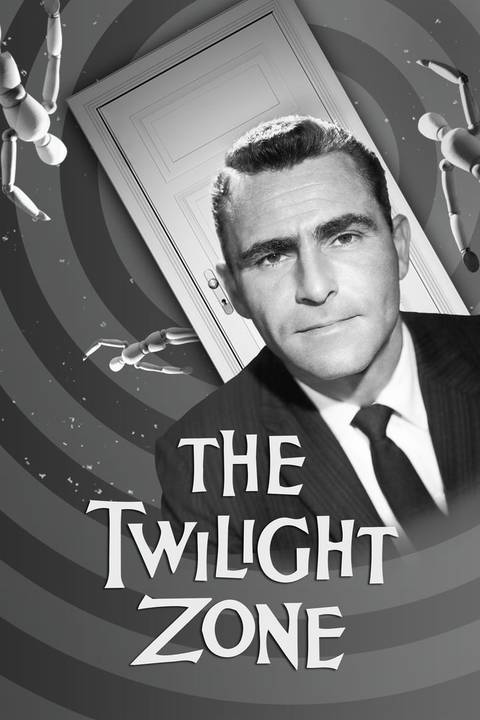
- Release Date
-
1959 – 1964
- Directors
-
John Brahm, Buzz Kulik, Douglas Heyes, Lamont Johnson, Richard L. Bare, James Sheldon, Richard Donner, Don Medford, Montgomery Pittman, Abner Biberman, Alan Crosland, Jr., Alvin Ganzer, Elliot Silverstein, Jack Smight, Joseph M. Newman, Ted Post, William Claxton, Jus Addiss, Mitchell Leisen, Perry Lafferty, Robert Florey, Robert Parrish, Ron Winston, Stuart Rosenberg
- Writers
-
Charles Beaumont, Richard Matheson, Earl Hamner, Jr., George Clayton Johnson, Jerry Sohl, Henry Slesar, Martin Goldsmith, Anthony Wilson, Bernard C. Schoenfeld, Bill Idelson, E. Jack Neuman, Jerome Bixby, Jerry McNeely, John Collier, John Furia, Jr., John Tomerlin, Lucille Fletcher, Ray Bradbury, Reginald Rose, Sam Rolfe, Adele T. Strassfield