Much of the time, a movie will only have a single director in a similar way to how most books just have a single writer. This is especially true if a filmmaker wants to be an auteur, which is kind of the cinematic equivalent of being an author, but some books are co-authored, and some movies are co-directed. And a few directing duos are very well-known, especially those who are siblings, like the Coen brothers (Fargo, The Big Lebowski, No Country for Old Men) and the Russo brothers (Avengers: Infinity War and Endgame).
There are also countless movies with second unit or assistant directors, but they’re not being covered below. What is intended to get covered below are movies that have more directors than you might expect; well-known films where it might be surprising to learn that there was more than one director involved. And these are instances where two or more directors were credited, or it’s been recorded that more than one director did a significant amount of work without as much credit as they might’ve deserved. There’s no guarantee that all of these will blow your mind, but hopefully, there’ll be at least a handful of names you might learn today.
8
‘Slumdog Millionaire’ (2008)
Danny Boyle is a pretty big name, as far as modern-day directors go, and Slumdog Millionaire can be counted among his best films. It tells a story that revolves around a young contestant on the Indian version of Who Wants to Be a Millionaire?, and the way he seems to know the answer to every question, with various flashbacks showing how he managed to learn what he did after experiencing numerous hardships.
It goes back to his childhood, and some of Slumdog Millionaire has dialogue in Hindi rather than English, which is where co-director Loveleen Tandan came in. She translated enough dialogue, while also playing a part in directing the scenes that featured Hindi dialogue, that she got a co-directing credit. But it’s typically thought of as a Danny Boyle film, and most of the awards won for Best Director (including the Academy Awards and Golden Globes) were officially given to just Boyle… though the New York Film Critics Online Best Director award was an exception, given to both Boyle and Tandan.
7
‘The General’ (1926)

Not only is The General generally well-known as a Buster Keaton movie, but it’s usually considered his very best, or potentially second-place only to Sherlock Jr. Keaton’s at the center of the movie, as its star, and he did often direct his greatest and most noteworthy films (including Sherlock Jr.), but The General also had Clyde Bruckman credited as a co-director.
Bruckman wasn’t as prolific as Keaton, as far as being a director went, but he did co-write quite a few silent movies, and was a significant enough contributor to The General for the directing credit to be shared. His life came to a tragic end about three decades after The General came out, via the use of a pistol Bruckman borrowed from Keaton. Still, a film he co-directed lives on and endures 100 years on from its release, and though Buster Keaton does remain a bigger and more well-known name, Bruckman won’t ever be entirely forgotten for as long as The General is remembered.
6
‘The Intouchables’ (2011)

This probably isn’t the most notable of examples, but The Intouchables had two directors: Éric Toledano and Olivier Nakache. Maybe that’s fitting, because even though it’s an intimate sort of film that could be handled by one director (unlike the aforementioned The General, which would’ve been a huge production for its time), The Intouchables is a buddy dramedy, and it’s about an unlikely friendship between two people.
So, two main characters, two writer-directors. Makes enough sense. Toledano and Nakache aren’t as well known outside France, but The Intouchables was an international hit. They’ve collaborated on other movies both before and since this 2011 one, so their status as a duo is probably more well-known in France (and they wouldn’t be the only filmmaking collaborators who aren’t siblings; see the Daniels, best known for Everything Everywhere All at Once).
5
‘Gone with the Wind’ (1939)
.jpg?q=49&fit=crop&w=825&dpr=2)
Victor Fleming has a strange legacy, since his two most popular and well-known films by far both came out in 1939: The Wizard of Oz and Gone with the Wind. Further, both had troubled productions and multiple directors involved, with Fleming being The Wizard of Oz’s main director at first, but then leaving that film and becoming the main director of Gone with the Wind, which had begun production with George Cukor in charge.
Fleming probably had one of the most hectic years a director could possibly have, helming two massive films long enough for each to be the only credited director of both.
And then Fleming didn’t remain on board as the only director for Gone with the Wind, since Sam Wood also directed the film for a time, replacing Victor Fleming for a while. Fleming probably had one of the most hectic years a director could possibly have, helming two massive films long enough for each to be the only credited director of both, though the production history of The Wizard of Oz means most will likely know about the multiple directors. Gone with the Wind won Fleming an Oscar, and he was the sole winner of said Oscar, so maybe his name is a little more tied to it than The Wizard of Oz, but people who know their Golden Age of Hollywood history have likely heard that both Cukor and Wood helmed parts of the epic.
4
‘Monty Python and the Holy Grail’ (1975)
Of all the members of Monty Python, Terry Gilliam appeared on camera the least, and post-Monty Python, he’s continued to operate mostly behind the camera by directing a host of well-known non-Monty Python movies. It’s not surprising that the guy who went on to direct the likes of Brazil, Twelve Monkeys, and Fear and Loathing in Las Vegas also directed while in Monty Python, doing so for the classic Monty Python and the Holy Grail, but the group’s other Terry – Terry Jones – was also often a director of their films.
In fact, Terry Jones was credited as the sole director for both Life of Brian and The Meaning of Life, without Gilliam being credited, so Terry Jones was arguably the more significant director, even if his non-Monty Python work is fairly obscure. So, it’s not surprising that Gilliam had a hand in helming Monty Python and the Holy Grail, given what he’s known for nowadays, but it is slightly more surprising that he wasn’t the film’s only director.
3
‘Cloud Atlas’ (2012)
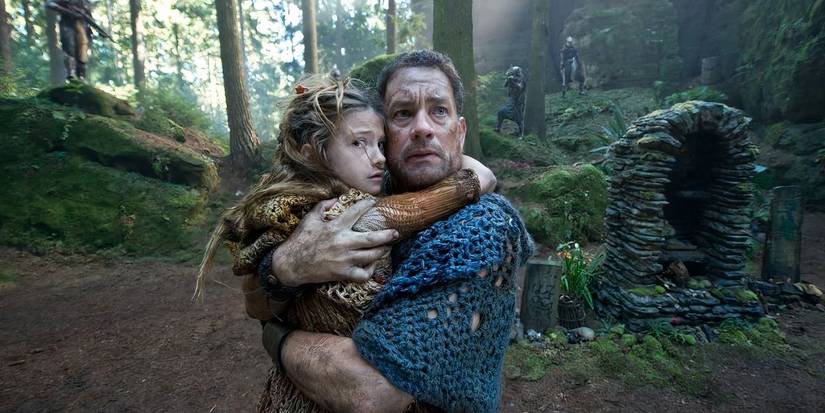
No, it’s not surprising that Cloud Atlas has more than one director, since Cloud Atlas is well-known for being directed by Lana and Lilly Wachowski. And they’re one of the most notable sibling duos of the past few decades, largely because of The Matrix and its sequels, but also because of other noteworthy and distinctive movies like Bound and Speed Racer. What’s instead surprising about Cloud Atlas is that it wasn’t just directed by the Wachowski sisters.
A third director, Tom Tykwer, was also credited with making Cloud Atlas, but his name doesn’t get mentioned as much in relation to the movie, which is strange, since he’s also notable for directing Run Lola Run. Cloud Atlas, though, is a huge movie, and it’s made up of various interweaving stories while feeling massively ambitious, so if it were a case of “the more the merrier,” in terms of people sharing directing duties, that makes some degree of sense. Even for two directors used to working together, Cloud Atlas is a lot.
2
‘City of God’ (2002)
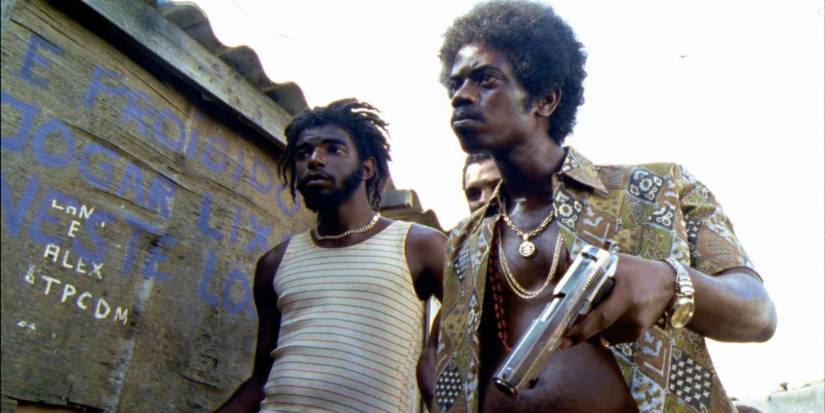
A little like Slumdog Millionaire, City of God is a movie that tends to get associated with one director, but not two. Here, though, Kátia Lund is not credited in a way that suggests she did less work than the film’s other director, Fernando Meirelles, but Meirelles is the bigger name (having also done The Constant Gardener and The Two Popes), and Meirelles was the only one of the pair who got a nomination for Best Director at the Oscars for City of God.
Rules were a bit strange back then, with the Academy Awards, but things have changed since to allow more than one person to win a Best Director Oscar, in recognition of the fact that some movies really need more than one directorial voice. City of God was one such film, but it’s not always remembered that way, which is a shame for Kátia Lund.
1
‘Mad Max Beyond Thunderdome’ (1985)

Mad Max is a series that’s always been directed by George Miller, right? Kind of. He was the sole director of the first two movies, and was also behind both Mad Max: Fury Road and its prequel, Furiosa. When it comes to the third (and not always beloved) movie, Mad Max Beyond Thunderdome, Miller was credited as well, but alongside a co-director: George Ogilvie.
Like some of the other examples here, Ogilvie is a somewhat obscure name, at least compared to his co-director on Mad Max Beyond Thunderdome, but it’s still a bit surprising how much he’s overshadowed. Sure, his work was on the least-liked movie in the series, and George Miller solely did all the other ones, but Mad Max Beyond Thunderdome’s other George (it’s like Monty Python and the Terrys all over again) deserves a bit more credit beyond just his, you know, name being there in the credits.