The 1980s were one of the most entertaining and wild decades for the horror genre, brimming with films with beautifully outlandish premises and sporting unapologetically surreal aesthetics. Cult director Fred Dekker‘s feature debut, Night of the Creeps, which came out in 1986, is a perfect example of the ’80s horror phenomenon: a film that is both original, as if it were designed to become a cult classic (which it eventually would), and at the same time, a passionate homage to not one, but numerous subgenres of horror. Sure, genre fans have seen many sci-fi movies about some kind of danger that came from space (in this case, in the form of impressively disgusting slugs). The same goes for the multiple movies about an infection turning people into murderous zombies that threaten to overtake the world. Same with the slashers about some crazed murderer fleeing the asylum, going around and killing youths. However, we usually see all of these tropes in separate films, not all at once, and especially not combined with an unexpected homage to yet another, very different, genre that was at its peak at the time—a teen comedy.
‘Night of the Creeps’ Is Both a Gory Horror and a Comedy About the Troubles of College Life
As a foreshadowing of the film’s general tone and style, Night of the Creeps starts off with two very different prologues. In the first, two aliens aboard a spaceship try to stop an experiment gone wrong (i.e., the infamous space slugs) from being spread out—with no success. The container carrying the slugs crashes in the reality of the second prologue—the black and white 1950s, reminiscent of Ed Wood‘s Plan 9 from Outer Space, where a very unlucky young couple happens to come upon both the slugs and an escaped axe murderer. The story then jumps to 1986: a college student, Chris Romero (Jason Lively), falls in love with Cynthia Cronenberg (Jill Whitlow), the president of one of the sororities at Corman University. Chris’ feelings unexpectedly lead to him and his loyal friend, J.C. Hooper (Steve Marshall), breaking into the university cryo lab and accidentally thawing an infected corpse, who turns out to be not so dead after all.
Dekker’s film really does manage to combine all of the above, turning what could be considered a tonal inconsistency into a distinctive style that mixes classic B-movie tropes, the matching gore, and an almost sweet intonation. Even the pool of characters in Night of the Creeps (the majority of whom are named after cult genre authors, long before Final Destination came up with the same trick) is representative of this duality. On the one hand, Chris Romero, despite his last name, has all the necessary hallmarks of the protagonist of a teen comedy about the hardships of young life: having trouble speaking with girls, falling in love with the girlfriend of the biggest jerk on campus, and testing the bonds of friendships. On the other hand, there is a severely traumatized Detective Ray Cameron (iconic Tom Atkins), who is haunted by the axe-wielding demons of the past and speaks exclusively in cool one-liners—an archetype straight from genre cinema.
‘Night of the Creeps’ Is Full of Nods to Horror Classics, but It Still Holds Its Own
By the time Fred Dekker got around to making his directorial debut, for which he also wrote the screenplay, he was already well versed in effectively mixing horror with comedy thanks to his participation in developing the story for Steve Miner‘s House (Miner’s name is also referenced in Night of the Creeps). He would also later go on to further experiment with pastiche storytelling, this time, mixing not genres but classic monsters, in his 1987 movie, The Monster Squad. Thus, Night of the Creeps doesn’t share the issue that many horror comedies tend to face in that they can truly only be one of those things. In this unusual zombie flick, the mashing of meta-irony and campy, explicit gore (heads exploding with the slugs bursting out of them and everything) just feels entirely organic.
Tom Atkins’ Detective Cameron becomes especially emblematic of the movie’s humor — a character who would fit perfectly in some film noir, a hard-boiled, heavily-drinking detective who constantly delivers amazing zings, including his trademark “Thrill me!” refrain. Dekker also paints the world here with the patented vivid neon colors, reminiscent of the popular comedies of the decade, that would later become one of the most distinctive features of the ’80s nostalgia boom. All the while, Night of the Creeps still works as an honest horror film, with the slugs that are appropriately gross, zombies that would make Jason Lively’s character’s namesake proud, and an unexpectedly suspenseful and heartbreaking scene that takes place in a toilet. Sadly, at the time of the film’s release, this complexity led to mixed reviews from both critics and the audience, with Night of the Creeps eventually becoming a commercial flop.
Throughout the years, though, the film gained the cult following it deserves, and now this horror comedy seems as relevant as ever for contemporary genre lovers. At a time when legacy reboots/ sequels and nostalgic tendencies dominate the genre scene, Night of the Creeps perfectly fits into the modern cultural landscape, with its masterclass on how to use horror cliches in a self-aware but fun way that allows the viewers to feel the authors’ appreciation for the genre but also let the film stand on its own. Dekker’s secret seems to be that he doesn’t really resort to spoofing here. This “strange mish-mash”, in the director’s own words, is special precisely because it doesn’t become a parody: instead, it’s a tender love letter to the genre, which just so happens to include parasitic slugs and flamethrowers.
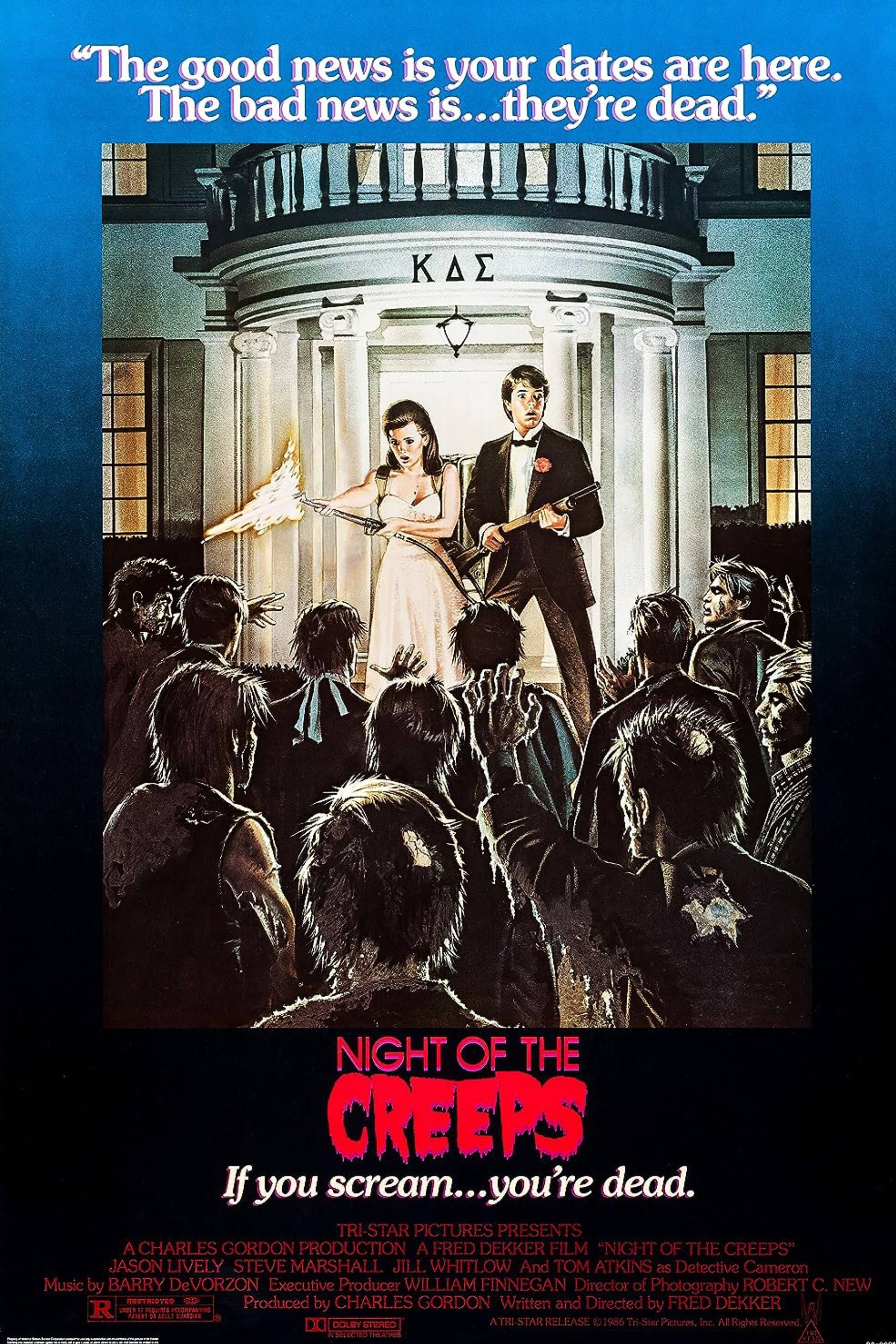
Night Of The Creeps
- Release Date
-
August 22, 1986
- Runtime
-
88 Minutes
- Director
-
Fred Dekker
- Writers
-
Fred Dekker