South Korean cinema has a reputation for expertly examining social class in stories that get your heart racing. From Bong Joon Ho’s Parasite to Park Chan-wook’s The Handmaiden, audiences have been delighted, horrified, and awe-struck by darkly comedic twists and turns that tangle around ultimately relatable themes. Kim Tae-joon offers up another healthy dose of pointed thrills in his new film for Netflix, Wall to Wall.
In Wall to Wall, Woo-sung (Squid Game’s Kang Ha-neul) barely makes enough to become an owner, instead of a renter, of an apartment in Seoul. His co-workers and even his boss tease him for thinking “house poor” instead of regular poor is an accomplishment. But for Woo-sung, buying an apartment in an area of Seoul that is set to see its value rise once a new train station is completed is worth it. With constantly rising prices, the government plans to place heavier restrictions on home loans, so Woo-sung goes all in while he can. Soon, he finds himself exhausted, paranoid, and caught in a web of apartment-wide paranoia that makes Woo-sung—and viewers—question if 84 square meters (about 900 square feet) could ever be worth it.
What Is ‘Wall to Wall’ About?
Wall to Wall opens with Woo-sung’s romanticized view of his life. With an upbeat ballad playing triumphantly over daydreams stylized with nostalgia as slides on a projector, Woo-sung imagines the life he’ll build on the foundation of his starter condo. He envisions that security bringing him a partner who will stick it out as the values rise, a fantasy made more poignant by the reveal that he recently called off an engagement because of his insecurity around his lack of money. He imagines selling the property to move on to better things, including owning land and a home big enough to care for his mother, portrayed by fellow Squid Game star Kang Ae-sim.
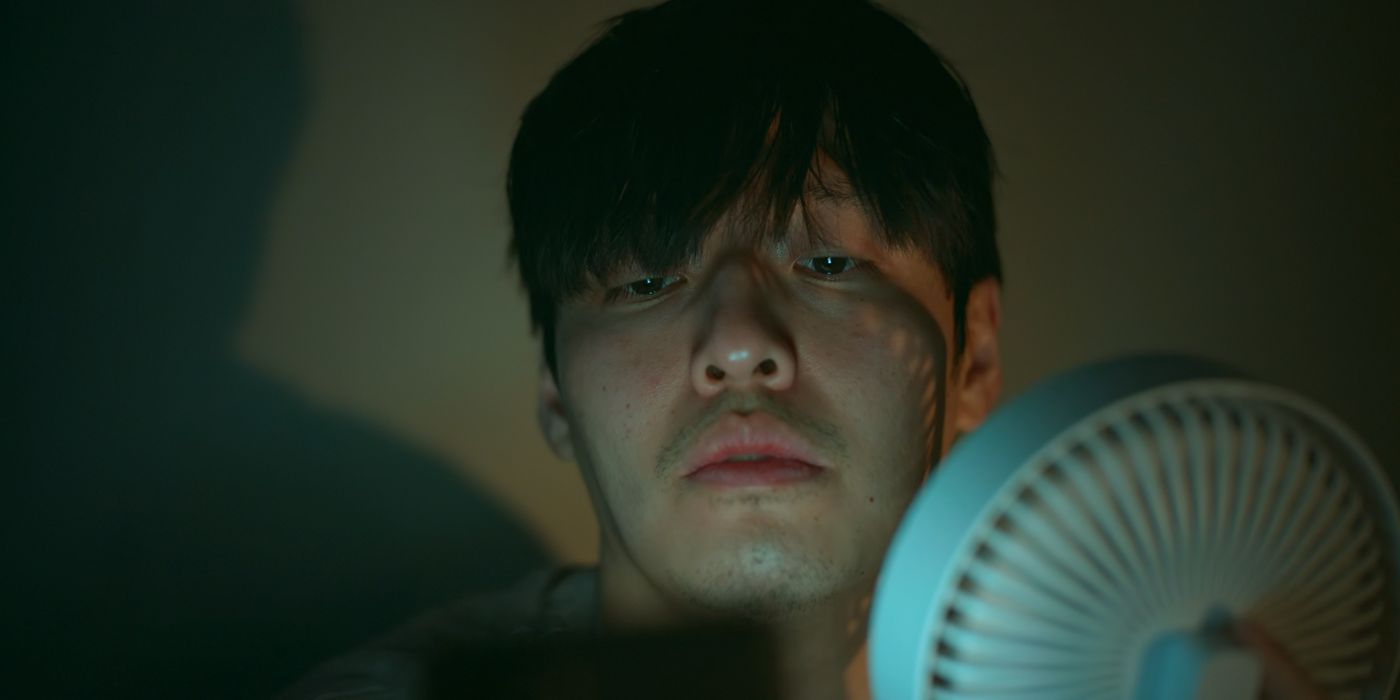
But reality is truly exhausting. He can’t even afford to furnish the apartment and sleeps on a bare cot with all his things on the floor of the living room. Woo-sung is barely hanging on and a wave of building-wide noise disturbances that leads to tenants accusing each other and denying responsibility soon sends him over the edge.
The film puts viewers in the thick of it with ambitious sequences of overwhelming sound, coupled with Kang’s sympathetic but unhinged portrayal of someone desperately clinging to their last shot of climbing into the middle class. No matter how intense the surrounding plot becomes, his performance is grounded in realism as he moves between numbness, extreme sadness, and outright rage. At times, it’s hard to untangle what’s fueling the tension you feel, as Kang’s flit between manic and pitiful is matched by the film’s carefully laid sound cues, insistent score, and stylistic overstimulating frames of a dropping crypto market or dense contracts.
His expressions feel more exaggerated in the film’s primary palette of cool tones and corporate greys that work to center viewers in his hopelessness and impending downward spiral. When warmth is introduced in the film, it’s reserved for tenants who have the warmth of wealth, like Eun-hwa (The Glory’s Yeom Hye-ran), a former prosecutor who lives in the penthouse and is the resident representative who can go between renters, owners, and property management.
‘Wall to Wall’ Traps Kang Ha-neul in an Unpredictable Ensemble
Every neighbor in the apartment building—besides Eun-hwa—feels as likely to be in Woo-sung’s shoes as they are to be an antagonist. Yeong Jin-ho (Seo Hyeon-woo), the resident above Woo-sung, is surly, and easily agitated but at times surprisingly amicable. Below Woo-sung, married couple Gwang-cheol (Jeon Jin-oh) and Joo-kyung (Kim Hyun-jung) are eager to pin the blame on Woo-sung, leaving excessive sticky notes across his door. Exhausted from working and tending to their children, who are also disturbed by all the noise, Wall to Wall calls into question the sanity of the couple just as much as viewers might question Woo-sung’s.
Neighbors film each other with doorbell cameras and cell phones, and sometimes a smaller camera or phone can be seen around a corner in a stairwell or briefly along the bottom of an apartment window. This community-driven panopticon pairs with crypto scams and a myriad of opportunists looking to swoop in when the working class fails or gives up. The thriller builds tension out of its circumstances so precisely that you almost forget there’s a larger mystery to unravel.
While relationship dynamics between neighbors shift and evolve throughout the film, Woo-sung is the newest resident and so bears the brunt of the suspicion. At times, the sheer volume of people accusing him becomes as overwhelming as the constant noise disruptions. Where wider conspiracy, hellish real estate markets, and low wages are the largest threat, Wall to Wall doesn’t let you forget the very real threat your fellow man poses when pushed to their limits. As the film goes on, the other tenants begin to feel as much like a hunting party as they do an absurdist take on a Greek chorus.
Director Kim Tae-joon Leans on Reality To Make ‘Wall to Wall’ More Unsettling
Pushed to your limit right alongside Woo-sung, Netflix’s latest offers a litmus test for your social anxieties and wear and tear at the hands of capitalism. Wall to Wall examines how nightmarish personal surveillance has become and posits that the desperation created by the housing market is becoming scarier than any supernatural haunted house story. With the global housing crisis on the rise and property making up 79% of assets for single homeowners in Korea on average, the exaggerated terror of the film reflects a stark reality, and its chilling ending drives the point home long after the credits roll.

Wall to Wall
- Release Date
-
July 18, 2025
- Runtime
-
118 minutes
- Director
-
Kim Tae-joon
- Writers
-
Kim Tae-joon
- Producers
-
Lee Won-haeng
-

Kang Ha-neul
Noh Woo-sung
-
Yeom Hye-ran
Jeon Eun-hwa
-
Seo Hyun-woo
Yeong Jin-ho
-
Jeon Jin-oh
Jeon Gwang-cheol