Remakes and reboots have existed in some form for practically as long as the entertainment industry itself. It’s normal practice for newer generations to reinterpret an older story with their own creativity or through the lens of improved film technology. But with the increased reliance upon IP over the decades, nostalgia has become a powerful and undeniably effective marketing tool. When used in a sensible, organic way for the overarching story, it can be just as effective of a writing tool: relying upon built-in affection for certain fictional universes can advance the stakes or bring past events and favorite characters full circle. Too often, however, dragging legacy characters into resurrected IP is like forcing a square peg in a round hole — hollow attempts to manipulate audience engagement that undermine the impact of resolved arcs and cut the entire project off at the knees.
Buffy the Vampire Slayer’s upcoming Hulu reboot is something of a unique situation. Unlike, say, Star Wars, the series’ appeal lies in the title. There couldn’t be a true Buffy continuation without Buffy Summers herself, which Sarah Michelle Gellar’s involvement behind and in front of the camera seems to recognize. Likewise, Gellar has hinted at other familiar faces returning and expressed how she wishes she could bring everyone — even dead characters — back for another run. Simultaneously, the series has revealed its brand-new Slayer in Ryan Kiera Armstrong, a young woman who seems to be either the replacement main character or heavily at the forefront. Armstrong’s casting, Gellar’s return, and the latter’s satisfaction with how the story is developing are the only hints the tight-lipped production has announced so far. Although Gellar’s involvement would be a must regardless of the circumstances, pursing new stories instead of relying upon nostalgia is exactly the angle the reboot should pursue.
The ‘Buffy the Vampire Slayer’ Reboot Faces Unique Challenges
As its title indicates, Buffy the Vampire Slayer revolves primarily around Buffy Summers’ life as a preppy teenage girl trying to survive the horrors of high school by day and defeat the horrors of the supernatural world by night. (And, as always, day and night, she reckons with the prophesied destiny she never asked for.) Becoming the Slayer literally, physically empowers Buffy in ways no human girl could achieve, and that makes her a symbol of resilient, defiant strength for audiences. Yet the dichotomy between selflessly risking her life to protect humanity and selfishly (although it’s a stretch to call this desire selfish) wanting to experience a normal teenager’s beautifully uneventful life haunts Buffy as much as any nightmare. As the series’ seven seasons progress, Buffy following her destiny’s demands exacts a devastating emotional cost — as does simply existing in a world where illnesses can steal away loved ones. Even when her temporary death in Season 1 activates two “replacement” Slayers, Kendra Young (Bianca Lawson) and Faith Lehane (Eliza Dushku), circumstances prevent Buffy from bonding with the only people alive capable of understanding her struggles. The Slayer’s life is one of isolation, and her duties only end with her death.
Given that framing, continuing the Buffy the Vampire Slayer world is a delicate line to walk. The series has endured since 1997 because of its leading lady. In this case, a reboot that relies on name recognition and enduring fan fondness but doesn’t give the titular protagonist her due would be quite a misstep. Simultaneously, Hulu’s reboot also needs to avoid the same fundamental mistakes that have befallen others of its ilk: i.e., tying itself so tightly to its origins that it hinders itself. Nostalgic gestures without merit and meaning are just that: empty gestures. If the reboot wants to not just succeed but soar, the strongest approach would be to focus on the wealth of new tales, characters, and plots available within this universe, while keeping the one and only Ms. Summers in a crucial main or supporting role — be that as an active mentor to Armstrong’s character or guarding over her from a distance.
This can naturally happen through perhaps the series’ best, most satisfying twist: expanding on the series finale, which practically serves up suitable sequel material on a silver platter. Buffy the Vampire Slayer‘s original saga ends by transforming its main conceit — one Slayer born into every generation, and one Slayer only — into a world where every woman who could potentially become a Slayer finds herself imbued with those powers. The gift that’s also a curse is no longer exclusive, just like Buffy’s burden of protecting the entire world from the Hellmouth afflicting her hometown isn’t solely hers to bear any longer. With all the dormant Potential Slayers awakened and the Hellmouth itself destroyed, the series ends with Buffy free, bruised and weary but smiling, free to pursue a measure of what her own wants. Travel America beyond Sunnydale? Travel the world? Take a thoroughly deserved break and tend to her accumulated wounds, emotional and physical? It’s all on the table.
‘Buffy the Vampire Slayer’s Sequel Series Can Improve on the Original Show’s Flaws
Concurrently on the table is welcoming newcomer Slayers into the fold. Although still a beloved property, Buffy has drawn deserved criticism for both its mishandling of its minority characters and the main ensemble’s lack of inclusivity. If Willow Rosenberg’s (Alyson Hannigan) spell in the series finale ensured that every Potential Slayer became one, and if that outcome has lingered ever since, then the sequel’s options for representation and creativity are linked and limitless. Whether they’re new Slayers in training, like Armstrong’s character, or part of a worldwide network powered by Slayers of all ages, pilot director Chloé Zhao and writers Nora and Lilla Zuckerman have the perfect opportunity to put diverse voices at the forefront of a series already known for empowering a generation of women.
The original Buffy the Vampire Slayer electrified women and queer communities by turning horror conventions on their head and making one of the genre’s typical victims — a petite high school cheerleader — into the force of vengeance monsters have nightmares about, while also surrounding Buffy with friends who were, by and large, social outcasts. New generations can receive the same benefit by focusing on a manifold of different individual and communal perspectives: main and vital supporting characters who are Black and people of color, who reflect the LGBTQIA+ spectrum, and who accurately portray body diversity. As long as the series centers their journeys and ensures that each addition is a fully fleshed-out individual (not a lifeless stand-in who doesn’t truly contribute) then the sky’s the limit.
Related
Both series were helmed by disgraced showrunner Joss Whedon.
This level of genuine representation has arguably never been more necessary than now, during our modern world’s increasingly divisive, frightening, and traumatizing time. Gellar agrees; she told Entertainment Tonight earlier this year that Zhao’s passion for the project convinced Gellar that “the story is needed.” During a separate interview with SiriusXM’s The Morning Mash Up, Gellar said of the reboot:
“I hope that it brings comfort. […] Buffy is still hitting people who are watching it for the first time, and they’re seeing themselves, and they’re seeing their friends, and they’re finding their chosen family. And I think more than ever right now, as we get more and more divided, we need that chosen family, so I hope to provide a new chosen family.”
The ‘Buffy the Vampire Slayer’ Reboot Can Easily Expand Its World
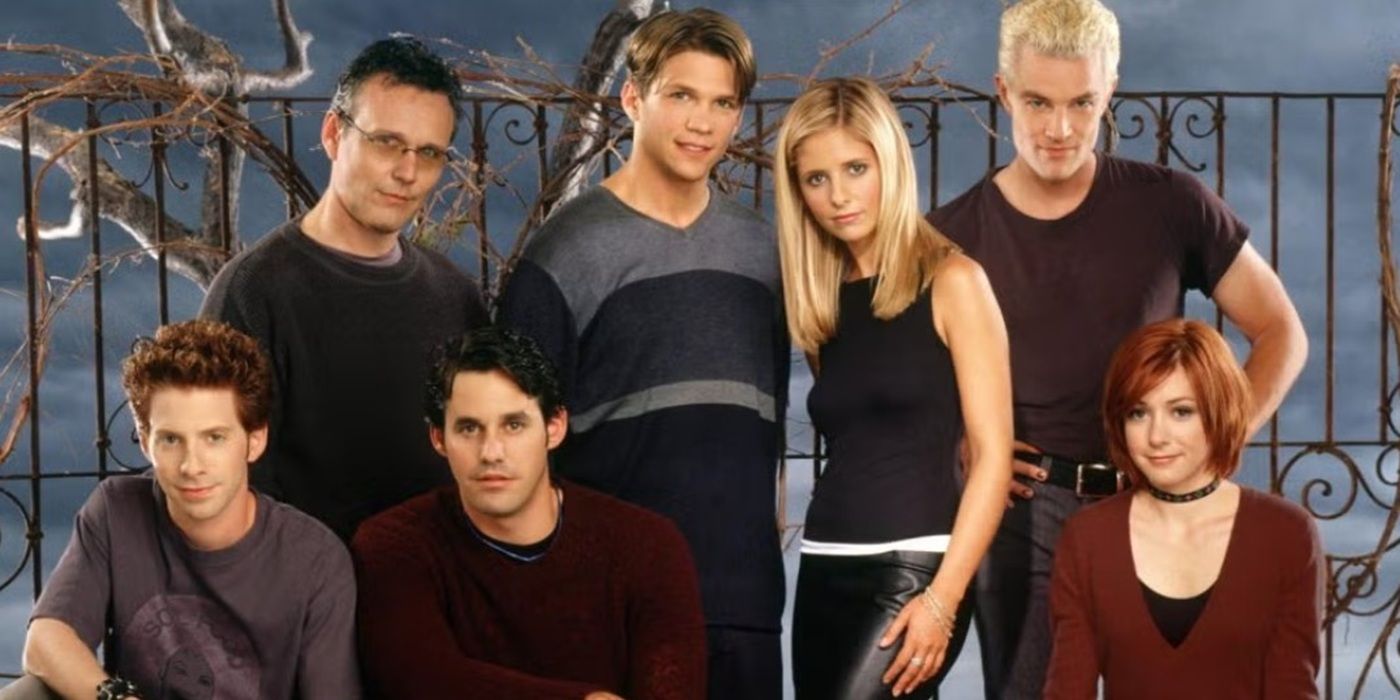
Admittedly, if the continuation wants to avoid being overcrowded, then introducing new characters makes it more difficult to preserve its parent series’ heart: the characters. Buffy the Vampire Slayer strikes a lasting chord beyond Buffy herself because of the ensemble cast’s nearly perfect chemistry. Fans naturally want to see familiar faces again, and after a certain point, making up excuses for why important characters aren’t partaking in the series risks straining narrative credibility. Although it’s entirely possible for other members of the original cast to have satisfying cameos or a major role without their nostalgic presence propping up a weak story (the long shadows they’ve cast should rightfully be honored), the viewers and the creatives overseeing the reboot must also reckon with the fact that the original series’ alchemy can’t be fully replicated.
Resurrecting a property with a legacy as complex and complicated (in more unfortunate ways than one) as Buffy the Vampire Slayer‘s was never going to be an easy feat. The new series shouldn’t lose sight of the small screen’s first Chosen One while benefitting from her name, but the series finale intentionally reshapes and underscores the series’ strongest theme. Buffy Summers’ story has already shifted from one about a lone, very necessary girl in the 20th generation, into a communal support system of hundreds, potentially thousands, of women. The best path forward is, in fact, forward, into a difficult, different, yet hopeful future.