As Superman soars into theaters, fans cannot seem to get enough of the Man of Steel. But if you’re looking for more live-action examples of Superman teaming up with other DC heroes, then consider turning to the small screen for some of the best comic book-inspired crossovers in the business. No, we’re not talking about the Arrowverse here, but rather the CW series that predated the 2010s craze for superhero television by an entire decade. That’s right, if you want another solid Superman team-up adventure, turn to Smallville‘s ninth season for the two-part crossover often referred to exclusively as “Absolute Justice.”
“Absolute Justice” Pushed ‘Smallville’ Further Into the DC Universe
As Smallville continued over the years, the Superman prequel began to expand on the greater DC Universe surrounding Tom Welling‘s Clark Kent. For two seasons, the show built up to the Season 6 extravaganza “Justice,” which united a proto-version of the Justice League that included Oliver Queen/Green Arrow (Justin Hartley), Arthur Curry/Aquaman (Alan Ritchson), and others. Smallville continued to introduce more DC characters to the prequel continuity over the years, eventually migrating to Metropolis for most of the final three seasons. But it wasn’t until Season 9 that Clark was introduced to DC’s first major team of superheroes, the historic Justice Society of America. In a Watchmen-inspired plot by DC scribe Geoff Johns, “Absolute Justice” is essentially an 84-minute movie that tells the tale of a new generation of heroes as they rediscover the old guard. It’s bold, triumphant, and downright heroic.
Though technically two episodes mashed together (“Society,” directed by Glen Winter, and “Legends,” helmed by Tom Welling himself), this rare Smallville two-parter aired on February 5, 2010, and exceeded fan expectations by bringing Hawkman (Michael Shanks), Doctor Fate (Brent Stait), and Stargirl (Britt Irvin) to life on the small screen. Most of these characters — and many of the other JSA members seen in flashback footage secured by Lois Lane (Erica Durance) — had never been translated to live-action before. Though Smallville had become notorious for giving its heroes leather outfits with dark sunglasses and hoodies, the JSA’s introduction was far more synergetic to the source material and, as a result, many have connected the dots between “Absolute Justice” and future CW superhero crossovers.
While long-term Smallville fans will benefit most from this two-parter, “Absolute Justice” can be largely enjoyed (and understood) by any newcomer as well. As members of the JSA come out of retirement to investigate the conspiracy behind why two of their own were murdered, Clark’s new team (not yet going by “Justice League”) likewise looks into these strange, brushed-under-the-rug events. The result is a team-up of superheroic proportions.
Clark Kent Helped Spark a New Age of Heroism on ‘Smallville’
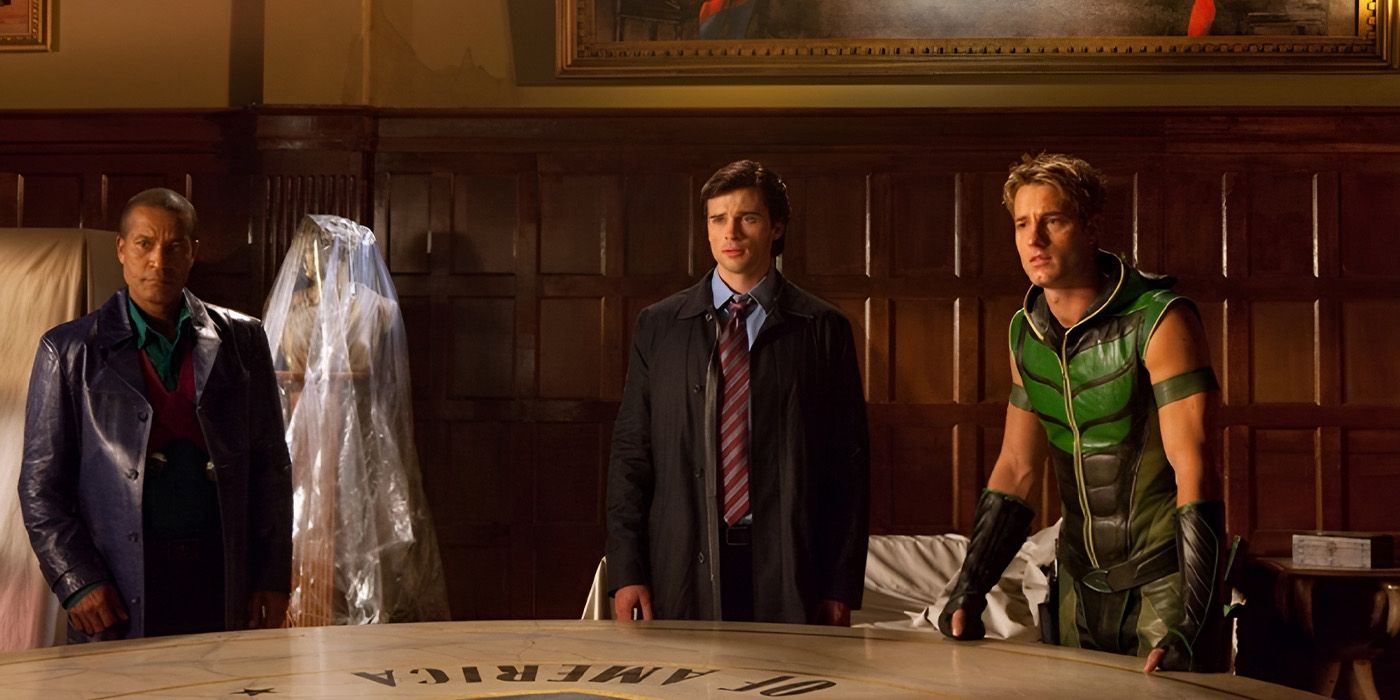
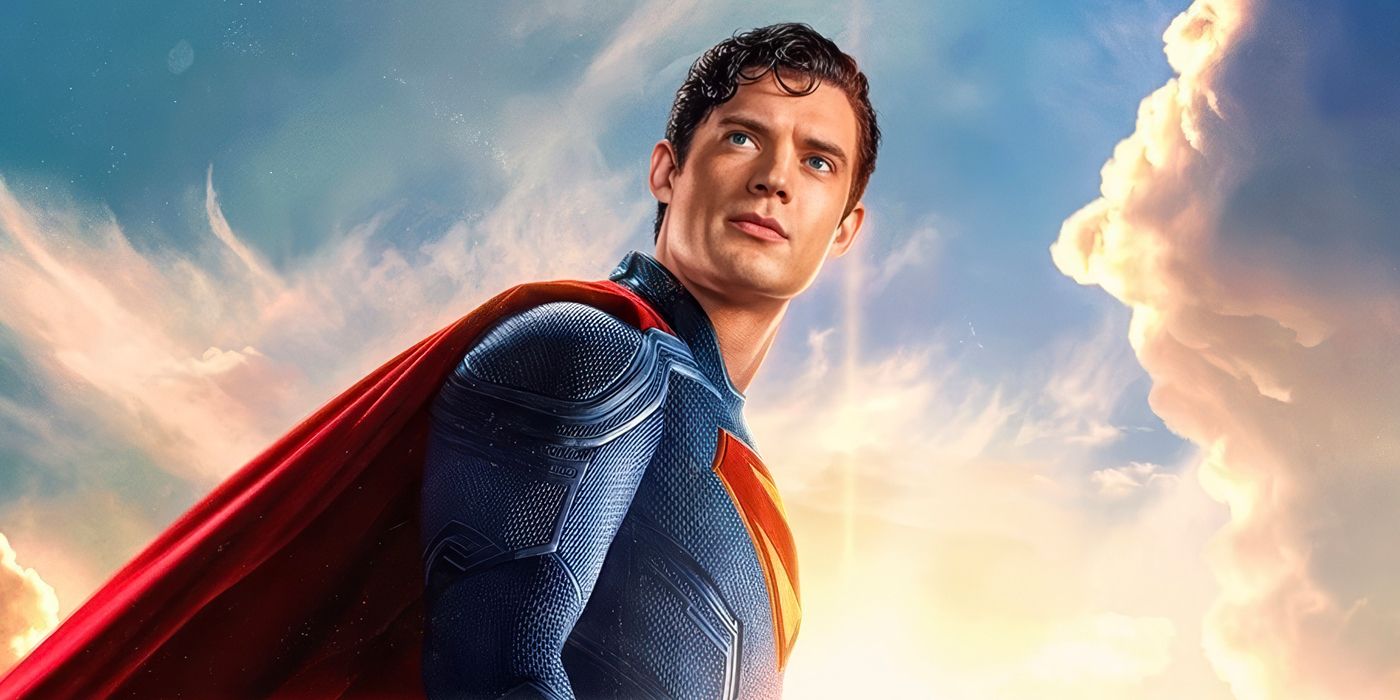
Just as David Corenswet‘s Superman inspires the “Justice Gang” to greater heights of heroism, so too does Clark here convince the JSA to come out of retirement officially and do some good in Smallville‘s growing DC Universe. But Clark is also, in turn, inspired by the old guard of DC heroes, namely Doctor Fate, who clues the future Superman into his destiny to lead “the Silver Age of Heroism,” chiefly against Michael Rosenbaum‘s Lex Luthor. While Oliver had largely been the leader of Smallville‘s Justice League to this point, it was here in “Absolute Justice” that Clark began to step into his own role as a leader. Sure, all of Smallville‘s heroes respected Clark’s decisions previously, but the steps he takes in this two-parter eventually culminate in the Season 9 finale, “Salvation,” where he officially leads the team (including Hawkman and Stargirl) against a Kandorian invasion.
While some of the action sequences are, admittedly, a bit dated to early 2000s CW special effects, the heart behind “Absolute Justice” beats just as bright. At its core, it’s a story about legacy and how a hero can have a profound impact on an individual, not unlike the new Superman film. However, we see this most obviously at play in Stargirl, a high school sophomore who — like Clark in his own teen years — chooses to risk her life to save others. Why? Because the legend of the JSA inspired her to something greater. Even Clark, who has had his own doubts about stepping out publicly as a hero, sees the good that the JSA has done and finds himself hopeful for the future. Any hardcore DC Comics fan will feast on the two-parter’s commitment to the source material and its refusal to be embarrassed by the colorful costumes, rich mythology, and comics-accurate characters.
Related
David Corenswet’s Personal Introduction to the Man of Steel Is Still Worth Binge-Watching Today
The new Man of Steel was inspired by the old.
‘Smallville’ Pushed Clark To Interact With Other Heroes Long Before ‘Superman’
Throughout the show’s 10 seasons, Clark often interacted with other metahumans or meteor freaks, inspiring them to use their powers responsibly. From young Ryan James (Ryan Kelley) in the first two seasons to even the Wonder Twins in the show’s penultimate year, it wasn’t uncommon to see the future Superman in this teenage/young adult Clark Kent. But by the time the show had entered its ninth season, the show had essentially committed to becoming a superhero program, just as Clark began wearing the House of El family crest and moonlighting as a hero. But each of Clark’s interactions with other heroes, be them powered or not, challenged him to remember how to responsibly use his own abilities. It’s no wonder that, eventually, he would step out of the shadows as Superman and begin defending not just Metropolis, but the whole world as a result.
While James Gunn‘s Superman presents a Man of Steel who has already been inserted into the superhero community, Clark Kent basically established that community himself throughout the show’s extensive run. Sure, episodes like “Absolute Justice” prove that the JSA existed before Clark even made it to Earth, but it was partially due to his influence and Lois’ investigation into the JSA murders that DC’s first superhero group decided it was time to give heroism another try. That’s, of course, what Superman does, be it in a live-action theatrical film like Superman or Justice League or in the pages of a classic DC comic book. If there’s one thing that Smallville excelled at in its final years, it’s that Clark Kent, Superman, is meant to be an inspiration, a beacon of hope, to all looking up — and that includes other heroes as well. “Absolute Justice” is a stellar two-parter that feels ripped from the pages of one of Geoff Johns’ many DC crossovers, and it’s one that manages to still put Superman in the forefront despite all the other heroes around him.
Smallville
- Release Date
-
2001 – 2011
- Network
-
The WB, The CW
- Directors
-
Mike Rohl, Jeannot Szwarc, Glen Winter, Terrence O’Hara, Whitney Ransick, Mairzee Almas, Paul Shapiro, Rick Rosenthal, David Carson, James L. Conway, Chris Long, Michael Katleman, Morgan Beggs, Allison Mack, David Barrett, Marita Grabiak, Michael W. Watkins, Philip Sgriccia, Rick Wallace, Thomas J. Wright, Todd Slavkin, Brad Turner, Charles Beeson, Craig Zisk
- Writers
-
Steven S. DeKnight, Holly Henderson, Don Whitehead, Caroline Dries, Mark Verheiden, Alfred Gough, Miles Millar, Philip Levens, Jordan Hawley, Kenneth Biller, Michael Green, Drew Z. Greenberg, Geoff Johns, John Chisholm, Drew Landis, Julia Swift, Doris Egan, Tracy Bellomo, Garrett Lerner, Greg Walker, Russel Friend, Shintaro Shimosawa, Tim Schlattmann, todd helbing