Rogue Snail’s upcoming Hell Clock is an impressive new action RPG offering. Published by Mad Mushroom, Hell Clock’s many confident ingredients combine marvelously, from the historic turn-of-the-century Brazil backdrop to its spidery upgrade trees and dramatic dark fantasy ambience. Anyone who loves to tinker with builds and plow through countless mobs with a few clicks will feel duly served, but Hell Clock is most successful in how it ties so many detailed gameplay systems into a postcolonial fable with such confidence and panache.
Some may be familiar with Brazilian studio Rogue Snail through its plucky Relic Hunters series. The original Relic Hunters games were modeled on the fundamentals of the pioneering roguelite Nuclear Throne, whereas the latter, Relic Hunters Legend, expanded this into a multiplayer-oriented online looter-shooter RPG with a sci-fi animated series veneer.
With Hell Clock, the studio reintroduces some roguelite elements, but they exist merely to elevate a systems-heavy action RPG. Much like Diablo and Path of Exile, it begins with simple basics but reveals its considerable depth over time, leveraging a gorgeous and highly specific cultural backdrop that is rare in gaming.
A Soldier Still Fighting The War of Canudos
Hell Clock’s Dark Fantasy Setting is Detailed and Immersive
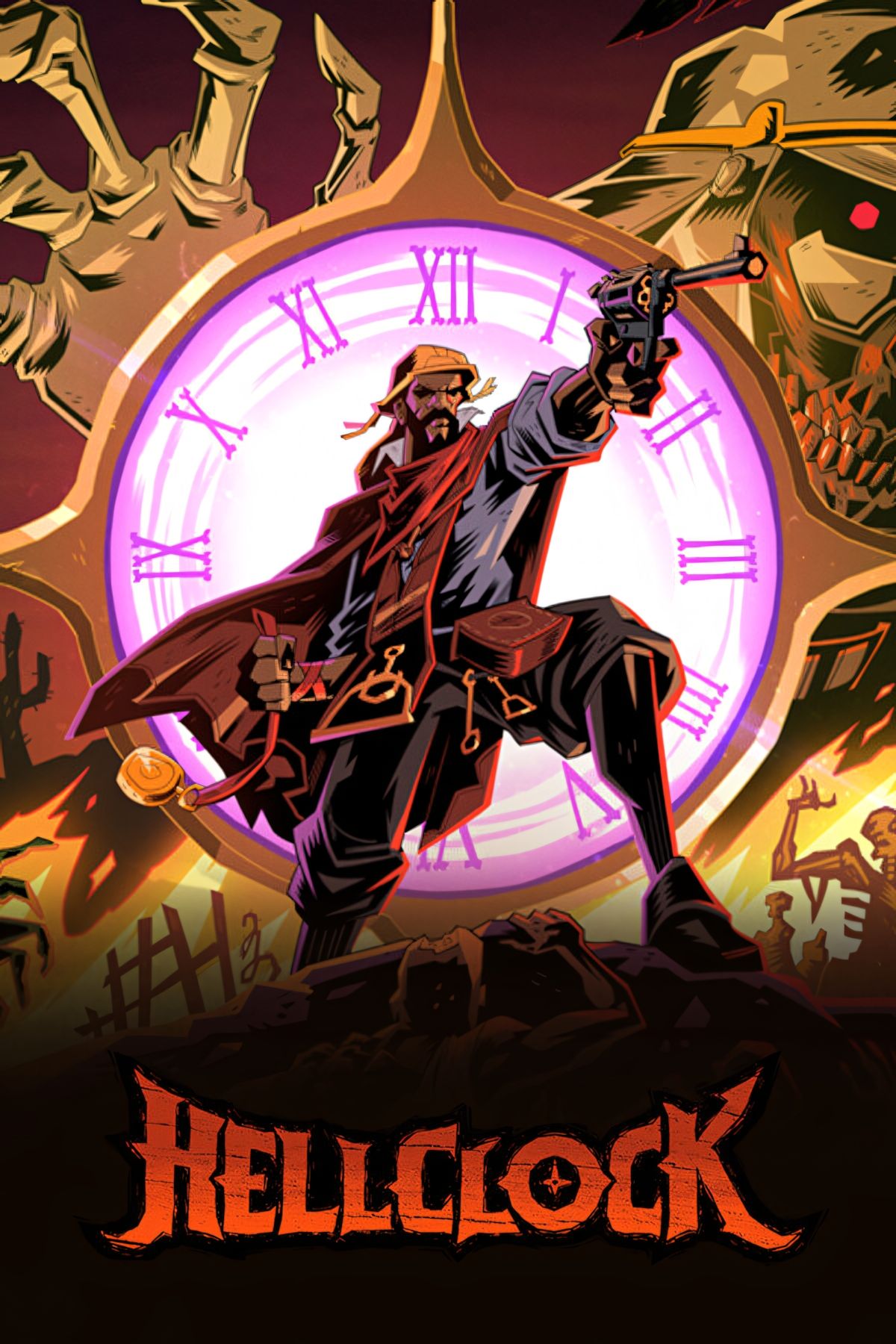
You are Pajeú, a former slave who earned his freedom through bloodshed and battle. He finds himself in Brazil’s Quixeramobim, birthplace of the priest Antônio Conselheiro, a real-life abolitionist and religious leader who took a stand in the town of Canudos against the republicanizing government’s forces in the 1890s. Pajeú wields the Hell Clock, an artifact that rolls back time, seemingly empowering him to travel the underworld and right the wrongs of the past, and possibly rescue Conselheiro’s soul.
Related
The 10 Best Action-RPGs, According To Ranker
The RPG genre has expanded into several subgenres, and these are the 10 best action RPGs that the Ranker community voted on.
Hell Clock isn’t overly generous with this backstory – most of which is directly sourced from history, albeit in heightened fashion here – apportioning it out over each of the game’s three acts and during individual dungeon runs. As Pajeú, you quickly amass a collection of skills, artifacts, upgrades, and gear pieces, incrementally growing stronger and nudging your way farther each time.
A successful Hell Clock run typically takes between ten and thirty minutes to complete, depending on how well you’re doing.
Pajeú, Conselheiro, and even boss NPCs, such as the racist eugenicist Dr. Raimundo Nina Rodrigues, are all drawn from history, woven together into a fascinating narrative that is finely written and fully voiced in both English and Brazilian Portuguese. It’s designed such that anyone who’d rather just blast spells at mobs and skip dialogue can do so, but they’ll miss out.
Build-Craft Your Way Through Hell
Hell Clock’s Many Systems Are Surprisingly Deep, With Lots of Viable Builds to Explore
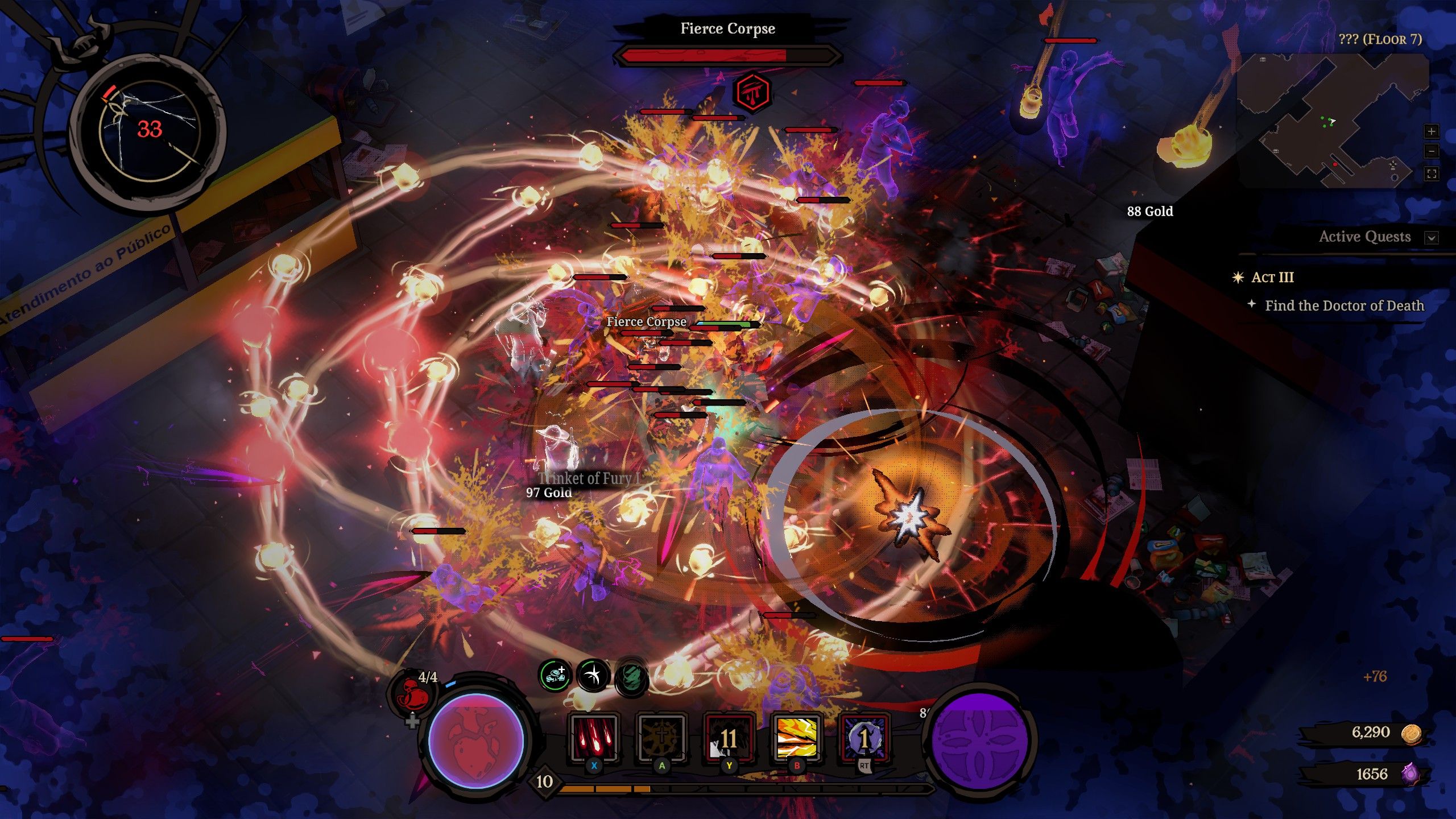
Hell Clock’s isometric view might make it appear like a twin-stick roguelite, but the game is all crunchy numbers under the hood. You start off with ten available skills, which can be configured into any of up to five active slots. Mixing these abilities soon reveals synergies, along with accumulated gear, perks, and various buffs. Relics can increase damage and transform skills further and, later on, a vast constellation mechanic utilizes a rare currency to further expand build potential. Trinkets picked up mid-run also produce temporary buffs, but they’re always lost upon death.
There are 20 total skills to unlock in Hell Clock. Players are also not forced to pick five skills; equipping fewer skills can be a tactical decision, as this reduces the pool of randomized blessings which appear during runs.
These many systems could prove overwhelming – and I do have some issues with how effectively they are explained in-game – but I ultimately appreciated Hell Clock’s structured and slower pacing. You’re continuously offered just enough new content as you progress through each of the game’s acts, which function as extensive tiered dungeons with randomized enemies, loot drops, and elites, as well as scheduled boss fights on specific floors.
Mouse and keyboard controls utilize click-to-move traversal – though I found the controller better integrated for everything aside from the game’s menus – and you can even rearrange equipped skills on the fly via pause. As in many roguelites, meta-progression empowers further ventures into each dungeon and proves crucial to success, and I doubt anyone could complete the game without them.
Turning Off The Clock…The Hell Clock
You Can Play Hell Clock Your Own Way…Even Without A Clock
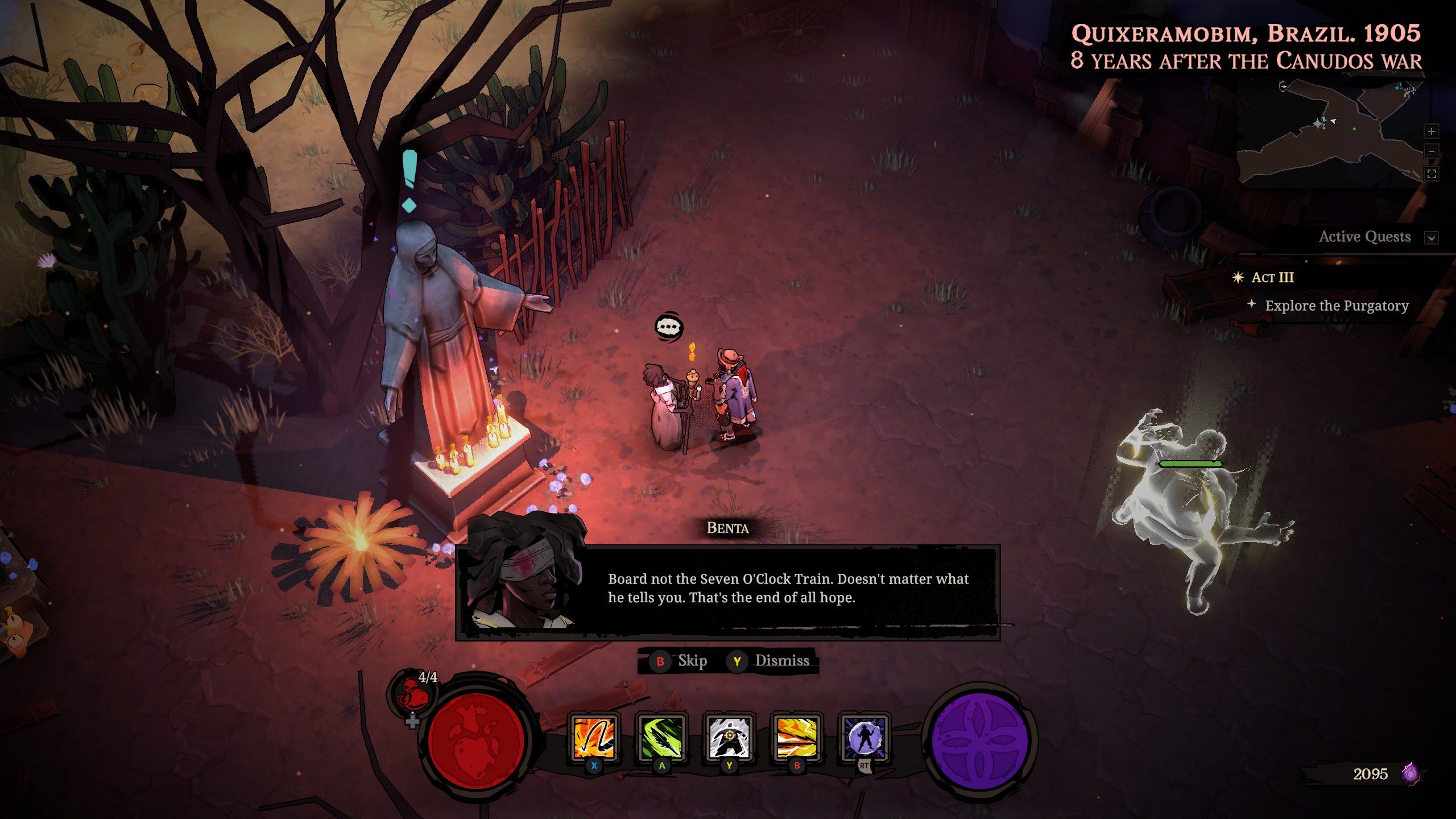
Hell Clock’s gameplay settings have more accessibility than I’d expect. There’s seemingly no direct mid-game pause by default, but you can activate it at the start of the game, and even outright remove the timer mechanics. Sure, it contradicts the very title itself, but players who just want to experience the game without the stress of a ticking clock can do so at their whim.
That timer is its own ingenious little device, though. Without it, you’ll eventually run into challenge walls where creatures take forever to kill, something which is meant to inform you that your run is for naught, that your build needs some more upgrades and polish. Blessings randomize each time and integrate with relics and skills, but an outright bad build won’t make it past the finish line on Act Three.
Soon you’ll be filling screens with beautifully busy spell animations and wreaking havoc at every step. There are loot goblins to crack open, intimidating elites that test your build (and can alternately be avoided), and even instances where you’re just bum-rushing the exit to try squeak through the next floor as the timer burns down, though it does thankfully freeze for boss fights.
In Hell, Planning Is Everything
Hell Clock Could Benefit From An Improved UI and Some QOL Upgrades
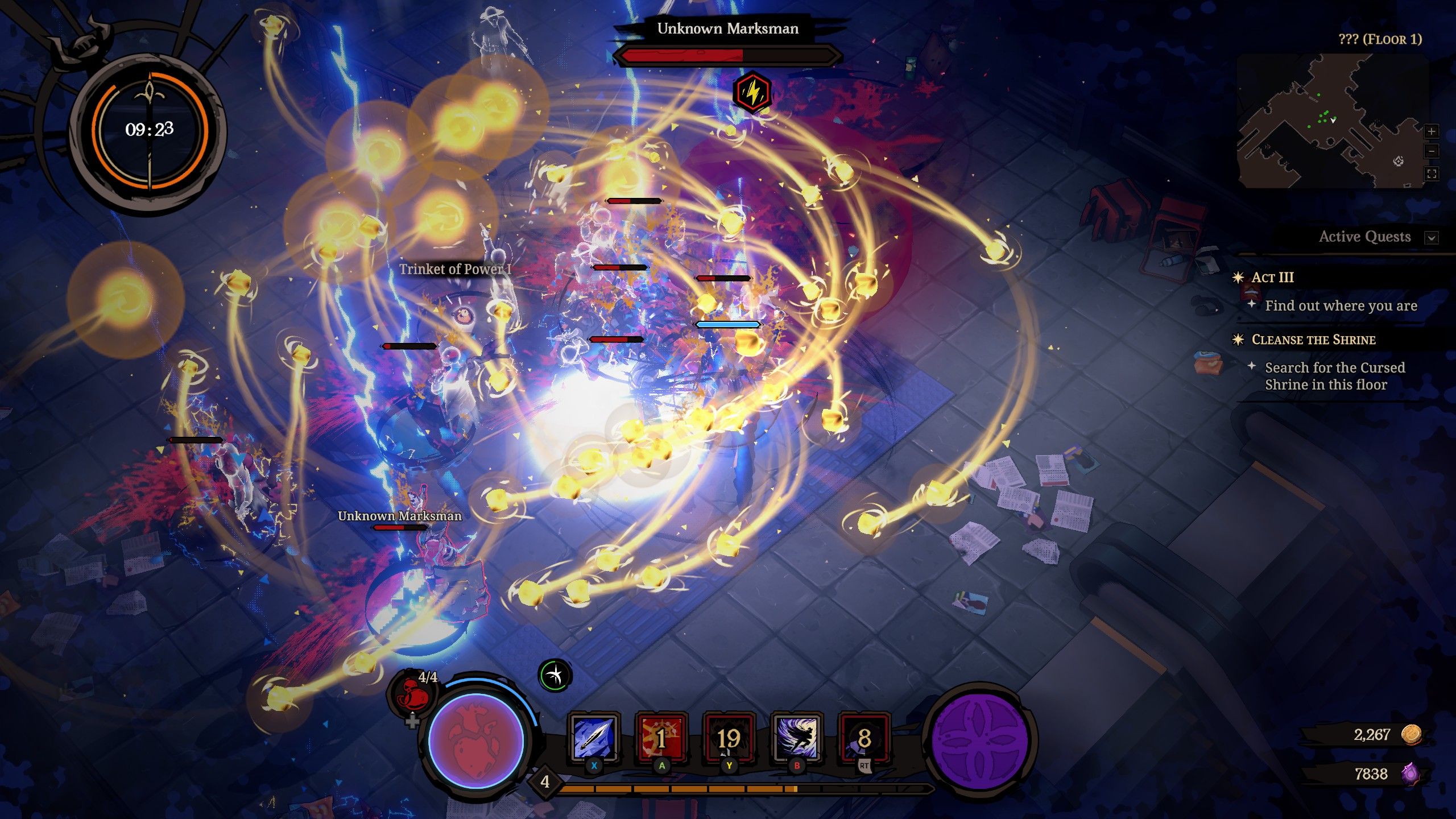
In Quixeramobim between dungeon runs, Pajeú is able to reallocate skills, upgrade stats, and interact with a robust reliquary. Relic drops transform individual skills and trigger synergies, but you’re limited by upgradable backpack space. The relics have randomized stats as well, so sorting duplicates, upgrading your favorites, and pruning the vault down can take many hours over time, but figuring out a killer setup is truly satisfying, and there’s plenty of room to experiment.
In true ARPG fashion, half of Hell Clock lies purely in the planning stage. As a result, I do wish the UI was more sensibly organized, as relics cannot be sorted by related skill, type, or rarity, nor can they be sold en masse or locked up for protection. The gear menu is also confusing and unexpectedly destructive; gear items are not vaulted and accrued like relics, so it’s entirely possible to “overwrite” a preferred piece of gear by mistake. Lastly, I’d love a method to save and load build/relic combos for ease of use.
Still, the UI may receive an overhaul over time, as Rogue Snail has already announced ascension-styled endgame elements to manifest soon after release. Hell Clock would lend itself well to additional gameplay updates, besides, especially once meta strategies and broken builds get inevitably exposed by the community, but the game does otherwise feel feature-complete at launch.
A Deceptively Deep Indie ARPG With All The Bells and Whistles
Hell Clock Delivers Room-Shattering Builds and Storytelling Stakes
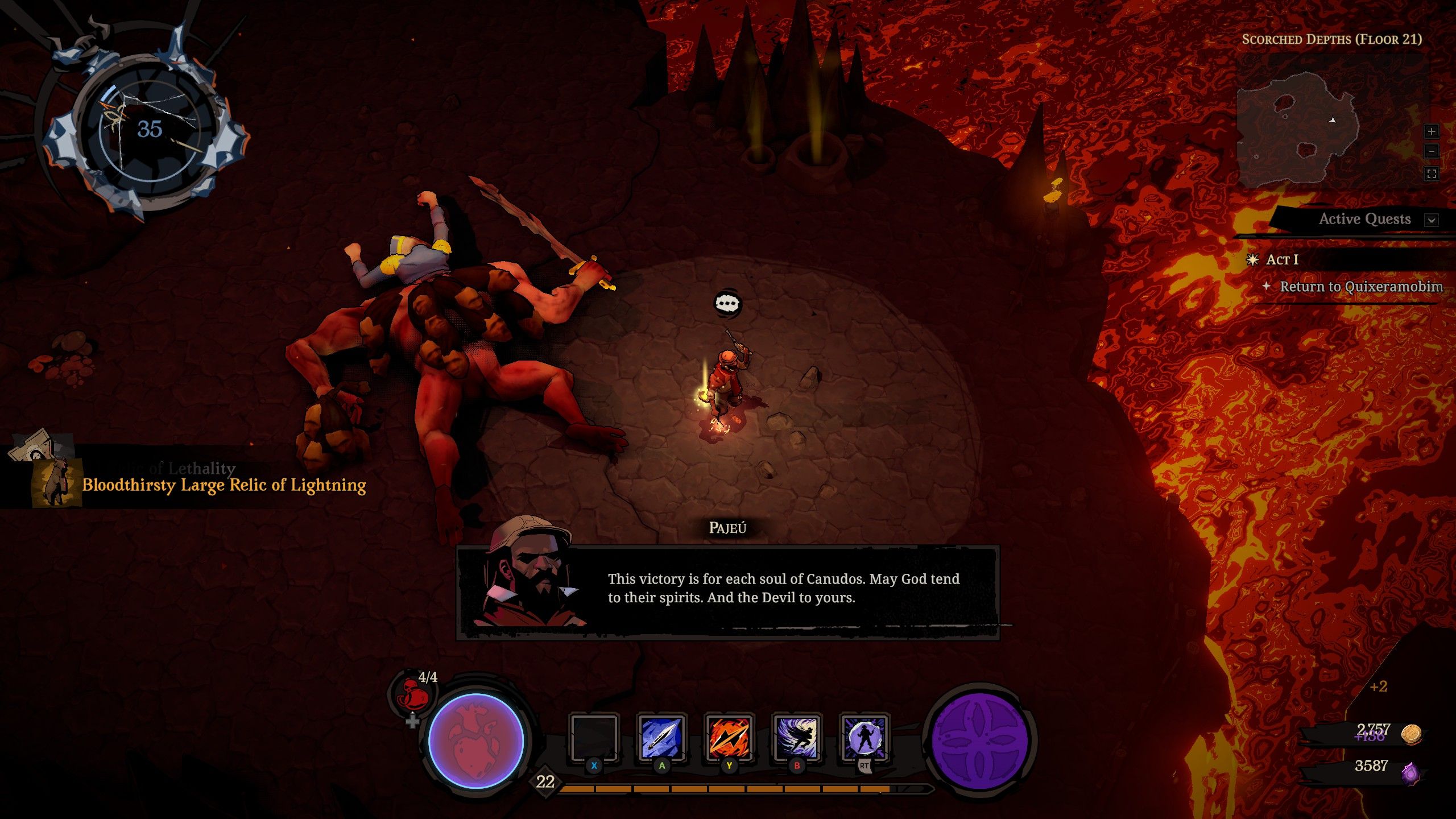
Aside from some UI quibbles, I do wish Hell Clock‘s narrative elements persisted throughout the general gameplay loop. When first exploring dungeons, plot gates and developments add exciting color to the routine, but these are one-and-done, fading out over time as the game deprioritizes the story. The second and third acts in particular feature a few nice storytelling surprises in this vein.
That narrative is bolstered by a superb visual and audio presentation, with a style similar to games like Darkest Dungeon, yet retaining its own specific identity. A contemplatively dramatic OST fills in the quieter moments between mass monster slaughter and the graphics mostly keep pace with the action, even if the game did strain my rig during its busiest spell effect displays.

Related
10 Best Horror-Based Roguelikes
From surreal FPS titles like Golden Light to iconic dungeon crawlers like The Binding of Isaac: Rebirth, there’re many excellent horror roguelikes.
There’s never been a game centered on the War of Canudos before, and Hell Clock makes terrific use of this unique setting, even inspiring me to scour the internet and learn more about this corner of world history. Hell Clock feels like a studio reaching its stride, and it’s going to be fun to watch its audience peel apart the meta and fuel the prestige components to come. If you’re looking for a beautifully dark, satisfyingly complex single-player action RPG with real stakes, set your alarms for Hell Clock.
Hell Clock

- Released
-
July 22, 2025
- Developer(s)
-
Rogue Snail
- Publisher(s)
-
Mad Mushroom
- Number of Players
-
Single-player
- Steam Deck Compatibility
-
Unknown
- Immersive and unique historic Brazilian dark fantasy setting with a great story to tell
- Strong visual presentation
- Fully voiced with excellent performances in both English and Brazilian Portuguese
- Build-crafting is detailed and deep
- Overall short dungeon runs encourage new attempts and experimentation, which keeps the gameplay loop fresh
- Some UI elements definitely need improvement, especially in the reliquary
- No way to save the game mid-run
- No ascension mode available at launch
- Certain game systems aren’t effectively explained, nor is there an in-game guide
Screen Rant was provided with a digital PC code for the purpose of this review.