Even though David Fincher directed instant classics like Se7en and Fight Club in the 1990s, he has evolved to become one of the most influential filmmakers of the 21st century. With The New York Times’ list of the best films of the last 25 years, Fincher was recognized three times for projects that could not be any more different; Zodiac is among the most meticulous serial killer thrillers ever made, The Social Network was a modern commentary that has grown even more relevant with time, and Gone Girl was a brilliant adaptation that satirized the obsessions of the media. Even if he has a few exciting film projects lined up, Fincher’s help in revolutionizing the television industry in the 21st century should not be overlooked.
Before Fincher’s decision to help develop House of Cards for Netflix, the notion of a cinematic director working in a supposedly “lesser” medium was virtually unheard of. Even if filmmakers like Curtis Hanson and Jay Roach would occasionally make films for HBO, there was traditionally a difference between the two industries, with those who made projects for the big screen treated as more artistically sound. However, Fincher provided a pathway for streaming to be taken seriously, and ended up doing some of the best work of his entire career for the small screen.
David Fincher Changed Television Forever
Although Lilyhammer was technically the first streaming original series to debut on Netflix, House of Cards proved to be the first project of note to utilize the binge model. Netflix’s initial decision to develop original content was treated as a joke, as many viewed the service as simply a means of renting DVDs. However, House of Cards had a freedom that did not exist for shows on networks, as it had no restrictions when it came to content, length, or structure. Fincher made a bet with the binge model for House of Cards, as it was possible for the series to be entirely forgotten if viewers were not hooked instantaneously. Thankfully, Fincher personally directed the first two episodes of House of Cards’ first season, which gripped the audience’s attention as they introduced the creepy politician Frank Underwood (Kevin Spacey) and his plot to become President of the United States. Even though Fincher did not return to direct, the initial seasons of House of Cards were met with critical acclaim because the other directors attempted to utilize his style.
With this move, Fincher helped initiate a significant change within the industry, as television soon began to be viewed as a medium in which storytellers could develop mature projects intended for adults. Superhero films and other blockbusters began to dominate the box office, as Hollywood continued to show less interest in mid-budget projects, like the ones that Fincher would typically direct. It became completely acceptable for highly-decorated stars to begin working on television; shortly after House of Cards, Matthew McConaughey and Woody Harrelson appeared in the first season of True Detective, and Big Little Lies assembled an impressive cast of A-listers, including Nicole Kidman, Reese Witherspoon, Laura Dern, Shailene Woodley, Zoe Kravitz, and Adam Scott. Fincher may have been snubbed by the Academy Awards far too many times, but he did earn an Emmy for Best Directing for a Drama Series for his work on the pilot of House of Cards. Just that is enough to prove Fincher’s contribution to TV history, but he has continued to work in the medium since.
Related
How Does ’The Social Network’s True Story Reflect the Real Zuckerberg Tale?
The David Fincher-directed feature embellished more than a few details from Mark Zuckerberg’s life.
Some of David Fincher’s Best Work Is on Netflix
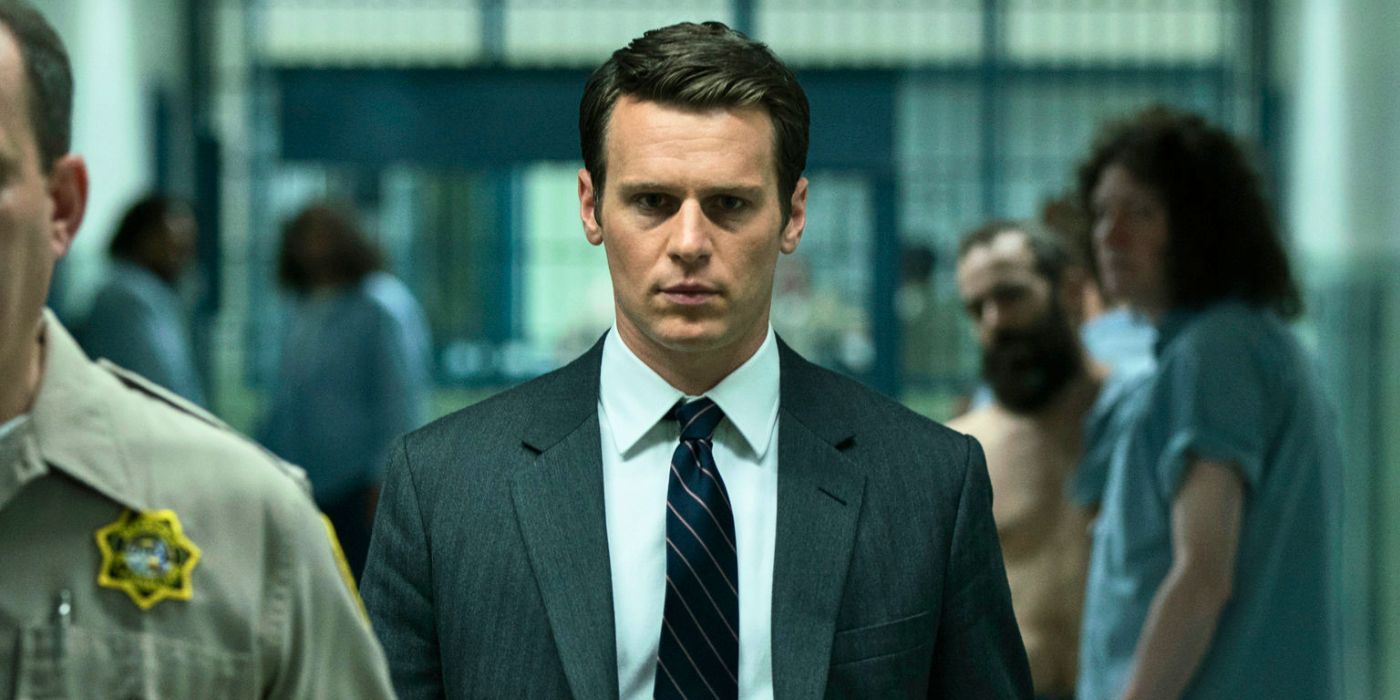
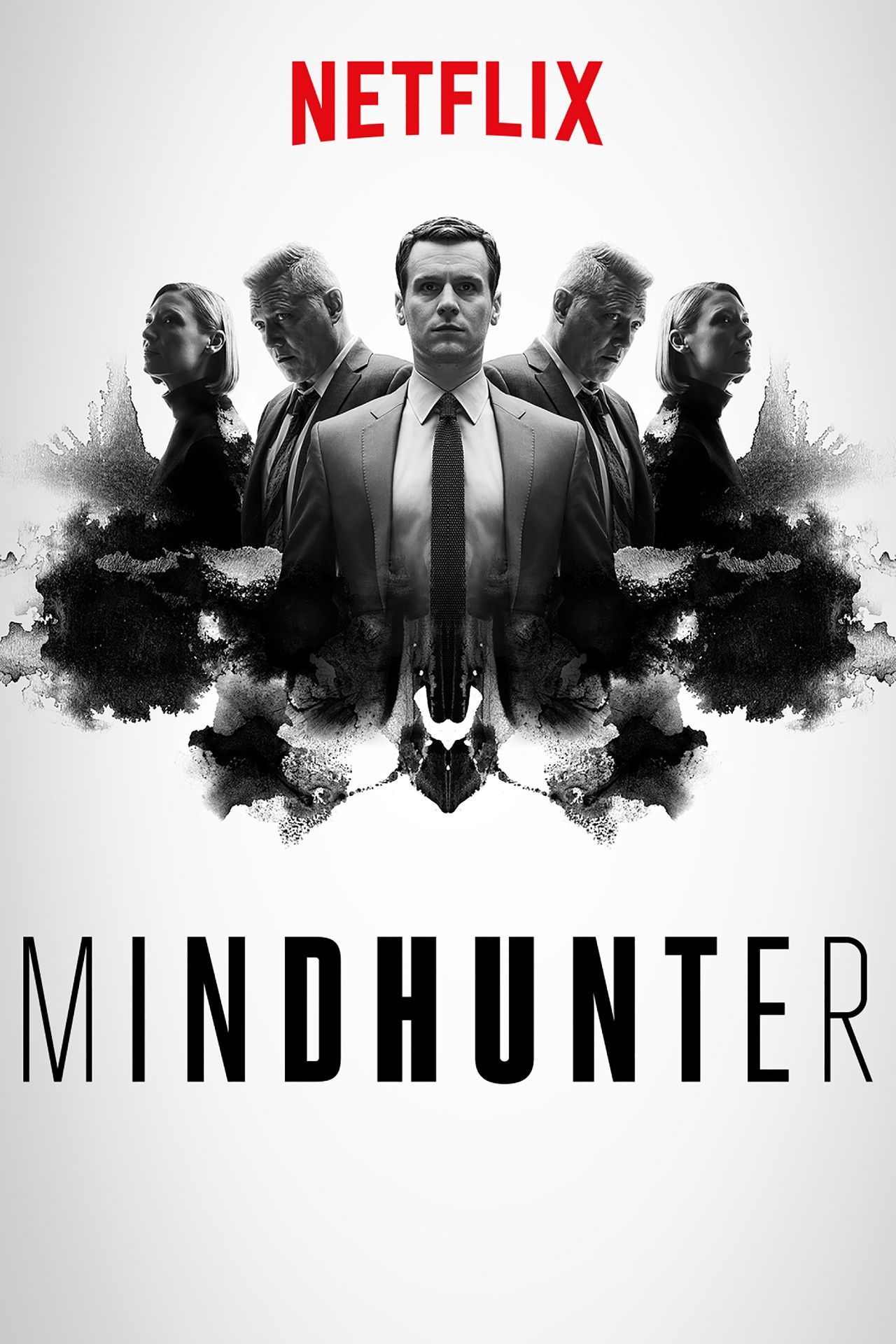
Although House of Cards began to decline in quality once Fincher was no longer directly involved, he succeeded in creating an even greater and more disturbing masterpiece with Mindhunter. Mindhunter is a continuation of the project that Fincher had been working on for years, as he had also explored serial killer psychology within his films Se7en, Zodiac, and The Girl With The Dragon Tattoo. Mindhunter acts as a commentary on the genre itself, exploring the real history of how FBI profilers coined the term “serial killer” and how, throughout the late 20th century, the media has made these criminals into celebrities. Mindhunter asks the type of deep questions about mankind’s inherent evil that would have been challenging to address in sufficient detail in a standard two-hour movie. The lack of restrictions on Netflix allowed Fincher to be as graphic as he needed to be. The show serves as an example of Fincher’s foresight when it comes to casting. Jonathan Groff may have been best known for his work in musicals like Hamilton and Spring Awakening, but Fincher handed him the opportunity to give an all-time great television performance with his role as Holden Ford.
Mindhunter allowed Fincher to invite other filmmakers to take advantage of the streaming model, as he was not the only director to work on the first two seasons. Andrew Dominik, the controversial filmmaker behind Killing Them Softly and Blonde, helped to direct a pivotal arc in the second season that explored both the fascination with Charles Manson (Damon Herriman) and Holden’s increasing anxiety that he had begun to have too much in common with the men he had been studying. Even more impressive was the second half of Mindhunter’s second season, which was directed in its entirety by Carl Franklin, the filmmaker behind thrillers such as Devil in a Blue Dress and Out of Time. It was necessary for an exploration of the horrifying Atlanta child murders to be told by a Black director, and Franklin created a haunting study on the ramifications of white guilt. Even if Mindhunter never returns, Franklin ensured that it concluded on a high note.
Mindhunter wasn’t the last project Fincher created for Netflix, as Love, Death and Robots proved to be the rare “adult animated” show that is not a sitcom like Family Guy or South Park; it finally allowed Fincher to return to science fiction for the first time since his disastrous experience making Alien 3. With a rumored Chinatown prequel, a potential series of Mindhunter made-for-television films, and the upcoming American reboot of Squid Game, Fincher has helped to open up Netflix as a streamer that supports idiosyncratic artists interested in making bold and transgressive content. It’s entirely possible that eventually, Fincher’s work on television may eclipse the legacy of his films.