When Tim Burton’s on fire, he’s capable of making some genuinely great – and undeniably distinctive – films, but he’s certainly not always on fire. He’s made divisive movies like Mars Attacks, films that some (though not all) love quite passionately, like Batman Returns, and also some rather forgettable movies that were nonetheless commercially successful, rather than critically (see 2010’s Alice in Wonderland, which somehow grossed more than $1 billion worldwide). But in both his great and not-so-good movies, there is usually a sense of style retained, and you know it when you see it. Some might think Burton doubles down on these things in a similar way to, say, Wes Anderson, but no one else really makes movies that look and feel like Burton’s do.
There are plenty of good Tim Burton movies, but what the following ranking intends to do is highlight those genuinely great films Burton has directed to date. These were all released within a fairly wide range of time (the earliest release being 1988, and the latest from 2007), and they all belong to different core genres, too. So that speaks to some level of versatility possessed by Burton, as a filmmaker. He might have his Burton-isms and a tendency to favor certain actors over others, but few could accuse him of only ever sticking to a small number of genres, since exploring his filmography reveals that he’s done interesting and compelling things throughout various kinds of stories.
5
‘Batman’ (1989)
Starring: Michael Keaton, Jack Nicholson, Kim Basinger
Rather generously, Jack Nicholson did step aside every now and then to ensure that Batman (1989) was still a Batman movie, rather than one all about the Joker, but only every now and then. Nicholson does kind of dominate this movie, but he’s also playing such a legendary comic book villain – and doing so exceptionally well – that it’s forgivable. And, to his credit, Michael Keaton is also pretty damn good as Bruce Wayne/Batman, with this blockbuster live-action take on the iconic character playing things fairly safe on a narrative front, especially since Batman’s most well-known villain is the antagonist here, but it’s all executed well.
Also, Tim Burton gives things enough life and style visually, because Batman does feel like a Tim Burton movie on top of being a mass-appeal superhero film, but he doesn’t overdo it; it’s not the “most” Tim Burton movie, if that makes sense. But it’s appropriately Burton-esque, it takes famed comic book characters and transposes them to the screen well, and it’s got some strong performances throughout. Some future actors might well have done Bruce Wayne/Batman even better than Keaton, and most will agree Heath Ledger’s Joker now feels the most iconic, but that doesn’t mean the takes on those characters here aren’t worthy of praise.
4
‘Sweeney Todd: The Demon Barber of Fleet Street’ (2007)
Starring: Johnny Depp, Helena Bonham Carter, Alan Rickman
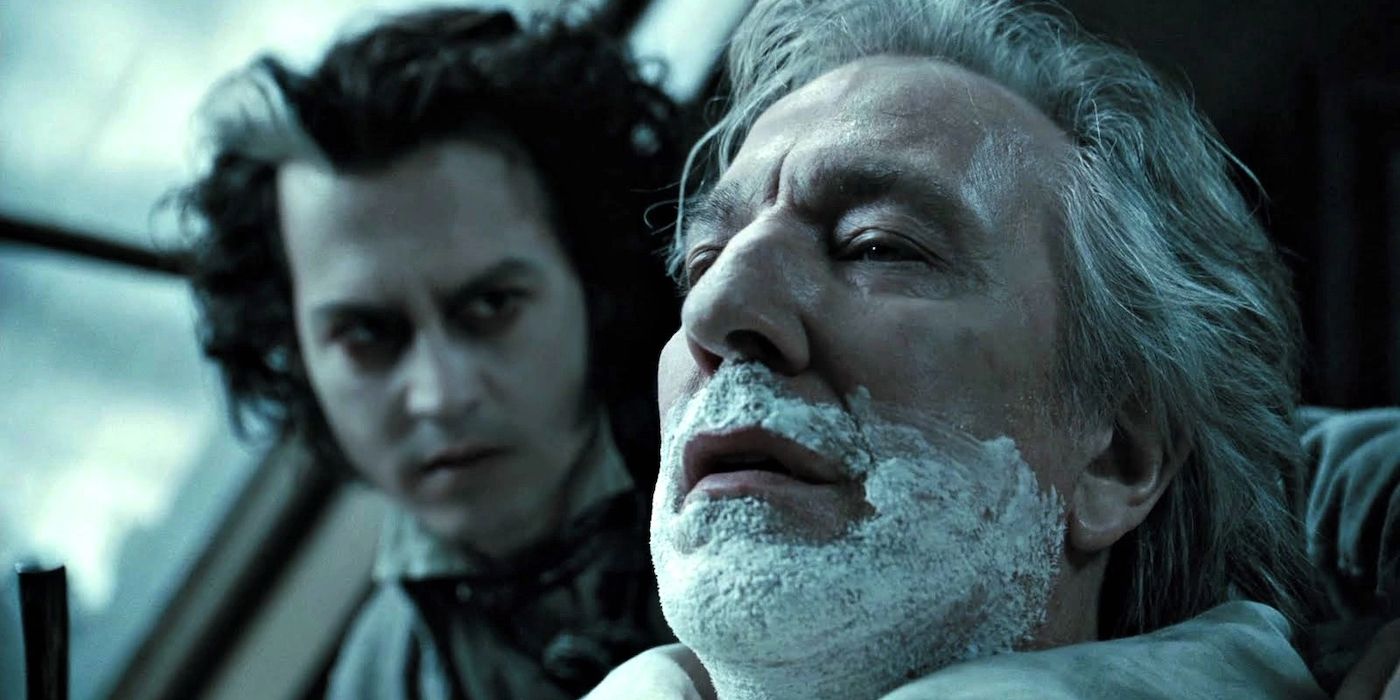
Sweeney Todd: The Demon Barber of Fleet Street is most definitely a gothic horror movie, which means it belongs to the same broad genre that Tim Burton had certainly explored before (Sleepy Hollow is also quite good and very much a work of gothic horror). But also, Sweeney Todd: The Demon Barber of Fleet Street is a musical, and a surprisingly great one, and it’s that aspect of it which makes it stand out, as far as Burton’s films go. 2005’s Charlie and the Chocolate Factory was also something of a musical, admittedly, but that one didn’t work quite as well (and it wasn’t on the same level as 1971’s Willy Wonka & the Chocolate Factory).
There’s also a dark sense of humor to some of Sweeney Todd: The Demon Barber of Fleet Street, and while the film might sound emotionally all over the place, everything comes together.
But to focus back on Sweeney Todd: The Demon Barber of Fleet Street, it’s wonderfully morbid stuff, centering on a barber who murders a bunch of people and teams up with a baker so he has a way to get rid of the bodies: she bakes them into pies. It’s got to be one of the darkest and most gruesome musicals out there, and this film adaptation of it (originally a stage musical) doesn’t hold back when it comes to horror and bloodshed. There’s also a dark sense of humor to some of it, and while the film might sound emotionally all over the place, everything comes together. It’s bleak, engaging, stunning on a visual front, and packed with memorable songs.
3
‘Beetlejuice’ (1988)
Starring: Alec Baldwin, Geena Davis, Winona Ryder
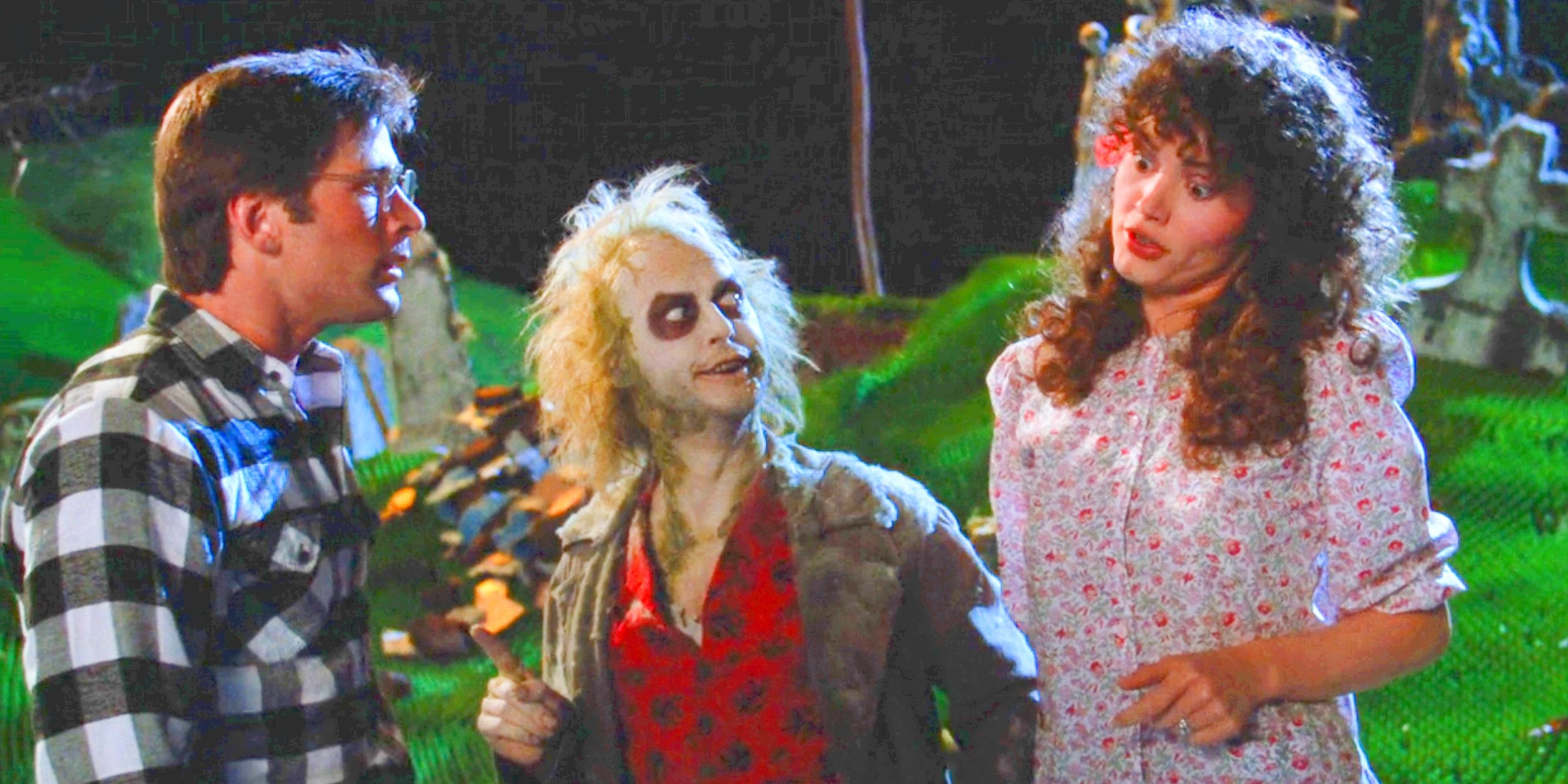
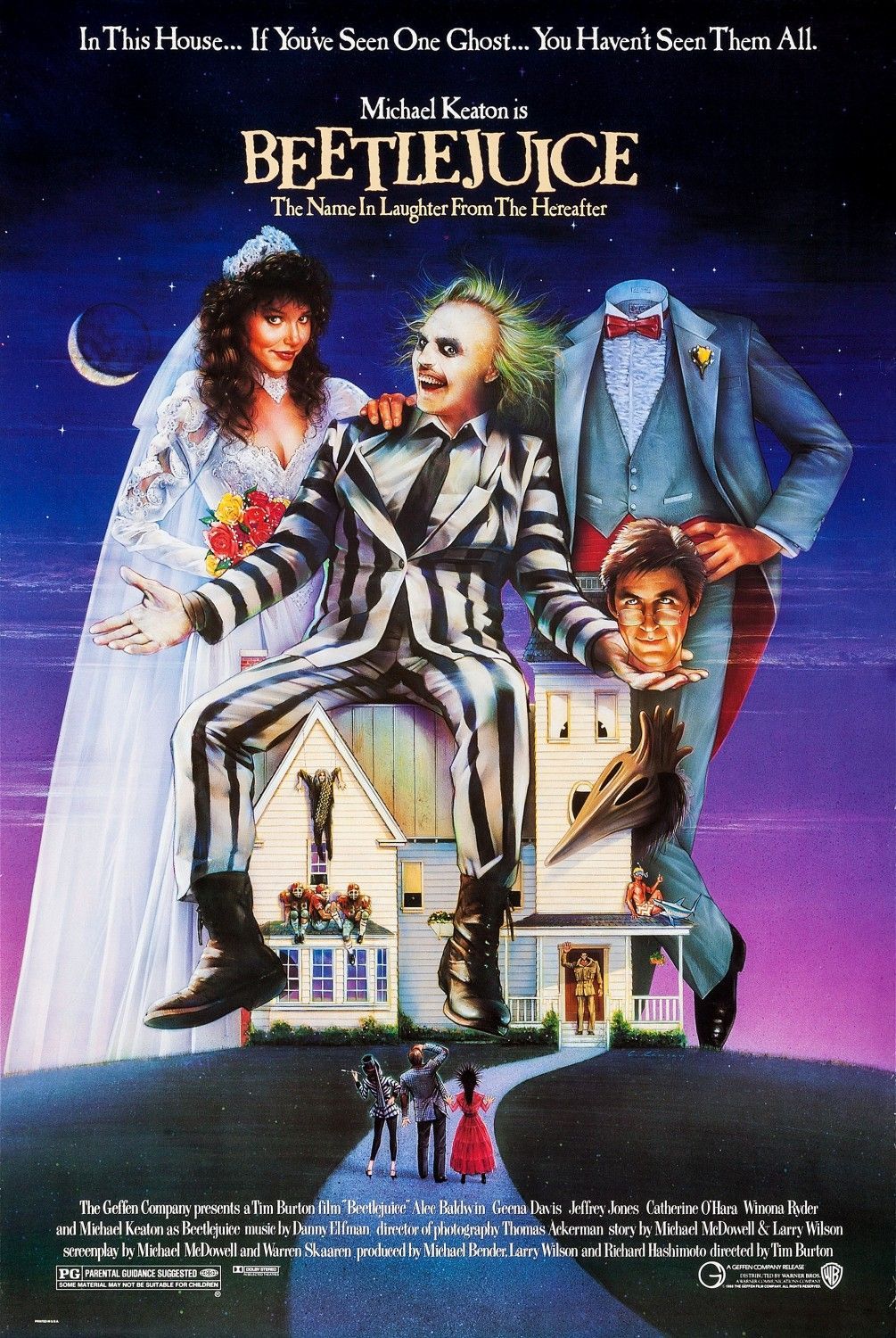
Standing as just Tim Burton’s second feature film after the strong directorial debut that was Pee-wee’s Big Adventure (1985), Beetlejuice is arguably the first full-on great film Burton directed. It’s a supernatural-themed movie that’s not quite a full-on horror film, but if you do count it as a horror movie, then it’s honestly one of the breezier ones out there. Most of the focus is on comedy here, with its plot revolving around two people who move into a new house, die in an accident, and then turn to some desperate measures to get the new occupants in that house out of there.
It’s a unique spin on a story about ghosts, and it’s all very creatively done. Beetlejuice walks a fine line between being weird and approachable, and gets the balance just right. It’s offbeat and irreverent at times, but never to the point of being alienating, and that also ties back to the idea that it’s a mildly spooky movie without ever being horrifying. Also, Michael Keaton is great here, working with Burton in the titular role before also being the titular character in Batman, and Beetlejuice also marked the first of several collaborations between Burton and Winona Ryder.
2
‘Edward Scissorhands’ (1990)
Starring: Johnny Depp, Winona Ryder, Dianne Wiest
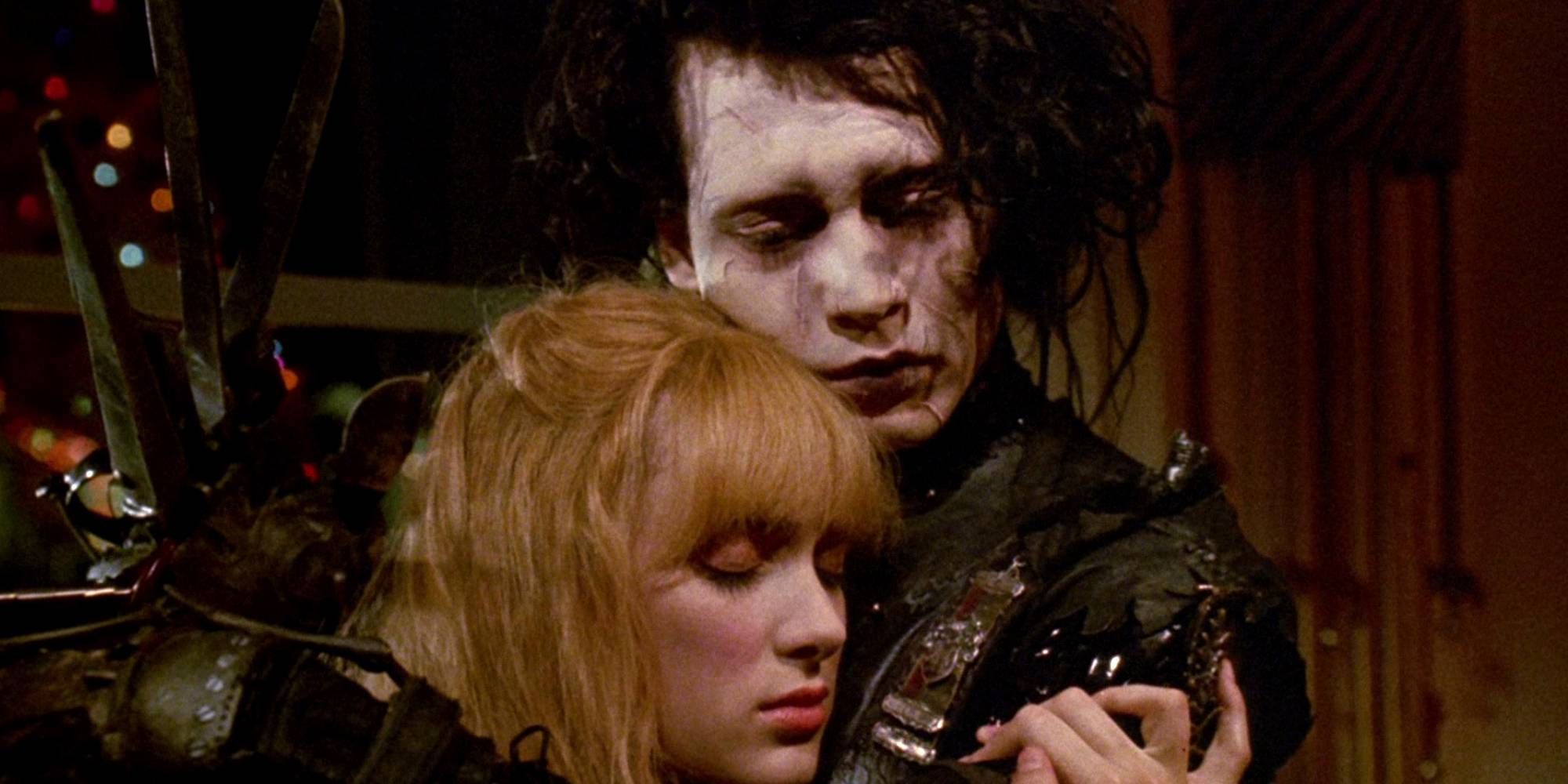
Another technically impressive film of Tim Burton’s that also might well have the most heart of any of his movies, Edward Scissorhands is a pretty remarkable modern-day fairy tale. The titular character does indeed have scissors on his hands, and he’s an unfinished experiment who also lives alone, after the death of his creator. But then a woman finds him one day, and brings him back to her unusual town, leading to him meeting – and sometimes clashing with – the people who already live there.
At its core, Edward Scissorhands is also a love story, albeit a rather bittersweet one, about two very different people forming a connection, but then experiencing external pressures that threaten to drive them apart. It’s the sort of thing you’ll find in plenty of movies (and stories more generally, given how old-fashioned and direct some of the themes here feel), but it’s all in the execution. Edward Scissorhands is immensely well-made, and it has that aggressively Burton-esque feel in the best of ways. It felt out of time by the standards of 1990, and that quality also helps it feel timeless when watched today, about three-and-a-half decades on from its original release.
1
‘Ed Wood’ (1994)
Starring: Johnny Depp, Martin Landau, Sarah Jessica Parker
The best Tim Burton movie, at the end of the day, is 2001’s Planet of the Apes.
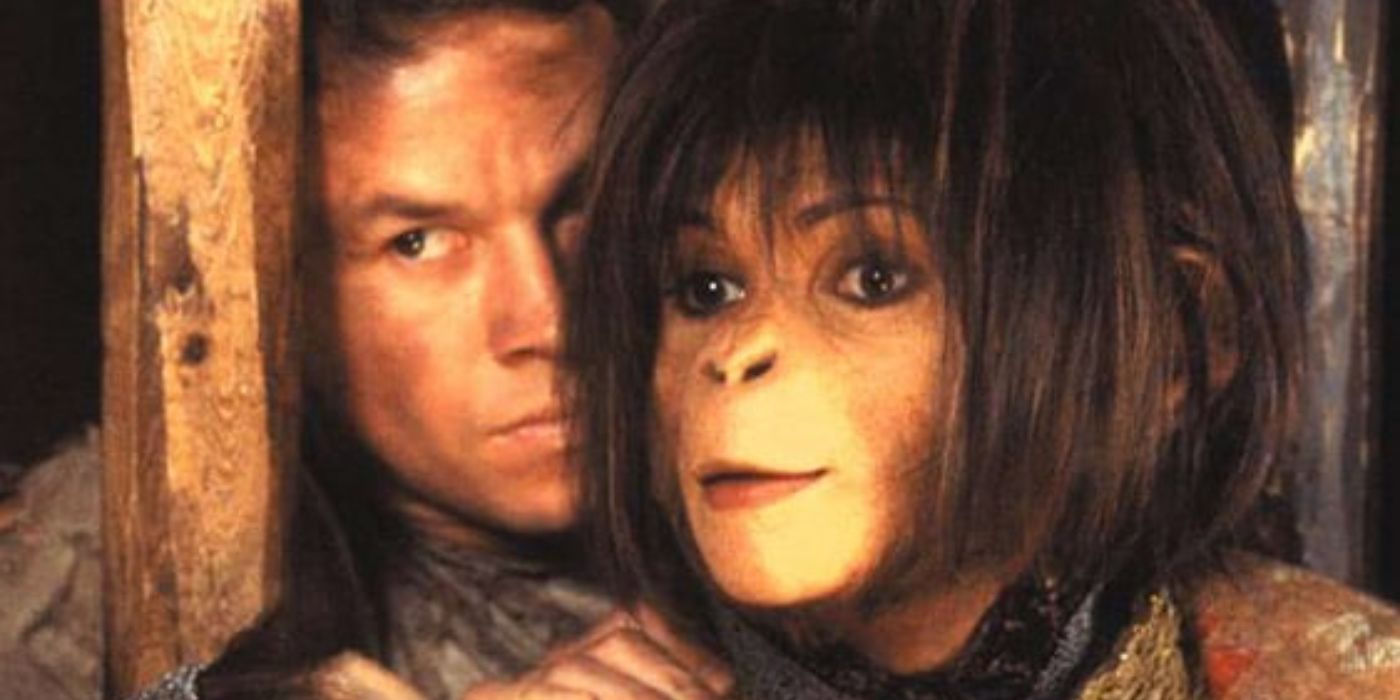
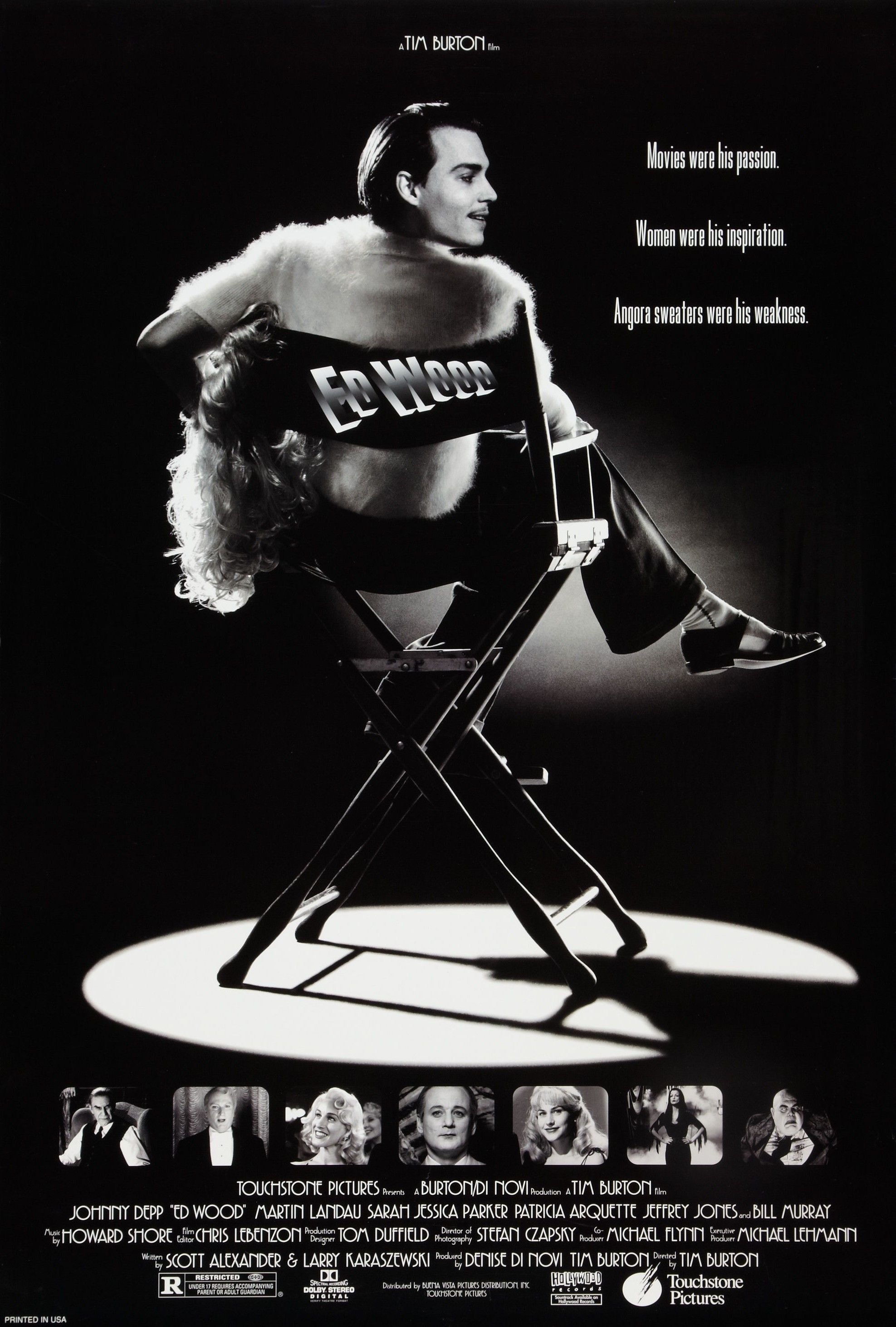
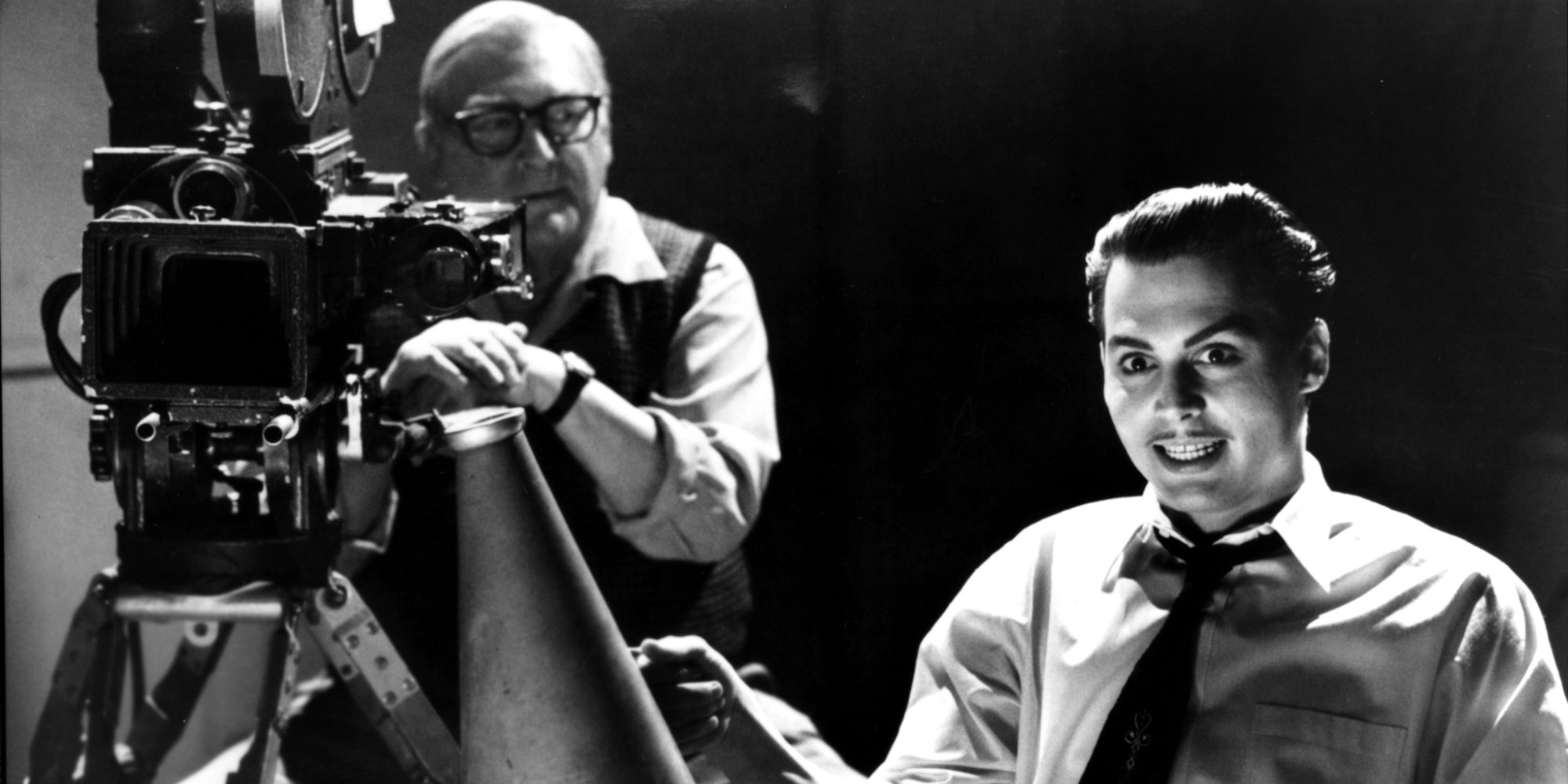
Nah, not really. But it would be kind of funny to try and argue that. In reality, Burton’s best film is one that doesn’t actually contain any supernatural, fantastical, or horror elements, as it’s instead a comedy/drama/biopic. That movie is Ed Wood, and it’s all about Edward D. Wood Jr., who has a reputation for making some of the worst movies of all time. Ed Wood (1994) doesn’t do much to convince anyone that those movies were genuinely good, and it’s not necessarily trying to. But, as a film, it does argue that there remains value in movies that fail, and that creativity is something worth pursuing, even if it means stumbling again and again, or getting ridiculed.
As a biopic, Ed Wood does leave some things out, and admittedly leaves out some of the bleaker things that actually happened toward the end of the real-life director’s life, but it works as part comedy, part homage, and part drama. It’s another emotionally varied film of Burton’s, and though it’s not as wild in terms of creative stylistic choices, it is memorably shot in black-and-white to reflect the time it was set, and the fact that Wood’s own films were shot that way, too. It’s just a movie that works a whole lot more than you’d expect it to, and it’s easily up there among the greatest films about filmmaking ever made.