Our image and conception of the American West and the nation’s history of expansion in the 19th century, for better or worse, were shaped by our media, particularly the Western film genre. From a historical and analytical perspective, this is certainly a sign of trouble, as no medium validated more myths and falsehoods than your average Hollywood Western from the ’40s through the ’60s. While the genre is largely dormant on the big screen, Kevin Costnerhas been attempting to revive its cultural relevance for the past 30 years. Along the way, the actor-director has perpetuated the same myths of yesteryear while doing his best to fill in the historical fallacies with nuance and revisionism.
Hot off the success of Yellowstone, Costner has put his name on a new History Channel documentary series, Kevin Costner’s The West, which hopes to provide truth to the West’s greatest stories of Indigenous triumph and the most consequential battles in American history. In Episode 7 of the series, “The Fetterman Fight,” Costner reveals the truth and upends the legend of the eponymous conflict and the classic 1951 film it inspired, Tomahawk.
‘Kevin Costner’s The West’ Chronicles a Triumphant Native American Battle in Wyoming
In a time when facts have become distorted with the influx of social media, mass digital consumption, and the weaponization of the press, we need documentary movies and shows more than ever. What’s past is prologue, so it’s just as vital to set the record straight on American history. Kevin Costner’s The West has shined a light on essential moments in the West that were marginalized or falsely portrayed in our media, notably events involving non-white figures who checked many of the boxes used to construct the legends of white settlers and outlaws.
Episode 7 of The West chronicles the Fetterman Fight, also known as the Fetterman Massacre. In 1866 Wyoming, a group of infantry, cavalry, and civilians under the command of Capt. William Fetterman was wiped out by thousands of Native warriors of the Lakota Sioux, Northern Cheyenne, and Arapaho tribes. The 81 casualties resulted in the army’s worst defeat in the West until the Battle of Little Big Horn a decade later. The site of the battle was Fort Phil Kearney, a frequent target of local Indigenous tribes, as it was one of many forts along the Bozeman Trail, built to connect settlers to gold mines out West. This trail invaded the Native land that the government had promised to the Sioux, Cheyenne, and Arapahoe. Being one of the few outright triumphs for Native Americans in their violent conflicts with white settlers, it rarely received attention in the mainstream media.
Western myth portrays Fetterman as a rogue, mad-with-power officer whose disobedience led to the bloody conflict. Thanks to research done by historian Shannon D. Smith, whose studies were integral to the fabric of the episode, it was revealed that Fetterman was far less sensational of a figure than the legend states. Contrary to popular belief, he was actually a revered officer by his colleagues and superiors and not an arrogant warmonger deadset on attaining glory. In reality, the episode reveals that it was another officer working under Fetterman, Lt. George Grummond, who was the actual hot-headed soldier who wanted to make a name for himself, despite having little combat experience against Indigenous fighters.
How Does the ’50s Western ‘Tomahawk’ Portray the West?
Directed by George Sherman and starring Van Heflin and Yvonne De Carlo, Tomahawk is a loose account of the onslaught of battles in Wyoming, leading to the Fetterman massacre. On the surface, the film is an ordinary Technicolor Western depicting a rudimentary conflict between cavalry officers and local Native tribes. While it doesn’t fully engage with the weight of its text, Tomahawk gives a surprisingly sympathetic portrait of the tribes who waged war on the U.S. army, at least for its time. Still, the story is told through the glossy perspective of honorable cavalry fighters and not the Indigenous people who were forced to defend their hard-earned land.
This episode of Kevin Costner’s The West demystifies what we’ve come to expect from Western media. Throughout the series, various talking heads re-emphasize the image of the West as an open vista as a reason behind the bloodshed between American settlers and Native tribes already occupying the land, as the former interprets the vast landscapes as free land open for economic exploitation. Once again, the Fetterman Fight was a direct result of settlers vying to capitalize on the discovery of gold in Montana. One can’t help but think about Martin Scorsese‘s historical quasi-Western epic, Killers of the Flower Moon, which depicts a nightmarish genocide of an Osage community predicated on assuring capital interest for white settlers.
Related
Kevin Costner’s Bold Western Series Revives a Forgotten Movement That Changed America Forever
The docuseries has been praised for having an even-handed approach to American West history.
Before the construction of the Bozeman Trail and the attack on Fort Phil Kearny, Americans seemingly had noble intentions. Montana was first enacted as a territory by Abraham Lincoln in 1864 during the Civil War, with the hope that the discovery of gold would quell the internal divide and expedite the unification process. Movies like Steven Spielberg‘s Lincoln(adapted from the work by biographer and frequent talking head on the show, Doris Kearns Goodwin) portray the 16th President as someone who refused to compromise on half-measures, but in reality, he had to give in to the temptations of Western expansionism.
Kevin Costner Grapples With the History of the West in His New Series
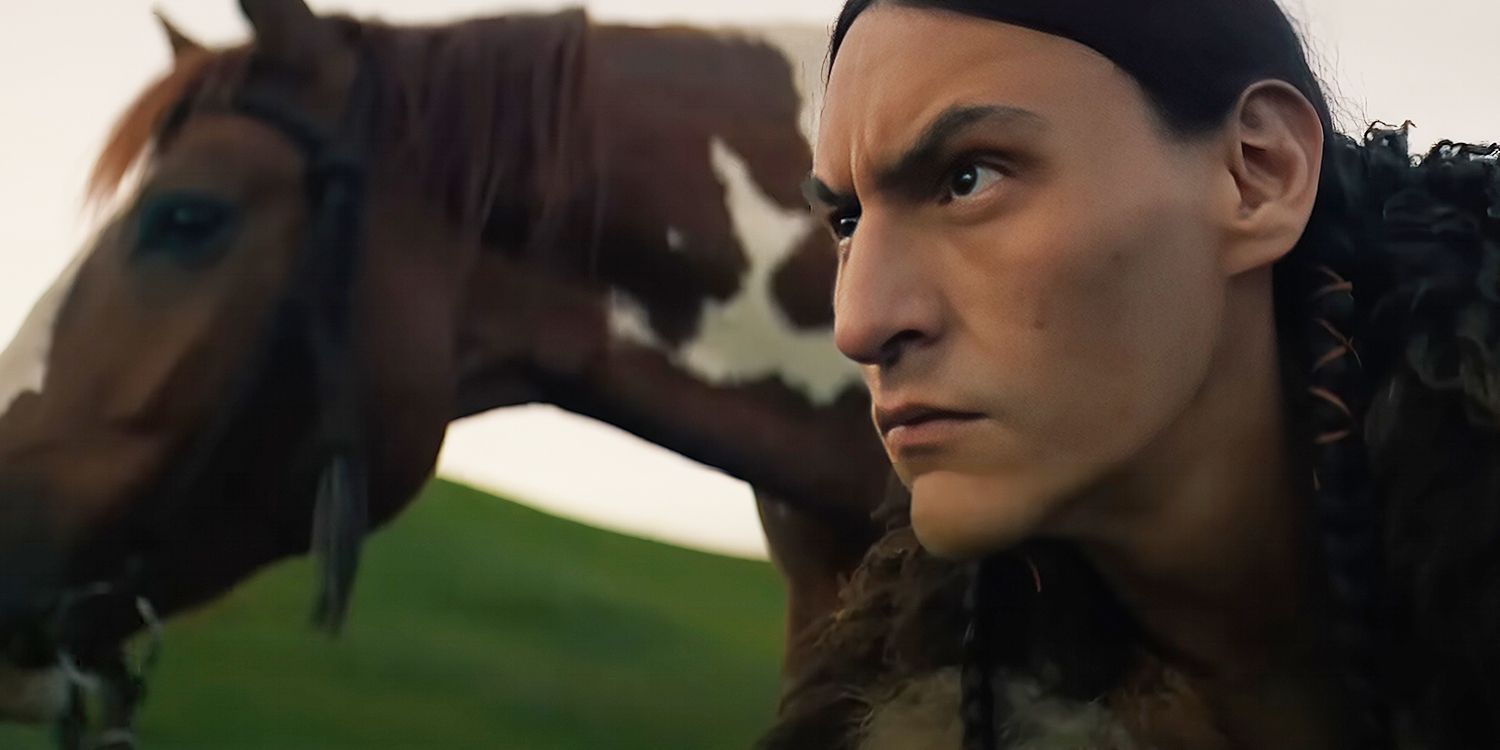
Classic and modern Westerns tend to center the narrative around a noble officer against the backdrop of war and injustice against Native people, a concept series host and narrator Kevin Costner surely recognizes, as his directorial debut, Dances With Wolves, is often cited as the ultimate white savior film. The History Channel docuseries outlines that Native American tribes scattered across the American West were left to fend for themselves, and allied support was few and far between.
Kevin Costner’s The West has paid close attention to the dynamic combat tactics of the various Native American tribes across the Northwest during this period. The ingeniousness of these tribe leaders, notably Crazy Horse, warrants epic Western films in their own right, but Hollywood prefers to follow from the perspective of the white interlopers.
“The Fetterman Fight communicates a level of Indigenous capability that few American policymakers believed [was] possible,” historianNed Blackhawk stated in the episode. Our nationalist-slanted history books and media portray Native Americans during Western expansion as hopeless lambs to the slaughter in the face of white settlers. As Kevin Costner’s The West continues to show, tribes across the Western landscape fought to their deaths to protect what they claimed first and was granted to them by the government. Defending your sovereignty and pride sounds like an idyllic story of American triumph, but rarely do we ever encounter these stories of Indigenous exceptionalism.